Analysis By Size (1-2 M, >2-4 M, and >4-6 M), Payload (Sonars, Camera, GPS, SATCOM, and Others), and Application (Defense, Scientific Research, Disaster Management, Hydrography, and Others)
No. of Pages:100
Report Code:
TIPRE00027982
Category:
Aerospace and Defense
South America Small Unmanned Surface Vehicles Market
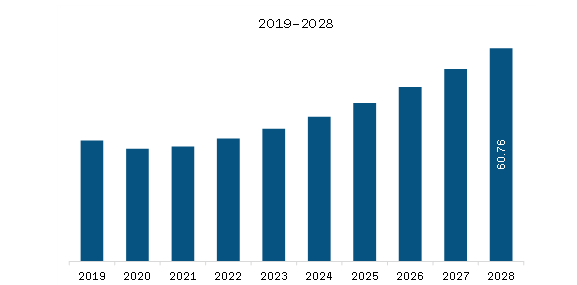
The SAM small unmanned surface vehicles market is expected to grow from US$ 32.73 million in 2021 to US$ 60.76 million by 2028; it is estimated to grow at a CAGR of 9.2% from 2021 to 2028.
Asymmetric threats in the maritime domain are a risk that can rear attackers' heads when least expected to unleash death and destruction to life and property. There is a rise in the deployment of advance technologies in small unmanned surface vehicles from military and defense sectors, such as Intelligence, Surveillance and Reconnaissance (ISR), Mine Counter Measures (MCM), and Anti-Submarine warfare, due to increasing asymmetric threats. The rapid pace of globalization in the recent past has seen growth in trade and commerce rise drastically, 90% of which is attributed to shipping. Several countries are striving to gain more control on maritime trade routes and maritime assets, such as underwater oil reserves and other offshore resources. Also, traditional geopolitical disputes are increasing, which propels the demand for constant and efficient maritime surveillance by all countries. Marine insecurity is compounding the terrorist threat. Therefore, there is a rise in the demand for small unmanned surface vehicles for maritime security. In addition, maritime shipping and infrastructure are among the sources of a nation’s commercial interest and qualify as a potential target of interest for terrorists. Terror attacks against maritime targets in the past have been quite diverse. Perpetrators of past incidents carried out attacks with differing motives. Countries are expected to invest large sums in small unmanned surface vehicles over the forecast period due to territorial conflicts and recently developed indigenous capabilities. All these factors are expected to drive the growth of the SAM small unmanned surface vehicles market in the coming years.
In case of COVID-19, SAM is highly affected especially Brazil. The COVID-19 pandemic has adversely affected many USV vendors, which also led to the shutdown of manufacturing facilities. According to the research study, Argentina was expected to witness a decline of 7.7% during the COVID-19 pandemic in FY 2020 owing to the impact of pandemic that has led to reduced operations across different locations in the country. Moreover, South America has enough water resources that requires to be maintained for operational use across different industries and also it is expected to offer lucrative opportunities for market vendors during the forecast period.
With the new features and technologies, vendors can attract new customers and expand their footprints in emerging markets. This factor is likely to drive the SAM small unmanned surface vehicles market. The SAM small unmanned surface vehicles market is expected to grow at a good CAGR during the forecast period.
SAM Small Unmanned Surface Vehicles Market Revenue and Forecast to 2028 (US$ Million)
SAM Small Unmanned Surface Vehicles Market Segmentation
SAM Small Unmanned Surface Vehicles Market – By Size
1-2 M
>2-4 M
>4-6 M
SAM Small Unmanned Surface Vehicles Market – ByPayload
Sonars
Camera
GPS
SATCOM
Others
SAM Small Unmanned Surface Vehicles Market – ByApplication
Defense
Scientific Research
Disaster Management
Hydrography
Others
SAM Small Unmanned Surface Vehicles Market, by Country
Brazil
Argentina
Rest of SAM
SAM Small Unmanned Surface Vehicles Market - Companies Mentioned
Aanderaa Data Instruments AS
AutoNaut Ltd
Eco Marine Power
HYDRONALIX
Liquid Robotics, Inc.
OceanAlpha Group Ltd.
Sirehna
South America Small Unmanned Surface Vehicles Market Strategic Insights
Get more information on this report
South America Small Unmanned Surface Vehicles Market Segmentation Analysis
South America Small Unmanned Surface Vehicles Market Report Highlights
South America Small Unmanned Surface Vehicles Report Scope
Report Attribute
Details
Market size in 2021
US$ 32.73 Million
Market Size by 2028
US$ 60.76 Million
CAGR (2021 - 2028)
9.2%
Historical Data
2019-2020
Forecast period
2022-2028
Segments Covered
By Size
1-2 M
>2-4 M
>4-6 M
By Payload
Sonars
Camera
GPS
SATCOM
By Application
Defense
Scientific Research
Disaster Management
Hydrography
Regions and Countries Covered
South and Central America
Brazil, Argentina, Rest of South and Central America
Market leaders and key company profiles
Aanderaa Data Instruments AS
AutoNaut Ltd
Eco Marine Power
HYDRONALIX
Liquid Robotics, Inc.
OceanAlpha Group Ltd.
Sirehna
Get more information on this report
South America Small Unmanned Surface Vehicles Market Country and Regional Insights
Get more information on this report
Identical Market Reports with other Region/Countries
The List of Companies - South America Small Unmanned Surface Vehicles Market
Aanderaa Data Instruments AS AutoNaut LtdEco Marine PowerHYDRONALIXLiquid Robotics, Inc.OceanAlpha Group Ltd. Sirehna
Frequently Asked Questions
How big is the South America Small Unmanned Surface Vehicles Market?
The South America Small Unmanned Surface Vehicles Market is valued at US$ 32.73 Million in 2021, it is projected to reach US$ 60.76 Million by 2028.
What is the CAGR for South America Small Unmanned Surface Vehicles Market by (2021 - 2028)?
As per our report South America Small Unmanned Surface Vehicles Market, the market size is valued at US$ 32.73 Million in 2021, projecting it to reach US$ 60.76 Million by 2028. This translates to a CAGR of approximately 9.2% during the forecast period.
What segments are covered in this report?
The South America Small Unmanned Surface Vehicles Market report typically cover these key segments-
What is the historic period, base year, and forecast period taken for South America Small Unmanned Surface Vehicles Market?
The historic period, base year, and forecast period can vary slightly depending on the specific market research report. However, for the South America Small Unmanned Surface Vehicles Market report:
Historic Period : 2019-2020
Base Year : 2021
Forecast Period : 2022-2028
Who are the major players in South America Small Unmanned Surface Vehicles Market?
The South America Small Unmanned Surface Vehicles Market is populated by several key players, each contributing to its growth and innovation. Some of the major players include:
Aanderaa Data Instruments AS
AutoNaut Ltd
Eco Marine Power
HYDRONALIX
Liquid Robotics, Inc.
OceanAlpha Group Ltd.
Sirehna
Who should buy this report?
The South America Small Unmanned Surface Vehicles Market report is valuable for diverse stakeholders, including:
Investors: Provides insights for investment decisions pertaining to market growth, companies, or industry insights. Helps assess market attractiveness and potential returns.
Industry Players: Offers competitive intelligence, market sizing, and trend analysis to inform strategic planning, product development, and sales strategies.
Suppliers and Manufacturers: Helps understand market demand for components, materials, and services related to concerned industry.
Researchers and Consultants: Provides data and analysis for academic research, consulting projects, and market studies.
Financial Institutions: Helps assess risks and opportunities associated with financing or investing in the concerned market.
Essentially, anyone involved in or considering involvement in the South America Small Unmanned Surface Vehicles Market value chain can benefit from the information contained in a comprehensive market report.




 Get Free Sample For South America Small Unmanned Surface Vehicles Market