Analysis By Size (1-2 M, >2-4 M, and >4-6 M), Payload (Sonars, Camera, GPS, SATCOM, and Others), and Application (Defense, Scientific Research, Disaster Management, Hydrography, and Others)
No. of Pages:118
Report Code:
TIPRE00027975
Category:
Aerospace and Defense
Asia Pacific Small Unmanned Surface Vehicles Market
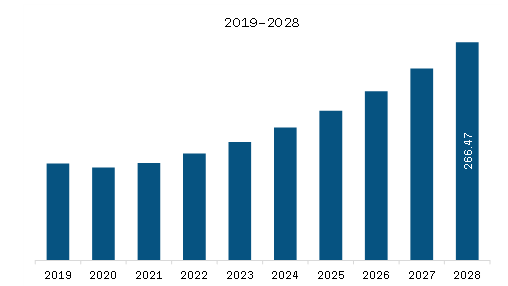
The APAC small unmanned surface vehicles market is expected to grow from US$ 118.66 million in 2021 to US$ 266.47 million by 2028; it is estimated to grow at a CAGR of 12.3% from 2021 to 2028.
With the growth of coastal developments, the maritime domain is increasingly becoming congested, fueled by state and non-state actors using the sea for various activities. The warrants have a high emphasis on maritime surveillance and protection. Therefore, modern assets, such as unmanned vehicles, are deployed to reduce human life risks and mitigate enemy contacts by moving into other domains. Moreover, the surging application of digital connectivity acts as a major factor in the growth of unmanned oceanic systems. As connectivity plays a paramount role for the modern networked sea and sub-sea forces. The defense sectors in major countries are substantially investing in the development of connect subsea-based sensors, submerged platforms, and surface assets with air systems and space-based assets, as well as in cyber operations. This factor is anticipated to trigger the expanding operations of unmanned assets to counter any potential adversary threat. Thus, the continuous investments in the development of deep sea exploration technologies are expected to provide numerous profitable opportunities for the unmanned surface vehicle market players in the coming years, thereby driving the APAC market growth.
COVID-19 affected APAC severely. The temporary shutdown of industrial facilities resulted in disruption in the manufacturing of marine products due to the demand reduction. The pandemic also raised concerns regarding the investments in maritime technologies across Asian countries, such as India, Japan, South Korea. However, leading vendors in this market, such as Hong Kong-based OceanAlpha Group Ltd., rolled out new products during the pandemic. For instance, in August 2020, OceanAlpha rolled out 1,000 Dolphin 1 Remote Control Lifebuoys from its assembly line in Yancheng, China, which has led the company to achieve a milestone for its production base. Moreover, the company held approximately 60% of the global small USV market share in 2020. However, the APAC market also witnessed a decline of 4.23% y-o-y basis compared to FY 2019. According to the research study, it is expected to regain and surpass its share in the market by the end of FY 2021.
With the new features and technologies, vendors can attract new customers and expand their footprints in emerging markets. This factor is likely to drive the APAC small unmanned surface vehicles market. The APAC small unmanned surface vehicles market is expected to grow at a good CAGR during the forecast period.
APAC Small Unmanned Surface Vehicles Market Revenue and Forecast to 2028 (US$ Million)
APAC Small Unmanned Surface Vehicles Market Segmentation
APAC Small Unmanned Surface Vehicles Market – By Size
1-2 M
>2-4 M
>4-6 M
APAC Small Unmanned Surface Vehicles Market – ByPayload
Sonars
Camera
GPS
SATCOM
Others
APAC Small Unmanned Surface Vehicles Market – ByApplication
Defense
Scientific Research
Disaster Management
Hydrography
Others
APAC Small Unmanned Surface Vehicles Market, by Country
Australia
China
India
Japan
South Korea
Rest of APAC
APAC Small Unmanned Surface Vehicles Market - Companies Mentioned
Aanderaa Data Instruments AS
AutoNaut Ltd
Eco Marine Power
HYDRONALIX
Liquid Robotics, Inc.
OceanAlpha Group Ltd.
QinetiQ Group plc
Sirehna
Asia Pacific Small Unmanned Surface Vehicles Market Strategic Insights
Get more information on this report
Asia Pacific Small Unmanned Surface Vehicles Market Segmentation Analysis
Asia Pacific Small Unmanned Surface Vehicles Market Report Highlights
Asia Pacific Small Unmanned Surface Vehicles Report Scope
Report Attribute
Details
Market size in 2021
US$ 118.66 Million
Market Size by 2028
US$ 266.47 Million
CAGR (2021 - 2028)
12.3%
Historical Data
2019-2020
Forecast period
2022-2028
Segments Covered
By Size
1-2 M
>2-4 M
>4-6 M
By Payload
Sonars
Camera
GPS
SATCOM
By Application
Defense
Scientific Research
Disaster Management
Hydrography
Regions and Countries Covered
Asia-Pacific
China, India, Japan, Australia, Rest of Asia-Pacific
Market leaders and key company profiles
Aanderaa Data Instruments AS
AutoNaut Ltd
Eco Marine Power
HYDRONALIX
Liquid Robotics, Inc.
OceanAlpha Group Ltd.
QinetiQ Group plc
Sirehna
Get more information on this report
Asia Pacific Small Unmanned Surface Vehicles Market Country and Regional Insights
Get more information on this report
Identical Market Reports with other Region/Countries
The List of Companies - Asia Pacific Small Unmanned Surface Vehicles Market
Aanderaa Data Instruments AS AutoNaut LtdEco Marine PowerHYDRONALIXLiquid Robotics, Inc.OceanAlpha Group Ltd. QinetiQ Group plc Sirehna
Frequently Asked Questions
How big is the Asia Pacific Small Unmanned Surface Vehicles Market?
The Asia Pacific Small Unmanned Surface Vehicles Market is valued at US$ 118.66 Million in 2021, it is projected to reach US$ 266.47 Million by 2028.
What is the CAGR for Asia Pacific Small Unmanned Surface Vehicles Market by (2021 - 2028)?
As per our report Asia Pacific Small Unmanned Surface Vehicles Market, the market size is valued at US$ 118.66 Million in 2021, projecting it to reach US$ 266.47 Million by 2028. This translates to a CAGR of approximately 12.3% during the forecast period.
What segments are covered in this report?
The Asia Pacific Small Unmanned Surface Vehicles Market report typically cover these key segments-
What is the historic period, base year, and forecast period taken for Asia Pacific Small Unmanned Surface Vehicles Market?
The historic period, base year, and forecast period can vary slightly depending on the specific market research report. However, for the Asia Pacific Small Unmanned Surface Vehicles Market report:
Historic Period : 2019-2020
Base Year : 2021
Forecast Period : 2022-2028
Who are the major players in Asia Pacific Small Unmanned Surface Vehicles Market?
The Asia Pacific Small Unmanned Surface Vehicles Market is populated by several key players, each contributing to its growth and innovation. Some of the major players include:
Aanderaa Data Instruments AS
AutoNaut Ltd
Eco Marine Power
HYDRONALIX
Liquid Robotics, Inc.
OceanAlpha Group Ltd.
QinetiQ Group plc
Sirehna
Who should buy this report?
The Asia Pacific Small Unmanned Surface Vehicles Market report is valuable for diverse stakeholders, including:
Investors: Provides insights for investment decisions pertaining to market growth, companies, or industry insights. Helps assess market attractiveness and potential returns.
Industry Players: Offers competitive intelligence, market sizing, and trend analysis to inform strategic planning, product development, and sales strategies.
Suppliers and Manufacturers: Helps understand market demand for components, materials, and services related to concerned industry.
Researchers and Consultants: Provides data and analysis for academic research, consulting projects, and market studies.
Financial Institutions: Helps assess risks and opportunities associated with financing or investing in the concerned market.
Essentially, anyone involved in or considering involvement in the Asia Pacific Small Unmanned Surface Vehicles Market value chain can benefit from the information contained in a comprehensive market report.




 Get Free Sample For Asia Pacific Small Unmanned Surface Vehicles Market