Analysis By Type [Polymethyl Methacrylate Cement (PMMA), Calcium Phosphate Cement (CPC), Glass Polyalkenoate Cement (GPC), and Others], Application (Arthroplasty, Kyphoplasty, and Vertebroplasty), and End User [Hospitals, Ambulatory Surgery Centers (ASCs), and Clinics]
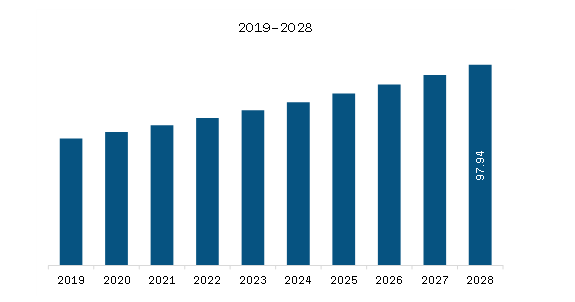
The SAM bone cement market is expected to grow from US$ 68.38 million in 2021 to US$ 97.94 million by 2028; it is estimated to grow at a CAGR of 5.3% from 2021 to 2028.
The rising demand for kyphoplasty, arthroplasty, and vertebroplasty surgeries is expected to increase the sales of bone cement. Leading market players across the region are increasing their penetration across emerging markets by expanding their distribution networks and augmented manufacturing capabilities. Emerging markets across the region are expected to offer potential growth opportunities for key bone cement manufacturers in the years to come. This can be attributed to the rise in the aging population, high prevalence of osteoporosis, increased disposable income, improved healthcare infrastructure, and growth of medical tourism in several countries. Several emerging countries across the region have become business-friendly and adaptable hubs due to relatively less stringent regulations and data requirements. Most players are shifting their focus to emerging markets. High investments in life science and health research in emerging countries play a key role in upgrading the latest technologies in these countries. This factor, in turn, supports the inclination toward bone cement use, thereby driving the SAM market.
A considerable number of countries in South America have very underdeveloped healthcare infrastructure. For instance, Peru has less than 1,000 intensive care unit beds for its 32 million inhabitants. Despite the facts mentioned above, SAM is positively impacted by COVID-19. Researchers have been studying alternatives to detect SARS-CoV-2 (COVID-19), and accurate and timely diagnosis is crucial for controlling the outbreaks of the disease. Like many countries worldwide, the Argentine government took extreme steps to protect citizens from vulnerability to COVID-19, the disease induced by the novel coronavirus. The COVID-19 pandemic generated the need for postponing elective surgery of the SUS, such as total hip and knee arthroplasty. As a result, in the first semester of 2020, there was a 67% decrease in the number and cost of knee and hip arthroplasty. This resulted in a financial loss for implant manufacturers, and it will drive the demand for additional procedures in the following months and years.
With the new features and technologies, vendors can attract new customers and expand their footprints in emerging markets. This factor is likely to drive the SAM bone cement market. The SAM bone cement market is expected to grow at a good CAGR during the forecast period.
SAM Bone Cement Market Revenue and Forecast to 2028 (US$ Million)
SAM Bone Cement Market Segmentation
SAM Bone Cement Market – by Type
Polymethyl Methacrylate Cement (PMMA)
Calcium Phosphate Cement (CPC)
Glass Polyalkenoate Cement (GPC)
Others
SAM Bone Cement Market – byApplication
Arthroplasty
Kyphoplasty
Vertebroplasty
SAM Bone Cement Market – byEnd User
Hospitals
Ambulatory Surgery Centers (ASCs)
Clinics
SAM Bone Cement Market, by Country
Brazil
Argentina
Rest of SAM
SAM Bone Cement Market - Companies Mentioned
Arthrex, Inc.
Cardinal Health Inc.
DePuy Synthes (The Orthopedics Company of Johnson & Johnson)
DJO Global, Inc.
Heraeus Holding GmbH
Smith & Nephew
Stryker Corporation
Tecres S.p.A.
Teknimed
Zimmer Biomet
South America Bone Cement Market Strategic Insights
Get more information on this report
South America Bone Cement Market Segmentation Analysis
South America Bone Cement Market Report Highlights
South America Bone Cement Report Scope
Report Attribute
Details
Market size in 2021
US$ 68.38 Million
Market Size by 2028
US$ 97.94 Million
CAGR (2021 - 2028)
5.3%
Historical Data
2019-2020
Forecast period
2022-2028
Segments Covered
By Type
Polymethyl Methacrylate Cement
Calcium Phosphate Cement
Glass Polyalkenoate Cement
Others
By Application
Arthroplasty
Kyphoplasty
Vertebroplasty
By End User
Hospitals
Ambulatory Surgery Centers
Clinics
Regions and Countries Covered
South and Central America
Brazil, Argentina, Rest of South and Central America
Market leaders and key company profiles
Arthrex, Inc.
Cardinal Health Inc.
DePuy Synthes (The Orthopedics Company of Johnson & Johnson)
DJO Global, Inc.
Heraeus Holding GmbH
Smith & Nephew
Stryker Corporation
Tecres S.p.A.
Teknimed
Zimmer Biomet
Get more information on this report
South America Bone Cement Market Country and Regional Insights
Get more information on this report
Identical Market Reports with other Region/Countries
The List of Companies - South America Bone Cement Market
Arthrex, Inc. Cardinal Health Inc.DePuy Synthes (The Orthopedics Company of Johnson & Johnson)DJO Global, Inc.Heraeus Holding GmbHSmith & NephewStryker Corporation Tecres S.p.A. TeknimedZimmer Biomet
Frequently Asked Questions
How big is the South America Bone Cement Market?
The South America Bone Cement Market is valued at US$ 68.38 Million in 2021, it is projected to reach US$ 97.94 Million by 2028.
What is the CAGR for South America Bone Cement Market by (2021 - 2028)?
As per our report South America Bone Cement Market, the market size is valued at US$ 68.38 Million in 2021, projecting it to reach US$ 97.94 Million by 2028. This translates to a CAGR of approximately 5.3% during the forecast period.
What segments are covered in this report?
The South America Bone Cement Market report typically cover these key segments-
End User (Hospitals, Ambulatory Surgery Centers, Clinics)
What is the historic period, base year, and forecast period taken for South America Bone Cement Market?
The historic period, base year, and forecast period can vary slightly depending on the specific market research report. However, for the South America Bone Cement Market report:
Historic Period : 2019-2020
Base Year : 2021
Forecast Period : 2022-2028
Who are the major players in South America Bone Cement Market?
The South America Bone Cement Market is populated by several key players, each contributing to its growth and innovation. Some of the major players include:
Arthrex, Inc.
Cardinal Health Inc.
DePuy Synthes (The Orthopedics Company of Johnson & Johnson)
DJO Global, Inc.
Heraeus Holding GmbH
Smith & Nephew
Stryker Corporation
Tecres S.p.A.
Teknimed
Zimmer Biomet
Who should buy this report?
The South America Bone Cement Market report is valuable for diverse stakeholders, including:
Investors: Provides insights for investment decisions pertaining to market growth, companies, or industry insights. Helps assess market attractiveness and potential returns.
Industry Players: Offers competitive intelligence, market sizing, and trend analysis to inform strategic planning, product development, and sales strategies.
Suppliers and Manufacturers: Helps understand market demand for components, materials, and services related to concerned industry.
Researchers and Consultants: Provides data and analysis for academic research, consulting projects, and market studies.
Financial Institutions: Helps assess risks and opportunities associated with financing or investing in the concerned market.
Essentially, anyone involved in or considering involvement in the South America Bone Cement Market value chain can benefit from the information contained in a comprehensive market report.




 Get Free Sample For South America Bone Cement Market