Analysis By Type [Polymethyl Methacrylate Cement (PMMA), Calcium Phosphate Cement (CPC), Glass Polyalkenoate Cement (GPC), and Others], Application (Arthroplasty, Kyphoplasty, and Vertebroplasty), and End User [Hospitals, Ambulatory Surgery Centers (ASCs), and Clinics]
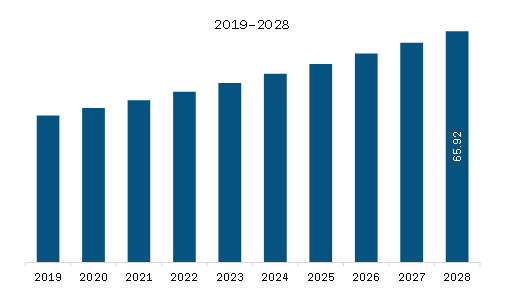
The MEA bone cement market is expected to grow from US$ 46.24 million in 2021 to US$ 65.92 million by 2028; it is estimated to grow at a CAGR of 5.2% from 2021 to 2028.
In recent years, antibiotic-impregnated acrylic bone cement has been used extensively in the prevention and treatment of orthopedic infections. The presence of biomaterials in various orthopedic surgeries involves the risk of developing a deep infection. Infections that develop around joint arthroplasties are among the most unmanageable ones and are difficult to heal. Bone cement impregnated with an antibiotic helps successfully eliminate the risk of developing any form of infection post-surgery. Companies have been involved in the manufacturing and marketing of bone cement in recent years. The use of systemic antibiotics and antibiotic bone cement was significantly more effective in preventing deep-seated infections than the use of systemic antibiotics or antibiotic bone cement alone. The use of antibiotic-loaded bone cement (ALBC) to treat active infections in arthroplasty is well established. The basis for using ALBC as a precautionary measure is to reduce the prevalence of deep joint infections. Gentamicin, cefuroxime, and tobramycin are the most commonly used antibiotics in bone cement in clinical trials. Of the three antibiotics, gentamicin is the most commonly used and most widely studied. Bone cement impregnated with antibiotics (also known as bone cement loaded with antibiotics) releases the antibiotics into the surrounding tissue. Bone cement with antibiotics can be used to treat infections after surgery or prevent infections during surgery. Antibiotic-loaded cement spacers have been established to treat hip and knee joint infections. The main advantage of incorporating antibiotics into bone cement arises directly from the release of antibiotics at the site of action, allowing high concentrations to be achieved at the site of action, with minimal or no systemic toxicity. The growing use of antibiotic-loaded bone cement is becoming the major reason for the development of the MEA bone cement market in the coming years.
In the case of COVID-19, South Africa was the highly affected country in the MEA. Economic uncertainties and ongoing conflicts are worsening the condition in the region. For instance, countries such as Syria, Libya, and Yemen are suffering violent conflicts and cannot implement robust public health measures. Iran was in a deep economic recession due to the US sanctions. The major source of economic stabilization in the MEA countries is oil production and export. However, the recent pandemic caused turbulence in the economies of the MEA. A sudden drop in domestic and external demand for goods and products, especially crude oil, and halted production due to labor shortage were major impacts observed in the region. The COVID-19 pandemic caused a heavy burden on the healthcare system across the region. The businesses in the region were hampered due to disruption in the supply chain and an increase in demand. The outbreak is expected to leverage the technology adoption and usability to streamline the process during the COVID-19 treatment. Moreover, the enterprise sector suffered a significant loss of production due to the worldwide lockdown.
Manufacturing companies were significantly hit by the lockdown, with nearly every plant coming to a halt. Many vital commodity manufacturing enterprises were likewise unable to continue operations due to the worker shortage caused by the social distancing norms. The COVID-19 pandemic affected orthopedics in several aspects. On the other hand, reports on orthopedic surgery during the COVID-19 outbreak have been scarce. After the announcement of the first cases of COVID-19 in Iran on February 19, 2021. Following that, all elective surgeries were canceled, and only emergency surgeries were conducted, as directed by Iran's Ministry of Health. As a result of these changes, the number of orthopedic surgeries in our center decreased dramatically during the outbreak.
With the new features and technologies, vendors can attract new customers and expand their footprints in emerging markets. This factor is likely to drive the MEA bone cement market. The MEA bone cement market is expected to grow at a good CAGR during the forecast period.
MEA Bone Cement Market Revenue and Forecast to 2028 (US$ Million)
MEA Bone Cement Market Segmentation
MEA Bone Cement Market – by Type
Polymethyl Methacrylate Cement (PMMA)
Calcium Phosphate Cement (CPC)
Glass Polyalkenoate Cement (GPC)
Others
MEA Bone Cement Market –by Application
Arthroplasty
Kyphoplasty
Vertebroplasty
MEA Bone Cement Market –by End User
Hospitals
Ambulatory Surgery Centers (ASCs)
Clinics
MEA Bone Cement Market, by Country
Saudi Arabia
South Africa
UAE
Rest of MEA
MEA Bone Cement Market - Companies Mentioned
Arthrex, Inc.
Cardinal Health Inc.
DePuy Synthes (The Orthopedics Company of Johnson & Johnson)
DJO Global, Inc.
Heraeus Holding GmbH
Smith & Nephew
Stryker Corporation
Tecres S.p.A.
Teknimed
Zimmer Biome
Middle East and Africa Bone Cement Market Strategic Insights
Get more information on this report
Middle East and Africa Bone Cement Market Segmentation Analysis
Middle East and Africa Bone Cement Market Report Highlights
Middle East and Africa Bone Cement Report Scope
Report Attribute
Details
Market size in 2021
US$ 46.24 Million
Market Size by 2028
US$ 65.92 Million
CAGR (2021 - 2028)
5.2%
Historical Data
2019-2020
Forecast period
2022-2028
Segments Covered
By Type
Polymethyl Methacrylate Cement
Calcium Phosphate Cement
Glass Polyalkenoate Cement
Others
By Application
Arthroplasty
Kyphoplasty
Vertebroplasty
By End User
Hospitals
Ambulatory Surgery Centers
Clinics
Regions and Countries Covered
Middle East and Africa
South Africa, Saudi Arabia, UAE, Rest of Middle East and Africa
Market leaders and key company profiles
Arthrex, Inc.
Cardinal Health Inc.
DePuy Synthes (The Orthopedics Company of Johnson & Johnson)
DJO Global, Inc.
Heraeus Holding GmbH
Smith & Nephew
Stryker Corporation
Tecres S.p.A.
Teknimed
Zimmer Biomet
Get more information on this report
Middle East and Africa Bone Cement Market Country and Regional Insights
Get more information on this report
Identical Market Reports with other Region/Countries
The List of Companies - Middle East and Africa Bone Cement Market
Arthrex, Inc. Cardinal Health Inc.DePuy Synthes (The Orthopedics Company of Johnson & Johnson)DJO Global, Inc.Heraeus Holding GmbHSmith & NephewStryker Corporation Tecres S.p.A.TeknimedZimmer Biomet
Krishna is a Market Research Analyst with over 4 years of experience across Life Sciences and Materials & Chemicals industries. He holds a Bachelor's degree in Pharmacy (B.Pharm.) and a Master's degree in Pharmaceutical Medicinal Chemistry (M.Pharm.). His expertise spans market intelligence, competitive benchmarking, market sizing and forecasting, primary and secondary research, and strategic consulting.
Krishna has successfully contributed to numerous syndicated and custom research engagements, delivering industry reports, market assessments, competitive analyses, and business proposals for clients across diverse sectors. With ..
Show More
Frequently Asked Questions
How big is the Middle East and Africa Bone Cement Market?
The Middle East and Africa Bone Cement Market is valued at US$ 46.24 Million in 2021, it is projected to reach US$ 65.92 Million by 2028.
What is the CAGR for Middle East and Africa Bone Cement Market by (2021 - 2028)?
As per our report Middle East and Africa Bone Cement Market, the market size is valued at US$ 46.24 Million in 2021, projecting it to reach US$ 65.92 Million by 2028. This translates to a CAGR of approximately 5.2% during the forecast period.
What segments are covered in this report?
The Middle East and Africa Bone Cement Market report typically cover these key segments-
End User (Hospitals, Ambulatory Surgery Centers, Clinics)
What is the historic period, base year, and forecast period taken for Middle East and Africa Bone Cement Market?
The historic period, base year, and forecast period can vary slightly depending on the specific market research report. However, for the Middle East and Africa Bone Cement Market report:
Historic Period : 2019-2020
Base Year : 2021
Forecast Period : 2022-2028
Who are the major players in Middle East and Africa Bone Cement Market?
The Middle East and Africa Bone Cement Market is populated by several key players, each contributing to its growth and innovation. Some of the major players include:
Arthrex, Inc.
Cardinal Health Inc.
DePuy Synthes (The Orthopedics Company of Johnson & Johnson)
DJO Global, Inc.
Heraeus Holding GmbH
Smith & Nephew
Stryker Corporation
Tecres S.p.A.
Teknimed
Zimmer Biomet
Who should buy this report?
The Middle East and Africa Bone Cement Market report is valuable for diverse stakeholders, including:
Investors: Provides insights for investment decisions pertaining to market growth, companies, or industry insights. Helps assess market attractiveness and potential returns.
Industry Players: Offers competitive intelligence, market sizing, and trend analysis to inform strategic planning, product development, and sales strategies.
Suppliers and Manufacturers: Helps understand market demand for components, materials, and services related to concerned industry.
Researchers and Consultants: Provides data and analysis for academic research, consulting projects, and market studies.
Financial Institutions: Helps assess risks and opportunities associated with financing or investing in the concerned market.
Essentially, anyone involved in or considering involvement in the Middle East and Africa Bone Cement Market value chain can benefit from the information contained in a comprehensive market report.







 Get Free Sample For Middle East and Africa Bone Cement Market