
Peritoneal Dialysis Market Outlook: Size, Share, Trends, Growth Analysis, Competitive Landscape & Forecast, 2026-2033

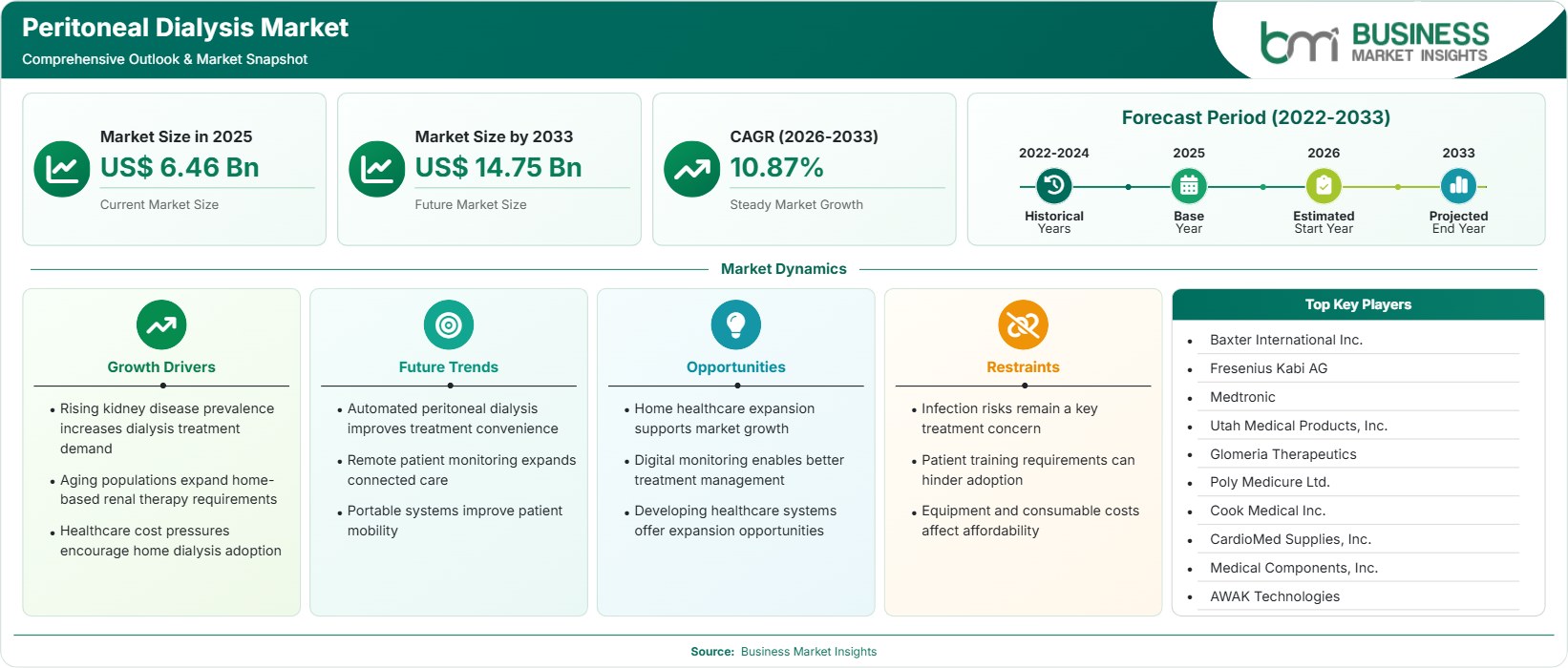
The Peritoneal Dialysis Market size was valued at USD 6.46 Billion in 2025 and is projected to reach USD 14.75 Billion by 2033, growing at a CAGR of 10.87% during 2026–2033. Rising chronic kidney disease prevalence, growing preference for home-based renal therapies, technological advancements in dialysis systems, and increasing healthcare cost optimization initiatives are accelerating market opportunities worldwide.

Report Coverage
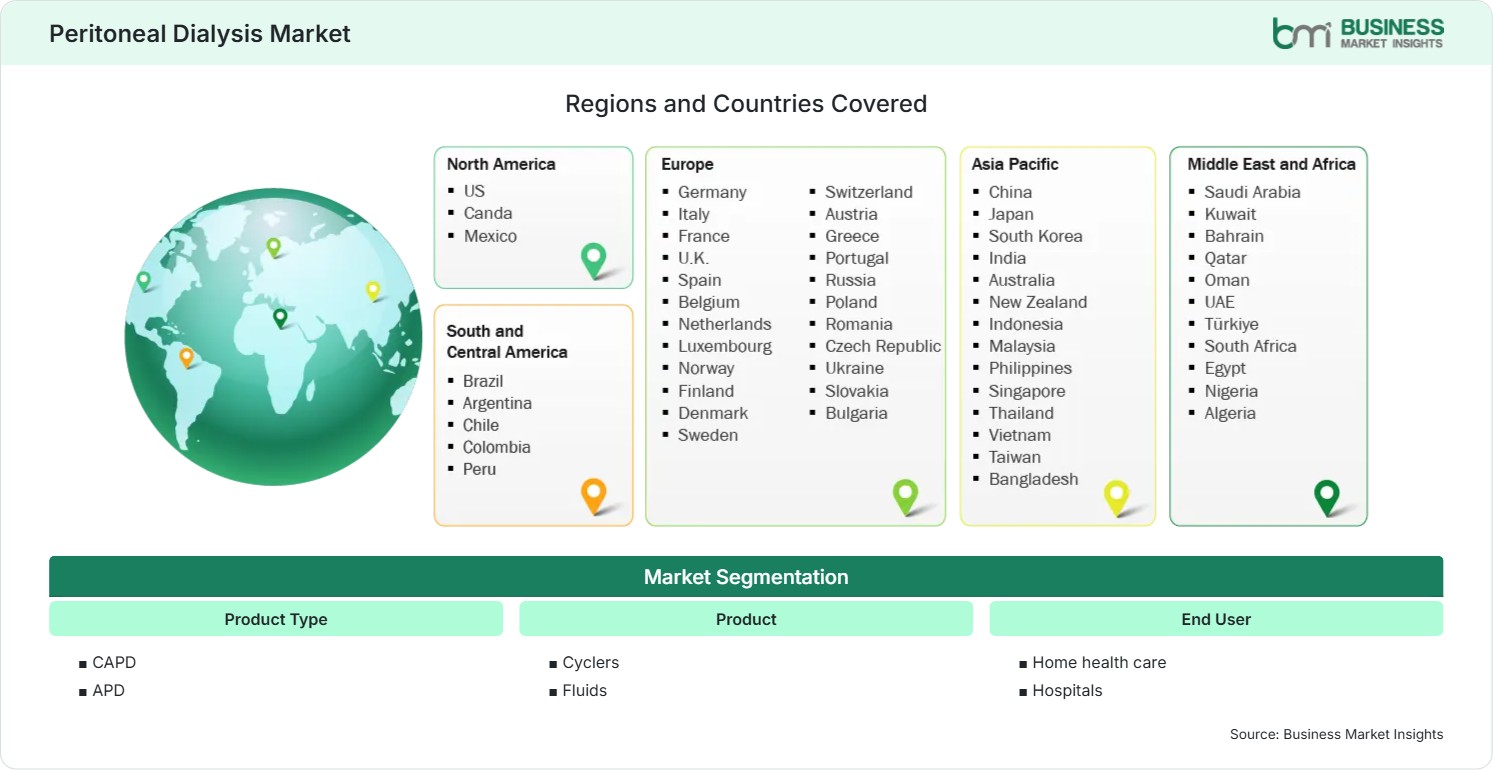
  • Product Type: CAPD, APD
  • Product: Cyclers, Fluids
  • End User: Home health care, Hospitals
US$ 6.46 Bn Market size in 2025
US$ 14.75 Bn Market Size by 2033
10.87% CAGR, 2026 - 2033
2026-2033 Forecast Period

01 AI Overview

Peritoneal Dialysis Market Summary

  • North America Region: North America holds 35%–38% share in 2025 and is projected to grow at a 9.8%–10.5% CAGR during 2026–2033. Expanding home dialysis adoption, favorable reimbursement frameworks, growing chronic kidney disease burden, and technological innovation in automated systems continue supporting sustained market expansion. U.S. market benefits from strong home-care adoption and reimbursement support, growing at 10.0%–10.7% CAGR.
  • Fastest Growing Region: Asia Pacific accounts for 24%–28% share in 2025 and is forecast to expand at a 12.2%–13.0% CAGR during 2026–2033. Rising renal disease incidence, expanding healthcare infrastructure, increasing awareness, and government initiatives promoting home-based therapies continue accelerating adoption.
  • Leading Segment: CAPD represents 58%–62% share in 2025 and is expected to grow at a 10.2%–10.9% CAGR. Simplicity of operation, lower infrastructure requirements, and strong suitability for home treatment continue supporting segment leadership.
  • High Growth Segment: Home health care accounts for 60%–64% share in 2025 and is projected to expand at a 11.4%–12.1% CAGR. Growing patient preference for convenience, reduced hospital visits, and cost-effective treatment models continue accelerating demand.
  • Key Market Opportunity: Integration of remote patient monitoring, connected dialysis platforms, digital care management, and wearable dialysis innovations creates opportunities to improve treatment adherence, outcomes, and healthcare efficiency.
  • Major Market Players: Baxter International Inc., Fresenius Kabi AG, Medtronic plc, Utah Medical Products, Inc., Glomeria Therapeutics, Inc., Poly Medicure Limited, Cook Medical LLC, CardioMed Supplies Inc., Medical Components, Inc., AWAK Technologies Pte. Ltd.
02 Strategic Insights

Peritoneal Dialysis Market: Strategic Insights

Peritoneal Dialysis Market Strategic Framework
FREE PDF
Request your free sample
Request free sample
03 Stakeholder View

Key Takeaways

  • The market ecosystem increasingly integrates device manufacturers, dialysis solution providers, healthcare facilities, telehealth platforms, and home-care service providers to improve treatment accessibility and patient outcomes.
  • Home-based renal therapy applications represent the strongest growth opportunity due to reduced healthcare costs and increasing patient preference for treatment flexibility.
  • Innovation is increasingly focused on automated systems, remote patient monitoring, portable dialysis technologies, and digital treatment management platforms.
  • Asia Pacific presents the most attractive regional investment opportunity because of expanding healthcare infrastructure and growing renal disease patient populations.
  • Strategic partnerships between medical-device manufacturers and healthcare service providers continue strengthening market penetration and patient support capabilities.
  • Reimbursement modernization and healthcare policy support are accelerating adoption of home dialysis therapies across multiple healthcare systems.
04 Geographic Outlook

Peritoneal Dialysis Market Regional Highlights

North America Peritoneal Dialysis Market

North America represented 35%–38% Peritoneal Dialysis Market share in 2025 and is projected to expand at a 9.8%–10.5% CAGR through 2033. Strong reimbursement mechanisms, high awareness of home dialysis benefits, and growing chronic kidney disease prevalence continue supporting regional growth. Healthcare providers are increasingly encouraging home-based renal therapies to improve patient outcomes and reduce treatment costs. Technology adoption and robust healthcare infrastructure further strengthen market development across the region.

  • Favorable reimbursement structures encourage wider adoption of home dialysis solutions and long-term treatment management programs.
  • Healthcare providers increasingly prioritize home-based renal care pathways to reduce hospital dependency and treatment expenses.
  • Automated dialysis technologies continue improving convenience, adherence, and patient satisfaction across treatment programs.
  • Rising chronic kidney disease incidence supports long-term demand for advanced renal replacement therapies.
  • Digital monitoring capabilities continue improving treatment oversight and healthcare provider engagement.

US Peritoneal Dialysis Market

The United States accounts for approximately 82%–86% share within North America and is expected to grow at a 10.0%–10.7% CAGR during 2026–2033. National initiatives supporting home dialysis adoption, increasing prevalence of kidney disorders, and technological innovation in treatment platforms continue driving market expansion. The country remains a major center for product innovation, reimbursement development, and advanced patient-care programs.

  • Home dialysis adoption continues growing through favorable care models and increasing patient preference.
  • Technological innovation remains focused on automation, connectivity, and treatment efficiency.
  • Healthcare organizations increasingly promote patient-centered approaches to renal disease management.
  • Expanding telehealth integration supports more effective monitoring and long-term patient engagement.

Europe Peritoneal Dialysis Market

Europe accounted for 27%–30% share in 2025 and is projected to expand at a 10.1%–10.8% CAGR through 2033. Rising chronic kidney disease prevalence, increasing adoption of home-based renal therapies, and supportive healthcare reimbursement models continue supporting regional growth. Germany remains the largest market due to advanced renal care infrastructure and strong treatment accessibility, while Spain demonstrates faster growth through expanding home-dialysis initiatives. Healthcare systems increasingly emphasize patient-centric care models that improve treatment flexibility and cost efficiency.

  • Germany leads regional demand through well-established renal care networks, advanced healthcare systems, and growing acceptance of home dialysis treatment pathways.
  • Spain and selected Western European countries continue promoting home-based renal care programs to reduce hospitalization burdens and healthcare expenditures.
  • Digital health integration increasingly supports patient monitoring, treatment adherence, and healthcare-provider oversight across dialysis programs.
  • Healthcare authorities continue encouraging early renal disease management and expansion of home-treatment accessibility.
  • Growing elderly populations continue increasing demand for long-term renal replacement therapies across the region.

Asia Pacific Peritoneal Dialysis Market

Asia Pacific represented 24%–28% share in 2025 and is forecast to register the fastest growth at 12.2%–13.0% CAGR through 2033. Expanding healthcare infrastructure, rising awareness of renal disease management, and increasing chronic kidney disease incidence continue accelerating adoption. China remains the largest regional market due to its substantial patient population and healthcare investments, while India records the strongest growth through expanding healthcare access and government-supported treatment initiatives. Continued urbanization and healthcare modernization further strengthen demand.

  • China benefits from significant investments in kidney disease management and wider adoption of home-based treatment models.
  • India demonstrates robust expansion due to increasing renal disease awareness and improved healthcare accessibility.
  • Government programs continue supporting development of affordable dialysis services and broader treatment coverage.
  • Telemedicine integration and digital health platforms are improving patient management and treatment continuity.
  • Rising healthcare expenditure across emerging economies continues strengthening long-term market prospects.

Rest of World Peritoneal Dialysis Market

Rest of World accounted for 8%–11% share in 2025 and is expected to expand at a 10.5%–11.2% CAGR through 2033. South and Central America benefit from improving healthcare services and increasing access to renal replacement therapies. The Middle East and Africa region is witnessing stronger adoption supported by healthcare modernization initiatives and growing awareness of chronic kidney disease management. Brazil remains the leading regional market, while Saudi Arabia demonstrates notable growth through healthcare investment and expansion of specialized renal treatment services.

  • Expanding healthcare infrastructure is improving patient access to dialysis treatment across emerging economies.
  • Brazil continues leading regional demand through broader healthcare coverage and increasing chronic disease management initiatives.
  • Saudi Arabia records strong growth due to healthcare transformation programs and renal care capacity expansion.
  • Government investment in specialized treatment facilities is strengthening long-term dialysis accessibility.
  • Growing awareness campaigns continue encouraging earlier diagnosis and treatment of kidney-related disorders.
Global Market Geography
FREE PDF
Request your free sample
Request free sample
05 Segment Analysis

Peritoneal Dialysis Market Segmentation

Product Type

CAPD represented approximately 58%–62% Peritoneal Dialysis Market share in 2025 and is projected to expand at a 10.2%–10.9% CAGR through 2034. The Peritoneal Dialysis Market scope continues expanding as CAPD remains widely preferred due to its simplicity, lower infrastructure requirements, ease of home administration, and reduced dependency on sophisticated equipment. Growing adoption of patient-managed treatment approaches continues supporting segment leadership across major healthcare markets.

  • CAPD: Widely utilized because of manual operation flexibility, accessibility, lower equipment requirements, and suitability for long-term home dialysis treatment programs.
  • APD: Increasingly adopted due to automation benefits, overnight treatment capability, enhanced patient convenience, and integration with digital monitoring technologies.

Product

Fluids accounted for approximately 63%–67% Peritoneal Dialysis Market share in 2025 and are expected to expand at a 10.8%–11.5% CAGR through 2034. Demand remains closely linked to recurring treatment requirements and growing patient populations undergoing long-term therapy. Continuous consumption patterns and increasing treatment accessibility continue supporting strong segment expansion.

  • Cyclers: Advanced automated systems improve treatment convenience, operational efficiency, and patient adherence while supporting modern home-based dialysis programs.
  • Fluids: Continuous treatment requirements drive sustained consumption and support strong revenue generation within peritoneal dialysis care pathways.

End User

Home health care represented approximately 60%–64% share in 2025 and is projected to grow at a 11.4%–12.1% CAGR through 2034. The Peritoneal Dialysis Market trends indicate growing preference for patient-centered therapies that reduce hospital visits and support independent treatment management. Expanding telehealth support and remote monitoring capabilities continue encouraging adoption across home-care environments.

  • Home health care: Demand is supported by treatment flexibility, reduced hospitalization requirements, patient convenience, and increasing reimbursement support for home therapies.
  • Hospitals: Continue serving as important treatment centers for patient training, clinical supervision, acute care, and dialysis-related complication management.
06 Market Forces

Peritoneal Dialysis Market Dynamics

Key Market Drivers

Rising kidney disease prevalence increases dialysis treatment demand

The growing burden of chronic kidney disease and end-stage renal disease continues increasing demand for renal replacement therapies worldwide. The Peritoneal Dialysis Market growth trajectory is supported by rising diabetes prevalence, hypertension-related kidney complications, and expanding elderly populations requiring long-term treatment. Healthcare systems are encouraging early diagnosis and treatment approaches in order to enhance their patients' outcome. The use of peritoneal dialysis provides several benefits such as flexibility, convenience of home treatment, and decreased dependence on facility-based treatment. Awareness of the benefits of home treatments among both the patients and healthcare practitioners is increasing and this is contributing to the continued usage of peritoneal dialysis.

Aging populations expand home-based renal therapy requirements

The increasing proportion of elderly individuals worldwide is contributing significantly to renal disease incidence and treatment demand. Older individuals have been found to favor methods of treatment that require minimal traveling and help them live independently. In addition, home-based treatments for renal disease are both flexible and comfortable while still producing effective results. Peritoneal dialysis has continued to be recommended for patients due to its suitability for homecare. Ageing of populations continues to be a key driver of demand in the future.

Healthcare cost pressures encourage home dialysis adoption

Healthcare systems are seeking treatment approaches that can improve outcomes while controlling costs associated with long-term care. The use of peritoneal dialysis helps to cut down on infrastructural needs and promotes efficient management of patients beyond hospital environments. There is ongoing evaluation of home-based treatment approaches that optimize the utilization of resources. Value-based care approaches are becoming more common, promoting the adoption of home dialysis programs.

Key Market Opportunities

Home healthcare expansion supports market growth

The increasing adoption of home healthcare services continues creating substantial opportunities throughout the industry. Peritoneal Dialysis Market Forecasts indicate growing demand for patient-centric treatment models that provide convenience, flexibility, and lower healthcare utilization costs. Home health care network expansion and nursing assistance service will enhance access to treatment. By making investments in easy-to-use devices and simple treatment technologies, manufacturers can gain more foothold in the market. Home treatment is becoming more popular among healthcare systems to enhance efficiency.

Digital monitoring enables better treatment management

Advances in connected medical devices and digital health technologies are transforming dialysis management. Remote patient monitoring allows healthcare professionals to monitor compliance, diagnose problems early, and increase patient engagement. The incorporation of cloud-based management services and telehealth will facilitate better delivery of care. Connected treatment systems are becoming increasingly relevant to device manufacturers as the demand for digital renal care options rises.

Developing healthcare systems offer expansion opportunities

Emerging economies continue investing in healthcare infrastructure, chronic disease management, and renal care accessibility. Growing awareness of kidney disease, expanding insurance coverage, and government healthcare initiatives are improving treatment availability. As healthcare capacity strengthens, demand for affordable and scalable dialysis solutions is expected to increase. Companies expanding into underserved regions can benefit from rising patient populations and increasing healthcare expenditure. These conditions support long-term market development.

Market Restraints and Challenges

Infection risks remain a key treatment concern

Factor: Peritoneal dialysis requires long-term catheter use and regular fluid exchange procedures that can increase the risk of infection if protocols are not followed correctly. Impact: Complications such as peritonitis may result in treatment interruptions, higher healthcare costs, and reduced patient confidence. Healthcare providers must emphasize infection prevention and patient education. Continuous monitoring and strict adherence to clinical procedures remain essential for maintaining treatment effectiveness and patient safety.

Patient training requirements can hinder adoption

Factor: Successful home-based dialysis requires patients and caregivers to undergo comprehensive training regarding treatment administration, hygiene practices, and device operation. Impact: Training requirements can delay therapy initiation and may discourage certain patient groups from adopting home dialysis. Healthcare providers must allocate resources to education, support, and ongoing monitoring. Addressing these challenges remains important for expanding adoption while ensuring treatment quality and safety standards.

07 Company Analysis

Competitive Landscape

The Peritoneal Dialysis Market analysis highlights competition focused on home-care technologies, dialysis solutions, digital monitoring capabilities, patient-support services, and innovation in renal replacement therapy systems.

Company Name

Overview

Products and Services relevant to this market

Baxter International Inc.

Global leader in renal care solutions with a strong focus on home-based dialysis therapies.

Peritoneal dialysis systems, cyclers, dialysis fluids, patient support services, and renal care solutions.

Fresenius Kabi AG

Healthcare company providing medical products and therapies across global healthcare markets.

Dialysis-related medical products, infusion therapies, healthcare solutions, and patient-care technologies.

Medtronic plc

Global medical technology company focused on innovative healthcare solutions.

Medical technologies, patient monitoring systems, connected healthcare solutions, and chronic disease management tools.

Utah Medical Products, Inc.

Medical device manufacturer serving critical and specialty healthcare applications.

Catheters, medical components, specialty healthcare products, and patient-care devices.

Glomeria Therapeutics, Inc.

Biotechnology company developing next-generation renal therapy technologies.

Innovative dialysis technologies, renal care solutions, and research-driven therapeutic platforms.

Poly Medicure Limited

Medical device manufacturer with a broad portfolio across healthcare applications.

Catheters, dialysis accessories, medical consumables, and patient-care products.

Cook Medical LLC

International medical-device company serving hospitals and specialty-care providers.

Catheters, minimally invasive medical devices, and healthcare procedure solutions.

CardioMed Supplies Inc.

Medical products supplier supporting patient care and specialized treatment needs.

Dialysis supplies, patient-care products, medical accessories, and healthcare support solutions.

Medical Components, Inc.

Medical-device company specializing in vascular access and treatment technologies.

Dialysis catheters, access devices, renal care products, and specialty medical components.

AWAK Technologies Pte. Ltd.

Healthcare technology company focused on portable and wearable dialysis innovations.

Portable dialysis systems, wearable technologies, and next-generation renal treatment solutions.


10 Trust & Transparency

Research Methodology

The market analysis combines proprietary research with secondary data from government agencies, company disclosures, regulatory filings, industry databases and expert interviews. Market estimates are validated through data triangulation, cross-market benchmarking and analyst review.

View Full Research Methodology

11 Questions Answered

Frequently Asked Questions

What insights does a Peritoneal Dialysis Market Report provide?

A Market Report provides insights into market size, competitive dynamics, treatment innovations, regional opportunities, patient-care trends, and future growth prospects.

How does digital monitoring improve dialysis care?

Digital monitoring enables healthcare providers to track treatment adherence, identify potential complications earlier, and improve communication with patients receiving home-care therapies.

Which segment leads the market?

CAPD remains the leading product-type segment because of its simplicity, accessibility, and strong suitability for patient-managed home treatment.

Why is home-based dialysis becoming more popular?

Home-based dialysis offers flexibility, convenience, reduced hospital visits, and greater independence while supporting effective chronic kidney disease management.

What is peritoneal dialysis?

Peritoneal dialysis is a renal replacement therapy that uses the lining of the abdomen as a natural filter to remove waste products and excess fluid from the blood.

Access the Full Peritoneal Dialysis Market Report

Get segment-level forecasts, regional estimates, competitive benchmarking, company profiles and downloadable Excel datasets.

Access the full Peritoneal Dialysis Market Report
350 pages PDF & Excel | 2026-08-20