Market Summary
Executive Summary and Market Analysis
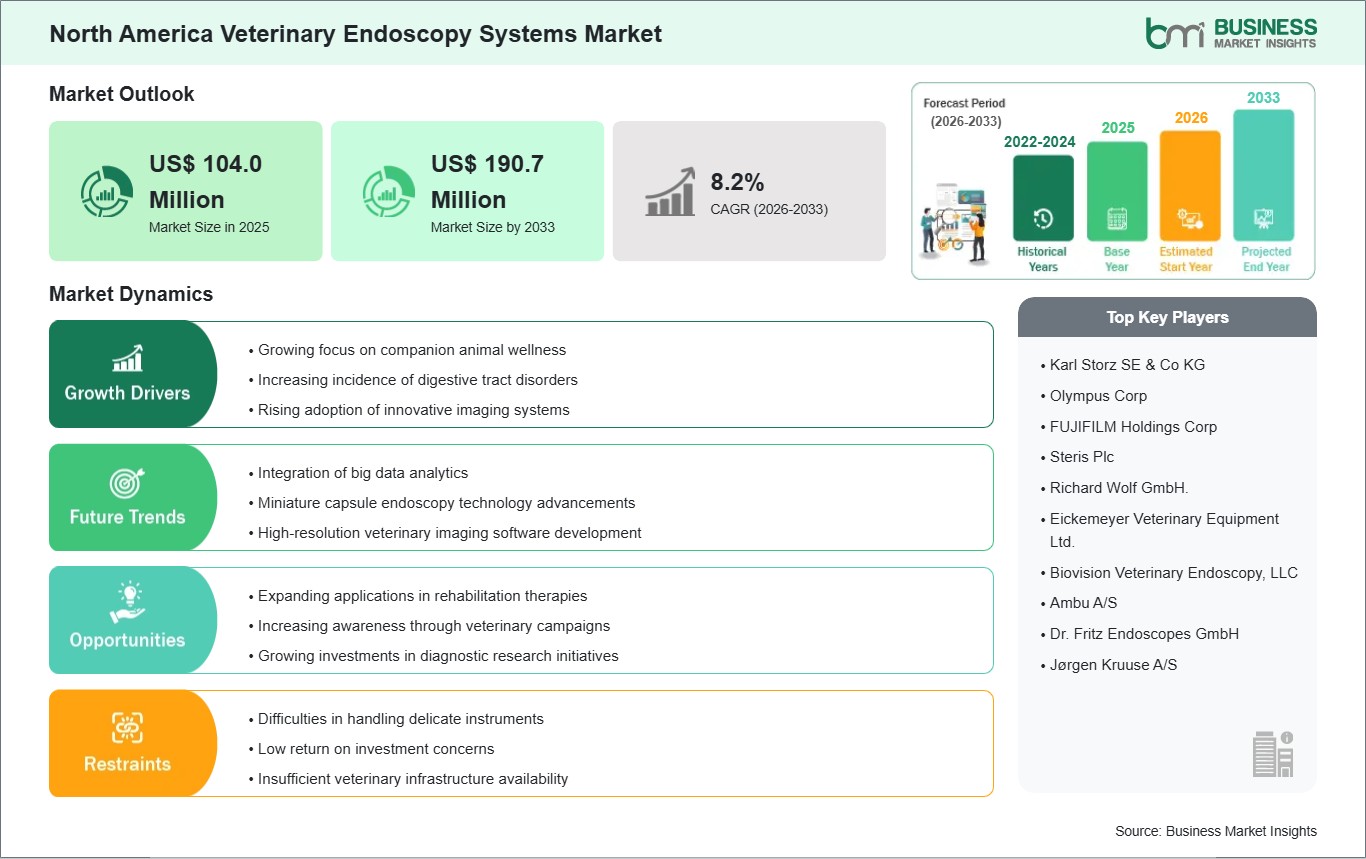
The North America veterinary endoscopy systems market is a highly mature, innovation-intensive ecosystem defined by advanced clinical standards, strong pet healthcare expenditure, and rapid integration of minimally invasive surgical technologies. The area, dominated by the US and Canada, represents one of the regions where there is a very high prevalence of veterinary endoscopy equipment worldwide, with these devices being extensively used in diagnostic, treatment and surgical processes in companion animal as well as specialty veterinary practices. An essential determinant of the market's dynamics is represented by the dominance of companion animal care services, especially in urban and suburban environments where animals are increasingly viewed as members of the family. This trend has generated continuous needs for diagnostic methods that involve minimal invasive techniques along with accurate results and fast recovery times. The procedure of endoscopy is extensively employed for gastrointestinal, respiratory and orthopedic diagnoses, as well as for soft tissue and laparoscopic surgeries. High-end veterinary clinics have started to rely on centralized procurement of equipment and clinical guidelines, thereby facilitating faster dissemination and adoption of advanced endoscopy solutions. The adoption of these tools by veterinary service networks will be facilitated due to the integration of advanced technology. In North America, technological progress is an important feature of this market. Newer developments in high-definition imaging, 3D visualizations, portable devices, and artificial intelligence diagnostics are driving the replacement cycle for this product segment. Integration with digital health records and cloud-based imaging platforms is becoming a common phenomenon, facilitating better collaboration and consultation as well as diagnosis monitoring. There is also the benefit of having a solid educational background for the veterinarians involved. Teaching hospitals and schools are key in the early adoption and training of the specialists who perform the procedures using state-of-the-art endoscopes. Nevertheless, due to the high cost of the equipment as well as regulatory issues, the prices are very high, resulting in lack of accessibility in smaller and independent facilities. The North American veterinary endoscopy systems market is defined by innovation, high technology, specialization, and frequent innovation cycles.
Segment Analysis
North America Veterinary Endoscopy Systems Market Segmentation
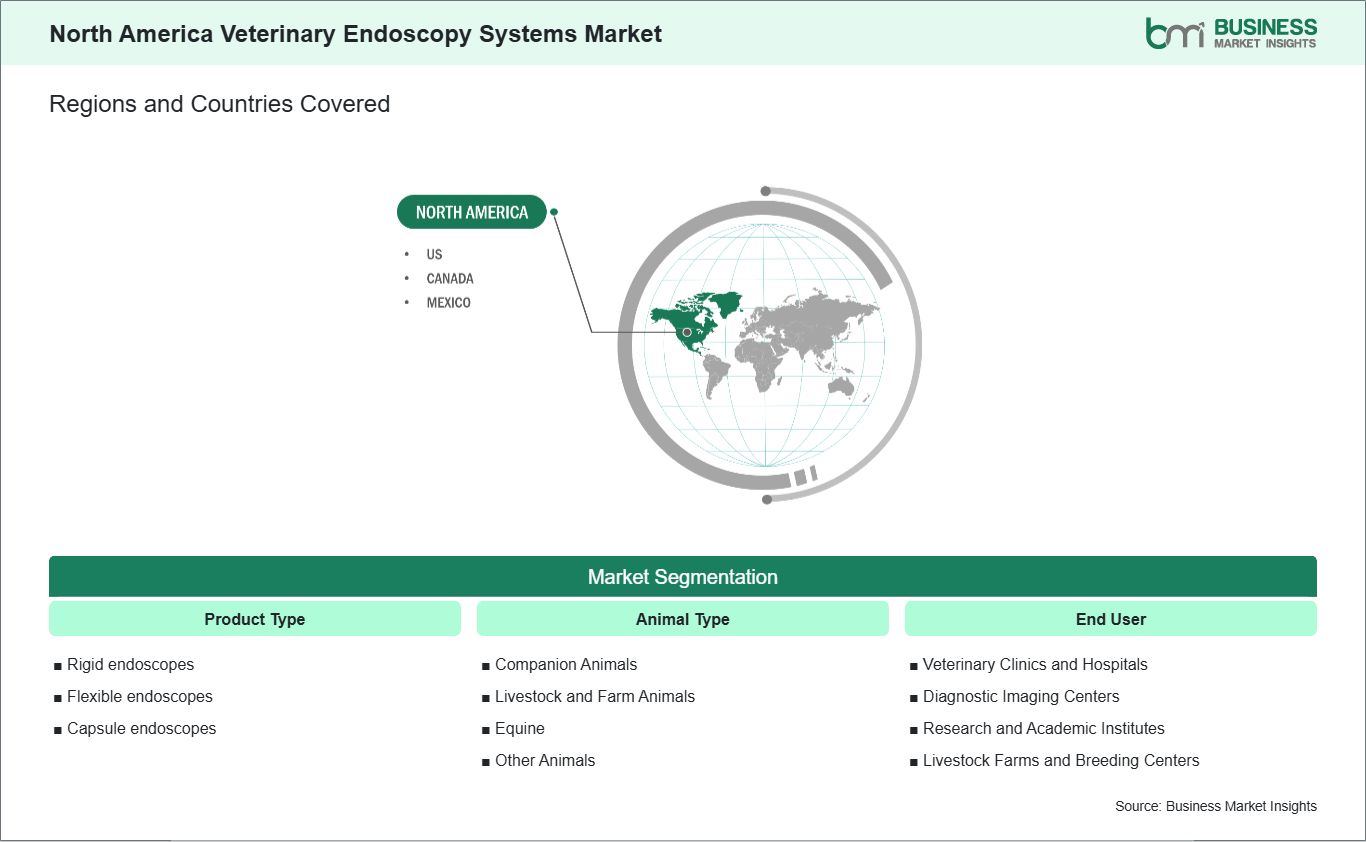
Key segments that contributed to the derivation of the North America veterinary endoscopy systems market analysis are product type, animal type, and end user.
- By product type, the veterinary endoscopy systems market is segmented into rigid endoscopes, flexible endoscopes, capsule endoscopes. The rigid endoscopes segment dominated the market in 2025.
- Based on animal type, the veterinary endoscopy systems market is categorized into companion animals, livestock & farm animals, equine, others. The companion animals segment dominated the market in 2025.
- In terms of end user, the veterinary endoscopy systems market is categorized veterinary clinics & hospitals, diagnostic imaging centers, research & academic institutes, livestock farms & breeding centers. The veterinary clinics and hospitals segment dominated the market in 2025.
Market Forces
North America Veterinary Endoscopy Systems Market Drivers and Opportunities
Increased focus on preventive veterinary care
The North America veterinary endoscopy systems market is being strongly driven by a growing emphasis on preventive veterinary care across the United States and Canada. There is currently a trend emerging in veterinary medicine, moving from reactionary to preventative treatment methods that rely heavily on the use of internal diagnosis techniques, such as endoscopy. The reason for this shift is an increase in awareness by pet owners regarding their animals’ long-term health and the advantages of diagnosing diseases in their early stages. This allows for simpler and cheaper treatment.
In the US, the field of preventive medicine is greatly advanced owing to the presence of an advanced ecosystem for companion animal healthcare, coupled with extensive access to veterinary healthcare facilities. There is an effort to incorporate endoscopy in preventive medicine programs within veterinary networks and specialty facilities in order to detect illnesses at early stages. Similar developments are being witnessed in Canada, where there is a growing emphasis on preventive diagnosis within urban-based veterinary facilities due to the higher numbers of pets owned by residents.
The development of pet insurance and wellness plans in North America will also help foster the uptake of preventive healthcare, which encourages owners to select diagnostic procedures such as endoscopy. Veterinary hospitals have thus made efforts to ensure that they offer the necessary services and invest in sophisticated imaging technology. The rise in preventive healthcare practices is likely to maintain the growth of veterinary endoscopy systems.
Development of multifunctional endoscopy platforms
The North America veterinary endoscopy systems market is also being shaped by the development of multifunctional endoscopy platforms that integrate multiple diagnostic and therapeutic capabilities into a single system. Veterinary practices are now looking for equipment that would cater to a wide array of purposes, from diagnosing, performing biopsies, and minimally invasive surgeries without the need for several units of separate machines. The reason behind this is the demand for efficiency, time savings, and more effective use of space within the clinic setting.
High-end multi-functional endoscopy equipment that features high definition imaging capabilities as well as recording capability for procedures is increasingly being used by leading veterinary hospitals and referral centers in the United States. This type of equipment is especially useful in highly active clinics where time and efficiency matter. Similar equipment is slowly becoming commonplace in Canada, but in major urban centers where complex diagnostic procedures are carried out.sssss
In North America, advances in technology from leading companies of medical equipment are speeding up the availability of multi-purpose veterinary endoscope devices. Through the use of digital imaging, better optics and computerized diagnostics, the capabilities of endoscopy procedures have increased. Due to the increasingly technological nature of veterinary medicine, multi-functional equipment will become the norm for advanced practices.
Size and Share Analysis
North America Veterinary Endoscopy Systems Market Size and Share Analysis
The North America veterinary endoscopy systems market demonstrates steady growth, with size and share analysis highlighting evolving trends and competitive dynamics among key players. The report examines subsegments categorized within product type, animal type, and end user, offering insights into their contribution to overall market performance.
By product type, the rigid endoscopes segment dominated the market in 2025, driven by widespread adoption of minimally invasive veterinary procedures and strong demand for high-precision, durable endoscopic instruments in advanced clinical settings.
Based on animal type, the companion animals subsegment dominated the market in 2025, driven by high pet ownership, significant spending on companion animal healthcare, and strong preference for advanced diagnostic and surgical procedures for dogs and cats.
In terms of end user, the veterinary clinics and hospitals subsegment dominated the market in 2025, driven by well-established veterinary infrastructure, high procedural volumes, and extensive integration of advanced endoscopy systems in routine and specialty animal care.
Report Coverage
North America Veterinary Endoscopy Systems Market Report Coverage and Deliverables
The "North America Veterinary Endoscopy Systems Market Size and Forecast (2022-2033)" report provides a detailed analysis of the market covering below areas:
- Market size and forecast at global, regional, and country levels for all the key market segments covered under the scope
- Market trends, as well as drivers, restraints, and opportunities
- Market analysis covering key trends, global and regional framework, major players, regulations, and recent developments
- Market concentration, heat map analysis, prominent players, and recent developments for the Market
- Detailed company profiles, including SWOT analysis
Geographic Insights
North America Veterinary Endoscopy Systems Market Geographic Insights
The geographical scope of the North America veterinary endoscopy systems market report is divided into US, Canada, Mexico. US held the largest share in 2025.
Country-level dynamics in the North America veterinary endoscopy systems market reflect a highly structured and technologically advanced ecosystem, where adoption is driven by clinical specialization, strong pet healthcare expenditure, and well-established veterinary service networks. United States remains the dominant market, supported by a large companion animal base, extensive corporate veterinary consolidation, and rapid integration of advanced surgical and diagnostic technologies. Endoscopy systems are widely utilized across specialty hospitals, emergency care centers, and referral clinics, with strong emphasis on minimally invasive procedures such as laparoscopy, gastrointestinal evaluation, and thoracic diagnostics. Canada represents a highly developed but comparatively smaller market, characterized by strong regulatory standards and a well-organized veterinary care framework. Adoption of endoscopy systems is concentrated in urban and academic hubs, where veterinary teaching hospitals and specialty clinics drive procedural innovation. The Canadian market places strong emphasis on clinical training and standardized care delivery, which supports steady but controlled integration of advanced endoscopic technologies. Mexico is an emerging but strategically important market within the region, showing increasing adoption of veterinary endoscopy systems driven by the dual expansion of companion animal care and commercial livestock operations. Urban veterinary clinics in cities such as Mexico City and Monterrey are gradually upgrading diagnostic capabilities, while livestock-focused veterinary services are beginning to incorporate endoscopy for herd health management and reproductive diagnostics. Across the region, a key differentiator is the level of veterinary specialization and infrastructure maturity. The United States leads in procedural sophistication and technology adoption speed, while Canada emphasizes standardized clinical excellence and academic integration. Mexico, in contrast, is in a transitional phase where adoption is expanding unevenly, primarily concentrated in private urban clinics and larger agricultural enterprises. North America presents a tiered market structure where the United States drives innovation and scale, Canada supports structured clinical adoption, and Mexico contributes long-term growth potential through gradual veterinary modernization and expanding access to advanced diagnostic tools.
Industry Activity
Recent Developments
The North America veterinary endoscopy systems market is evaluated by gathering qualitative and quantitative data post primary and secondary research, which includes important corporate publications, association data, and databases. A few of the key developments in the North America veterinary endoscopy systems market are:
- In December 2022, Olympus Corporation, announced that it had acquired Odin Vision, a cloud-AI endoscopy company, strengthening its digital endoscopy portfolio used in minimally invasive procedures across North American healthcare and veterinary-adjacent academic institutions.
- In May 2023, Olympus Corporation, announced the U.S. market launch of the EVIS X1 endoscopy system, an advanced imaging platform supporting high-definition flexible endoscopy workflows used in veterinary teaching hospitals and specialist animal care centers in North America.
Trust & Transparency
Research Methodology
The market analysis combines proprietary research with secondary data from government agencies, company disclosures, regulatory filings, industry databases and expert interviews. Market estimates are validated through data triangulation, cross-market benchmarking and analyst
review.
View Full Research Methodology
Key Sources Referred:
American College of Veterinary Radiology (ACVR)World Small Animal Veterinary Association (WSAVA)British Veterinary Association (BVA)International Veterinary Radiology Association (IVRA)American Veterinary Medical Association (AVMA)ASEANan College of Veterinary Diagnostic Imaging (ECVDI)World Organisation for Animal Health (WOAH / OIE)Veterinary Imaging & Radiation Oncology Society (VIROS)