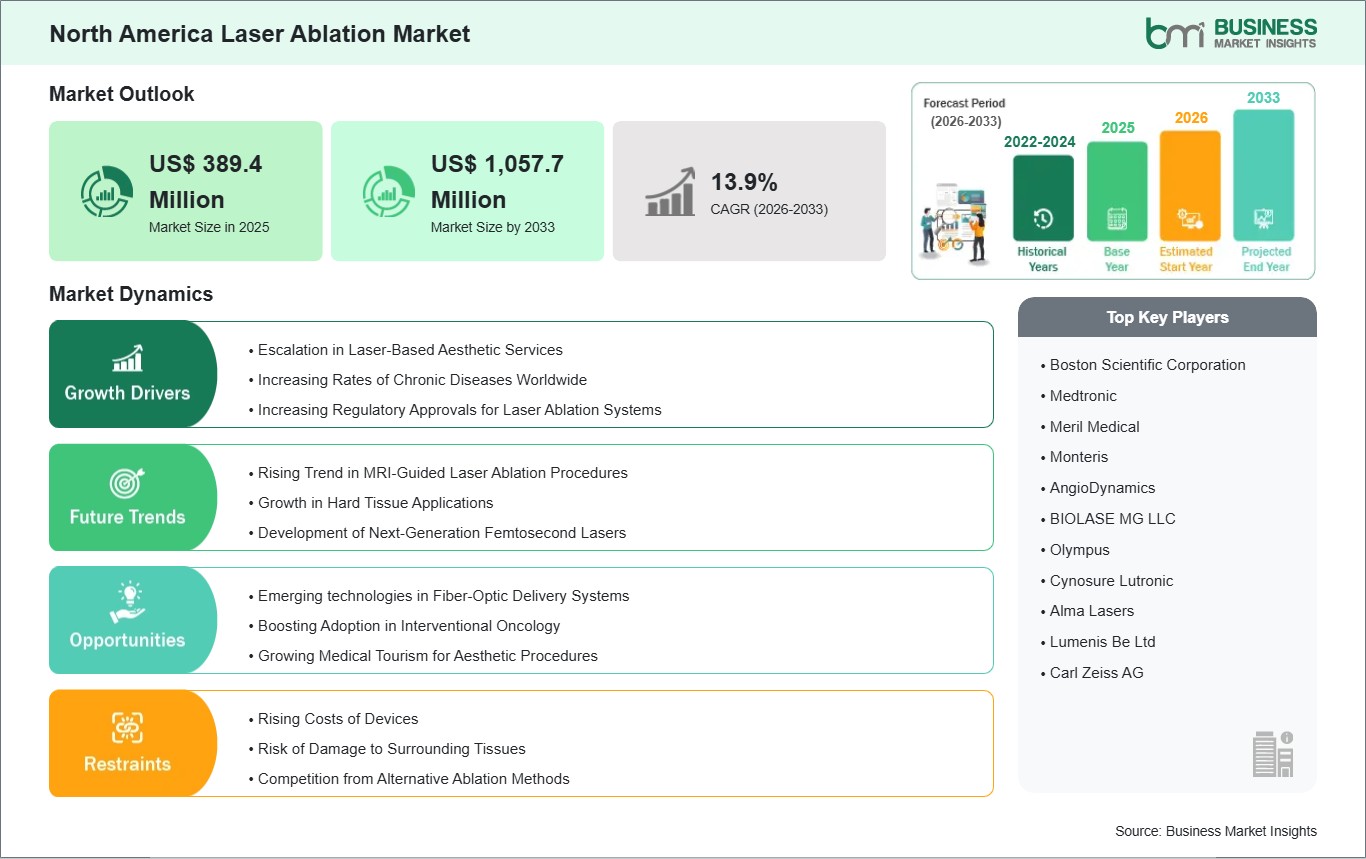
Escalation in Laser-Based Aesthetic Services
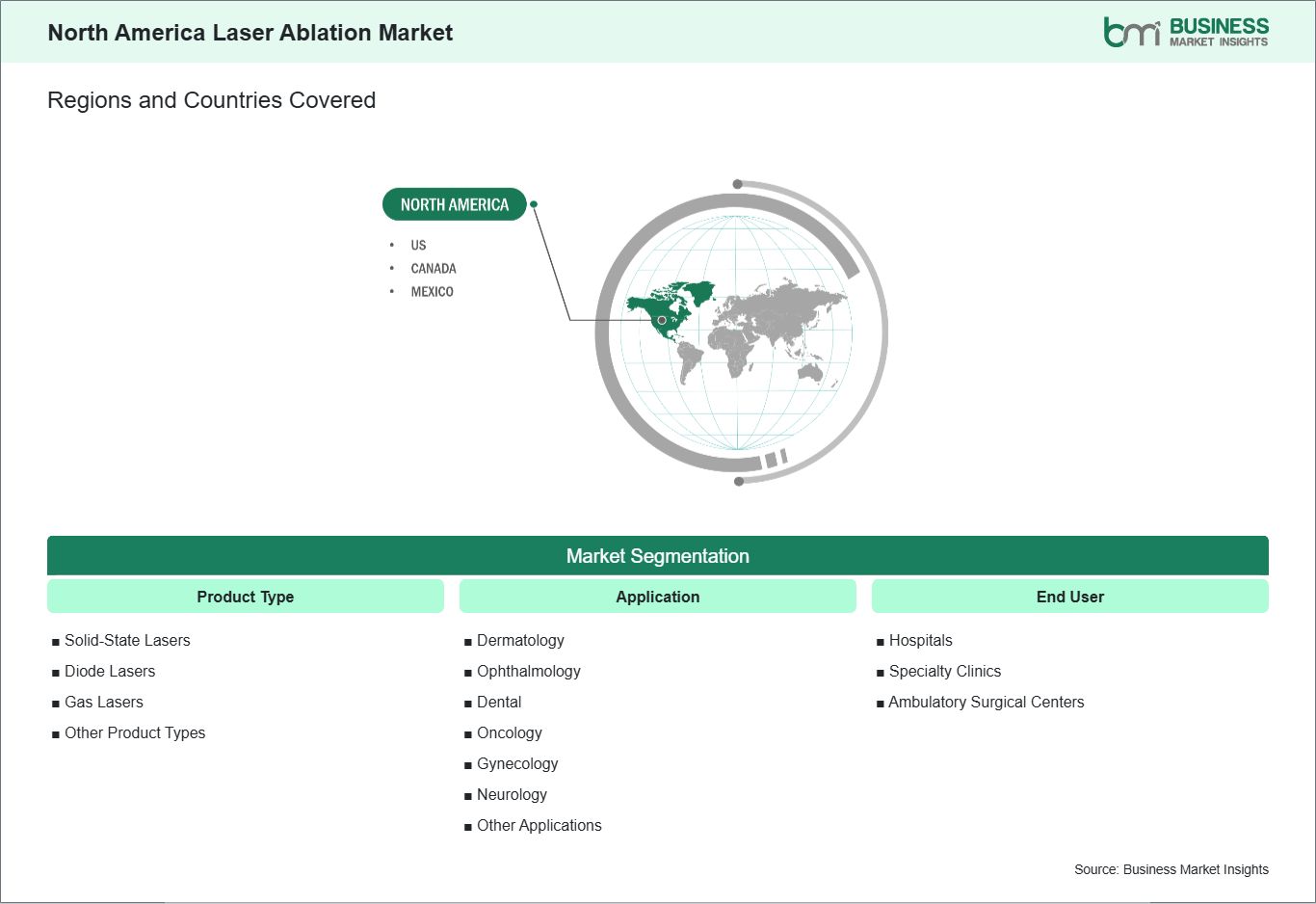
The North American laser ablation market, encompassing the United States and Canada, has seen a marked escalation in aesthetic services driven by rising consumer awareness, technological adoption, and the influence of social media on beauty standards. Urban centers have become hubs for advanced dermatology and medspa services offering laser hair removal, fractional skin resurfacing, tattoo removal, and treatment of vascular and pigmented lesions. Patients increasingly prefer minimally invasive procedures that provide rapid recovery and predictable outcomes compared to surgical alternatives. The integration of laser services into multi-specialty wellness centers has expanded accessibility, allowing more individuals to pursue aesthetic care in a clinically supervised environment.
Demographic and lifestyle trends in North America support growth in laser-based treatments. A highly diverse population with varying skin types requires adaptable technologies capable of precise energy control for safe outcomes. Millennials and Gen Z consumers, in particular, are driving demand for innovative treatments targeting anti-aging, acne scarring, and skin texture improvements. Clinics emphasize customized treatment plans, combining laser therapies with skincare regimens to optimize results for different skin conditions.
The regulatory landscape in North America, with stringent FDA approvals and state-level licensing, ensures high safety standards and builds patient confidence. Advanced training programs for practitioners, coupled with consumer awareness campaigns on procedural efficacy and safety, further contribute to the market’s expansion. These factors collectively drive the sustained growth of laser-based aesthetic services across North America, positioning them as an essential component of the region’s wellness and cosmetic healthcare ecosystem.
Emerging Technologies in Fiber-Optic Delivery Systems
Fiber-optic delivery systems are emerging as a key innovation in the North American laser ablation market, providing improved precision, safety, and clinical versatility. Clinics in metropolitan areas such as Los Angeles, New York, Toronto, and Chicago are increasingly adopting these systems for procedures like fractional skin resurfacing, scar revision, pigmentation correction, and hair removal. The technology allows laser energy to be delivered with pinpoint accuracy to targeted tissues, minimizing collateral damage and ensuring consistent outcomes. This is especially important in North America, where patient expectations for predictable, high-quality results are high.
Beyond aesthetic applications, fiber-optic systems are being integrated into dermatologic and minor surgical procedures. Real-time feedback, adjustable energy settings, and sophisticated calibration tools improve procedural efficiency and safety. Multifunctional devices appeal to clinics seeking to offer both cosmetic and therapeutic procedures from a single platform, optimizing equipment utilization and operational efficiency.
Innovation trends focus on modular, portable, and user-friendly designs that accommodate different clinic sizes and practice models. Advanced software controls enable practitioners to tailor treatments to individual skin types, conditions, and cosmetic goals. In addition, the widespread availability of continuing education programs ensures that clinicians are proficient in using these systems. By combining precision, customization, and operational efficiency, fiber-optic delivery technologies are driving growth and supporting the expansion of both aesthetic and medical laser procedures in the North American market.