Market Summary
Executive Summary and Market Analysis
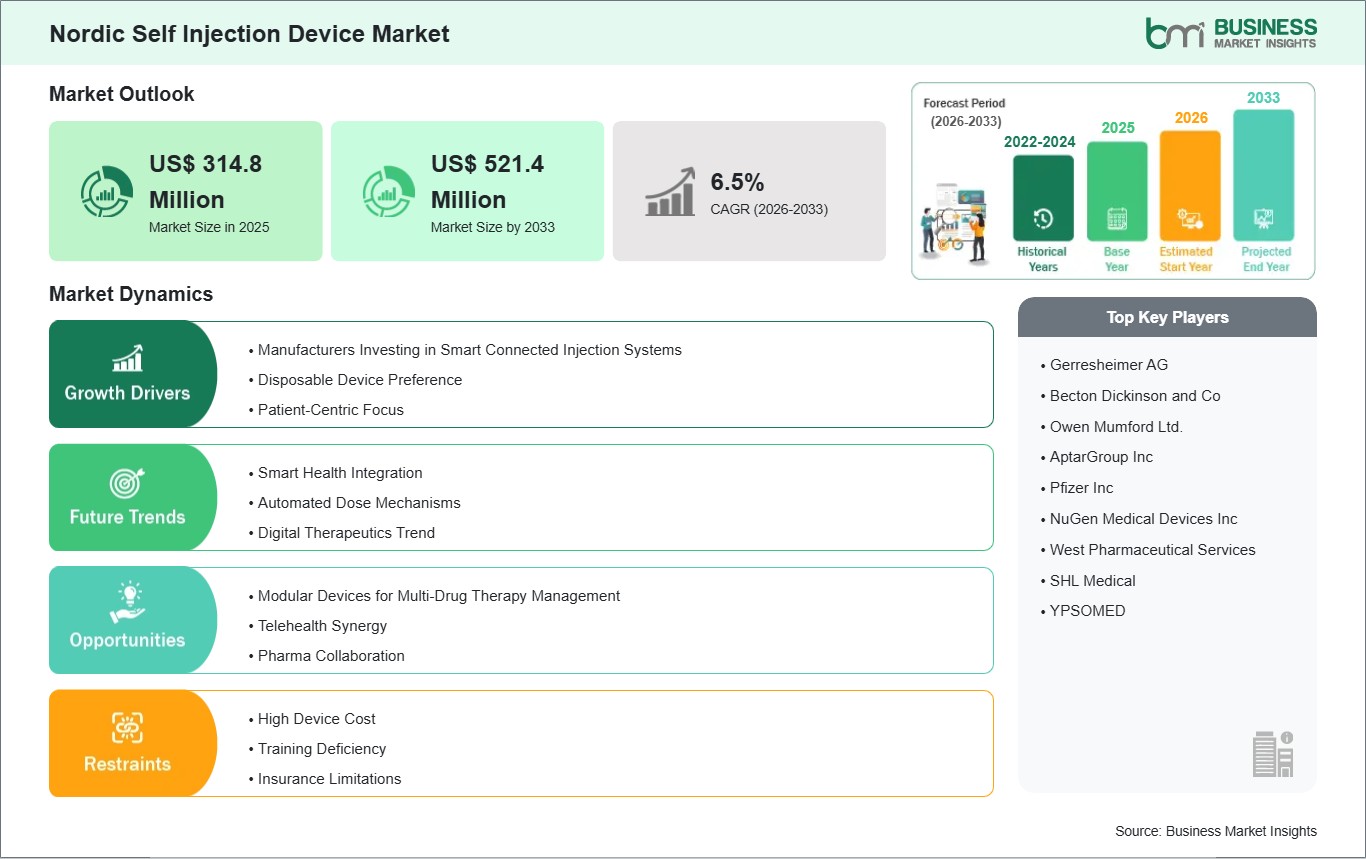
The Nordic self-injection device market has matured into a strategically important segment of the region's broader medical device ecosystem, underpinned by advanced healthcare infrastructures, a high chronic disease prevalence, and a patient population that increasingly values convenience, autonomy, and digital health integration. Countries including Sweden, Denmark, Norway, Finland, and Iceland exhibit strong public healthcare spending, universal coverage models, and well-established reimbursement frameworks that support the adoption of self-administration technologies across multiple therapeutic areas, most notably diabetes, autoimmune disorders, fertility treatments, and hormone therapies. The growing incidence of Type 1 and Type 2 diabetes has particularly driven uptake of pen injectors and continuous glucose monitor-linked delivery systems. At the same time, the expansion of biologics for rheumatoid arthritis and multiple sclerosis has heightened demand for ergonomic autoinjectors and wearable delivery solutions. Market competition is characterized by the presence of global medical device manufacturers with Nordic distribution networks, as well as agile regional players that tailor products to local clinician preferences and patient behavior. Procurement models vary from centralized hospital system tenders in Norway and Finland to mixed public-private reimbursement in Sweden and Denmark, influencing how manufacturers price and position devices.
Regulatory rigor is high, with Nordic authorities enforcing stringent safety and quality standards that align with broader European Union Medical Device Regulation (MDR) requirements, necessitating robust clinical evidence and post-market surveillance for product registrations. Digital health trends are particularly pronounced; integration of self-injection devices with mobile apps, adherence reminders, and cloud-based monitoring platforms resonates with tech-savvy patients and clinicians alike, enhancing engagement and outcome tracking. Importantly, physician and nurse endorsement remains a key adoption driver, prompting device makers to invest in professional education initiatives and patient support services that improve technique proficiency. As healthcare systems in the Nordics continue to emphasize decentralized care, remote monitoring, and patient empowerment, self-injection devices are evolving beyond simple delivery tools to become integral components of chronic care management pathways that improve outcomes and optimize resource utilization.
Segment Analysis
Nordic Self Injection Device Market Segmentation
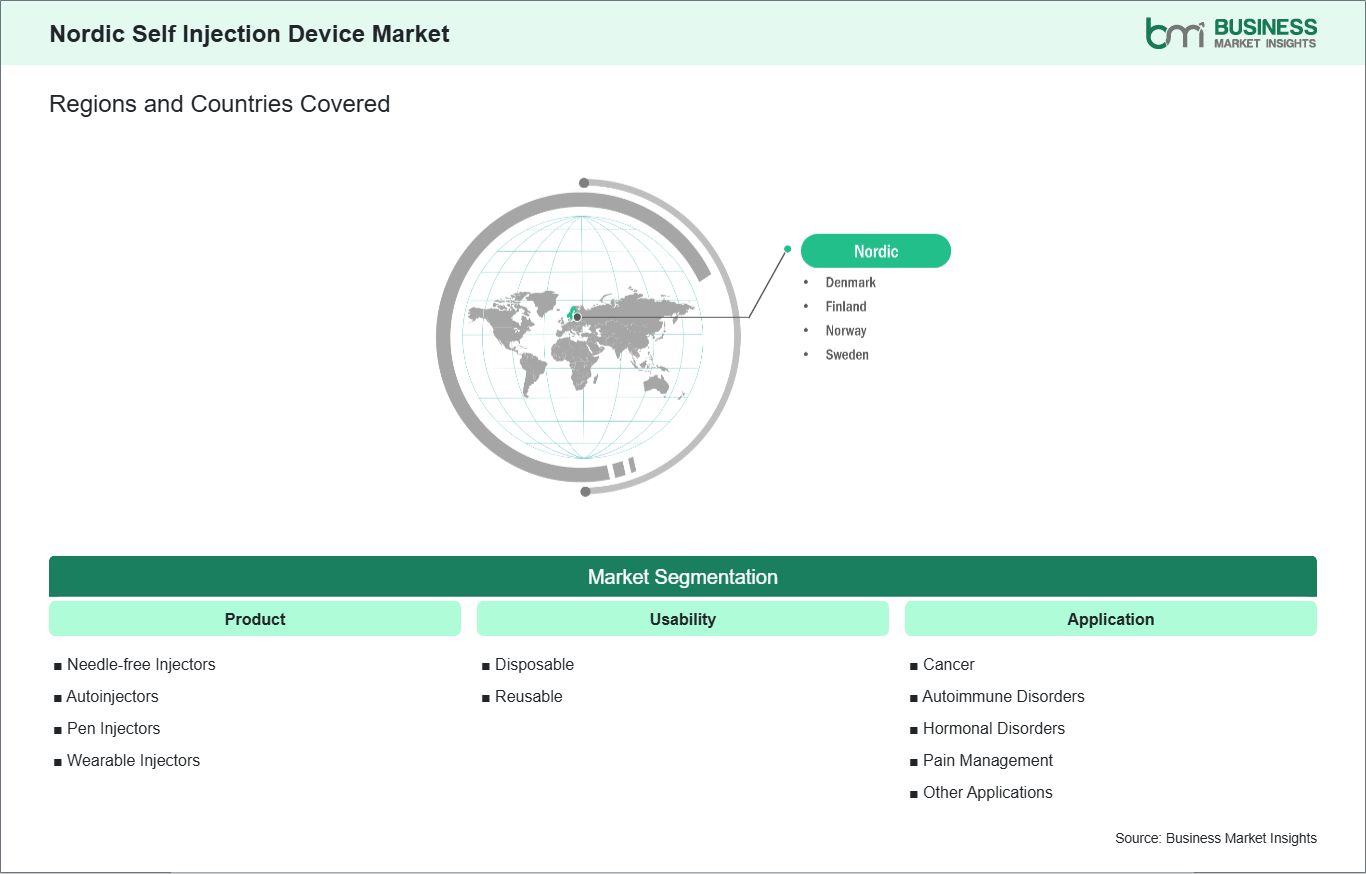
Key segments that contributed to the derivation of the Nordic self injection device market analysis are product, usability, and application.
- By product, the self injection device market is segmented into needle-free Injectors, autoinjectors, pen Injectors, and wearable Injectors. The needle-free Injectors segment dominated the market in 2025.
- Based on usability, the self injection device market is categorized into disposable and reusable. The disposable segment dominated the market in 2025.
- In terms of application, the market is classified into cancer, autoimmune disorders, hormonal disorders, pain management, and other applications. The autoimmune disorders segment dominated the market in 2025.
Market Forces
Nordic Self Injection Device Market Drivers and Opportunities
Manufacturers Investing in Smart Connected Injection Systems
In the Nordic region, manufacturers are heavily investing in smart connected injection systems because the market is highly receptive to digital health innovations. High smartphone penetration, strong digital infrastructure, and widespread acceptance of remote healthcare make Nordic patients ideal early adopters for connected devices. Smart injection pens and autoinjectors that sync with mobile apps are increasingly used in chronic disease management programs, especially for diabetes and autoimmune therapies. These systems provide real-time tracking of injection timing, dose history, and adherence patterns. Healthcare providers in the Nordics are also integrating connected injection systems into national electronic health records and telehealth platforms. This interoperability allows clinicians to access injection data remotely, enabling proactive treatment adjustments and personalized support.
Nordic clinics often use digital dashboards to monitor adherence and intervene when patients miss doses or display irregular patterns. For example, connected insulin pens are being adopted as part of comprehensive diabetes care programs, where patient data is reviewed regularly during virtual consultations. This digital integration supports more efficient management of chronic conditions while reducing the need for frequent in-person visits. Manufacturers are responding to Nordic demand by developing devices with advanced usability features such as automatic dose recording, Bluetooth connectivity, and seamless app interfaces in multiple languages. The region's high regulatory standards also drive companies to prioritize data security and privacy in connected devices. In addition, Nordic patient advocacy groups and healthcare organizations often support pilot programs that test new smart injection technologies, accelerating adoption. Overall, smart connected injection systems are becoming a defining feature of the Nordic self-injection market, driven by digital health readiness and a strong focus on improving adherence and long-term outcomes.
Modular Devices for Multi-Drug Therapy Management
Nordic healthcare systems are increasingly managing patients with multiple chronic conditions, leading to a rising need for modular self-injection devices that support multi-drug therapy management. Many patients with metabolic syndrome or autoimmune comorbidities require more than one injectable therapy, and modular systems allow them to use a single device platform for different medications. This convenience reduces confusion and supports adherence. The Nordic market is particularly receptive to devices that simplify complex treatment regimens. Modular devices also align with the Nordic preference for sustainable healthcare solutions. By using reusable platforms with interchangeable cartridges or dosing modules, these devices reduce waste compared to single-use systems. This is consistent with the region's broader commitment to environmental sustainability and circular economy principles.
Hospitals and clinics increasingly favor modular platforms in procurement decisions because they support long-term therapy flexibility and lower overall device waste. Patients also appreciate the convenience of a single, adaptable device that can be used across therapies, reducing the need to learn multiple device types. In Nordic patient populations, modular devices are often integrated into digital care pathways that include dose tracking and remote monitoring. This allows clinicians to review multi-drug administration patterns and optimize treatment plans based on real-world adherence data. Modular systems also support flexible dosing and easy switching between therapies, which is valuable in cases where treatment regimens change over time. As Nordic healthcare systems continue to emphasize outpatient management and patient autonomy, modular self-injection platforms are expected to become a key growth area, providing a practical solution for managing complex multi-drug therapies with minimal patient burden.
Size and Share Analysis
Nordic Self Injection Device Market Size and Share Analysis
The Nordic Self Injection Device Market demonstrates steady growth, with size and share analysis highlighting evolving trends and competitive dynamics among key players. The report examines subsegments categorized within product, usability, and application, offering insights into their contribution to overall market performance.
By product, the needle-free Injectors subsegment dominated the market in 2025, driven by strong patient demand for minimally invasive delivery options that enhance treatment adherence.
Based on usability, the disposable subsegment dominated the market in 2025, driven by widespread prioritization of single-use devices to support high standards of hygiene and safety.
In terms of application, the autoimmune disorders subsegment dominated the market in 2025, driven by increasing use of self-administered biologics for prevalent chronic immune-mediated conditions.
Report Coverage
Nordic Self Injection Device Market Report Coverage and Deliverables
The "Nordic Self Injection Device Market Size and Forecast (2022–2033)" report provides a detailed analysis of the market covering below areas:
- Nordic Self Injection Device Market size and forecast at regional and country levels for all market segments covered under the scope
- Nordic Self Injection Device Market trends, as well as drivers, restraints, and opportunities
- Nordic Self Injection Device Market analysis covering key trends, regional framework, major players, regulations, and recent developments
- Industry landscape and competition analysis covering market concentration, heat map analysis, prominent players, and recent developments for the Nordic Self Injection Device Market
- Detailed company profiles, including SWOT analysis
Geographic Insights
Nordic Self Injection Device Market Geographic Insights
The geographical scope of the Nordic Self Injection Device Market report is divided into Sweden, Denmark, Norway, and Finland. Sweden held the largest share in 2025.
Country-level dynamics within the Nordic self-injection device market reveal nuanced variations in adoption patterns, regulatory approaches, and healthcare priorities, despite overarching similarities in public healthcare commitment and high patient expectations. Sweden is a leading adopter of connected and smart delivery solutions, with significant uptake of Bluetooth-enabled glucose pens and data-linked autoinjectors that integrate with national e-health records. Swedish procurement processes emphasize total cost of care and long-term adherence benefits, encouraging device makers to demonstrate outcome improvements through real-world evidence. Denmark mirrors this trend but with a stronger emphasis on patient education and nurse-led programs that support self-injection technique and confidence, particularly in autoimmune and fertility therapy segments where multiple dose regimens are common. Danish healthcare authorities also prioritize interoperability with national telehealth platforms, enhancing continuity of care.
Norway has a centralized tendering system for high-value devices that places a premium on quality, safety, and vendor service capabilities, resulting in high penetration of premium autoinjectors and ergonomic pens across hospital networks and home care services. Norway's geographical dispersion also incentivizes remote support tools and clinician-linked digital adherence features. Finland demonstrates a strong focus on evidence-based adoption, with payers requiring comprehensive health economics data and pilot program outcomes before broad formulary inclusion; this has led manufacturers to invest in robust post-market studies and localized support infrastructure. Iceland—while smaller in scale—shows a strong preference for devices with simplified user interfaces and multilingual resources, reflecting its diverse patient demographics and centralized healthcare delivery model. Across all Nordic markets, clinician engagement, alignment with national digital health strategies, and demonstration of long-term clinical and cost benefits remain central to successful self-injection device adoption, making localized insights and tailored go-to-market strategies essential for long-term competitiveness.
Industry Activity
Recent Developments
The Nordic Self Injection Device Market is evaluated by gathering qualitative and quantitative data post primary and secondary research, which includes important corporate publications, association data, and databases. A few of the key developments in the Nordic self injection device market are:
- In January 2025, the Omnipod 5 Automated Insulin Delivery System was launched in Denmark, Finland, Norway, and Sweden, expanding access across the Nordics. The system integrates with the FreeStyle Libre 2 Plus and Dexcom G6 to enable automated insulin delivery. It is designed for individuals aged two years and older with type 1 diabetes. The launch marks a significant step in advancing connected, wearable insulin therapy in the region.
- In October 2025, Ypsomed launched the YpsoLoop autoinjector platform, designed for circularity with material recovery and efficient recycling, reinforcing sustainable delivery options that are increasingly relevant for Nordic healthcare purchasers. Although this development is global in scope, the Nordic medtech market, which is known for prioritizing sustainability and lifecycle value in procurement, is a key target for the rollout and adoption of devices with a reduced environmental footprint. YpsoLoop offers both 1 mL and 2.25 mL configurations and supports broader regional interest in ergonomic and environmentally conscious self-injection solutions.
Trust & Transparency
Research Methodology
The market analysis combines proprietary research with secondary data from government agencies, company disclosures, regulatory filings, industry databases and expert interviews. Market estimates are validated through data triangulation, cross-market benchmarking and analyst
review.
View Full Research Methodology
Key Sources Referred:
World Health Organization (WHO) Organisation for Economic Cooperation and Development (OECD) The World Bank Group Worldometer The Lancet International Bar Association International Trade Administration