Market Summary
Executive Summary and Market Analysis
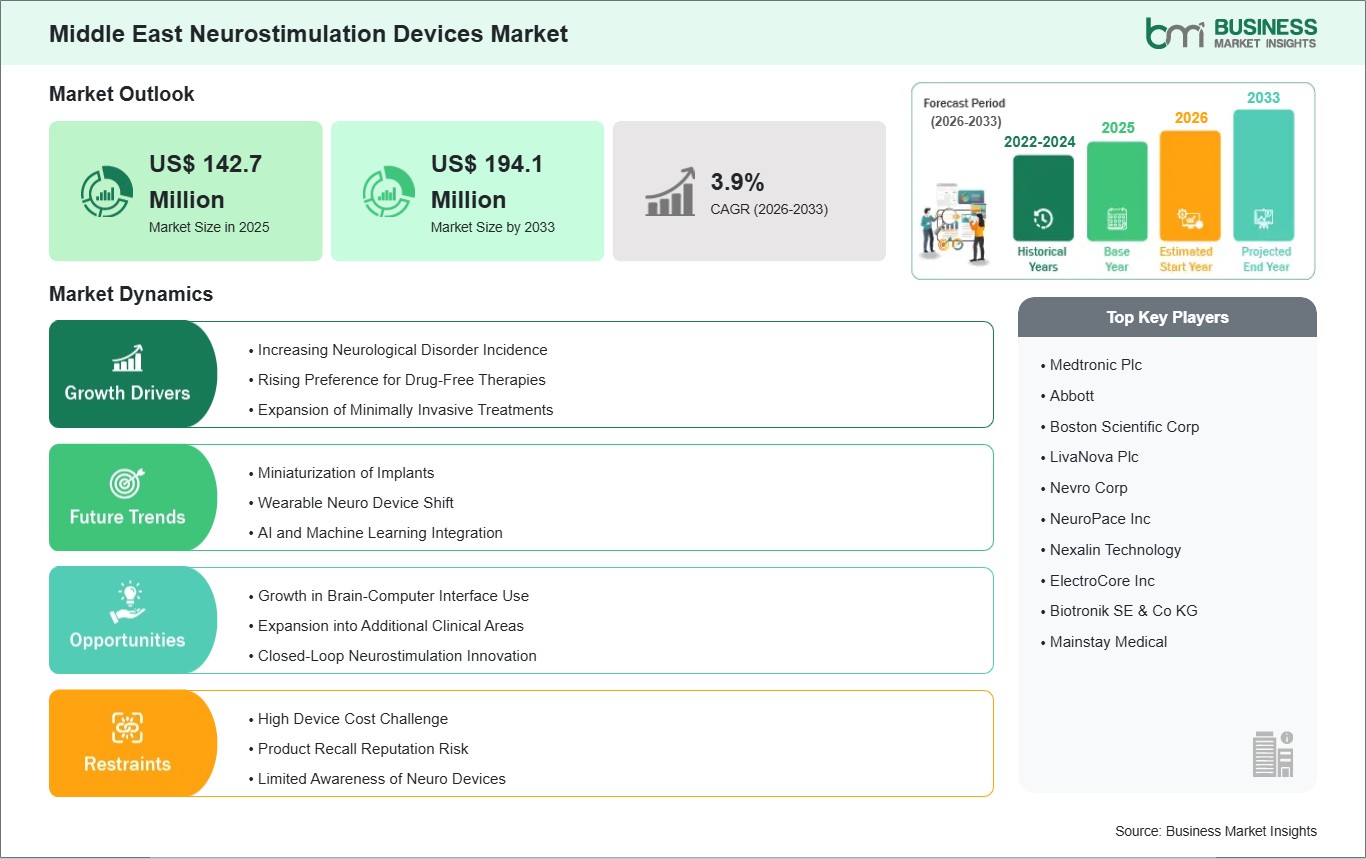
The Middle East region is developing its neurostimulation devices market into a key strategic area which connects with both neurology and medical device sectors because Saudi Arabia, UAE, Qatar and Israel face increasing neurological and chronic pain disease challenges. Healthcare systems are moving toward new treatment solutions, which include spinal cord stimulation, deep brain stimulation and vagus nerve stimulation, because the rate of epilepsy, Parkinson's disease, depression and treatment-resistant chronic pain has increased. The region experiences major growth because healthcare infrastructure undergoes transformation through government initiatives, which develop tertiary care hospitals and create new neurology facilities. Neurostimulation therapies highly benefit from the rising popularity of minimally invasive treatment methods, which employ advanced technology, because private healthcare networks already provide these specialized procedures. Patients and clinicians now show increased awareness about neuromodulation-based treatments, which progressively enhance treatment acceptance throughout the region. The market experiences significant limitations that restrict its development. The healthcare system must spend more money on treatments because it needs to import both devices and advanced neurosurgical equipment, which results in higher expenditures that some medical institutions cannot cover. Manufacturers face product adoption and market entry delays because the Middle Eastern countries have different reimbursement systems and regulatory requirements. The region experiences limited access to neurospecialists who possess advanced training, which prevents doctors from performing many medical procedures. The Middle East currently stands as a promising growth market for neurostimulation device manufacturers because the region experiences both increasing demand for advanced neurological care and strong healthcare investment momentum.
Segment Analysis
Middle East Neurostimulation Devices Market Segmentation
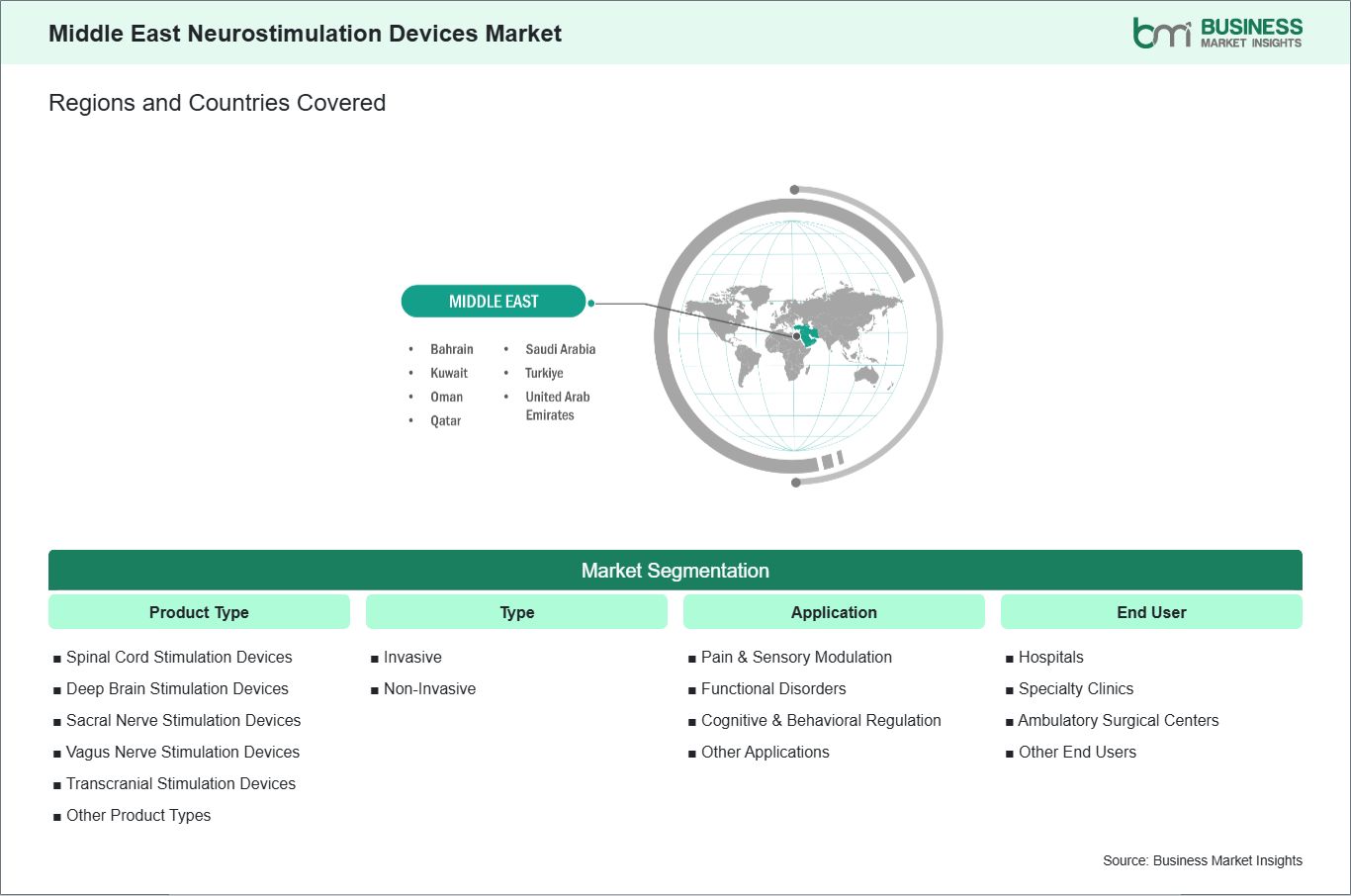
Key segments that contributed to the derivation of the Middle East neurostimulation devices market analysis are product type, type, application, and end user.
- By product type, the neurostimulation devices market is segmented into spinal cord stimulation devices, deep brain stimulation devices, sacral nerve stimulation devices, vagus nerve stimulation devices, transcranial stimulation devices, and other product types. The spinal cord stimulation devices segment dominated the market in 2025.
- Based on type, the neurostimulation devices market is categorized into invasive and non-invasive. The invasive segment dominated the market in 2025.
- On the basis of application, the neurostimulation devices market is categorized into pain and sensory modulation, functional disorders, cognitive and behavioral regulation, and other applications. The pain and sensory modulation segment dominated the market in 2025.
- In terms of end user, the neurostimulation devices market is categorized into hospitals, specialty clinics, ambulatory surgical centers, and other end users. The hospitals segment dominated the market in 2025.
Market Forces
Middle East Neurostimulation Devices Market Drivers and Opportunities
Increasing Neurological Disorder Incidence
The Middle East neurostimulation devices market is expanding because more neurological disorders are being diagnosed throughout the area, which results from better clinical knowledge and increased access to specialized medical facilities. Major healthcare centers in Riyadh, Dubai and Istanbul are expanding their neurology departments to provide better treatment for epilepsy, Parkinson's disease and chronic pain.
The increasing rates of lifestyle diseases, which include diabetes, hypertension and obesity, are leading to secondary neurological disorders that result in neuropathic pain and nerve damage. Both public and private healthcare systems now require more spinal cord stimulation and peripheral nerve stimulation therapies because Gulf Cooperation Council countries have high rates of chronic diseases.
Modernization projects in the Middle East healthcare sector are building better infrastructure for neurological treatment, which helps doctors identify conditions earlier, perform advanced surgical procedures and monitor patient progress after treatment. Patients and physicians will adopt advanced neurostimulation devices faster because of growing awareness, which hospitals will support through their neurology training programs and precision medicine technology investments.
Growth in Brain-Computer Interface Use
Brain-computer interface integration with neurostimulation devices is gradually gaining traction in the Middle East, particularly within advanced neurology centers in countries such as the United Arab Emirates, Saudi Arabia, and Turkey. These systems are being explored for their ability to improve precision in treating neurological disorders and enhancing patient-specific therapy outcomes.
Increasing investment in digital healthcare infrastructure and artificial intelligence is supporting early experimentation with closed-loop neurostimulation systems. These technologies allow real-time monitoring of brain signals, which can improve responsiveness in conditions such as epilepsy and movement disorders across major urban hospitals.
Research collaborations between regional hospitals and global technology firms are also encouraging pilot programs focused on brain-computer interfaces for rehabilitation and psychiatric care. Although still in early stages, these initiatives are expected to support long-term adoption of adaptive neurostimulation solutions across the region. Medical education programs are also incorporating these technologies to build clinician expertise. region-wide adoption.
Size and Share Analysis
Middle East Neurostimulation Devices Market Size and Share Analysis
The Middle East neurostimulation devices market is experiencing steady growth, with market size and share analysis reflecting evolving treatment preferences and competitive dynamics among key players. The report evaluates important subsegments categorized within product type, type, application, and end user, highlighting their respective contributions to market performance.
By product type, the spinal cord stimulation devices subsegment dominated the market in 2025, driven by its widespread adoption for chronic pain management and strong clinical efficacy.
Based on type, the invasive subsegment dominated the market in 2025, driven by higher precision, long-term effectiveness, and increasing preference for implantable solutions in severe neurological conditions.
On the basis of application, the pain and sensory modulation subsegment dominated the market in 2025, driven by the rising prevalence of chronic pain disorders and growing demand for non-opioid treatment alternatives.
In terms of end user, the hospitals subsegment dominated the market in 2025, driven by advanced healthcare infrastructure, availability of skilled professionals, and higher volume of neurostimulation procedures.
Report Coverage
Middle East Neurostimulation Devices Market Report Coverage and Deliverables
The "Middle East Neurostimulation Devices Market Size and Forecast (2022-2033)" report provides a detailed analysis of the market covering below areas:
- Market size and forecast at regional and country levels for all market segments covered under the scope
- Market trends, as well as drivers, restraints, and opportunities
- Market analysis covering key trends, regional framework, major players, regulations, and recent developments
- Market concentration, heat map analysis, prominent players, and recent developments for the Market
- Detailed company profiles, including SWOT analysis
Geographic Insights
Middle East Neurostimulation Devices Market Geographic Insights
The geographical scope of the Middle East Neurostimulation Devices Market report is divided into UAE, Saudi Arabia, Bahrain, Oman, Kuwait, Qatar, Turkiye. Turkiye held the largest share in 2025.
The Middle East neurostimulation devices market experiences variations in healthcare development and reimbursement systems and neurological care capacity across different nations, with Turkiye emerging as the primary market leader. The United Arab Emirates serves as the most developed market in the Gulf Cooperation Council because its private healthcare system provides advanced medical services and employs many neurology experts, while tertiary hospitals offer both implantable and non-invasive neurostimulation treatment options. Saudi Arabia ranks as a fast-expanding market because it has numerous patients and new specialty hospitals, and the government continues to fund advanced neurological care through national healthcare transformation programs. Qatar develops its healthcare system through targeted investments in high-quality medical facilities, which allow the country to use cutting-edge neuromodulation systems before its population becomes fully established. Kuwait experiences consistent growth in medical procedures, although its adoption rate remains restricted to treating chronic pain and movement disorders, which are most common in private hospital settings. Bahrain and Oman operate at an early development stage because their healthcare systems use limited treatment methods and rely on customer referrals to larger treatment centers, but both nations are enhancing patient access through better facilities and wider insurance options. The Turkish market leads the regional sector because its domestic patient base, neurosurgical training system, affordable medical equipment production base, and established medical tourism system enable the fast growth of advanced neurostimulation procedures across public and private healthcare facilities.
Industry Activity
Recent Developments
The Middle East Neurostimulation Devices Market is evaluated by gathering qualitative and quantitative data post primary and secondary research, which includes important corporate publications, association data, and databases. A few of the key developments in the Middle East neurostimulation devices market are:
- In February 2025, Nyxoah SA announced that it had commercially launched its Genio® hypoglossal nerve stimulation system in the Middle East, marking the first successful implantation in Dubai at Saudi German Hospital, UAE, supported by regional healthcare partners.
- In February 2026, Insulet Corporation announced the commercial launch of its Omnipod® 5 automated insulin delivery system in Saudi Arabia, Kuwait, Qatar, and the UAE, expanding access to advanced wearable therapeutic device technology in the Middle East healthcare market.
Trust & Transparency
Research Methodology
The market analysis combines proprietary research with secondary data from government agencies, company disclosures, regulatory filings, industry databases and expert interviews. Market estimates are validated through data triangulation, cross-market benchmarking and analyst
review.
View Full Research Methodology
Key Sources Referred:
U.S. Food and Drug Administration (FDA)European Medicines Agency (EMA)National Institutes of Health (NIH)World Health Organization (WHO)International Neuromodulation SocietyNorth American Neuromodulation SocietyAmerican Academy of NeurologyEuropean Academy of NeurologyCongress of Neurological SurgeonsCompany WebsitesCompany Annual ReportsCompany Investor Presentations