Market Summary
Executive Summary and Market Analysis
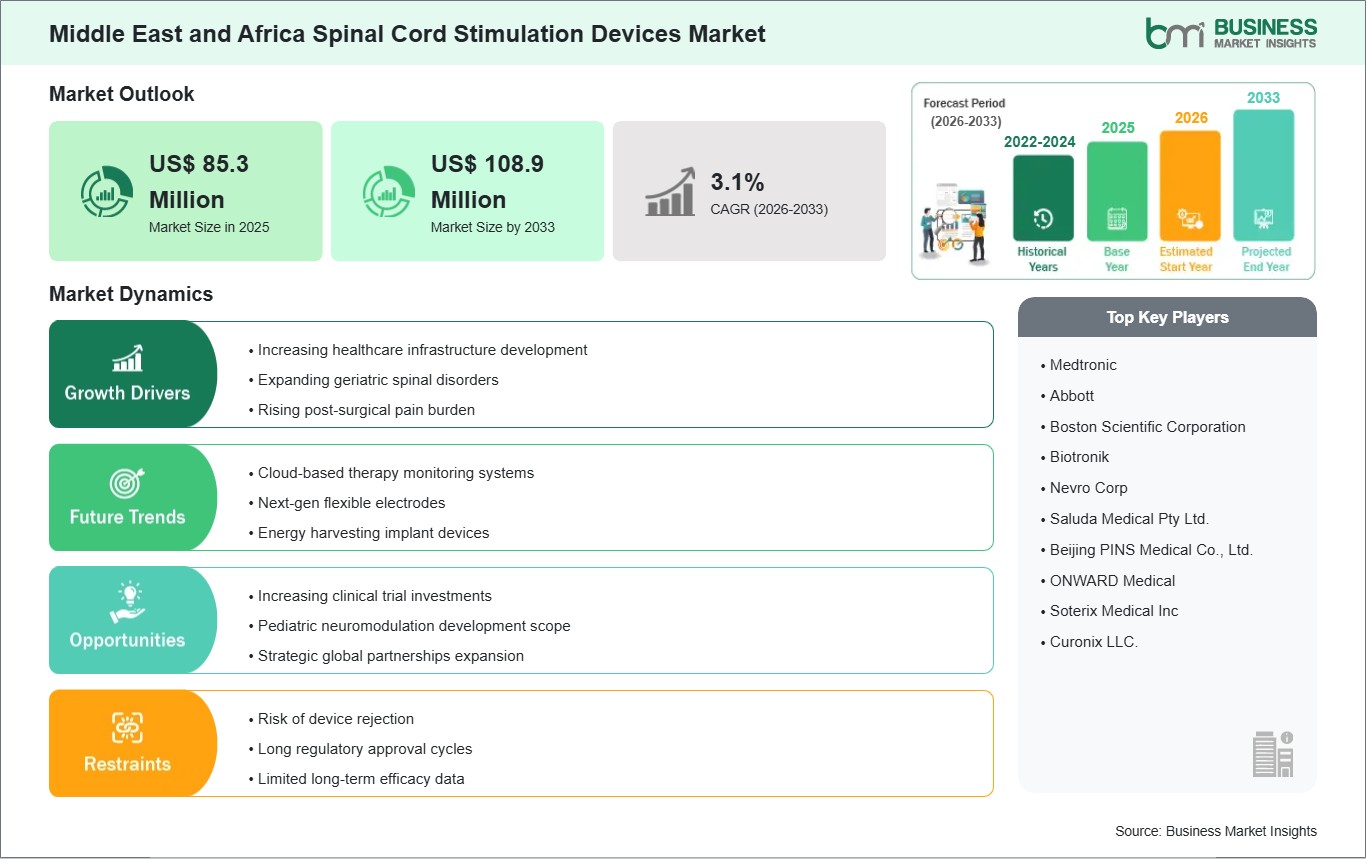
The Middle East and Africa spinal cord stimulation (SCS) devices market is slowly emerging owing to the growing interest in advanced pain management and neuromodulation therapy by healthcare facilities in chosen countries. In comparison to North America and Europe, the regional market is still at its early adoption phase, yet the demand for spinal cord stimulation devices keeps growing due to the increasing incidence of various chronic spinal conditions, neuropathic pain syndromes, and postoperative issues requiring sustained treatment. Market expansion is primarily seen in urban hospitals as well as private healthcare facilities where neurosurgical interventions are practiced routinely. The growing modernization of regional healthcare facilities, with a focus on specialized medicine and the development of medical tourism, can be viewed as another factor promoting market growth. Modern interventional techniques are gaining popularity in pain management treatment programs; therefore, spinal cord stimulation devices will find application in this sphere. Finally, rising specialist awareness of various non-opioid pain management methods is expected to drive market growth. Nevertheless, the industry is hindered by several factors such as underdeveloped reimbursement structures, high costs of procedures, and unequal availability of sophisticated health facilities in the region. In most of the African nations, the emphasis within the healthcare sector remains on basic and emergency treatment needs, leading to the lack of funding for expensive implant devices.
Segment Analysis
Middle East and Africa Spinal Cord Stimulation Devices Market Segmentation
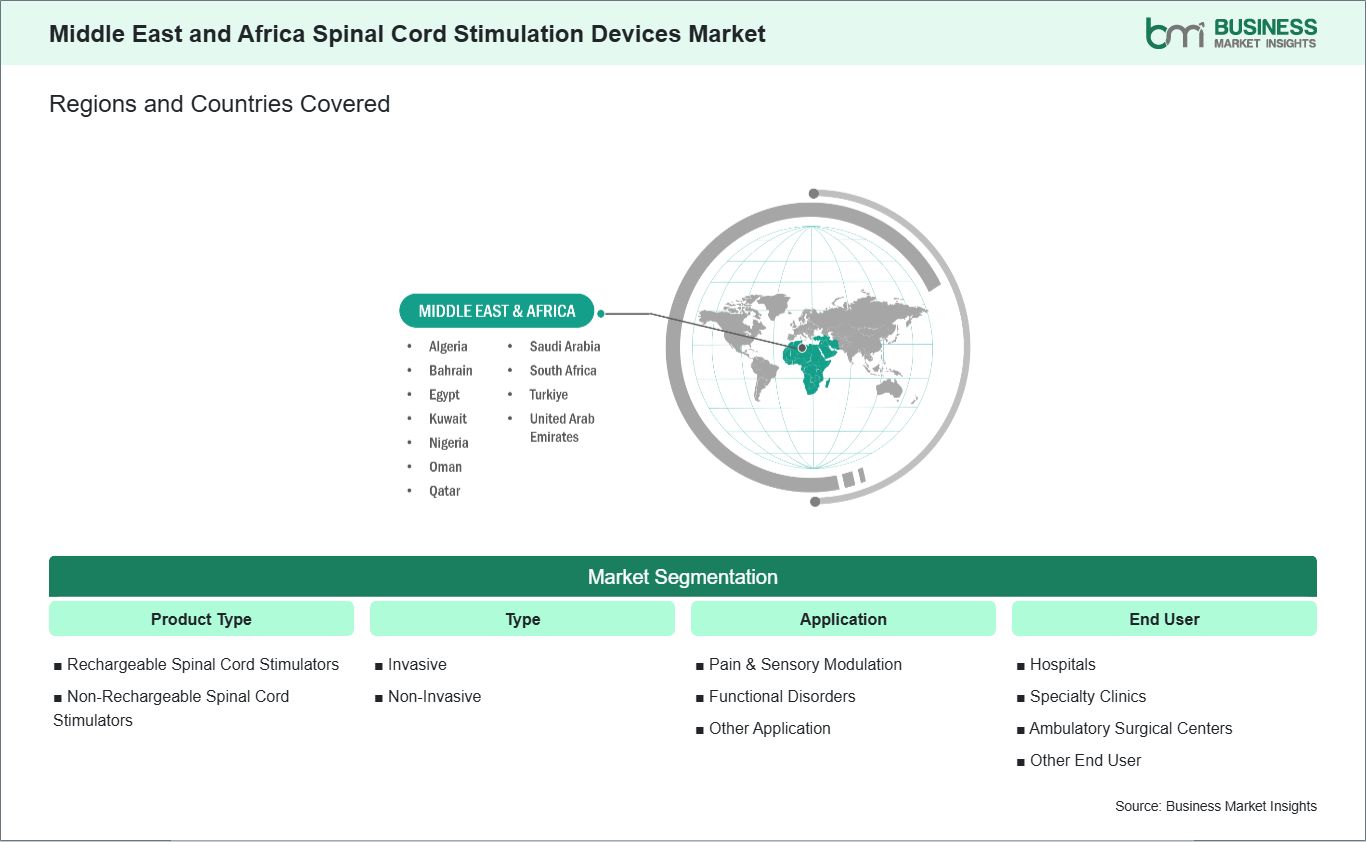
Key segments that contributed to the derivation of the Middle East and Africa spinal cord stimulation devices market analysis are product type, type, application, and end user.
- By product type, the spinal cord stimulation devices market is segmented into rechargeable spinal cord stimulators and non-rechargeable spinal cord stimulators. The rechargeable spinal cord stimulators segment dominated the market in 2025.
- Based on type, the spinal cord stimulation devices market is segmented into invasive and non-invasive. The invasive segment dominated the market in 2025.
- On the basis of application, the spinal cord stimulation devices market is classified into pain and sensory modulation, functional disorders, and other application. The pain and sensory modulation segment dominated the market in 2025.
- In terms of end user, the spinal cord stimulation devices market is categorized into hospitals, specialty clinics, ambulatory surgical centers, and other end user. The hospitals segment dominated the market in 2025.
Market Forces
Middle East and Africa Spinal Cord Stimulation Devices Market Drivers and Opportunities
Increasing Healthcare Infrastructure Development
The Middle East and Africa SCS devices market is registering consistent growth owing to the developments being witnessed in the healthcare infrastructure within leading urban healthcare systems. There have been many investments by both governments and private stakeholders within the healthcare sector to develop specialist hospitals, neurological centers, and highly-equipped surgery centers for chronic pain management procedures. The growing number of multispecialty hospitals, neurological centers, and surgeries with pain management units has increased the reach of neuro-modulation therapy for treating failed back surgery syndrome, neuropathy, and spinal conditions.
The development plans of a number of Gulf countries healthcare sectors include investments in advanced medical equipment. Modern multispecialty hospitals with dedicated pain management units that utilize minimally invasive techniques in their procedures are now commonplace. The development of tertiary care hospitals with pain management units and digital monitoring facilities has resulted in an increase in the use of SCS devices for pain management purposes.
In terms of the health care infrastructures across Africa, there are still many gaps but improvements are being made with regard to gaining access to neurological specialists. Urban-based hospitals are making investments in high-end equipment for diagnosis, rehabilitation, and neuromodulation to cater to the rising cases of pain-related disorders. Despite having poor access in rural areas, the increasing health care budget and collaboration with other health care sectors will enhance the future availability of spinal cord stimulators in Africa.
Increasing Clinical Trial Investments
The market for spinal cord stimulators in the Middle East and Africa region is also witnessing an increase in spending on research efforts aimed at assessing the benefits of these systems for chronic pain conditions. This trend is supported by the involvement of health institutions in the international research of new-generation spinal cord stimulator technologies used for treating pain syndromes resistant to other treatments.
A number of modern healthcare facilities within the region have started cooperating with foreign medical equipment manufacturers in conducting studies involving high-frequency stimulation and adaptive neurostimulation. Such developments are helping to enhance physicians' knowledge about spinal cord stimulation techniques, as well as ensuring regulatory approval of new implantable products.
Moreover, higher investments into neurological and rehabilitative research are also fueling the emergence of region-specific treatment plans for patients suffering from chronic pain. There is a growing emphasis on developing clinical training programs at universities and specialist hospitals focused on neuromodulation and minimal-invasive pain treatments. The rise in awareness about evidence-based pain management will further contribute to making clinical trials highly significant to drive adoption of spinal cord stimulation devices in the Middle East and Africa health care industry.
Size and Share Analysis
Middle East and Africa Spinal Cord Stimulation Devices Market Size and Share Analysis
The Middle East and Africa spinal cord stimulation devices market is experiencing steady growth, with market size and share analysis reflecting evolving treatment preferences and competitive dynamics among key players. The report evaluates important subsegments categorized within product type, type, application, and end user, highlighting their respective contributions to overall market performance.
By product type, the rechargeable spinal cord Stimulators subsegment dominated the market in 2025, because long-term chronic pain treatment requires devices that can operate continuously for several years without frequent replacement. Patients increasingly preferred rechargeable systems as they reduce the likelihood of repeat surgeries and lower overall treatment interruption.
Based on type, the invasive subsegment dominated the market in 2025 because implanted spinal cord stimulators deliver more stable and accurate nerve stimulation compared to external therapies. These systems are widely used for severe chronic pain conditions where medication and physiotherapy provide limited relief.
On the basis of application, the pain and sensory modulation subsegment dominated the market in 2025, because spinal cord stimulation is primarily designed to manage chronic neuropathic and musculoskeletal pain. The growing number of patients suffering from lower back pain, diabetic nerve pain, and post-surgical pain significantly increased demand for neuromodulation therapies.
In terms of end user, the hospitals subsegment dominated the market in 2025 because most spinal cord stimulator procedures require specialized surgical facilities, imaging equipment, and multidisciplinary pain management teams. Patients generally prefer hospitals for implantation procedures due to better emergency support and post-operative monitoring capabilities.
Report Coverage
Middle East and Africa Spinal Cord Stimulation Devices Market Report Coverage and Deliverables
The "Middle East and Africa Spinal Cord Stimulation Devices Market Size and Forecast (2022-2033)" report provides a detailed analysis of the market covering below areas:
- Market size and forecast at regional and country levels for all market segments covered under the scope
- Market trends, as well as drivers, restraints, and opportunities
- Market analysis covering key trends, regional framework, major players, regulations, and recent developments
- Market concentration, heat map analysis, prominent players, and recent developments for the Market
- Detailed company profiles, including SWOT analysis
Geographic Insights
Middle East and Africa Spinal Cord Stimulation Devices Market Geographic Insights
The geographical scope of the Middle East and Africa Spinal cord stimulation devices market report is divided into: Saudi Arabia, the United Arab Emirates, Kuwait, Bahrain, Qatar, Oman, Turkey, South Africa, Egypt, Nigeria, Algeria, and the Rest of MEA. Turkiye held the largest share in 2025.
Turkiye takes the lead in the Middle East and Africa spinal cord stimulation market because of its relatively well-developed healthcare sector, highly skilled neurosurgeons, and increasing popularity as a medical tourism destination in the region. There are specialized hospitals and pain centers in the country, where the therapy is integrated into the treatment strategy of various pain conditions, including neuropathic pain, failed back surgery syndrome, and spinal diseases. As compared to most neighboring countries, there are more specialists in Turkiye who have the necessary skills to conduct complicated neuromodulation therapies. The significant factor behind Turkiyes lead in the spinal cord stimulation market is the investments the country makes in updating its tertiary healthcare institutions and making advanced surgical equipment more available to physicians. Major hospitals in large urban areas, including Istanbul and Ankara, are actively implementing novel methods of interventional pain therapy and cooperating with global medical device vendors. Furthermore, the development of the market is assisted by the expanding medical tourism industry of Turkiye, since there is a rising trend of people seeking spinal and neurological treatment from other countries coming into the nation. Nonetheless, there are hurdles involved that hinder the adoption of such technology in terms of cost and accessibility. There may also be variability in coverage for implantation based on indications.
Industry Activity
Recent Developments
The Middle East and Africa spinal cord stimulation devices market is evaluated by gathering qualitative and quantitative data post primary and secondary research, which includes important corporate publications, association data, and databases. A few of the key developments in the Middle East and Africa spinal cord stimulation devices market are:
- In April 2024, Medtronic announced that the U.S. FDA approved its Inceptiv closed-loop spinal cord stimulator for chronic pain treatment, a strategic development expected to support future global expansion activities including distributor-led commercialization and neuromodulation portfolio growth in Middle East and African healthcare markets.
- In January 2024, Medtronic announced new clinical data from European and international studies demonstrating the long-term effectiveness of its DTM spinal cord stimulation therapy and investigational closed-loop SCS technology, strengthening the companys positioning for broader commercialization and adoption in emerging healthcare markets across the Middle East and Africa.
Trust & Transparency
Research Methodology
The market analysis combines proprietary research with secondary data from government agencies, company disclosures, regulatory filings, industry databases and expert interviews. Market estimates are validated through data triangulation, cross-market benchmarking and analyst
review.
View Full Research Methodology
Key Sources Referred:
The World BankWorld Health Organization (WHO)Center for Disease Control and Prevention (CDC)Food and Drug Administration (FDA)Centers for Medicare and Medicaid Services (CMS)European CommissionMedicines and Healthcare products Regulatory Agency (MHRA)Company WebsitesCompany Annual ReportsCompany Investor Presentation