Analysis By Material (Polyvinyl Chloride (PVC), Polycarbonate (PC), Acrylonitrile Butadiene Styrene (ABS), Polyethylene Terephthalate-Glycol (PETG), and Others), Type (Contact Cards, Contactless Cards, and Multi-Component Cards), and Application (BFSI, Government, Telecommunication, Retail, Healthcare, Hospitality, and Others)
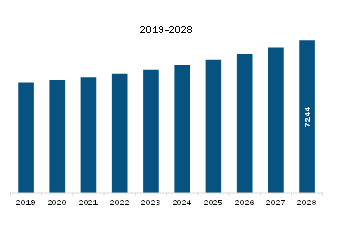
The smart card material market in MEA is expected to grow from US$ 54.97 million in 2021 to US$ 72.44 million by 2028; it is estimated to grow at a CAGR of 4.0% from 2021 to 2028.
There is a growing focus on making smart card from more renewable resources. Many companies across the region are focusing on developing a new product that contains less plastic. Bio-based plastic material is a new and emerging subset of conventional plastic for producing smart cards. LUC-BIO is one such material which is a green form of PVC developed to meet the growing demand for green products. Universal Smart Cards Inc. produces smart cards using this material. One major manufacturer has created radio-frequency identification (RFID) cards and smart cards with bio-based materials. The end use industries are demanding for the smart cards made of biodegradable materials to maintain the eco-sustainability of their products and to comply with the nation’s guidelines. Thus, the increasing focus on the development of bio-based material would emerge as a trend in the smart card materials market during the forecast period.
In the Middle East and Africa region, South Africa is among the major countries with a high number of COVID-19 confirmed cases and deaths. The COVID-19 pandemic has had a severe impact on the economy of the Middle East & Africa. The pandemic has significantly slowed down the growth of the smart card materials market in the region due to negative impacts upon the growth of various industries. The COVID-19 pandemic has impacted the retail and hospitality industry. As a result of lockdowns and stay-at-home orders, the customer footprints has been reduced. The demand for smart card materials in the region will depend upon the evolution of the epidemic, vaccination plans, and economic recovery.
With the new features and technologies, vendors can attract new customers and expand their footprints in emerging markets. This factor is likely to drive the smart card material market. The MEA smart card material market is expected to grow at a good CAGR during the forecast period.
MEA Smart Card Material Market Revenue and Forecast to 2028 (US$ Million)
MEA Smart Card Material Market Segmentation
MEA Smart Card Material Market –by Material
Polyvinyl Chloride (PVC)
Polycarbonate (PC)
Acrylonitrile Butadiene Styrene (ABS)
Polyethylene Terephthalate-Glycol (PETG)
Others
MEA Smart Card Material Market – by Type
Contact Cards
Contactless Cards
Multi-Component Cards
MEA Smart Card Material Market – by Application
BFSI
Government
Telecommunication
Retail
Healthcare
Hospitality
Others
MEA Lymphedema Treatment Market – by Country
South Africa
Saudi Arabia
UAE
Rest of MEA
MEA Lymphedema Treatment Market – Companies Mentioned
3A Composites GmbH
BASF SE
Eastman Chemical Company
LG Chem
SABIC
Solvay S.A.
Teijin Limited
Westlake Chemical Corporation
Middle East and Africa Smart Card Material Market Strategic Insights
Get more information on this report
Middle East and Africa Smart Card Material Market Segmentation Analysis
Middle East and Africa Smart Card Material Market Report Highlights
Middle East and Africa Smart Card Material Report Scope
Report Attribute
Details
Market size in 2021
US$ 54.97 Million
Market Size by 2028
US$ 72.44 Million
CAGR (2021 - 2028)
4.0%
Historical Data
2019-2020
Forecast period
2022-2028
Segments Covered
By Material
Polyvinyl Chloride
Polycarbonate
Acrylonitrile Butadiene Styrene
Polyethylene Terephthalate-Glycol
By Type
Contact Cards
Contactless Cards
Multi-Component Cards
By Application
BFSI
Government
Telecommunication
Retail
Healthcare
Hospitality
Regions and Countries Covered
Middle East and Africa
South Africa, Saudi Arabia, UAE, Rest of Middle East and Africa
Market leaders and key company profiles
3A Composites GmbH
BASF SE
Eastman Chemical Company
LG Chem
SABIC
Solvay S.A.
Teijin Limited
Westlake Chemical Corporation
Get more information on this report
Middle East and Africa Smart Card Material Market Country and Regional Insights
Get more information on this report
Identical Market Reports with other Region/Countries
The List of Companies - Middle East and Africa Smart Card Material Market
3A Composites GmbHBASF SEEastman Chemical Company LG ChemSABICSolvay S.A.Teijin LimitedWestlake Chemical Corporation
Frequently Asked Questions
How big is the Middle East and Africa Smart Card Material Market?
The Middle East and Africa Smart Card Material Market is valued at US$ 54.97 Million in 2021, it is projected to reach US$ 72.44 Million by 2028.
What is the CAGR for Middle East and Africa Smart Card Material Market by (2021 - 2028)?
As per our report Middle East and Africa Smart Card Material Market, the market size is valued at US$ 54.97 Million in 2021, projecting it to reach US$ 72.44 Million by 2028. This translates to a CAGR of approximately 4.0% during the forecast period.
What segments are covered in this report?
The Middle East and Africa Smart Card Material Market report typically cover these key segments-
Material (Polyvinyl Chloride, Polycarbonate, Acrylonitrile Butadiene Styrene, Polyethylene Terephthalate-Glycol)
Type (Contact Cards, Contactless Cards, Multi-Component Cards)
What is the historic period, base year, and forecast period taken for Middle East and Africa Smart Card Material Market?
The historic period, base year, and forecast period can vary slightly depending on the specific market research report. However, for the Middle East and Africa Smart Card Material Market report:
Historic Period : 2019-2020
Base Year : 2021
Forecast Period : 2022-2028
Who are the major players in Middle East and Africa Smart Card Material Market?
The Middle East and Africa Smart Card Material Market is populated by several key players, each contributing to its growth and innovation. Some of the major players include:
3A Composites GmbH
BASF SE
Eastman Chemical Company
LG Chem
SABIC
Solvay S.A.
Teijin Limited
Westlake Chemical Corporation
Who should buy this report?
The Middle East and Africa Smart Card Material Market report is valuable for diverse stakeholders, including:
Investors: Provides insights for investment decisions pertaining to market growth, companies, or industry insights. Helps assess market attractiveness and potential returns.
Industry Players: Offers competitive intelligence, market sizing, and trend analysis to inform strategic planning, product development, and sales strategies.
Suppliers and Manufacturers: Helps understand market demand for components, materials, and services related to concerned industry.
Researchers and Consultants: Provides data and analysis for academic research, consulting projects, and market studies.
Financial Institutions: Helps assess risks and opportunities associated with financing or investing in the concerned market.
Essentially, anyone involved in or considering involvement in the Middle East and Africa Smart Card Material Market value chain can benefit from the information contained in a comprehensive market report.




 Get Free Sample For Middle East and Africa Smart Card Material Market