Analysis By Material [Polyvinyl Chloride (PVC), Polycarbonate (PC), Acrylonitrile Butadiene Styrene (ABS), Polyethylene Terephthalate-Glycol (PETG), and Others], Type (Contact Cards, Contactless Cards, and Multi-Component Cards), and Application (BFSI, Government, Telecommunication, Retail, Healthcare, Hospitality, and Others)
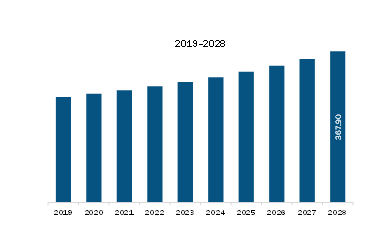
The smart card material market in Europe is expected to grow from US$ 273.29 million in 2021 to US$ 367.90 million by 2028; it is estimated to grow at a CAGR of 4.3% from 2021 to 2028.
Materials, such as PETG, ABS, PVC, PC, and PET, are used for the manufacturing of smart card bodies to provide the required thickness, resistance, and durability to the cards. These materials are most widely used to build smart cards used in the sectors, such as BFSI, government, hospitality, and retail. The increasing digitalization in the banking and financial services industry across the region to make the banking operations convenient with efficient data management is expected to increase the demand for smart cards. Also, the growing development of modern infrastructure and rising investments in the banking sectors are among the key factors supporting the growth of the banking and financial industry, which is further augmenting the usage of smart cards. Moreover, financial institutions and merchants are issuing and accepting the contact smart cards for credit and debit payments and are highly migrating to EMV (Europay, MasterCard, and Visa) for payment methods. This factor boosts the demand for smart cards and materials required to develop those cards. In the government sector, smart card technology is highly recognized as the most appropriate technology for identity applications to meet security requirements. Smart cards are used to monitor military credentials by government and materials such as polyethylene terephthalate-glycol (PETG) and polyethylene terephthalate (PET) are used for producing smart cards for this kind of application, which requires longer life span. Thus, the technological advancements in banking and government and other regulatory bodies are expected to contribute toward the growth of the market. In addition, growing digitalization in the retail industry for strengthening the payment infrastructure is augmenting the consumption of smart cards, which helps in driving the market growth. The smart card technology is highly accepted by consumer for selecting mode of payment in both online and offline retailing. Thus, the increasing usage of the smart card in the retail industry is propelling the demand for smart card materials, which helps in driving the market growth.
Europe is one of the worst affected economies due to the COVID-19 pandemic. The unprecedented rise in the number of COVID-19 cases across the US and Canada and the subsequent lockdown of numerous manufacturing facilities in the countries have negatively influenced the growth of the various markets. The significant disruption in manufacturing has had an impact on the demand for smart card materials in the region. The COVID-19 pandemic has also impacted the retail and hospitality industry. The pandemic’s impact on the retail and hospitality industry was immediate and profound. However, the market is reviving on account of the government's significant measures, such as vaccination drives. Various industries are also overcoming the challenges of supply chain disruptions of their raw materials. Many players are resuming pre-pandemic investment plans as businesses gain confidence in stabilizing economies and anticipate increased demand. This is expected to provide the impetus for market growth.
With the new features and technologies, vendors can attract new customers and expand their footprints in emerging markets. Thus, the Europe smart card material market is expected to grow at a good CAGR during the forecast period.
Europe Smart Card Material Market Revenue and Forecast to 2028 (US$ Million)
Europe Smart Card Material Market Segmentation
Europe Smart Card Material Market –by Material
Polyvinyl Chloride (PVC)
Polycarbonate (PC)
Acrylonitrile Butadiene Styrene (ABS)
Polyethylene Terephthalate-Glycol (PETG)
Others
Europe Smart Card Material Market – by Type
Contact Cards
Contactless Cards
Multi-Component Cards
Europe Smart Card Material Market – by Application
BFSI
Government
Telecommunication
Retail
Healthcare
Hospitality
Others
Europe Lymphedema Treatment Market – by Country
Germany
France
Italy
UK
Russia
Rest of Europe
Europe Lymphedema Treatment Market – Companies Mentioned
3A Composites GmbH
BASF SE
Eastman Chemical Company
KEM ONE
LG Chem
SABIC
Solvay S.A.
Teijin Limited
Westlake Chemical Corporation
Europe Smart Card Material Market Strategic Insights
Get more information on this report
Europe Smart Card Material Market Segmentation Analysis
Europe Smart Card Material Market Report Highlights
Europe Smart Card Material Report Scope
Report Attribute
Details
Market size in 2021
US$ 273.29 Million
Market Size by 2028
US$ 367.90 Million
CAGR (2021 - 2028)
4.3%
Historical Data
2019-2020
Forecast period
2022-2028
Segments Covered
By Material
Polyvinyl Chloride
Polycarbonate
Acrylonitrile Butadiene Styrene
Polyethylene Terephthalate-Glycol
By Type
Contact Cards
Contactless Cards
Multi-Component Cards
By Application
BFSI
Government
Telecommunication
Retail
Healthcare
Hospitality
Regions and Countries Covered
Europe
UK, Germany, France, Russia, Italy, Rest of Europe
Market leaders and key company profiles
3A Composites GmbH
BASF SE
Eastman Chemical Company
KEM ONE
LG Chem
SABIC
Solvay S.A.
Teijin Limited
Westlake Chemical Corporation
Get more information on this report
Europe Smart Card Material Market Country and Regional Insights
Get more information on this report
Identical Market Reports with other Region/Countries
The List of Companies - Europe Smart Card Material Market
3A Composites GmbHBASF SEEastman Chemical Company KEM ONELG ChemSABICSolvay S.A.Teijin LimitedWestlake Chemical Corporation
Frequently Asked Questions
How big is the Europe Smart Card Material Market?
The Europe Smart Card Material Market is valued at US$ 273.29 Million in 2021, it is projected to reach US$ 367.90 Million by 2028.
What is the CAGR for Europe Smart Card Material Market by (2021 - 2028)?
As per our report Europe Smart Card Material Market, the market size is valued at US$ 273.29 Million in 2021, projecting it to reach US$ 367.90 Million by 2028. This translates to a CAGR of approximately 4.3% during the forecast period.
What segments are covered in this report?
The Europe Smart Card Material Market report typically cover these key segments-
Material (Polyvinyl Chloride, Polycarbonate, Acrylonitrile Butadiene Styrene, Polyethylene Terephthalate-Glycol)
Type (Contact Cards, Contactless Cards, Multi-Component Cards)
What is the historic period, base year, and forecast period taken for Europe Smart Card Material Market?
The historic period, base year, and forecast period can vary slightly depending on the specific market research report. However, for the Europe Smart Card Material Market report:
Historic Period : 2019-2020
Base Year : 2021
Forecast Period : 2022-2028
Who are the major players in Europe Smart Card Material Market?
The Europe Smart Card Material Market is populated by several key players, each contributing to its growth and innovation. Some of the major players include:
3A Composites GmbH
BASF SE
Eastman Chemical Company
KEM ONE
LG Chem
SABIC
Solvay S.A.
Teijin Limited
Westlake Chemical Corporation
Who should buy this report?
The Europe Smart Card Material Market report is valuable for diverse stakeholders, including:
Investors: Provides insights for investment decisions pertaining to market growth, companies, or industry insights. Helps assess market attractiveness and potential returns.
Industry Players: Offers competitive intelligence, market sizing, and trend analysis to inform strategic planning, product development, and sales strategies.
Suppliers and Manufacturers: Helps understand market demand for components, materials, and services related to concerned industry.
Researchers and Consultants: Provides data and analysis for academic research, consulting projects, and market studies.
Financial Institutions: Helps assess risks and opportunities associated with financing or investing in the concerned market.
Essentially, anyone involved in or considering involvement in the Europe Smart Card Material Market value chain can benefit from the information contained in a comprehensive market report.




 Get Free Sample For Europe Smart Card Material Market