Analysis By Testing Type (In Vivo ADMET Testing, In Vitro ADMET Testing, and In Silico ADMET Testing), Technology (Cell Culture, High Throughput, Molecular Imaging, and OMICS Technology), and Application (Systemic Toxicity, Renal Toxicity, Hepatotoxicity, Neurotoxicity, and Others)
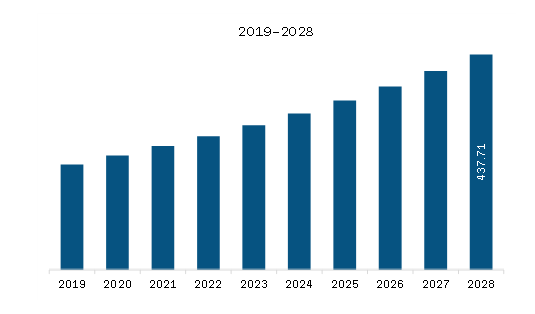
The pharma ADMET testing market in Middle East & Africa is expected to grow from US$ 270.94 million in 2022 to US$ 437.71 million by 2028. It is estimated to grow at a CAGR of 8.3% from 2022 to 2028.
The disaster of a rising number of therapeutic molecules in the last phases of clinical trials has cost money and valuable time invested in developing new drugs. This has led to higher investments being made in the development of fresher technology for toxicity testing. According to the article “Importance of ADME/Tox in Early Drug Discovery,” 2022, in the current drug discovery and development pipeline, only 10 molecules out of 1,000 screened hits are projected to enter the preclinical testing stage, and only 9.6% will enter clinical trials.
The drug approval process is projected to take 15 years on an average, and phases II and III are the most expensive phases of clinical trials. According to the study titled “Why 90% of Clinical Drug Development Fails and How to Improve It?”, 2022, 90% of clinical drug development fails despite implementing many strategies. After entering clinical investigations, 9 out of 10 drug candidates fail during phase I, II, and III clinical trials and the drug approval process. Drug candidates rejected in preclinical stages are not included in the 90% failure rate of the drugs in clinical stages, as they do not enter the phase I clinical trials. If preclinical drug candidates are included, the drug discovery and development failure rate rise even higher than 90%. According to analyses of clinical trial data from 2010 to 2017, lacking clinical effectiveness (40–50%), uncontrollable toxicity (30%), poor drug-like qualities (10–15%), no commercial needs, and ineffective strategic planning (10%) are the four major causes of trial failure. New drug development is both resource and time-intensive, where later clinical stages result in high costs.
To lower the attrition rate in drug research & development, it is crucial to filter and optimize the absorption, distribution, metabolism, elimination, and toxicity (ADMET) characteristics of pharmaceuticals at an early stage. It has been widely accepted that drug ADMET properties should be considered as early as possible to reduce failure rates in the clinical phase of drug discovery.In vitroand in vivo drug evaluation techniques have reached maturity in preclinical applications, and in silico technologies are gaining vast acceptance to evaluate the relevant properties of drugs in the preclinical stage. The development of software programs and in silico models is further promoting the implementation of ADMET studies. Thus, the increasing need for drug-development ADME testing boosts the pharma ADMET testing market.
Middle East & Africa Pharma ADMET Testing Market Revenue and Forecast to 2028 (US$ Million)
Middle East & Africa Pharma ADMET Testing Market Segmentation
The Middle East & Africa pharma ADMET testing market is segmented by testing type, technology, application, and country. Based on testing type, the market is segmented into in vivo ADMET testing, in vitro ADMET testing, and in silico ADMET testing. The in vivo ADMET testing segment is dominating the market in 2022. Based on technology, the market is segmented into cell culture, high throughput, molecular imaging, and OMICS technology. The cell culture segment is dominating the market in 2022. Based on application, the market is segmented into systemic toxicity, renal toxicity, hepatotoxicity, neurotoxicity, and others. The systemic toxicity segment is dominating the market in 2022. Based on country, the market is segmented intoSouth Africa, Saudi Arabia, the UAE, and the Rest of the Middle East & Africa. Further, South Africa dominated the market in 2022.
A few key players dominating the Middle East & Africa pharma ADMET testing market are Agilent Technologies, Inc.; Bio-Rad Laboratories, Inc.; Biovia (Dassault Systèmes); Charles River Laboratories; IQVIA Inc.; MERCK KGaA; Promega Corporation; and Wuxi AppTec.
Middle East & Africa Pharma ADMET Testing Market Strategic Insights
Get more information on this report
Middle East & Africa Pharma ADMET Testing Market Segmentation Analysis
Middle East & Africa Pharma ADMET Testing Market Report Highlights
Middle East & Africa Pharma ADMET Testing Report Scope
Report Attribute
Details
Market size in 2022
US$ 270.94 Million
Market Size by 2028
US$ 437.71 Million
CAGR (2022 - 2028)
8.3%
Historical Data
2020-2021
Forecast period
2023-2028
Segments Covered
By Testing Type
In Vivo ADMET Testing
In Vitro ADMET Testing
In Silico ADMET Testing
By Technology
Cell Culture
High Throughput
Molecular Imaging
OMICS Technology
By Application
Systemic Toxicity
Renal Toxicity
Hepatotoxicity
Neurotoxicity
Regions and Countries Covered
Middle East and Africa
South Africa, Saudi Arabia, UAE, Rest of Middle East and Africa
Market leaders and key company profiles
Agilent Technologies, Inc.
Bio-Rad Laboratories, Inc.
Biovia (Dassault Systèmes)
Charles River Laboratories
IQVIA Inc.
MERCK KGaA
Promega Corporation
Wuxi AppTec
Get more information on this report
Middle East & Africa Pharma ADMET Testing Market Country and Regional Insights
Get more information on this report
Identical Market Reports with other Region/Countries
The List of Companies - Middle East & Africa Pharma ADMET Testing Market
Agilent Technologies, Inc.Bio-Rad Laboratories, Inc.Biovia (Dassault Systèmes)Charles River LaboratoriesIQVIA Inc.MERCK KGaAPromega CorporationWuxi AppTec
Frequently Asked Questions
How big is the Middle East & Africa Pharma ADMET Testing Market?
The Middle East & Africa Pharma ADMET Testing Market is valued at US$ 270.94 Million in 2022, it is projected to reach US$ 437.71 Million by 2028.
What is the CAGR for Middle East & Africa Pharma ADMET Testing Market by (2022 - 2028)?
As per our report Middle East & Africa Pharma ADMET Testing Market, the market size is valued at US$ 270.94 Million in 2022, projecting it to reach US$ 437.71 Million by 2028. This translates to a CAGR of approximately 8.3% during the forecast period.
What segments are covered in this report?
The Middle East & Africa Pharma ADMET Testing Market report typically cover these key segments-
Testing Type (In Vivo ADMET Testing, In Vitro ADMET Testing, In Silico ADMET Testing)
Technology (Cell Culture, High Throughput, Molecular Imaging, OMICS Technology)
What is the historic period, base year, and forecast period taken for Middle East & Africa Pharma ADMET Testing Market?
The historic period, base year, and forecast period can vary slightly depending on the specific market research report. However, for the Middle East & Africa Pharma ADMET Testing Market report:
Historic Period : 2020-2021
Base Year : 2022
Forecast Period : 2023-2028
Who are the major players in Middle East & Africa Pharma ADMET Testing Market?
The Middle East & Africa Pharma ADMET Testing Market is populated by several key players, each contributing to its growth and innovation. Some of the major players include:
Agilent Technologies, Inc.
Bio-Rad Laboratories, Inc.
Biovia (Dassault Systèmes)
Charles River Laboratories
IQVIA Inc.
MERCK KGaA
Promega Corporation
Wuxi AppTec
Who should buy this report?
The Middle East & Africa Pharma ADMET Testing Market report is valuable for diverse stakeholders, including:
Investors: Provides insights for investment decisions pertaining to market growth, companies, or industry insights. Helps assess market attractiveness and potential returns.
Industry Players: Offers competitive intelligence, market sizing, and trend analysis to inform strategic planning, product development, and sales strategies.
Suppliers and Manufacturers: Helps understand market demand for components, materials, and services related to concerned industry.
Researchers and Consultants: Provides data and analysis for academic research, consulting projects, and market studies.
Financial Institutions: Helps assess risks and opportunities associated with financing or investing in the concerned market.
Essentially, anyone involved in or considering involvement in the Middle East & Africa Pharma ADMET Testing Market value chain can benefit from the information contained in a comprehensive market report.





 Get Free Sample For Middle East & Africa Pharma ADMET Testing Market