Analysis - by Type (Lignosulfonates, Kraft Lignin, High Purity Lignin, and Others), Form (Solid and Liquid), and Application (Concrete Additives, Plastics and Polymers, Bitumen, Water Treatment, Dyes and Pigments, Activated Carbon, Carbon Fiber, and Others)
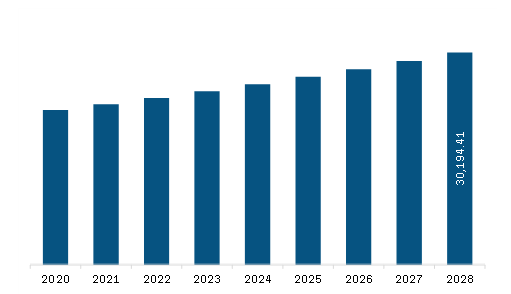
The Middle East & Africa lignin market was valued at US$ 23,684.38 thousand in 2022 and is expected to reach US$ 30,194.41 thousand by 2028; it is estimated to grow at a CAGR of 4.1% from 2022 to 2028.
Adoption of Lignin for Carbon Fiber Production
Carbon fibers are high-performance materials with superior properties such as high stiffness, high flexibility, good tensile strength, low thermal expansion, high-temperature tolerance, lightweight, and high fatigue resistance. These properties make carbon fibers essential in producing advanced composites for various industrial applications, including aerospace, transportation, wind energy, construction, and automotive. Most carbon fibers are manufactured from polyacrylonitrile, a petroleum-based, non-renewable, and unsustainable chemical at a relatively higher price. However, lignin is a renewable, inexpensive, and highly accessible resource that can fabricate lignin-based carbon fibers. The constant diminishing of petroleum resources and associated environmental issues are major factors expected to boost the demand for lignin for carbon fiber production.
Manufacturers in the carbon fiber industry increasingly use lignin as a raw material to produce carbon fiber to cater to the increasing demand. For instance, in July 2021, Stora Enso Oyj, a manufacturer of pulp, paper, and other forest products, established a pilot plant for lignin-based carbon materials for batteries. According to Stora Enso Oyj, the demand for batteries is expected to rise tremendously over the next decade as battery producers require more sustainable materials for the electrification of mobility and reduction of carbon emissions. The company projects that carbon-based-anode materials, produced from converted lignin separated from wood, can be a more sustainable replacement for graphite-based battery anodes. Thus, the adoption of lignin for carbon fiber production will likely offer lucrative opportunities for the market players during the forecast period.
Middle East & Africa Lignin Market Overview
Lignin is a byproduct of bioethanol, pulp and paper, and compressed biogas plants. It is also used as a bitumen extender in the production of asphalt mixtures that are used in the development of sustainable infrastructure, including roadways. In addition, it is widely used as a grinding agent in cement production, cement substitute materials, water-reducing admixtures, and set retarders. Governments of several countries in the Middle East & Africa focus on investing in the construction and infrastructure sector. Based on a report by the International Trade Administration in 2022, the 2020–2025 development plan by the Government of Kuwait focuses on economic reforms and megaprojects, encompassing infrastructure projects worth US$ 124 billion. According to the same report, the UAE has lined-up transportation and road infrastructure projects—including the Etihad rail project worth US$ 11 billion, the hyperloop project valued at US$ 5.9 billion (connecting Dubai and Abu Dhabi), and the Sheikh Zayed double-deck road project with a valuation of US$ 2.7 billion. In 2021, Abu Dhabi National Oil Company (UAE) announced its plans to develop a large-scale seawater treatment and transmission pipeline project in Abu Dhabi. The UAE government plans to achieve 50% of its total construction via sustainable operations by 2030. Therefore, an upsurge in the construction industry and various government initiatives promoting sustainable construction boost the demand for lignin in the Middle East & Africa.
Middle East & Africa Lignin Market Revenue and Forecast to 2028 (US$ Thousand)
Middle East & Africa Lignin Market Segmentation
The Middle East & Africa lignin market is segmented based on type, form, application, and country. Based on type, the Middle East & Africa lignin market is segmented into lignosulfonates, kraft lignin, high purity lignin, and others. The lignosulfonates segment held the largest Middle East & Africa lignin market share in 2022.
Based on form, the Middle East & Africa lignin market is bifurcated into solid and liquid. The solid segment held a larger market share in 2022.
Based on application, the Middle East & Africa lignin market is segmented into concrete additives, plastics and polymers, bitumen, water treatment, dyes and pigments, activated carbon, carbon fiber, and others. The dyes and pigments segment held the largest market share in 2022.
Based on country, the Middle East & Africa lignin market is segmented into Saudi Arabia, South Africa, the UAE, and the Rest of Middle East & Africa. Saudi Arabia dominated the Middle East & Africa lignin market share in 2022.
Nippon Paper Industries Co Ltd; Borregaard ASA; Burgo Group SpA; Domsjo Fabriker AB; Sappi Ltd; Stora Enso Oyj; Suzano SA; and The Dallas Group of America Inc are the leading companies operating in the Middle East & Africa lignin market.
Middle East & Africa Lignin Market Strategic Insights
Get more information on this report
Middle East & Africa Lignin Market Segmentation Analysis
Middle East & Africa Lignin Market Report Highlights
Middle East & Africa Lignin Report Scope
Report Attribute
Details
Market size in 2022
US$ 23,684.38 thousand
Market Size by 2028
US$ 30,194.41 thousand
CAGR (2022 - 2028)
4.1%
Historical Data
2020-2021
Forecast period
2023-2028
Segments Covered
By Type
Lignosulfonates
Kraft Lignin
High Purity Lignin
By Form
Solid
Liquid
By Application
Concrete Additives
Plastics and Polymers
Bitumen
Water Treatment
Dyes and Pigments
Activated Carbon
Carbon Fiber
Regions and Countries Covered
Middle East and Africa
South Africa, Saudi Arabia, UAE, Rest of Middle East and Africa
Market leaders and key company profiles
Borregaard ASA
Burgo Group SpA
Domsjo Fabriker AB
Nippon Paper Industries Co Ltd
Sappi Ltd
Stora Enso Oyj
Suzano SA
The Dallas Group of America Inc
Get more information on this report
Middle East & Africa Lignin Market Country and Regional Insights
Get more information on this report
Identical Market Reports with other Region/Countries
The List of Companies - Middle East & Africa Lignin Market
Borregaard ASABurgo Group SpADomsjo Fabriker ABNippon Paper Industries Co LtdSappi LtdStora Enso OyjSuzano SAThe Dallas Group of America Inc
Frequently Asked Questions
How big is the Middle East & Africa Lignin Market?
The Middle East & Africa Lignin Market is valued at US$ 23,684.38 thousand in 2022, it is projected to reach US$ 30,194.41 thousand by 2028.
What is the CAGR for Middle East & Africa Lignin Market by (2022 - 2028)?
As per our report Middle East & Africa Lignin Market, the market size is valued at US$ 23,684.38 thousand in 2022, projecting it to reach US$ 30,194.41 thousand by 2028. This translates to a CAGR of approximately 4.1% during the forecast period.
What segments are covered in this report?
The Middle East & Africa Lignin Market report typically cover these key segments-
Type (Lignosulfonates, Kraft Lignin, High Purity Lignin)
Form (Solid, Liquid)
Application (Concrete Additives, Plastics and Polymers, Bitumen, Water Treatment, Dyes and Pigments, Activated Carbon, Carbon Fiber)
What is the historic period, base year, and forecast period taken for Middle East & Africa Lignin Market?
The historic period, base year, and forecast period can vary slightly depending on the specific market research report. However, for the Middle East & Africa Lignin Market report:
Historic Period : 2020-2021
Base Year : 2022
Forecast Period : 2023-2028
Who are the major players in Middle East & Africa Lignin Market?
The Middle East & Africa Lignin Market is populated by several key players, each contributing to its growth and innovation. Some of the major players include:
Borregaard ASA
Burgo Group SpA
Domsjo Fabriker AB
Nippon Paper Industries Co Ltd
Sappi Ltd
Stora Enso Oyj
Suzano SA
The Dallas Group of America Inc
Who should buy this report?
The Middle East & Africa Lignin Market report is valuable for diverse stakeholders, including:
Investors: Provides insights for investment decisions pertaining to market growth, companies, or industry insights. Helps assess market attractiveness and potential returns.
Industry Players: Offers competitive intelligence, market sizing, and trend analysis to inform strategic planning, product development, and sales strategies.
Suppliers and Manufacturers: Helps understand market demand for components, materials, and services related to concerned industry.
Researchers and Consultants: Provides data and analysis for academic research, consulting projects, and market studies.
Financial Institutions: Helps assess risks and opportunities associated with financing or investing in the concerned market.
Essentially, anyone involved in or considering involvement in the Middle East & Africa Lignin Market value chain can benefit from the information contained in a comprehensive market report.





 Get Free Sample For Middle East & Africa Lignin Market