Market Summary
Executive Summary and Market Analysis
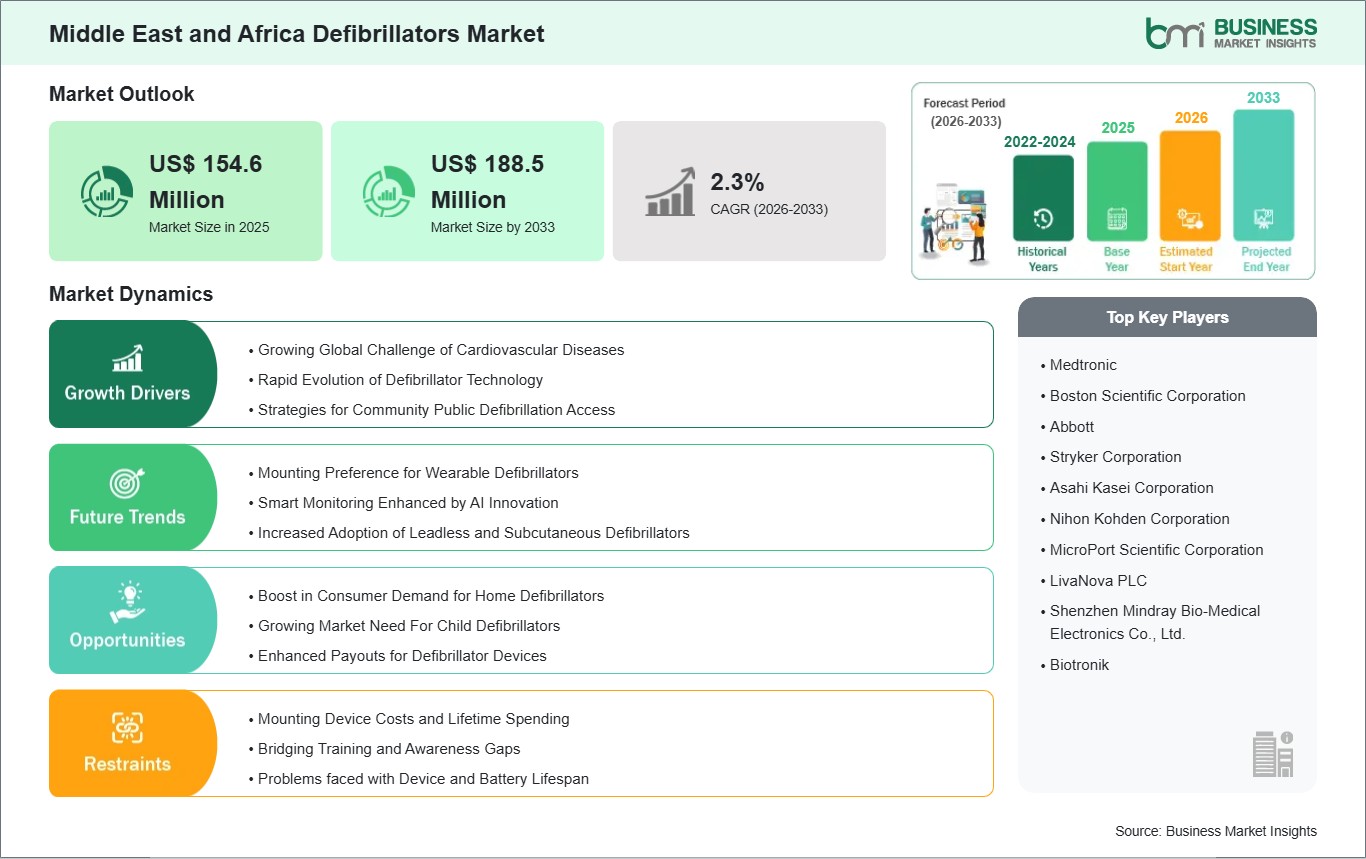
Rising awareness of cardiovascular diseases and sudden cardiac arrests is driving governments and private healthcare providers to increase the availability of defibrillators in hospitals, clinics, and emergency response units. In urban centers, public access programs are being introduced in airports, shopping complexes, and corporate offices, reflecting a shift toward community-based emergency preparedness. Advances in portable and automated external defibrillators (AEDs) have made it easier for first responders and laypersons to administer life-saving care quickly, improving survival rates.
Uneven healthcare infrastructure across countries limits the accessibility of defibrillators, particularly in rural and underserved areas. Public awareness and training remain inconsistent, restricting effective usage of AEDs outside hospitals. High device costs can make adoption difficult for smaller clinics or local emergency services. Despite these challenges, the region shows progress, driven by increasing governmental focus on public health, private sector involvement, and an emphasis on emergency response capabilities in urban areas.
Segment Analysis
Middle East and Africa Defibrillators Market Segmentation
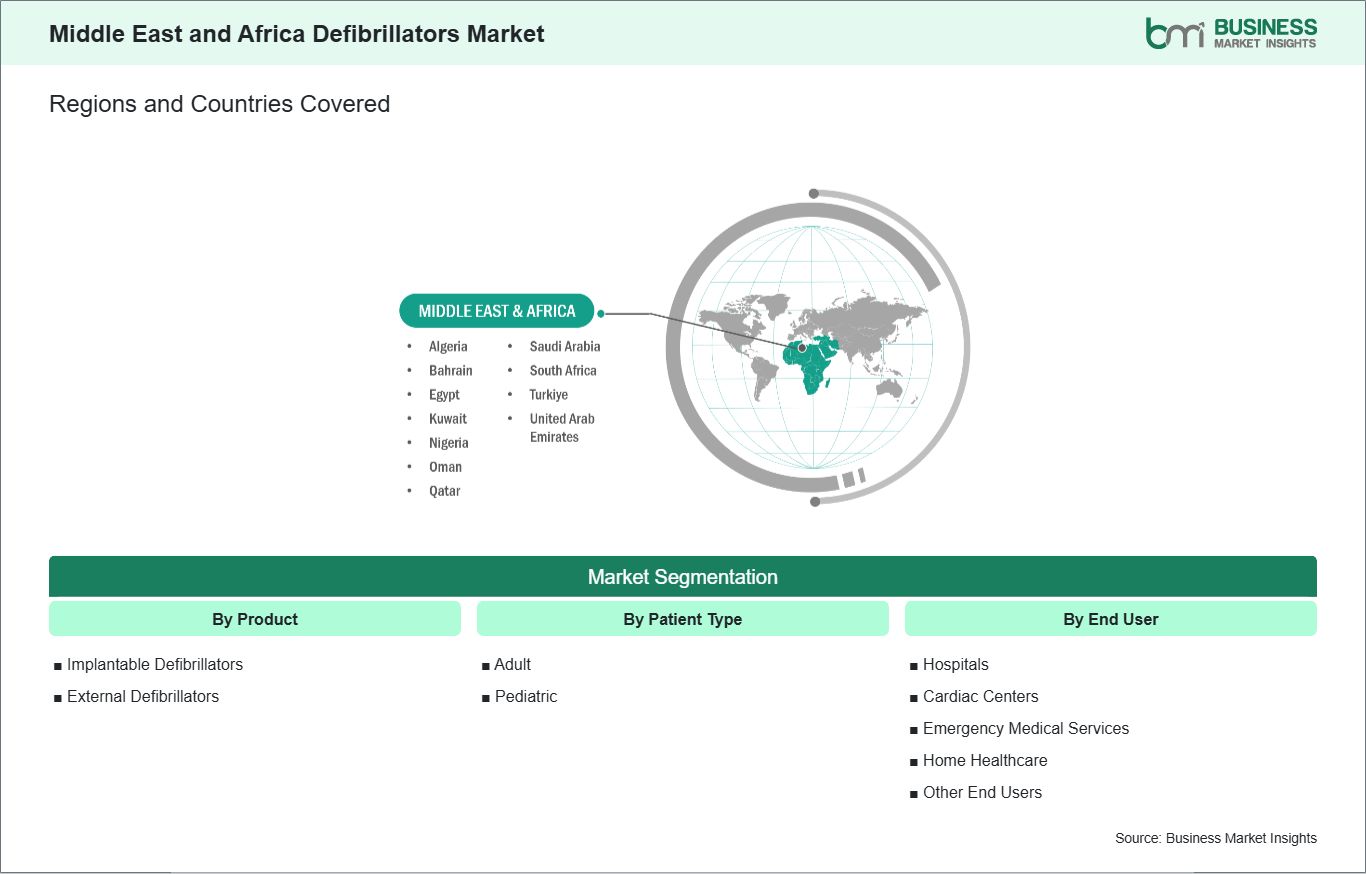
Key segments that contributed to the derivation of the Middle East and Africa Defibrillators market analysis are product type, patient type, and end user.
- By product type, the Defibrillators market is segmented into implantable defibrillators and external defibrillators. The implantable defibrillators segment dominated the market in 2025.
- Based on patient type, the Defibrillators market is classified into adult and pediatric. The adults segment dominated the market in 2025.
- In terms of end user, the Defibrillators market is categorized into hospitals, cardiac centers, emergency medical services, home healthcare, and other end users. The hospitals segment dominated the market in 2025.
Market Forces
Middle East and Africa Defibrillators Market Drivers and Opportunities
Rising Challenge of Cardiovascular Diseases
In the Middle East and Africa, cardiovascular diseases have become a central healthcare concern as lifestyles change and chronic conditions rise. High rates of heart disease are increasingly being linked to urban lifestyles and related health risk factors. In African nations, the dual burden of infectious diseases alongside growing cases of heart conditions has pushed cardiovascular care up national health agendas.
Hospitals and emergency responders are integrating more advanced cardiac intervention tools into standard care. Defibrillators are now widely seen as essential equipment in tertiary care centers as well as in regional hospitals and clinics. This trend is evident in larger urban health systems, where investment in medical technologies has been prioritized to address acute cardiac events.
Because sudden cardiac arrest can occur anywhere, the need for rapid defibrillation is influencing how healthcare systems allocate resources. Across the Gulf states and African capitals, emergency response protocols emphasize quick access to defibrillation, boosting institutional procurement of automated external defibrillators (AEDs) and implantable devices. This trend is reinforcing the role of defibrillators as a critical component of comprehensive heart care strategies.
Surging Consumer Demand for Home Defibrillators
More individuals — particularly those with known cardiac risks — are considering home defibrillators as part of personalized health preparedness. In parts of the Gulf, where private healthcare spending is high, households with family histories of heart disease are beginning to invest in user‑friendly AED models. This trend reflects consumer interest in taking proactive steps toward managing sudden cardiac emergencies.
In urban centers such as Cairo, Nairobi, and Lagos, health education campaigns and media coverage of cardiac emergencies have made the public more aware of the impact that timely defibrillation can have. As a result, patients and caregivers inquire about home‑use defibrillators during medical consultations, prompting clinics and cardiac care specialists to provide more guidance on available options.
In African and Middle Eastern communities, cost considerations and limited access to trained support services still temper widespread uptake. Manufacturers and distributors are introducing simplified devices and local training initiatives to make home defibrillators more accessible. These efforts signal a shift toward consumer‑centric cardiac care and suggest that home defibrillators will become a discussed option for risk‑aware families throughout the Middle East and Africa.
Size and Share Analysis
Middle East and Africa Defibrillators Market Size and Share Analysis
The Middle East and Africa Defibrillators market demonstrates steady growth, with size and share analysis highlighting evolving trends and competitive dynamics among key players. The report evaluates important subsegments categorized within product type, patient type, and end user, highlighting their respective contributions to overall market performance.
By product type, the implantable defibrillators subsegment dominated the market in 2025. Their adoption is driven by their proven efficacy in preventing sudden cardiac arrest, long-term reliability, and ability to continuously monitor and correct life-threatening arrhythmias, making them a cornerstone in cardiac care.
In terms of patient type, the adults subsegment dominated the market in 2025 due to the higher prevalence of cardiac disorders in the adult population, increased awareness of sudden cardiac death prevention, and greater accessibility of advanced defibrillator therapies for adult patients.
Based on end user, the hospitals subsegment dominated the market in 2025. Hospitals remain the primary distribution channel due to their comprehensive cardiac care facilities, access to trained cardiologists and specialized technicians, advanced monitoring infrastructure, and ability to provide immediate, life-saving interventions.
Report Coverage
Middle East and Africa Defibrillators Market Report Coverage and Deliverables
The "Middle East and Africa Defibrillators Market Size and Forecast (2022–2033)" report provides a detailed analysis of the market covering below areas:
- Middle East and Africa Defibrillators market size and forecast at regional and country levels for all market segments covered under the scope
- Middle East and Africa Defibrillators market trends, as well as drivers, restraints, and opportunities
- Middle East and Africa Defibrillators market analysis covering key trends, regional framework, major players, regulations, and recent developments
- Industry landscape and competition analysis covering market concentration, heat map analysis, prominent players, and recent developments for the Middle East and Africa Defibrillators market
- Detailed company profiles, including SWOT analysis
Geographic Insights
Middle East and Africa Defibrillators Market Geographic Insights
The geographical scope of the Middle East and Africa Defibrillators market report is divided into: Saudi Arabia, the United Arab Emirates, Kuwait, Bahrain, Qatar, Oman, Turkiye, South Africa, Egypt, Nigeria, Algeria, and the Rest of MEA. Turkiye held the largest share in 2025.
Turkiye represents the most developed market within the Middle East and Africa. The country benefits from a well-structured emergency medical response system and an established network of public and private healthcare institutions. External defibrillators are incorporated into hospital emergency departments, ambulances, corporate campuses, transportation hubs, and sports complexes. Regulatory alignment with international medical device standards has encouraged participation from multinational manufacturers and domestic distributors, creating a competitive and diversified supply environment. Public awareness initiatives around cardiac health and emergency preparedness have supported broader acceptance of automated external defibrillators beyond hospital settings. Corporate entities and educational institutions are equipping facilities with AEDs as part of occupational health and safety strategies. Turkiye’s strong logistics infrastructure and medical device distribution channels position it as a gateway for product movement into neighboring Middle Eastern and select African markets. Challenges persist in ensuring consistent access across rural provinces and maintaining standardized training programs for lay responders. Nonetheless, continuous healthcare system strengthening and growing institutional focus on rapid cardiac response sustain Turkiye’s leadership in the regional market.
Industry Activity
Recent Developments
The Middle East and Africa Defibrillators market is evaluated by gathering qualitative and quantitative data post primary and secondary research, which includes important corporate publications, association data, and databases. A few of the key developments in the Middle East and Africa Defibrillators market are:
- In July 2025, the Ministry of Health and Population of Egypt announced that it had launched the second phase of its nationwide AED training program for government agencies and health workers, aimed at expanding the use and operational readiness of AEDs across public facilities and healthcare settings in Egypt.
- In January 2024, the Ministry of Health and Population of Egypt announced that it will install AEDs in major public venues, including airport terminals, train and metro stations, places of worship, tourist sites, hotels, and emergency vehicles across the country, as part of a wider initiative to enhance emergency cardiac care infrastructure.
Trust & Transparency
Research Methodology
The market analysis combines proprietary research with secondary data from government agencies, company disclosures, regulatory filings, industry databases and expert interviews. Market estimates are validated through data triangulation, cross-market benchmarking and analyst
review.
View Full Research Methodology
Key Sources Referred:
The World Bank World Health Organization (WHO) Center for Disease Control and Prevention (CDC) European Database on Medical Devices (EUDAMED) European Society of Cardiology American College of Cardiology American Heart Association Company Websites Company Annual Reports Company Investor Presentations