Analysis By Technology (CTC Detection and Enrichment Method, CTC Direct Detection Method, and CTC Analysis), Application (Clinical/Liquid Biopsy, and Research), and End-User (Hospitals and Clinics, Research and Academic Institutes, and Diagnostic Centers)
No. of Pages:117
Report Code:
TIPRE00028648
Category:
Life Sciences
Middle East and Africa Circulating Tumor Cell (CTC) Diagnostics Market
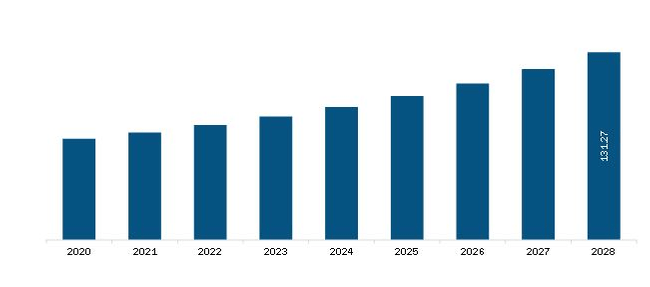
The Middle East & Africa circulating tumor cell (CTC) diagnostics market is expected to reach US$ 131.3 million by 2028 from US$ 75.3 million in 2021; it is estimated to grow at a CAGR of 8.3% during 2021–2028.
A circulating tumor cell is shed into the vasculature from the primary tumor and is carried around the body with the help of blood circulation. These circulating tumor cells are an indication of metastatic disease, and their detection can help in diagnosing the disease in its early stages and designing an appropriate treatment regime for the patient. In recent years, there have been significant advancements in isolation methods of circulating tumor cells for diagnosis. Immunoaffinity, physical properties, and direct analysis are among a few of the approaches used for circulating tumor cell isolation. Immunoaffinity is the affinity reactions that capture antibodies and target antigens present on cells of interest using magnetic beads, microfluidic flow, nanostructured substrate, microtubes, and leucocyte depletion. The microtube approach uses the biomimetic approach to stimulate the procedure of selectin-mediated cell adhesion for capturing CTCs. Even at a high flow rate of 4.8 ml/h, selectin-coated microtubes induce cell attachment and rolling, which promotes CTC binding with anti-EpCAM (i.e., epithelial cell adhesion molecule) and anti-PSMA antibodies. The device had a capture efficiency of 50% and an average purity of 66%, and it detected circulating tumor cells in 14 of 14 patient blood samples examined, compared to 9 of 14 detected by the CellSearch system. Physical properties are also used to isolate circulating tumor cells from peripheral blood cells. A few of the common physical properties used for the isolation of CTCs are density gradient centrifugation, microfiltration, microfluidics, and dielectrophoresis. Thus, the ongoing developments and advancements in various isolation techniques for circulating tumor cells are expected to gain traction in the coming years.
During the COVID19 pandemic, healthcare providers had to reduce the number of diagnostic services and screening programs to redirect their efforts on the management of this disease. As a result, cancer patients became more susceptible to serious infections and faced issues such as interrupted cancer or standard medical care. Increased pressure from elevated hospitalization rates for COVID-19 patients led to the reprofiling of many hospitals and departments, including oncology clinics, to treat COVID-19 patients. These factors harmed the progress of the Middle East and Africa circulating tumor cell (CTC) diagnostics market.
With the new features and technologies, vendors can attract new customers and expand their footprints in emerging markets. This factor is likely to drive the circulating tumor cell (CTC) diagnostics market. The Middle East & Africa circulating tumor cell (CTC) diagnostics market is expected to grow at a good CAGR during the forecast period.
Middle East & Africa Circulating Tumor Cell (CTC) Diagnostics Market Revenue and Forecast to 2028 (US$ Million)
Middle East & Africa Circulating Tumor Cell (CTC) Diagnostics Market Segmentation
By Technology
CTC detection and Enrichment Method
CTC Direct Detection Methods
CTC Analysis
By Application
Clinical/Liquid Biopsy
Risk Assessment
Screening and Monitoring
Research
Cancer Stem Cell and Tumorigenesis Research
Drug/Therapy Development
By End-User
Hospitals and Clinics
Research and Academic Institutes
Diagnostic Centers
By Country
UAE
Saudi Arabia
South Africa
Rest of Middle East & Africa
Companies Mentioned
Thermo Fisher Scientific Inc.
Stemcell Technologies Inc.
Qiagen
Advanced Cell Diagnostics, Inc. (Bio-Techne Corporation)
Fluxion Bioscience
Middle East and Africa Circulating Tumor Cell (CTC) Diagnostics Market Strategic Insights
Get more information on this report
Middle East and Africa Circulating Tumor Cell (CTC) Diagnostics Market Segmentation Analysis
Middle East and Africa Circulating Tumor Cell (CTC) Diagnostics Market Report Highlights
Middle East and Africa Circulating Tumor Cell (CTC) Diagnostics Report Scope
Report Attribute
Details
Market size in 2021
US$ 75.3 Million
Market Size by 2028
US$ 131.3 Million
CAGR (2021 - 2028)
8.3%
Historical Data
2019-2020
Forecast period
2022-2028
Segments Covered
By Technology
CTC Detection and Enrichment Method
CTC Direct Detection Method
CTC Analysis
By Application
Clinical/Liquid Biopsy
Research
By End-User
Hospitals and Clinics
Research and Academic Institutes
Diagnostic Centers
Regions and Countries Covered
Middle East and Africa
South Africa, Saudi Arabia, UAE, Rest of Middle East and Africa
Market leaders and key company profiles
Thermo Fisher Scientific Inc.
Stemcell Technologies Inc.
Qiagen
Advanced Cell Diagnostics, Inc. (Bio-Techne Corporation)
Fluxion Biosciences
Get more information on this report
Middle East and Africa Circulating Tumor Cell (CTC) Diagnostics Market Country and Regional Insights
Get more information on this report
Identical Market Reports with other Region/Countries
The List of Companies - Middle East and Africa Circulating Tumor Cell (CTC) Diagnostics Market
Thermo Fisher Scientific Inc.Stemcell Technologies Inc.QiagenAdvanced Cell Diagnostics, Inc. (Bio-Techne Corporation)Fluxion Biosciences
Frequently Asked Questions
How big is the Middle East and Africa Circulating Tumor Cell (CTC) Diagnostics Market?
The Middle East and Africa Circulating Tumor Cell (CTC) Diagnostics Market is valued at US$ 75.3 Million in 2021, it is projected to reach US$ 131.3 Million by 2028.
What is the CAGR for Middle East and Africa Circulating Tumor Cell (CTC) Diagnostics Market by (2021 - 2028)?
As per our report Middle East and Africa Circulating Tumor Cell (CTC) Diagnostics Market, the market size is valued at US$ 75.3 Million in 2021, projecting it to reach US$ 131.3 Million by 2028. This translates to a CAGR of approximately 8.3% during the forecast period.
What segments are covered in this report?
The Middle East and Africa Circulating Tumor Cell (CTC) Diagnostics Market report typically cover these key segments-
Technology (CTC Detection and Enrichment Method, CTC Direct Detection Method, CTC Analysis)
Application (Clinical/Liquid Biopsy, Research)
End-User (Hospitals and Clinics, Research and Academic Institutes, Diagnostic Centers)
What is the historic period, base year, and forecast period taken for Middle East and Africa Circulating Tumor Cell (CTC) Diagnostics Market?
The historic period, base year, and forecast period can vary slightly depending on the specific market research report. However, for the Middle East and Africa Circulating Tumor Cell (CTC) Diagnostics Market report:
Historic Period : 2019-2020
Base Year : 2021
Forecast Period : 2022-2028
Who are the major players in Middle East and Africa Circulating Tumor Cell (CTC) Diagnostics Market?
The Middle East and Africa Circulating Tumor Cell (CTC) Diagnostics Market is populated by several key players, each contributing to its growth and innovation. Some of the major players include:
Thermo Fisher Scientific Inc.
Stemcell Technologies Inc.
Qiagen
Advanced Cell Diagnostics, Inc. (Bio-Techne Corporation)
Fluxion Biosciences
Who should buy this report?
The Middle East and Africa Circulating Tumor Cell (CTC) Diagnostics Market report is valuable for diverse stakeholders, including:
Investors: Provides insights for investment decisions pertaining to market growth, companies, or industry insights. Helps assess market attractiveness and potential returns.
Industry Players: Offers competitive intelligence, market sizing, and trend analysis to inform strategic planning, product development, and sales strategies.
Suppliers and Manufacturers: Helps understand market demand for components, materials, and services related to concerned industry.
Researchers and Consultants: Provides data and analysis for academic research, consulting projects, and market studies.
Financial Institutions: Helps assess risks and opportunities associated with financing or investing in the concerned market.
Essentially, anyone involved in or considering involvement in the Middle East and Africa Circulating Tumor Cell (CTC) Diagnostics Market value chain can benefit from the information contained in a comprehensive market report.




 Get Free Sample For Middle East and Africa Circulating Tumor Cell (CTC) Diagnostics Market