
Implantable Cardioverter Defibrillator Market Outlook: Size, Share, Trends, Growth Analysis, Competitive Landscape & Forecast, 2026-2033

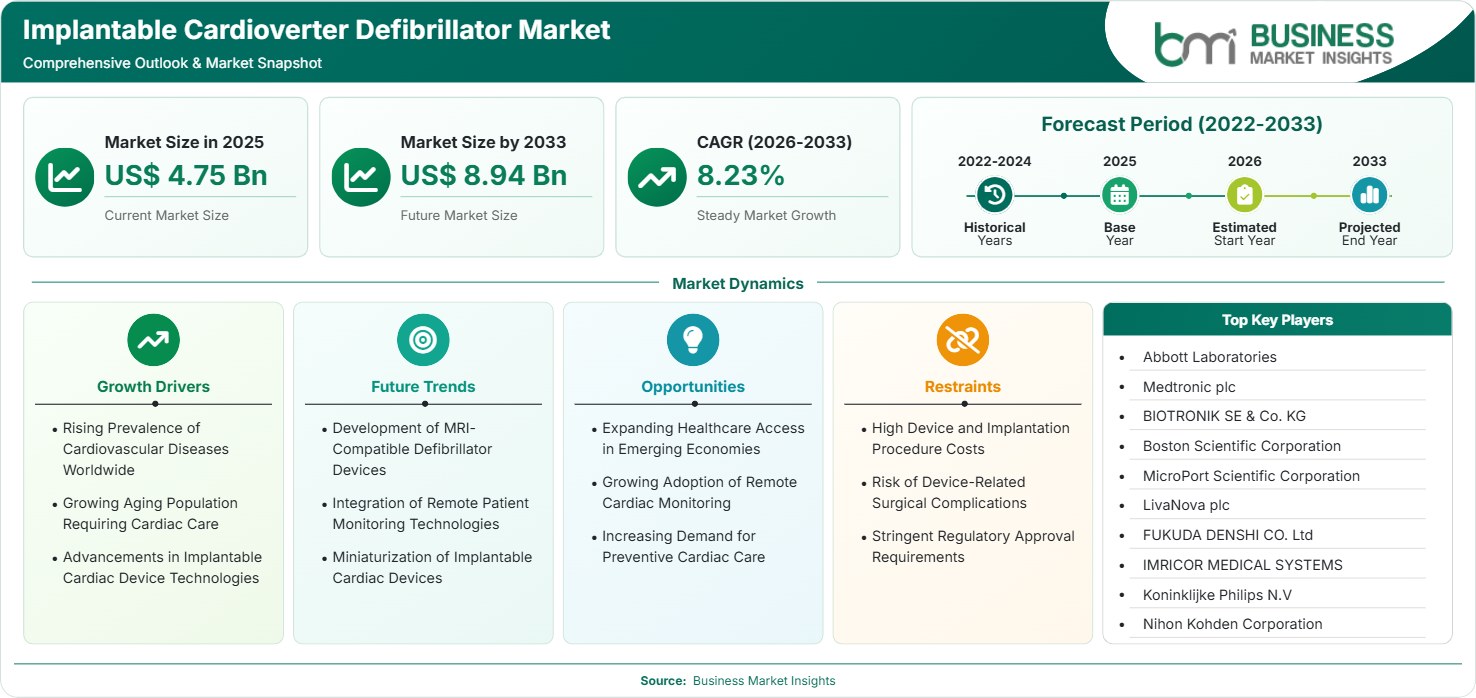
The Implantable Cardioverter Defibrillator Market size was valued at US$ 4.75 billion in 2025 and is projected to reach US$ 8.94 billion by 2033, growing at a CAGR of USD 8.23% during 2026–2033, driven by rising cardiovascular disease prevalence, aging populations, technological advancements, and increasing adoption of remote cardiac monitoring solutions.

Report Coverage
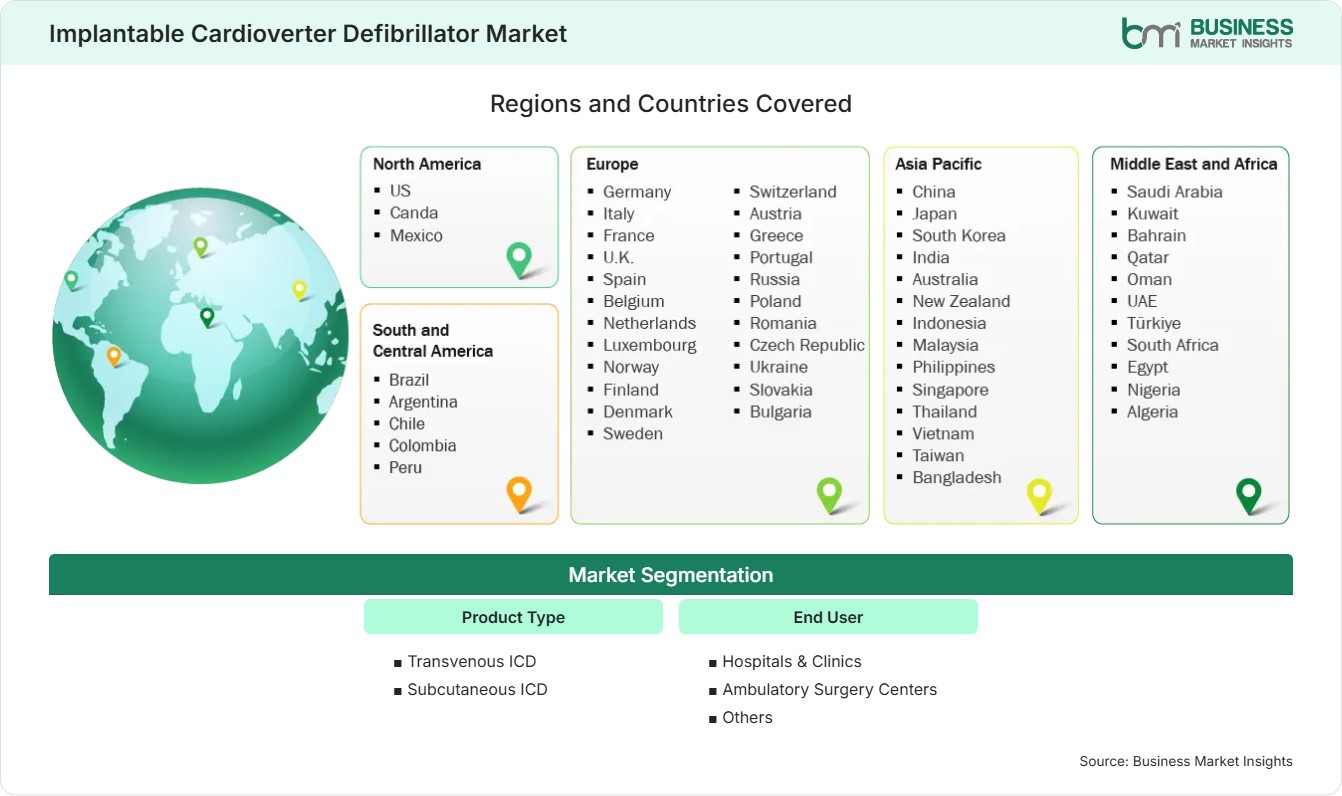
  • Product Type: Transvenous ICD, Subcutaneous ICD
  • End User: Hospitals & Clinics, Ambulatory Surgery Centers, Others
US$ 4.75 Bn Market size in 2025
US$ 8.94 Bn Market Size by 2033
8.23% CAGR, 2026 - 2033
2026-2033 Forecast Period

01 AI Overview

Implantable Cardioverter Defibrillator Market Summary

  • North America Region: North America holds a market share of 38%–42% in 2025, growing with a CAGR of 7.5%–8.5%, influenced by advanced healthcare infrastructure, reimbursement support, and cardiac disease management programs. The US market demonstrates steady adoption with a CAGR of 7.8%–8.8% through 2033.
  • Fastest Growing Region: Asia Pacific maintains a market share of 20%–24% in 2025, expanding with a CAGR of 9.0%–10.0%, supported by improving healthcare access, rising cardiovascular cases, and investments in advanced cardiac treatment facilities across emerging economies.
  • Leading Segment: Transvenous ICD represents a market share of 72%–76% in 2025, growing with a CAGR of 7.0%–8.0% due to established clinical usage, physician familiarity, and broad applicability in secondary prevention procedures.
  • High Growth Segment: Subcutaneous ICD records a market share of 24%–28% in 2025, advancing with a CAGR of 9.0%–10.0% driven by reduced vascular complications, expanding patient eligibility, and preference for minimally invasive cardiac device approaches.
  • Key Market Opportunity: Expansion of remote monitoring platforms, integration of artificial intelligence-based diagnostics, and increasing healthcare investments create opportunities for manufacturers to develop connected cardiac devices supporting long-term patient management.
  • Major Market Players: Abbott Laboratories, Medtronic plc, BIOTRONIK SE & Co. KG, Boston Scientific Corporation, MicroPort Scientific Corporation, LivaNova plc, FUKUDA DENSHI CO. LTD., IMRICOR MEDICAL SYSTEMS, Koninklijke Philips N.V., and Nihon Kohden Corporation.
02 Strategic Insights

Implantable Cardioverter Defibrillator Market: Strategic Insights

implantable-cardioverter-defibrillator-market-market-strategic-framework
FREE PDF
Request your free sample
Request free sample
03 Stakeholder View

Key Takeaways

  • The value chain is evolving from traditional device manufacturing toward integrated cardiac care ecosystems involving implant producers, software developers, monitoring providers, and healthcare networks. Suppliers with expertise in miniaturized electronics, battery technology, and connectivity solutions are gaining strategic importance.
  • Growth opportunities are concentrated in subcutaneous devices, emerging healthcare markets, and outpatient cardiac management models. Manufacturers focusing on expanding patient eligibility and reducing procedural complexity can capture additional demand from evolving treatment pathways.
  • Product innovation is shifting toward longer-lasting batteries, MRI compatibility, improved arrhythmia detection algorithms, and remote monitoring capabilities. Companies investing in digital health integration are positioned to strengthen clinical adoption and physician confidence.
  • Asia Pacific presents a compelling regional opportunity due to expanding hospital infrastructure, increasing cardiovascular disease burden, and government initiatives supporting specialized cardiac treatment capabilities in countries such as China and India.
  • Investment activity is increasingly focused on strategic partnerships, technology acquisitions, and collaborations between medical device companies and digital healthcare providers. These moves support portfolio expansion and accelerate the commercialization of connected cardiac solutions.
  • Clinical evidence generation remains a key competitive differentiator, as healthcare providers increasingly evaluate device reliability, patient outcomes, and long-term cost effectiveness before adopting advanced cardiac technologies.
04 Geographic Outlook

Implantable Cardioverter Defibrillator Market Regional Highlights

North America Implantable Cardioverter Defibrillator Market

North America accounted for a 38%–42% share in 2025 and is projected to expand at a CAGR of 7.5%–8.5% during 2026–2033. The region benefits from advanced electrophysiology centers, established reimbursement frameworks, and strong adoption of innovative cardiac technologies. The Implantable Cardioverter Defibrillator Market share remains supported by high procedure volumes in the United States and Canada, while healthcare digitization continues improving patient monitoring.

  • The United States represents the dominant regional contributor with strong clinical adoption, supported by advanced cardiac care infrastructure and continuous investment in electrophysiology research programs.
  • Canada demonstrates increasing demand through expanded access to specialized cardiac procedures, improving hospital capabilities, and the adoption of remote patient monitoring technologies.
  • Regional manufacturers and healthcare providers emphasize connected devices that enable real-time monitoring, reducing hospitalization risks and improving long-term patient management outcomes.
  • Regulatory approvals for advanced cardiac devices continue to support innovation, with companies focusing on safety improvements, device durability, and enhanced diagnostic performance.

US Implantable Cardioverter Defibrillator Market

The US market held a 32%–36% share in 2025 and is expected to grow at a CAGR of 7.8%–8.8% from 2026 to 2033. The country remains the largest individual market due to high cardiovascular disease prevalence, advanced reimbursement mechanisms, and widespread availability of electrophysiology specialists. Strong clinical adoption and research activity continue supporting market expansion.

  • The presence of leading medical device companies accelerates product development, clinical trials, and commercialization of next-generation cardiac implant technologies.
  • Increasing utilization of remote monitoring platforms allows physicians to track device performance and patient conditions outside traditional healthcare settings.
  • Aging demographics and rising prevalence of heart rhythm disorders are increasing demand for implantable therapies across hospitals and specialized cardiac clinics.

Europe Implantable Cardioverter Defibrillator Market

Europe accounted for a 26%–30% share in 2025 and is forecast to expand at a CAGR of 7.0%–8.0% during 2026–2033. Germany, the United Kingdom, and France remain key contributors due to advanced healthcare systems and strong cardiovascular care networks. The Implantable Cardioverter Defibrillator Market share in Europe is influenced by increasing adoption of minimally invasive devices and digital health integration.

  • Germany leads regional adoption through advanced cardiac centers, strong medical technology infrastructure, and established reimbursement pathways supporting implant procedures.
  • The United Kingdom is witnessing increasing demand due to healthcare modernization initiatives and improved access to specialized arrhythmia treatment services.
  • France continues investing in cardiovascular disease management programs, supporting the adoption of advanced implantable cardiac devices.
  • European manufacturers emphasize device safety, regulatory compliance, and improved patient outcomes through continuous research and development.
  • Italy and Spain represent emerging opportunities due to expanding cardiac care capabilities and increasing healthcare investments.

Asia Pacific Implantable Cardioverter Defibrillator Market

Asia Pacific accounted for a 20%–24% share in 2025 and is projected to register a CAGR of 9.0%–10.0% between 2026–2033. The region represents the fastest expanding area due to rising cardiovascular disease incidence, improving healthcare infrastructure, and increasing access to advanced cardiac procedures. The Implantable Cardioverter Defibrillator Market growth is supported by government healthcare investments, private hospital expansion, and growing awareness of preventive cardiac interventions.

  • China remains a major contributor due to increasing cardiac care investments, expanding tertiary hospitals, and rising adoption of advanced electrophysiology procedures in urban healthcare centers.
  • India demonstrates strong growth potential through increasing healthcare expenditure, improving specialty hospitals, and wider availability of cardiac device implantation services.
  • Japan maintains stable demand through advanced medical technology adoption, aging demographics, and established cardiac treatment networks supporting long-term device utilization.
  • South Korea and Southeast Asian countries are expanding adoption through healthcare modernization programs, increasing specialist availability, and improved patient access.
  • Regional manufacturers are focusing on cost-effective device solutions to address affordability challenges and expand adoption across developing healthcare systems.

Rest of World Implantable Cardioverter Defibrillator Market

Rest of World accounted for a 8%–12% share in 2025 and is anticipated to grow at a CAGR of 8.0%–9.0% through 2033. South and Central America, along with Middle East and Africa markets, are gaining attention due to healthcare infrastructure improvements and rising cardiac disease awareness. The Implantable Cardioverter Defibrillator Market share is gradually increasing as hospitals invest in advanced cardiac treatment capabilities.

Latin American countries are improving access through healthcare reforms, while Middle Eastern markets are investing in specialized cardiac centers and medical technology adoption. South Africa and Gulf countries represent important growth areas due to increasing healthcare modernization.

  • Brazil is expanding cardiac device adoption through improved hospital infrastructure, rising cardiovascular disease management programs, and greater availability of specialized healthcare services.
  • Mexico is experiencing increasing demand as private healthcare providers invest in advanced cardiac treatment facilities and diagnostic capabilities.
  • Gulf countries including Saudi Arabia and the UAE are supporting adoption through healthcare transformation initiatives and investments in specialized cardiac centers.
  • South Africa demonstrates opportunities through expanding medical infrastructure, improving specialist availability, and increasing awareness of cardiac rhythm management therapies.
  • Regional growth is supported by partnerships between international manufacturers and local healthcare organizations focused on improving treatment accessibility.
global-market-geography
FREE PDF
Request your free sample
Request free sample
05 Segment Analysis

Implantable Cardioverter Defibrillator Market Segmentation

Product Type

Product Type segmentation represents a critical area of adoption analysis, with Transvenous ICD and Subcutaneous ICD technologies addressing different clinical requirements. The segment accounted for a combined market share of 100% in 2025 and is projected to maintain expansion through 2034. The Implantable Cardioverter Defibrillator Market scope is influenced by physician preference, patient risk profiles, technological advancements, and demand for safer implantation procedures.

  • Transvenous ICD: These systems remain widely adopted due to extensive clinical experience, established implantation procedures, and suitability for patients requiring pacing capabilities alongside defibrillation support.
  • Subcutaneous ICD: These devices are gaining acceptance because they avoid vascular access complications and provide alternative treatment options for selected patients requiring defibrillation therapy.

End User

End-user segmentation reflects changing healthcare delivery models, with hospitals, clinics, and ambulatory surgery centers contributing to market development. Hospitals & Clinics represent the leading category due to specialized infrastructure and electrophysiology expertise. The segment’s market dynamics are shaped by procedure volumes, reimbursement frameworks, and healthcare accessibility. Increasing outpatient treatment capabilities are gradually influencing adoption patterns across healthcare facilities.

  • Hospitals & Clinics: Hospitals remain primary adoption centers due to advanced cardiac departments, trained specialists, comprehensive patient monitoring capabilities, and availability of implantation facilities.
  • Ambulatory Surgery Centers: These facilities are gaining relevance through shorter procedures, lower healthcare costs, and increasing preference for outpatient cardiac interventions.
06 Market Forces

Implantable Cardioverter Defibrillator Market Dynamics

Key Market Drivers

Rising Prevalence of Cardiovascular Diseases Worldwide

The issue of cardiovascular diseases is prevalent globally, making the market for rhythm management products a constant need. As per the World Health Organization, 17.9 million people die each year due to cardiovascular diseases around the world. An increase in incidents of ventricular arrhythmias and cardiac arrest has boosted the market due to the increased importance of preventive treatment approaches by doctors. The Implantable Cardioverter Defibrillator Market trends indicate increasing demand for devices with accurate sensing, efficient battery life, and remote monitoring capabilities.

Growing Aging Population Requiring Cardiac Care

An increase in the population worldwide has resulted in an increased demand for more efficient treatments of the heart, as there is a higher possibility of arrhythmias and other heart problems in the older age group. According to the United Nations' demographic forecasts, the population aged 65 and above is increasing rapidly in the developed world. As far as cardiac problems due to aging are concerned, this has led to an increase in the number of implantation surgeries. The growing requirement for long-term cardiac monitoring and improved survival outcomes continues to influence clinical decisions. Manufacturers are responding with devices designed for durability, compatibility, and enhanced patient management.

Advancements in Implantable Cardiac Device Technologies

Technological advancements are revolutionizing the field of implantable heart devices through improved algorithms, wireless connectivity, and integration with digital health platforms. Today’s technologies deliver improved arrhythmia detection, remote diagnosis, and patient monitoring. Predictive healthcare models are being supported by artificial intelligence through the analysis of device data. These developments have positively influenced physicians' decision-making and are motivating the adoption of these devices at specialized heart centers.

Key Market Opportunities

Expanding Healthcare Access in Emerging Economies

Emerging countries offer many opportunities, especially with improvements in healthcare infrastructure and the growing availability of specialized cardiac treatments. The growth in investment in hospitals, the adoption of new technology, and physician training programs are leading to the formation of new centers to meet demand. As per the Implantable Cardioverter Defibrillator Market Forecasts, manufacturers have much to gain from adopting local approaches, developing affordable products, and forming alliances with regional healthcare providers.

Growing Adoption of Remote Cardiac Monitoring

Technologies for remote monitoring have enabled continuous patient management after device implantation. Through connected platforms, healthcare professionals can monitor the device's operation, detect abnormal events, and respond in a timely manner. The integration of devices with smartphones, cloud computing systems, and the broader digital healthcare system adds more value to them. Those companies that invest in data security, interoperability, and AI-based monitoring gain a competitive advantage.

Increasing Demand for Preventive Cardiac Care

Cardiac preventive programs have led to the early identification of at-risk patients and provided opportunities for improved treatment methods. More attention is being paid by healthcare professionals towards reducing cases of sudden cardiac death via the use of risk assessments and personalized therapy. Growing consumer awareness and diagnostics are helping meet the demand for implantable treatment methods. Companies can make use of this situation by offering user-friendly solutions.

Market Restraints and Challenges

High Device and Implantation Procedure Costs

Factor: High device pricing, specialized implantation requirements, and expensive follow-up care can restrict adoption, particularly in price-sensitive healthcare systems.

Impact: Cost factors may lead to delayed treatment decision-making, reduced access to procedures, and lower penetration in developing regions due to inconsistent reimbursement coverage. The process of performing implantable cardioverter defibrillator procedures requires specialized electrophysiologists, adequate hospital infrastructure, and constant patient monitoring, resulting in higher healthcare costs overall. These problems are being solved by manufacturers through cost-effectiveness measures, efficient manufacturing, and the creation of partnerships based on value-based care.

Risk of Device-Related Surgical Complications

Factor: Device implantation involves risks, including infection, lead-related complications, and procedural challenges associated with cardiac interventions. 

Impact: These clinical considerations can affect doctor preferences, patient preferences, and adoption rates. Although technological developments have minimized the risk of complications, healthcare professionals still focus on safety, efficacy, and long-term clinical outcomes. Manufacturers are working on leadless technology, improved device material, and monitoring devices that minimize the complications. Effective physician training and post-procedural care pathways play a vital role in enhancing confidence in device use.

07 Company Analysis

Competitive Landscape

The Implantable Cardioverter Defibrillator Market analysis highlights competition among global medical technology companies focused on cardiac rhythm management, implant innovation, and connected healthcare solutions. Leading players emphasize research and development, clinical validation, strategic collaborations, and digital monitoring capabilities to improve device performance and strengthen market presence.

Company Name

Overview

Products and Services relevant to this market

Abbott Laboratories

Global healthcare company developing cardiovascular medical technologies and innovative treatment solutions.

Implantable cardioverter defibrillators, cardiac rhythm management systems, monitoring technologies, and digital healthcare solutions.

Medtronic plc

Leading medical technology company specializing in advanced cardiac and surgical solutions.

ICD systems, cardiac rhythm management devices, remote monitoring platforms, and implantable therapies.

BIOTRONIK SE & Co. KG

German medical technology company focused on cardiovascular device innovation.

Implantable defibrillators, cardiac monitoring systems, electrophysiology solutions, and connected care platforms.

Boston Scientific Corporation

Medical technology leader providing minimally invasive cardiovascular solutions globally.

ICD devices, cardiac rhythm management products, monitoring technologies, and implantable cardiac systems.

MicroPort Scientific Corporation

Healthcare technology company developing cardiovascular intervention solutions.

Implantable cardiac devices, defibrillator systems, and rhythm management technologies.

LivaNova plc

Medical device company specializing in cardiovascular and neuromodulation therapies.

Cardiac rhythm management solutions and advanced cardiovascular treatment technologies.

FUKUDA DENSHI CO. LTD.

Japanese company providing medical monitoring and diagnostic equipment solutions.

Cardiac monitoring systems, diagnostic technologies, and healthcare information solutions.

IMRICOR MEDICAL SYSTEMS

Medical technology company focused on MRI-guided cardiac procedures.

Cardiac navigation technologies, electrophysiology solutions, and imaging-guided procedures.

Koninklijke Philips N.V.

Global healthcare technology company supporting connected care and diagnostics.

Patient monitoring systems, cardiac care technologies, and digital healthcare platforms.

Nihon Kohden Corporation

Japanese healthcare technology company developing patient monitoring 

 
10 Trust & Transparency

Research Methodology

The market analysis combines proprietary research with secondary data from government agencies, company disclosures, regulatory filings, industry databases and expert interviews. Market estimates are validated through data triangulation, cross-market benchmarking and analyst review.

View Full Research Methodology

11 Questions Answered

Frequently Asked Questions

Why are subcutaneous ICD systems gaining attention?

Subcutaneous ICD systems are gaining attention because they eliminate the need for vascular leads, potentially reducing certain complications. They provide an alternative solution for selected patients requiring defibrillation therapy without pacing functionality.

What insights are provided in the Implantable Cardioverter Defibrillator Market Report?

The report evaluates market dynamics, competitive positioning, technological developments, segmentation trends, regional opportunities, and strategic factors influencing industry growth through 2033.

Which healthcare facilities are major users of these devices?

Hospitals and specialized cardiac centers remain the primary users due to advanced implantation capabilities and electrophysiology expertise. Ambulatory surgery centers are gradually expanding adoption as outpatient cardiac procedures become more common.

How are technological advancements changing cardiac defibrillator devices?

Modern devices are incorporating improved sensing algorithms, wireless connectivity, remote monitoring, and enhanced battery technologies. These developments improve clinical decision-making, reduce follow-up complexity, and support personalized patient management approaches.

What factors are influencing the adoption of implantable cardioverter defibrillators?

Increasing cardiovascular disease prevalence, aging populations, improved diagnosis rates, and technological improvements in cardiac devices are major factors influencing adoption. Healthcare providers are increasingly prioritizing therapies that reduce sudden cardiac death risks and improve long-term patient outcomes.

Access the Full Implantable Cardioverter Defibrillator Market Report

Get segment-level forecasts, regional estimates, competitive benchmarking, company profiles and downloadable Excel datasets.

Access the full Implantable Cardioverter Defibrillator Market Report
350 pages PDF & Excel | 2026-08-04