
Heart Valves Market Outlook: Size, Share, Trends, Growth Analysis, Competitive Landscape & Forecast, 2026-2033

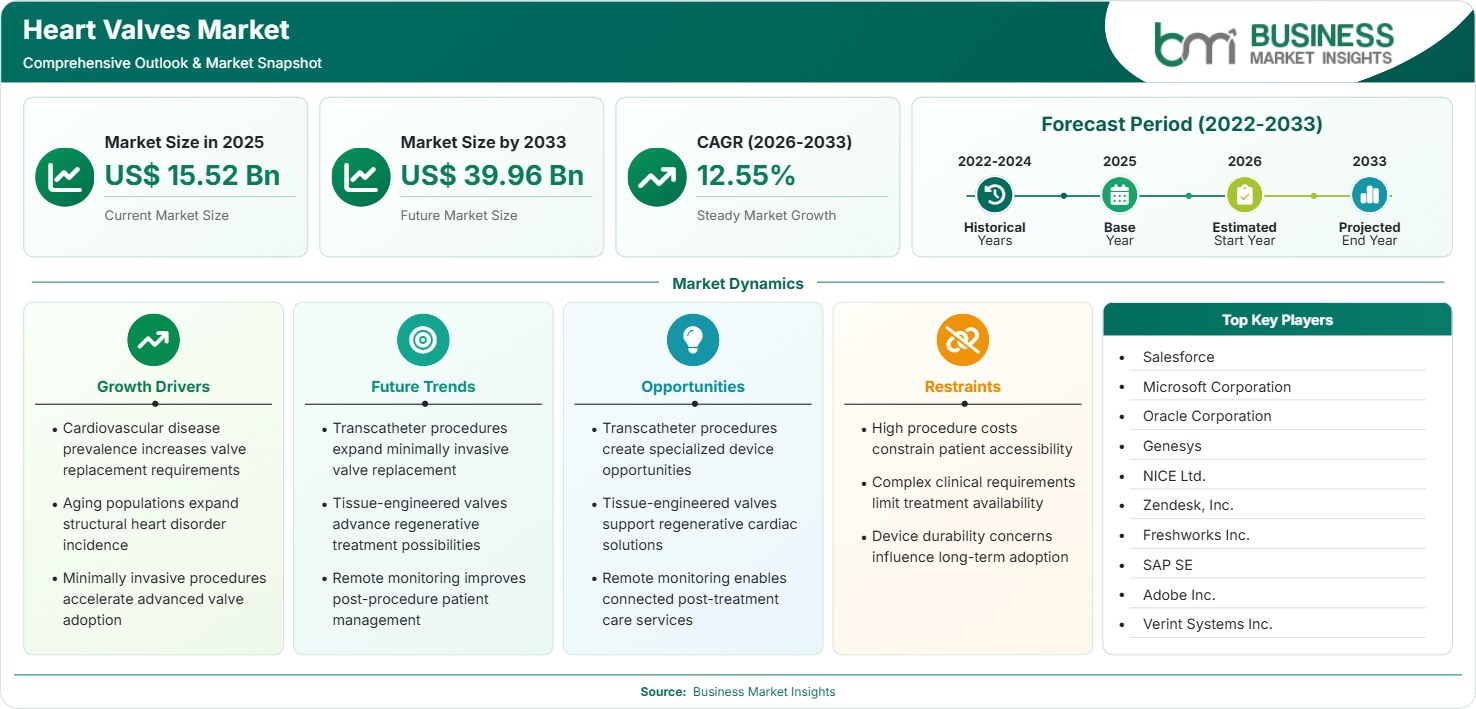
The Heart Valves Market size was valued at US$ 15.52 Billion in 2025 and is projected to reach US$ 39.96 Billion by 2033, growing at a CAGR of 12.55% during 2026–2033. Rising prevalence of valvular heart disease, increasing transcatheter valve procedures, expanding elderly population, technological advancements in bioprosthetic valves, and broader access to cardiac interventions are creating substantial growth opportunities globally.

Report Coverage
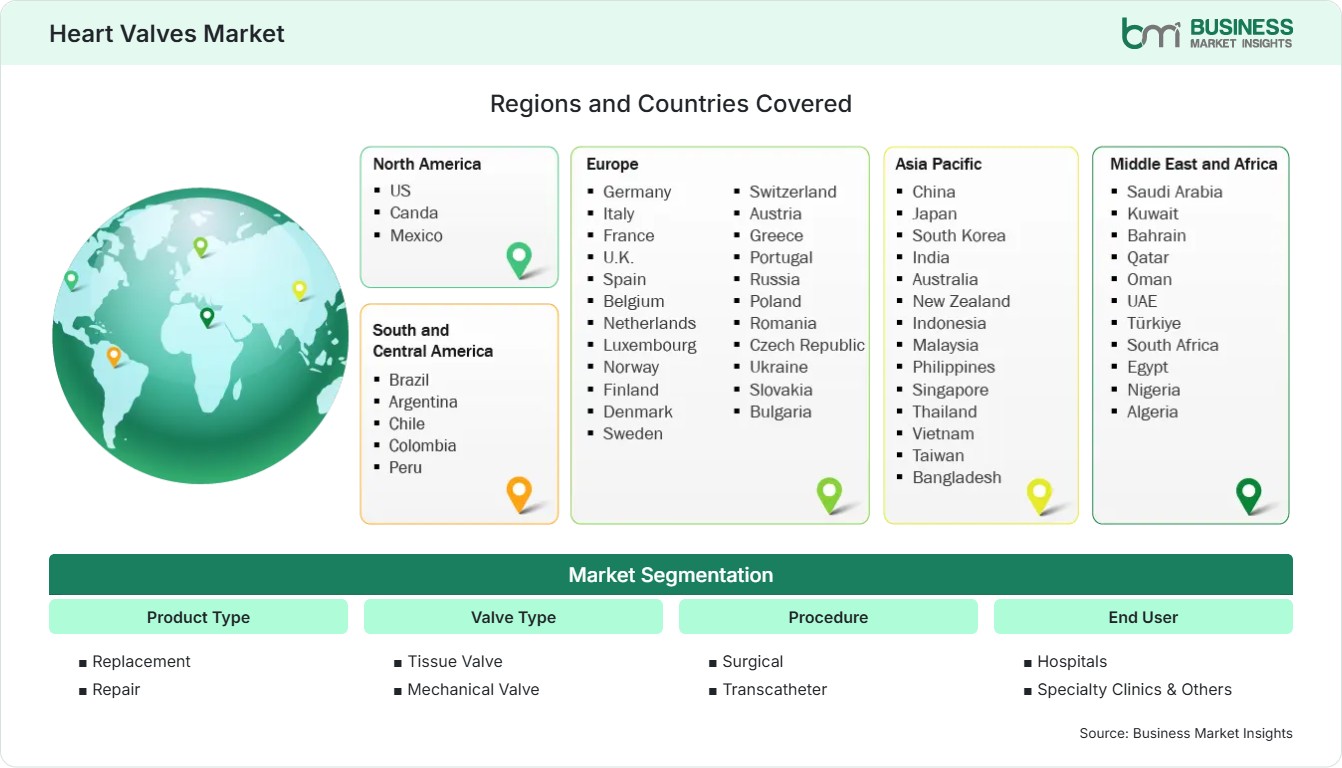
  • Product Type: Replacement , Repair
  • Valve Type: Tissue Valve, Mechanical Valve
  • Procedure: Surgical, Transcatheter
  • End User: Hospitals, Specialty Clinics & Others
US$ 15.52 Bn Market size in 2025
US$ 39.96 Bn Market Size by 2033
12.55% CAGR, 2026 - 2033
2026-2033 Forecast Period

AI Overview

Heart Valves Market Summary

  • North America Region: North America holds a market share of 38%–41% in 2025, growing with a CAGR of 11.5%–12.0% during 2026–2033, influenced by strong reimbursement systems, advanced cardiac centers, growing transcatheter adoption, and increasing elderly patient volumes. The US remains the regional leader, supported by valve innovation, high procedural volumes, and an estimated CAGR of 11.8%–12.3% through 2033.
  • Fastest Growing Region: Asia Pacific holds a market share of 24%–27% in 2025, growing with a CAGR of 14.5%–15.2% during 2026–2033, driven by healthcare infrastructure investments, growing cardiovascular disease burden, wider access to minimally invasive interventions, increasing specialist availability, and favorable medical device commercialization pathways.
  • Leading Segment: Transcatheter procedures account for 52%–56% share in 2025 and are projected to expand at 13.5%–14.2% CAGR through 2033. Growth is supported by reduced hospitalization periods, expanding clinical indications, enhanced procedural outcomes, growing physician preference, and increasing use among elderly and high-risk patients.
  • High Growth Segment: Tissue valves represent 60%–64% share in 2025 and are expected to grow at 13.8%–14.5% CAGR during 2026–2033. Increasing preference for anticoagulation-free solutions, improved durability, aging demographics, favorable physician recommendations, and expanded minimally invasive implantation techniques continue accelerating adoption across healthcare settings.
  • Key Market Opportunity: Expansion of transcatheter therapies into intermediate-risk and younger patient populations creates opportunities for manufacturers to develop durable valve platforms, improve long-term outcomes, strengthen procedural efficiency, and increase global treatment accessibility.
  • Major Market Players: Edwards Lifesciences Corporation, Medtronic plc, Abbott Laboratories, Boston Scientific Corporation, Artivion, Inc., LivaNova PLC, JenaValve Technology, Inc., Meril Life Sciences Pvt. Ltd., Lepu Medical Technology (Beijing) Co., Ltd., and Venus Medtech (Hangzhou) Inc.
Strategic Insights

Heart Valves Market: Strategic Insights

Heart Valves Market Strategic Framework
FREE PDF
Request your free sample
Request free sample
Stakeholder View

Key Takeaways

  • The value chain in the industry is now bringing together suppliers of biomaterials, providers of imaging technology, manufacturers of catheters, hospitals, and specialists in structural heart surgery, thus establishing a highly cooperative environment that focuses on clinical performance and procedural efficiency.
  • The main expansion possibilities are focused on transcatheter interventions and tissue-based valve technologies since healthcare systems are favouring minimally invasive treatment options and shorter patient recovery times.
  • The focus of innovation is now on next-generation bioprosthetic materials, improved leaflet durability, the use of artificial intelligence to assist with imaging guidance, and valve systems designed so that a wider range of patients are eligible.
  • The investment environment in Asia Pacific is highly attractive due to the increasing number of procedures, rising healthcare spending, rapid expansion of specialist training programs, and growing capacity for structural heart treatments.
  • More strategic acquisitions and collaborations are concentrating on transcatheter technologies, imaging systems, and clinical research partnerships to improve market access and reinforce long-term product portfolios.
  • Companies that have well-developed physician training systems and the ability to provide thorough post-procedure support are well positioned to establish sustainable competitive advantages as the complexity of procedures continues to evolve.
Geographic Outlook

Heart Valves Market Regional Highlights

North America Heart Valves Market

North America accounted for approximately 38%–41% of global revenue in 2025 and is projected to expand at a CAGR of 11.5%–12.0% through 2033. The Heart Valves Market share remains highest in North America due to substantial procedural volumes, strong clinical adoption of innovative devices, active physician training initiatives, and continued investment in structural heart treatment programs.

  • The United States and Canada are still responsible for driving demand through high rates of diagnosis and the widespread use of minimally invasive cardiac interventions.
  • The increasing use of transcatheter aortic valve replacement procedures indicates that the procedures are becoming more efficient and are leading to shorter hospital stays within healthcare networks.
  • The clinical evidence in support of advanced tissue valves should lead to greater acceptance among older patients and those with intermediate risk.
  • The major manufacturers have established a strong presence in each region by means of physician education programs, launching new products, and conducting clinical trials.
  • The integration of advanced imaging helps to increase the success rates of procedures and leads to greater acceptance of structural heart therapies.

US Heart Valves Market

The United States represents approximately 82%–86% of the North American Heart Valves Market revenue and is expected to expand at a CAGR of 11.8%–12.3% through 2033. Robust healthcare expenditure, advanced hospital networks, significant procedural expertise, and rapid adoption of catheter-based interventions support market development.

  • The leading academic medical centers are still expanding their structural heart programs to deal with the increasing prevalence of cardiovascular disease.
  • The conditions regarding reimbursement are favorable, and this has led to the adoption of new transcatheter systems by the major healthcare providers.
  • The vigorous activity in clinical research speeds up the commercialization of advanced valve technologies and procedural techniques.
  • The fact that the population is getting older means that there will be a continued need for replacement and repair procedures over the period under consideration.

Europe Heart Valves Market

Europe represented approximately 27%–30% of global Heart Valves Market revenue in 2025 and is forecast to record a CAGR of 11.8%–12.6% through 2033. Strong adoption of minimally invasive cardiovascular procedures, aging populations, and well-established cardiac treatment pathways continue to support demand.

  • Germany makes the greatest contribution from the region because of its highly developed cardiac centers, the large amount of clinical experience it has, and the fact that it has strong reimbursement coverage, which encourages wide use of replacement and repair procedures.
  • France is continuing to enhance adoption by means of structural heart disease programs, which are aimed at improving patient outcomes, extending access to minimally invasive treatments, and backing clinical innovation initiatives.
  • Spain is still one of the fastest-growing markets since hospitals are gradually increasing their investment in transcatheter infrastructure, specialist training, and advanced imaging technologies for structural heart interventions.
  • The fact that Italy has an increasing number of elderly people together with greater awareness of the diagnosis of valvular disease is helping to ensure continued growth in the number of procedures carried out in both public and private facilities.
  • Regional manufacturers and international suppliers are still expanding their clinical collaborations to speed up innovation and the commercialization of their products in the major European healthcare markets.

Asia Pacific Heart Valves Market

Asia Pacific captured approximately 24%–27% of global Heart Valves Market revenue in 2025 and is projected to achieve the fastest CAGR of 14.5%–15.2% through 2033. The region benefits from expanding healthcare expenditure, rising cardiovascular disease prevalence, improving diagnostic capabilities, and growing access to specialized cardiac procedures.

  • China's share of regional demand is led by its increasing use of transcatheter procedures, its growing ability to manufacture domestically, and the strong support from the government for advanced cardiovascular treatments.
  • India offers a high-growth opportunity due to the expansion of its hospital networks, increased access to cardiac specialists, and growing awareness of valvular disorders.
  • Because of its large population of elderly people and the widespread use of advanced replacement technologies, Japan has a great deal of procedural work.
  • South Korea is continuing its investment in innovation and clinical research and is therefore increasing its adoption of next-generation valve platforms and minimally invasive procedures.
  • Local manufacturers are now improving their competitiveness by means of product innovation, cutting costs, and forming strategic partnerships with healthcare providers.

Rest of World Heart Valves Market

Rest of World accounted for approximately 7%–10% of global Heart Valves Market revenue in 2025 and is expected to expand at a CAGR of 12.8%–13.5% through 2033. South & Central America benefits from growing cardiovascular treatment capacity and increasing awareness regarding structural heart disease.

  • Brazil is leading regional demand due to the expansion of its cardiovascular programs, its improved hospital infrastructure, and greater access to advanced replacement procedures.
  • Mexico is still creating opportunities since both public and private healthcare institutions are expanding their capabilities in the treatment of cardiac conditions and the training of specialists.
  • Saudi Arabia is still a major healthcare market in the Middle East as a result of large-scale investments in healthcare and the increasing availability of advanced cardiac treatments.
  • The United Arab Emirates is becoming a regional hub for advanced procedures, due to its modern healthcare infrastructure and the presence of medical tourism.
  • There is an increasing use of procedural interventions in South Africa as a result of better access to healthcare and because more cases of valvular heart diseases are being diagnosed.
Global Market Geography
FREE PDF
Request your free sample
Request free sample
Segment Analysis

Heart Valves Market Segmentation

Product Type

The product type segment accounts for a significant portion of industry demand, with replacement procedures representing approximately 68%–72% share in 2025 and growing at a CAGR of 12.3%–13.0% through 2033. The Heart Valves Market scope is expanding through both replacement and repair technologies designed to address diverse patient needs and clinical conditions.

  • Replacement: Dominates industry adoption due to extensive utilization in severe valvular disease treatment, technological advances in prosthetic valve design, and wider availability of transcatheter replacement procedures.
    • Aortic: Represents the largest replacement category, supported by substantial prevalence of aortic stenosis and increasing adoption of minimally invasive transcatheter treatment approaches.
    • Mitral: Demand continues increasing as repair limitations in complex cases encourage broader use of replacement solutions supported by enhanced durability outcomes.
  • Repair: Gains traction through valve-preservation strategies, improved procedural techniques, and physician preference for maintaining native valve function whenever clinically feasible.

Valve Type

Valve type segmentation remains heavily influenced by patient age, long-term treatment considerations, and procedural suitability. Tissue valves accounted for approximately 60%–64% Heart Valves Market share in 2025 and are forecast to register a CAGR of 13.8%–14.5% through 2033, supported by growing preference for anticoagulation-free treatment approaches.

  • Tissue Valve: Benefits from increasing adoption among elderly patients, expanding transcatheter implantation compatibility, and continued improvements in biomaterial engineering and durability.
  • Mechanical Valve: Maintains relevance among younger patient populations requiring long-term durability and predictable performance despite lifelong anticoagulation requirements.

Procedure

Procedure segmentation reflects the transition toward minimally invasive cardiovascular interventions. Transcatheter procedures captured approximately 52%–56% share in 2025 and are expected to achieve a CAGR of 13.5%–14.2% through 2033. Growing clinical evidence, physician familiarity, and patient preference for reduced recovery times continue accelerating adoption while supporting procedural innovation and healthcare efficiency improvements.

  • Surgical: Remains essential for complex clinical cases requiring direct anatomical access and comprehensive corrective intervention across multiple valve structures.
  • Transcatheter: Expands rapidly due to shorter recovery periods, reduced hospitalization requirements, favorable clinical outcomes, and widening eligibility across patient risk categories.

End User

End-user demand remains concentrated within large healthcare institutions equipped with advanced cardiovascular treatment capabilities. Hospitals represented approximately 72%–76% share in 2025 and are projected to grow at a CAGR of 12.1%–12.8% through 2033. Continued investments in structural heart programs, specialist expertise, and integrated diagnostic capabilities reinforce their dominant position across global healthcare markets.

  • Hospitals: Continue leading utilization due to comprehensive procedural capabilities, multidisciplinary cardiac teams, and access to advanced imaging and surgical infrastructure.
  • Specialty Clinics & Others: Growing steadily through increasing outpatient treatment capabilities, specialized cardiovascular services, and improved referral networks supporting patient access.
Market Forces

Heart Valves Market Dynamics

Key Market Drivers

Rising Prevalence of Valvular Heart Disease

The increasing burden of valvular heart disease is a primary factor supporting global demand for advanced treatment solutions. Age-related degeneration remains the leading cause of aortic stenosis and mitral valve disorders, particularly in developed economies experiencing rapid demographic aging. According to cardiovascular health studies, the prevalence of clinically significant valvular disease rises substantially among populations above 65 years of age. Earlier diagnosis through echocardiography screening programs is further expanding treatment eligibility. Growing awareness among healthcare providers and patients is also improving referral rates, creating sustained momentum for Heart Valves Market growth across multiple healthcare systems.

Rapid Adoption of Transcatheter Procedures

Minimally invasive procedures are changing how clinical practice is carried out in structural heart care. Compared to traditional surgery, transcatheter technologies provide shorter hospital stays, less procedural trauma, and a quicker recovery for certain patient groups. The fact that regulatory approvals have broadened treatment indications to include intermediate- and lower-risk patients has led to a significant increase in the number of procedures performed. Hospitals are still making investments in specialized catheterization laboratories and in physician training courses to support this growth in procedures. At the same time, manufacturers are improving their delivery systems, increasing the accuracy of valve positioning, and enhancing long-term durability.

Advancements in Tissue Valve Technologies

Continuous innovation in biomaterials, leaflet engineering, and anti-calcification technologies is improving the performance profile of modern tissue valves. Manufacturers are introducing enhanced biological valve platforms capable of extending durability while minimizing complications. Increased physician preference for anticoagulation-free treatment options has also accelerated adoption, particularly among elderly patients. Heart Valves Market trends indicate growing acceptance of tissue-based devices across both surgical and catheter-delivered procedures. Enhanced product longevity creates additional value for healthcare providers by reducing the likelihood of repeat interventions.

Key Market Opportunities

Expansion into Younger Patient Populations

A major opportunity exists in extending advanced valve therapies beyond traditional elderly patient groups. Improving durability profiles and expanding clinical evidence are supporting broader adoption among younger individuals requiring long-term treatment. Manufacturers investing in next-generation biomaterials and lifetime management strategies are particularly well positioned to capitalize on this shift. Greater acceptance among lower-risk patients expands addressable procedure volumes while supporting premium product positioning.  Heart Valves Market Forecasts increasingly reflect the impact of extending intervention eligibility across broader demographic categories and disease severity levels.

Growth Potential Across Emerging Healthcare Systems

Because of the growing prevalence of cardiovascular diseases and the increasing availability of healthcare, emerging economies offer a significant amount of untapped potential. In the Asia-Pacific region, in Latin America, and in certain areas of the Middle East, governments are still investing in infrastructure for advanced cardiac treatments and in training specialists. Since healthcare systems are often not adequately developed relative to the level of disease, this creates favorable conditions for long-term growth in the number of procedures performed. Companies that establish regional partnerships, develop local manufacturing capabilities, and launch initiatives to educate physicians will be able to capitalize on rising adoption rates.

Digital Integration and Structural Heart Ecosystems

Digital technologies are providing new possibilities for planning procedures, patient monitoring, and clinical decision-making. Imaging aided by artificial intelligence, the use of predictive analytics, and digital patient management systems are becoming more supportive of structural heart interventions. These tools not only improve the efficiency of procedures but also enable doctors to identify the best treatment options. For manufacturers, combining digital features with their range of devices allows them to enhance differentiation and strengthen ties with customers. Moreover, treatment planning based on data contributes to better patient outcomes and more efficient use of resources.

Market Restraints and Challenges

High Procedure Costs and Reimbursement Variability

The use of advanced replacement and transcatheter procedures usually involves considerable expenses for devices, imaging, and hospital infrastructure. As a result, high treatment costs may limit the uptake in healthcare systems that are concerned about expenses and can lead to unequal access for patients. Although developed countries generally have reimbursement systems in place to support these treatments, the extent of coverage varies greatly from one region to another. Budget constraints may cause hospitals and healthcare networks to delay the adoption of the technology. In emerging markets, there are further affordability challenges due to lower levels of healthcare spending.

Stringent Regulatory and Clinical Evidence Requirements

The fact that cardiovascular implantable devices are subject to intense regulatory oversight, have lengthy clinical trial periods, and must meet strict safety standards means that product development takes longer and becomes more costly, which can delay commercialization and prevent smaller companies from taking part. To get approval in key markets, manufacturers must produce strong long-term evidence on durability, safety, and clinical results. Changing regulatory requirements can also lead to higher compliance costs and greater operational complexity.

Company Analysis

Competitive Landscape

The competitive environment is characterized by ongoing product innovation, expanded transcatheter capabilities, and strategic collaborations with healthcare providers. Current Heart Valves Market analysis indicates competition is increasingly centered on procedural outcomes, valve durability, and physician training ecosystems.

Company Name

Overview

Products and Services relevant to this market

Edwards Lifesciences Corporation

Global leader in structural heart technologies with strong expertise in transcatheter valve therapies and cardiovascular innovation.

Transcatheter aortic valve replacement systems, surgical tissue valves, patient monitoring technologies, and structural heart solutions.

Medtronic plc

Diversified medical technology company with extensive cardiovascular portfolio and strong global commercial presence.

Surgical heart valves, transcatheter valve platforms, cardiac surgery products, and associated intervention technologies.

Abbott Laboratories

Major healthcare company focusing on structural heart interventions and minimally invasive cardiovascular treatments.

Mitral repair systems, transcatheter technologies, diagnostic solutions, and structural heart therapy products.

Boston Scientific Corporation

Innovative medical device company expanding its structural heart and cardiovascular intervention capabilities.

Structural heart technologies, catheter-based treatment solutions, imaging support tools, and cardiovascular devices.

Artivion, Inc.

Specialized cardiovascular company focused on aortic therapies and advanced cardiac surgical solutions.

Surgical heart valves, tissue preservation technologies, aortic repair products, and cardiac surgery solutions.

LivaNova PLC

Established medical technology provider with strong expertise in cardiopulmonary and cardiac surgery markets.

Heart valve products, perfusion systems, cardiopulmonary technologies, and related surgical support solutions.

JenaValve Technology, Inc.

Structural heart specialist focused on next-generation transcatheter valve innovation and development.

Transcatheter aortic valve systems, valve replacement technologies, and minimally invasive treatment platforms.

Meril Life Sciences Pvt. Ltd.

Rapidly expanding medical technology company with broad cardiovascular device manufacturing capabilities.

Transcatheter heart valve systems, cardiovascular implants, intervention devices, and cardiac care solutions.

Lepu Medical Technology (Beijing) Co., Ltd.

Large healthcare technology manufacturer serving cardiovascular and interventional medicine markets globally.

Heart valve products, cardiovascular intervention systems, medical implants, and diagnostic technologies.

Venus Medtech (Hangzhou) Inc.

Specialized structural heart company focused on transcatheter valve innovation and commercialization.

Transcatheter valve replacement systems, delivery technologies, and minimally invasive cardiovascular solutions.

Trust & Transparency

Research Methodology

The market analysis combines proprietary research with secondary data from government agencies, company disclosures, regulatory filings, industry databases and expert interviews. Market estimates are validated through data triangulation, cross-market benchmarking and analyst review.

View Full Research Methodology

Questions Answered

Frequently Asked Questions

What does a Heart Valves Market Report typically evaluate?

A Heart Valves Market Report generally examines industry size, competitive positioning, technology trends, regional developments, regulatory influences, growth opportunities, and strategic initiatives shaping future demand.

Which region offers the highest future growth potential?

Asia Pacific is expected to deliver the strongest growth owing to healthcare modernization, increasing cardiovascular disease burden, rising healthcare expenditure, and expanding specialist cardiac treatment capabilities.

Why are transcatheter procedures gaining popularity?

Transcatheter interventions offer shorter recovery periods, reduced hospital stays, lower procedural trauma, and favorable clinical outcomes, making them increasingly attractive to patients and healthcare providers.

Which valve type currently leads revenue generation?

Tissue valves lead revenue generation due to strong physician preference, expanding transcatheter compatibility, and reduced need for lifelong anticoagulation therapy among many patient groups.

What factors are creating long-term demand for heart valve therapies?

Growing elderly populations, increased valvular disease diagnosis rates, improving access to cardiovascular treatment, and broader adoption of minimally invasive procedures are supporting long-term industry expansion.

Access the Full Heart Valves Market Report

Get segment-level forecasts, regional estimates, competitive benchmarking, company profiles and downloadable Excel datasets.

Access the full Heart Valves Market Report
350 pages PDF & Excel | 2026-09-23
Similar Research

Related Market Reports