Increasing livestock modernization and camel farming
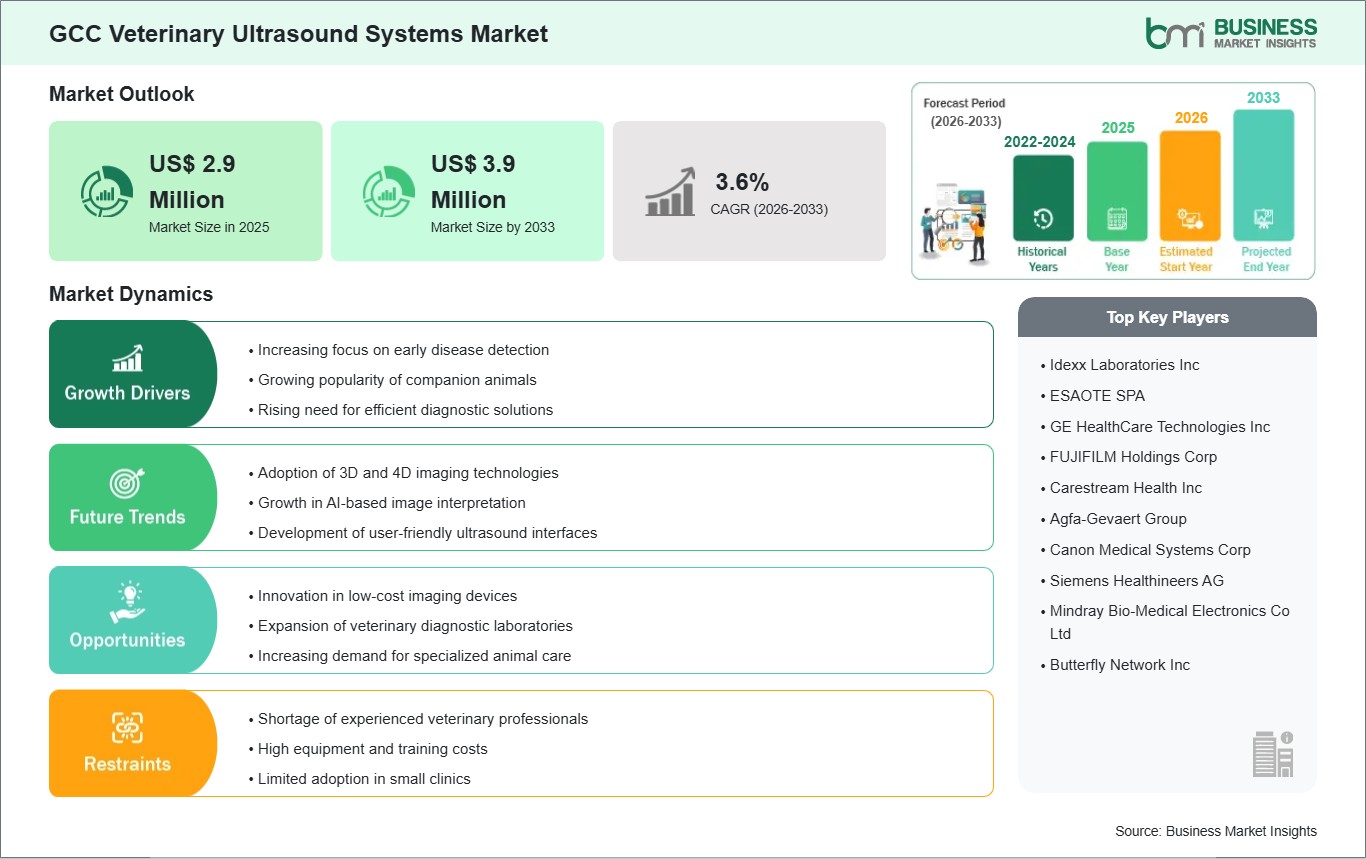
In the GCC region, the veterinary ultrasound systems market is being driven by investments in contemporary livestock operations especially with regard to camels, cattle, and poultry. The countries of Saudi Arabia and UAE have developed their commercial farms and breeding programs as a response to increasing consumer demand for the meat, milk, and camel products produced by these animals. The use of ultrasound systems in veterinary medicine will enhance the reproductive efficiency and monitoring of pregnant animals while ensuring the highest degree of health for an animal that is economically or culturally important to this area. Both government initiatives and private funding have supported efforts to modernize the livestock industry. Programs focused on improving productivity, prevention of disease, and genetic selection are providing a growing environment for the introduction of veterinary technologies. As ultrasound systems are being utilized more frequently as a means of monitoring reproductive cycles and identifying problems with reproduction as well as to optimise breeding results for camels and cattle.
Furthermore, the increased focus on the quality and traceability of livestock has further encouraged the integration of technology into the livestock industry. Farms will use accurate methods of monitoring reproduction as well as performing health diagnostic procedures in order to comply with food safety requirements and achieve the consumer expectation level in an ever increasingly sophisticated marketplace..
The veterinary ultrasound systems market in the GCC countries continues to advance the modernisation of the livestock sector through the introduction of technology into the management of livestock with the ultimate goal of increasing productivity and profitability based on improved herd management.
Adoption of high-tech portable ultrasound systems
The GCC has a large need for portable ultrasound devices as there is great demand for high-tech ultrasound units and they are used at farm locations often in the desert or are on large farms, so having portable ultrasound units can help with good herd management through on-site imaging since animals do not need to be moved, thus conserving time and resources.
Farmers in Saudi Arabia and Oman increasingly use mobile veterinary services, particularly on remote farms where flexible veterinary services are required. By using portable ultrasound systems, veterinarians will be able to complete productions checks, health checks of organs, and pregnant checking in real time, thus increasing the efficiency of animal care and in turn helping to keep with the technology-driven livestock management philosophy of the region.
In addition to the growing demand for portable ultrasound equipment, the development of advanced training programs for veterinarians will also help drive adoption. In the GCC, the growing use of portable and connected ultrasound systems by veterinary professionals will lead to improved herd monitoring and diagnostic capacities for livestock species. Once more veterinarians become aware of the availability of portable, high-tech ultrasound systems, their use will become commonplace among livestock managers, leading to improved productivity, animal welfare, and sustainable development across the GCC.