External Defibrillator Market Regional Highlights
North America External Defibrillator Market
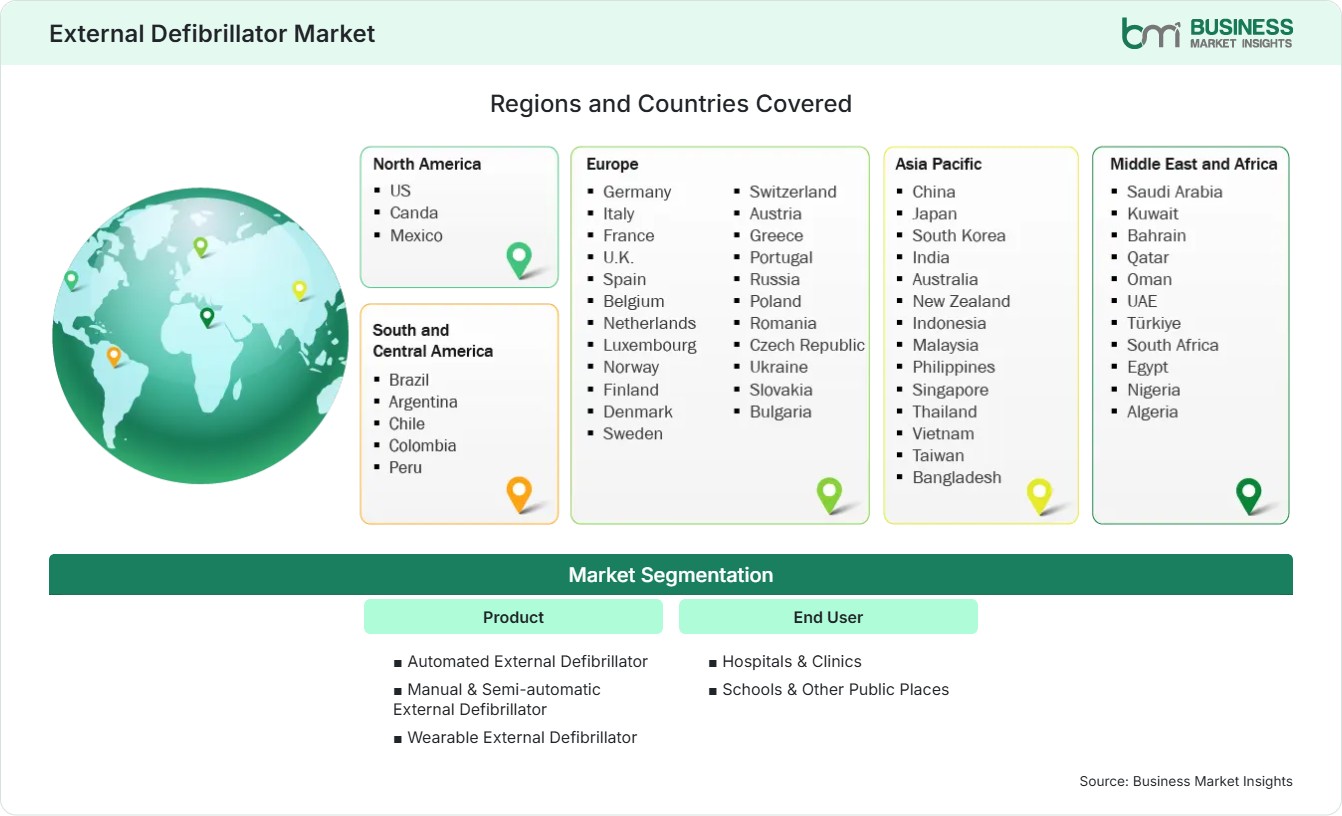
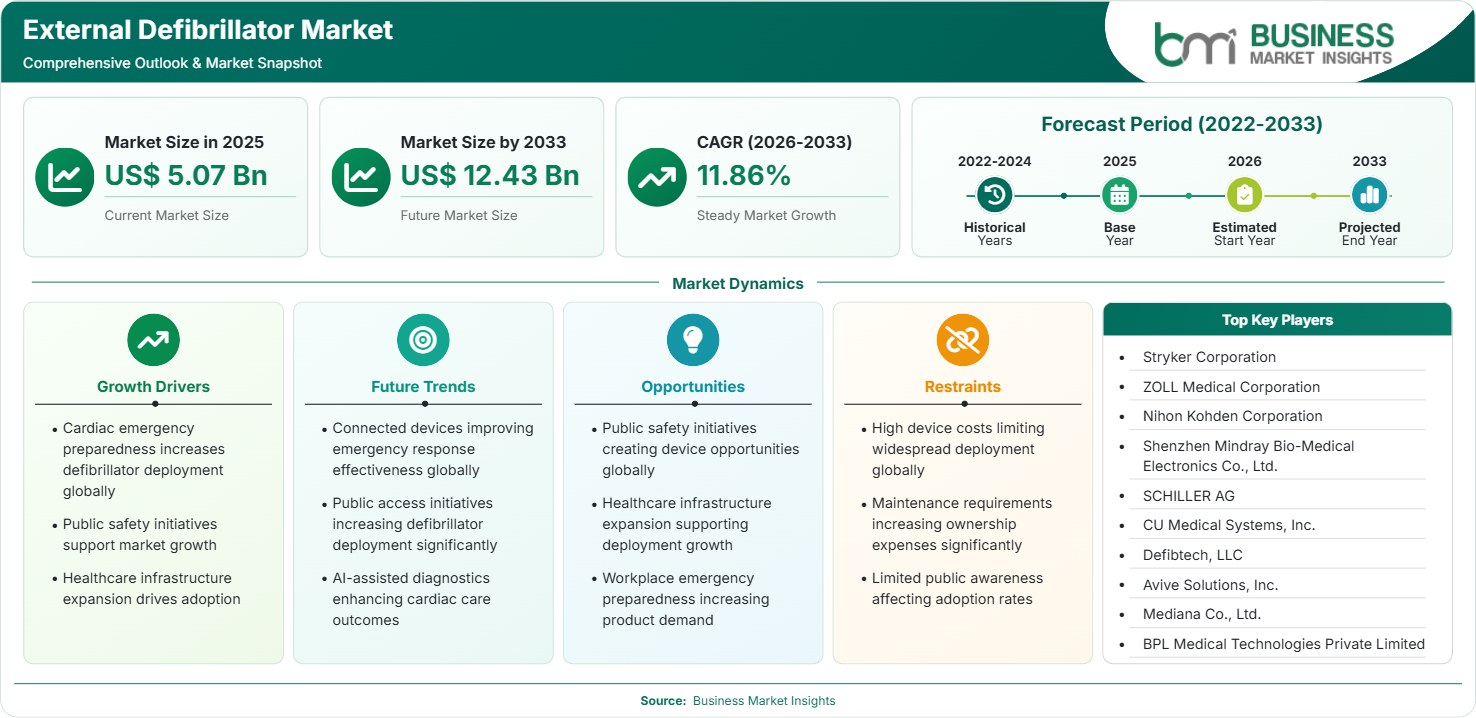
North America represents 39%–42% share in 2025 and is projected to expand at a 10.5%–11.5% CAGR through 2033. Mature EMS infrastructure, established AED awareness, replacement demand, and workplace deployment sustain regional leadership. The External Defibrillator Market share remains supported by broad hospital procurement and public-access programs. US demand accounts for most regional revenue, while Canada contributes through public-sector emergency preparedness and institutional purchasing. Connected fleet management is becoming an important differentiator as organizations seek greater visibility into device readiness.
- Public-access programs increasingly emphasize device availability, maintenance status, responder accessibility, and integration with emergency dispatch networks.
- Hospitals and EMS operators prioritize multifunction monitors with connectivity, intuitive interfaces, clinical decision support, and streamlined data transfer.
- Replacement demand benefits suppliers because older AED fleets require updated batteries, pads, software, and complete device upgrades.
- Corporate, educational, municipal, and transportation deployments broaden the addressable customer base beyond conventional clinical buyers.
US External Defibrillator Market
The US represents 82%–86% of North American revenue in 2025 and is projected to expand at a 10.8%–11.8% CAGR. The External Defibrillator Market growth is supported by EMS modernization, public-access AED programs, workplace requirements, sports facilities, schools, and healthcare replacement cycles. FDA oversight creates a demanding commercialization environment, while connected systems improve fleet management. The American Heart Association estimates approximately 356,000 adult EMS-treated out-of-hospital cardiac arrests annually, reinforcing the need for rapid response infrastructure.
- AED purchasing increasingly includes software, monitoring, maintenance, training, consumables, and replacement services rather than a device-only transaction.
- EMS buyers favor multifunction systems capable of defibrillation, cardioversion, pacing, monitoring, and rapid transfer of patient information.
- Connected public-access devices can improve operational visibility by reporting status, location, usage events, and maintenance requirements.
Europe External Defibrillator Market
The Europe market will contribute to the share of 27% to 30%, with a projected growth rate of 10.8% to 11.8% CAGR. Germany, the UK, France, and Italy represent the established demand for the products. Spain and the Central European market also represent additional growth prospects. The External Defibrillator Market Share has been driven by a well-equipped emergency care system, an aging population, hospital upgrades, and public accessibility initiatives.
- Germany benefits from sophisticated hospital and EMS infrastructure, creating demand for professional monitors alongside public-access AEDs.
- The UK supports community AED placement and emergency-response initiatives, strengthening demand for accessible devices and managed fleets.
- France and Italy offer replacement opportunities as public and healthcare organizations modernize emergency equipment and improve device availability.
- European procurement increasingly considers cybersecurity, lifecycle management, battery longevity, and compliance alongside clinical performance.
Asia Pacific External Defibrillator Market
Asia Pacific is expected to account for 20%-23% of the market share in 2025 and to have the highest growth rate, at a 13.5%-14.5% CAGR. China, Japan, Australia, South Korea, and India drive the demand. Japan is a market with advanced AED adoption, whereas China and India offer many infrastructure-related opportunities. Some of the External Defibrillator Market trends include growth in hospitals and emergency response, manufacturing in local plants, urbanization, and rising awareness of cardiac care.
- Japan combines mature AED adoption with advanced emergency-care systems and continued deployment across large public venues.
- China benefits from expanding healthcare infrastructure, domestic manufacturing capabilities, and greater institutional attention to emergency response.
- India offers substantial white-space potential across hospitals, airports, educational institutions, industrial facilities, and public transport infrastructure.
- Australia and South Korea provide relatively mature procurement environments with opportunities centered on replacement, connectivity, and public-access coverage.
Rest of World External Defibrillator Market
Rest of World holds a share of 10%–13% in 2025 and is forecast to grow at a CAGR of 11.5%–12.5%. In South and Central America, Brazil and Mexico are dominant countries where private healthcare and urban emergency solutions foster adoption. As for the Middle East and Africa, there are better prospects in Saudi Arabia, the UAE, and South Africa. There has been some progress in developing demand, with public infrastructure investment and the expansion of private hospitals.
Opportunities in Latin America are mainly in Brazil and Mexico, driven by improvements in emergency systems across hospitals, airports, stadiums, and offices. Gulf countries will profit from investment in top-quality healthcare facilities and big public places. Opportunities in emergency care equipment exist in South Africa, whereas in other parts of Africa, reliance on infrastructure remains high.
- Brazil combines private healthcare investment with expanding emergency preparedness across large metropolitan facilities.
- Gulf states increasingly integrate advanced emergency equipment into hospitals, airports, stadiums, and major public developments.
- South Africa provides opportunities through private hospitals, occupational safety programs, and emergency medical service modernization.
- Latin American and African adoption remains sensitive to device affordability, service availability, consumables logistics, and responder training.