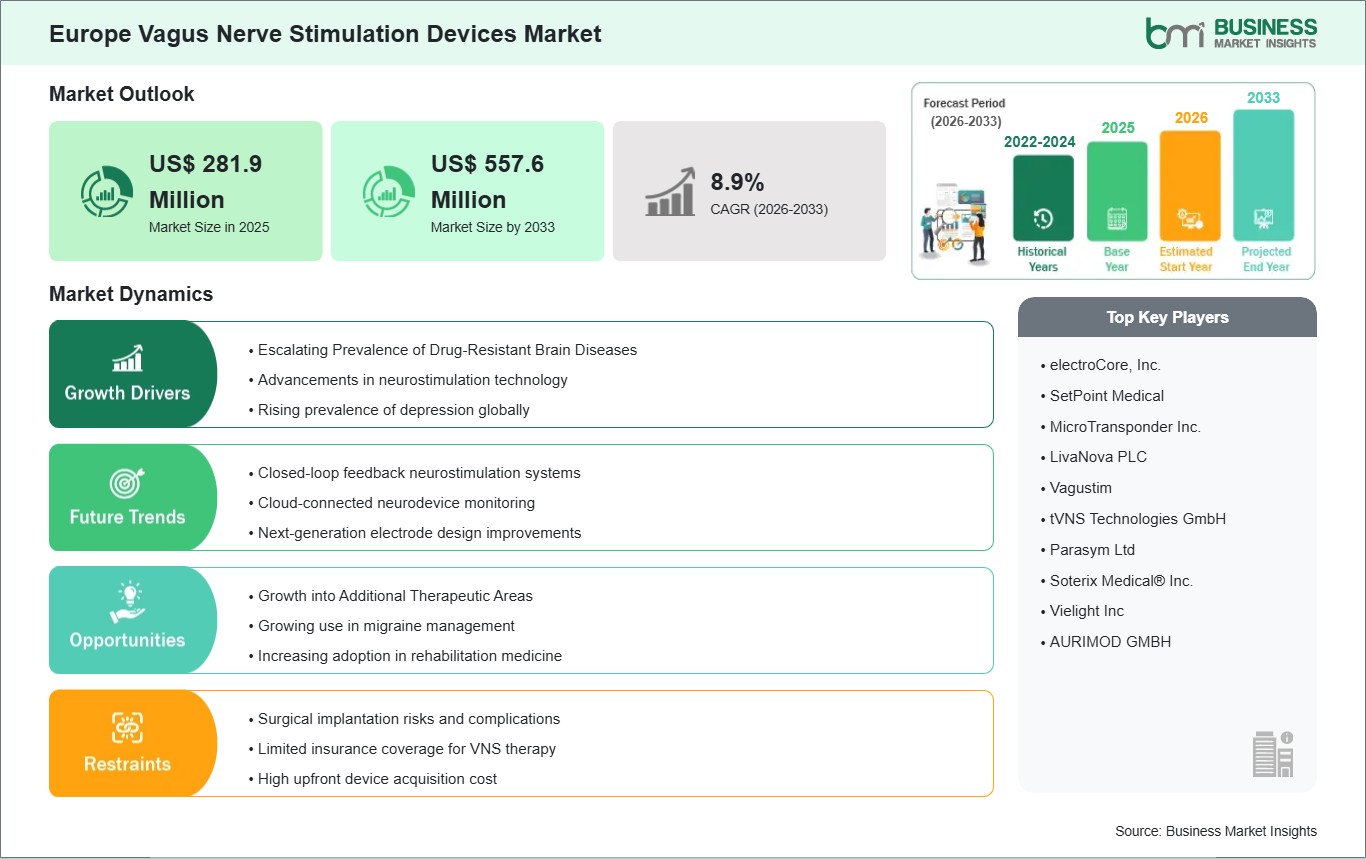
The Europe vagus nerve stimulation devices market size is expected to reach US$ 557.6 million by 2033 from US$ 281.9 million in 2025. The market is estimated to record a CAGR of 8.9% from 2026 to 2033.
Europe's VNS device industry is marked by an organized adoption of the technology in very protocol-driven neurological practice, where implantable neuromodulation therapy has been largely incorporated into established epilepsy and psychiatry therapy protocols. VNS treatment is typically employed as an add-on to help manage drug-resistant epileptic conditions and certain drug-resistant depressive disorders in healthcare systems that prioritize optimal long-term results. This region is known for high standardization, and patient suitability is usually determined using epilepsy surgery boards as well as neurology guidelines from individual nations.
One of the main factors influencing the market is that of neuromodulation being highly entrenched in dedicated hospital networks. Tertiary neuroscience centers act as centers for treating patients and training clinicians in implementing implantable solutions. These centers work closely with national epilepsy referral programs for consistent patient evaluations as well as follow-up. Moreover, Europe enjoys continuous research activities in bioelectronics medicine, which ensures familiarity among doctors and helps gradually expand applications of VNS therapy beyond epilepsy into psychiatric and inflammatory conditions. The market suffers from conservative behavior across some countries with national health services, with pharmacological therapy continuing to be the predominant first line of treatment in such cases. The high degree of centralization of procedures also impacts the market since only dedicated academic hospitals undertake treatment and monitoring processes.

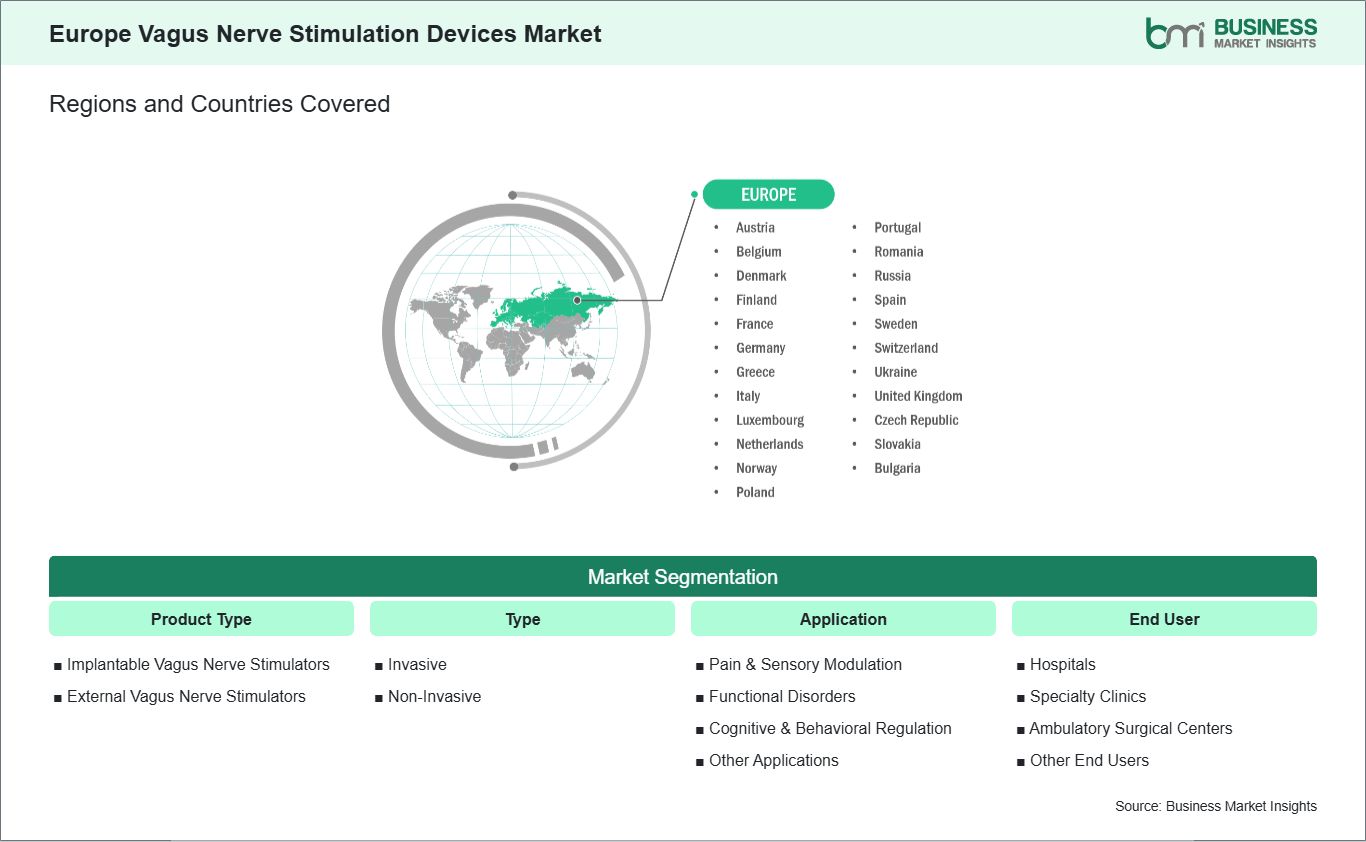
Key segments that contributed to the derivation of the Europe Vagus Nerve Stimulation Devices market analysis are product type, type, application, and end user.
The European vagus nerve stimulator market will experience changes driven by an increasing set of neurological disorders, which are resistant to drugs and move from the category of simple epilepsy diseases to complicated brain dysfunction disorders. Patients are increasingly experiencing several disorders simultaneously, such as non-responsive seizures, cognitive impairment, sleep problems, and deteriorated behavior, resulting in non-responsiveness to existing medications. These trends will encourage neurologists to think about neuromodulation therapy among those suffering from a combination of neurological disorders for many years now and showing non-responsiveness to medication therapy.
Another important driver is the increasing burden of cerebrovascular-related brain injury, where recurrent ischemic episodes and small-vessel pathology contribute to secondary seizure disorders and chronic neurological instability. These cases are often resistant to standard anti-epileptic medications due to the structural nature of brain damage, making long-term symptom control more challenging. As survival rates after acute neurological events improve, the population living with chronic post-injury neurological sequelae is expanding, adding sustained pressure on specialist neurology services.
Additionally, trauma-related and post-infectious neurological complications continue to contribute to a heterogeneous patient pool with persistent seizure activity. These conditions are often characterized by variable drug responsiveness and fluctuating disease progression, complicating long-term management strategies. As a result, clinical interest in adjunctive therapies such as vagus nerve stimulation is gradually increasing in tertiary care environments where multidisciplinary teams manage complex and refractory neurological cases.
The scope of vagal nerve stimulation applications in Europe continues to grow from a narrow field of epilepsy into a wider scope of neurological and systemic disorders. Among the key areas that benefit from vagal nerve stimulation applications are those related to bioelectronics and medicine based on networks. For example, VNS is used in precision psychiatry treatment programs for treatment-resistant depression, where individual approaches to neuromodulation play a crucial role. The patients' treatment needs are identified on the basis of their specific autonomic biomarkers, neurophysiology patterns, and previous medical history.
Another key development of the application landscape for VNS is related to the use of this technology in neurorehabilitation settings aimed at helping stroke survivors. Instead of focusing on the reduction of symptoms, practitioners consider the opportunity of combining vagal nerve stimulation with rehabilitation therapy techniques such as motor-task training and cognitive re-training.
Additionally, there is emerging clinical exploration of VNS in autonomic dysfunction and stress-related neurological syndromes, including conditions characterized by dysregulated vagal tone and impaired neurocardiac balance. Researchers are investigating its potential role in stabilizing physiological stress responses, improving sleep regulation, and reducing symptom variability in chronic multisystem conditions. This expansion into systemic neurophysiology marks a significant evolution in how VNS technology is being positioned within broader therapeutic ecosystems.

The Europe Vagus Nerve Stimulation Devices market demonstrates steady growth, with size and share analysis highlighting evolving trends and competitive dynamics among key players. The report evaluates important subsegments categorized within product type, type, application, and end user, highlighting their respective contributions to overall market performance.
By product type, the implantable vagus nerve stimulators subsegment dominated the market in 2025, driven by their established clinical efficacy and widespread adoption in the treatment of neurological and psychiatric disorders such as epilepsy and treatment-resistant depression. These devices provide continuous and targeted nerve stimulation, making them a preferred long-term therapeutic option for chronic conditions.
Based on type, the invasive subsegment dominated the market in 2025, owing to its higher clinical effectiveness and stronger therapeutic outcomes in managing severe and refractory conditions. Invasive vagus nerve stimulation systems are widely preferred in hospital-based settings due to their proven long-term benefits and consistent symptom control.
In terms of application, the functional disorders subsegment dominated the market in 2025, propelled by the increasing prevalence of conditions such as epilepsy and depression, along with growing clinical adoption of vagus nerve stimulation as an adjunct therapy for patients who are unresponsive to conventional treatments.
On the basis of end user, the hospitals subsegment dominated the market in 2025 due to the availability of advanced neurology infrastructure, specialized neurosurgical expertise, and comprehensive postoperative care required for implantation and management of vagus nerve stimulation devices.
| Report Attribute | Details |
|---|---|
| Market size in 2025 | US$ 281.9 Million |
| Market Size by 2033 | US$ 557.6 Million |
| CAGR (2026 - 2033) | 8.9% |
| Historical Data | 2022-2024 |
| Forecast period | 2026-2033 |
| Segments Covered | By Product Type
|
|
Regions and Countries Covered
| |
| Europe | Germany, Italy, France, U.K., Spain, Belgium, Netherlands, Luxembourg, Norway, Finland, Denmark, Sweden, Switzerland, Austria, Greece, Portugal, Russia, Poland, Romania, Czech Republic, Ukraine, Slovakia, Bulgaria |
| Market leaders and key company profiles |
|
The "Europe Vagus Nerve Stimulation Devices Market Size and Forecast (2022-2033)" report provides a detailed analysis of the market covering below areas:
The geographical scope of the Europe Vagus Nerve Stimulation Devices market report is divided into: Germany, Italy, France, the UK, Spain, Belgium, the Netherlands, Luxembourg, Norway, Finland, Denmark, Sweden, Austria, Switzerland, Russia, Romania, Greece, the Czech Republic, Portugal, Ukraine, Poland, Slovakia, and Bulgaria. Germany held the largest share in 2025.
Germany holds the first position in the VNS market in Europe owing to its well-developed infrastructure of neurosurgery clinics and epilepsy patient care services, which include university hospitals and specialized neurological centers. This country functions on a decentralized health care system, which has centralized regulation with regard to advanced neuromodulation technologies applied in certified epilepsy centers using standard procedures of treatment for refractory seizures.
One of the characteristics of the German market of VNS is the high involvement of epilepsy surgery programs in medical educational institutions that evaluate VNS therapy as one of the ways of treating seizures, together with other treatment techniques like resection surgery or another neuromodulation method. The involvement of various specialists, including neurosurgeons and neuropsychologists, provides better management of therapy over the long run. Clinical innovation activity is yet another key strength associated with Germany in the context of clinical innovation. Indeed, the country's hospital-based research projects and device registries ensure the ongoing optimization of neuromodulation procedures. It ensures ongoing commitment on the side of medical specialists, which in its turn contributes to higher levels of confidence in neuromodulation systems. There are still limitations to the penetration rate of VNS devices outside of tertiary referral centers because of high specialization standards and procedural experience confined only to certified hospitals.

The Europe Vagus Nerve Stimulation Devices market is evaluated by gathering qualitative and quantitative data post primary and secondary research, which includes important corporate publications, association data, and databases. A few of the key developments in the Europe Vagus Nerve Stimulation Devices market are:
The Europe Vagus Nerve Stimulation Devices Market is valued at US$ 281.9 Million in 2025, it is projected to reach US$ 557.6 Million by 2033.
As per our report Europe Vagus Nerve Stimulation Devices Market, the market size is valued at US$ 281.9 Million in 2025, projecting it to reach US$ 557.6 Million by 2033. This translates to a CAGR of approximately 8.9% during the forecast period.
The Europe Vagus Nerve Stimulation Devices Market report typically cover these key segments-
The historic period, base year, and forecast period can vary slightly depending on the specific market research report. However, for the Europe Vagus Nerve Stimulation Devices Market report:
The Europe Vagus Nerve Stimulation Devices Market is populated by several key players, each contributing to its growth and innovation. Some of the major players include:
The Europe Vagus Nerve Stimulation Devices Market report is valuable for diverse stakeholders, including:
Essentially, anyone involved in or considering involvement in the Europe Vagus Nerve Stimulation Devices Market value chain can benefit from the information contained in a comprehensive market report.
Please tell us your area of interest
(Market Segments/ Regions and Countries/ Companies)