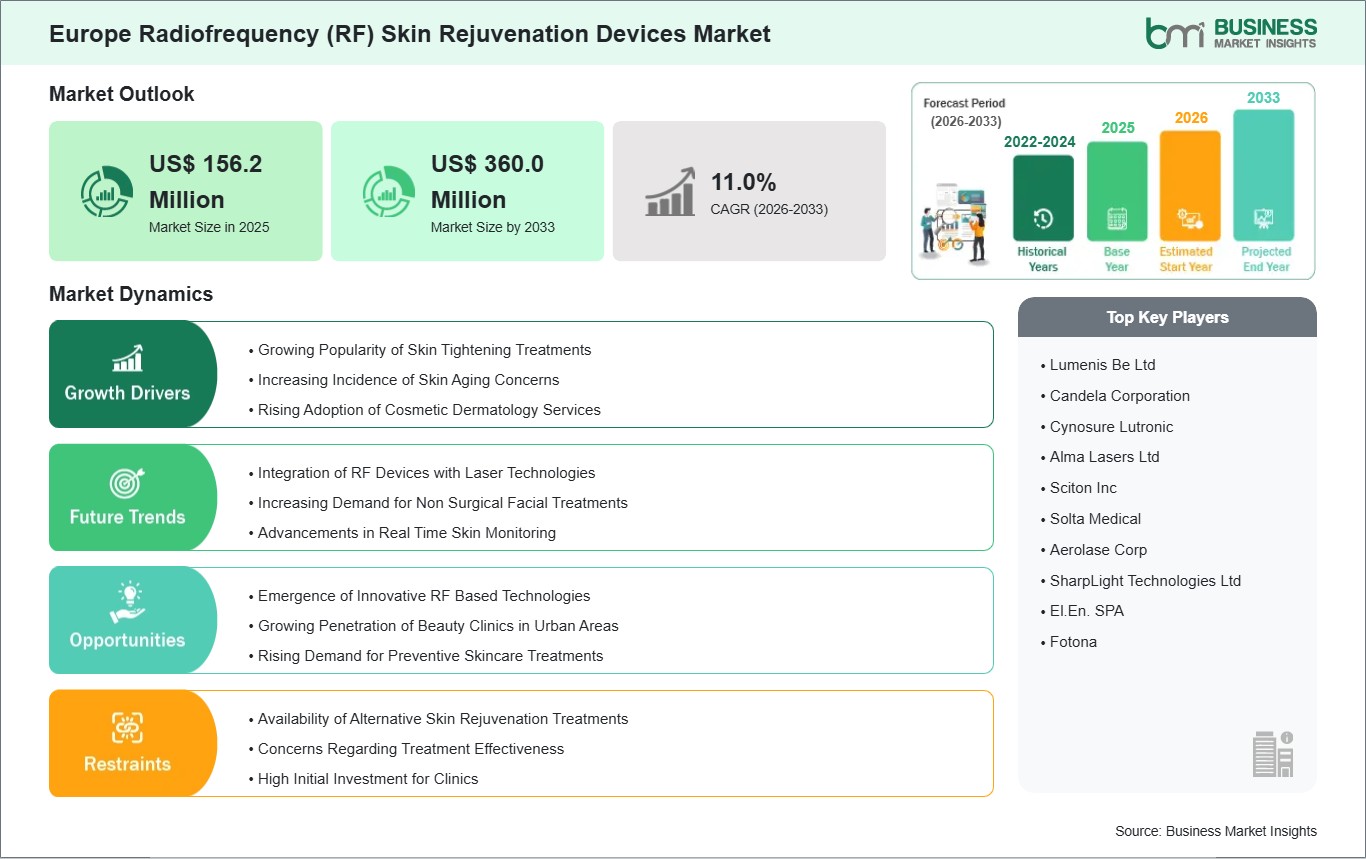
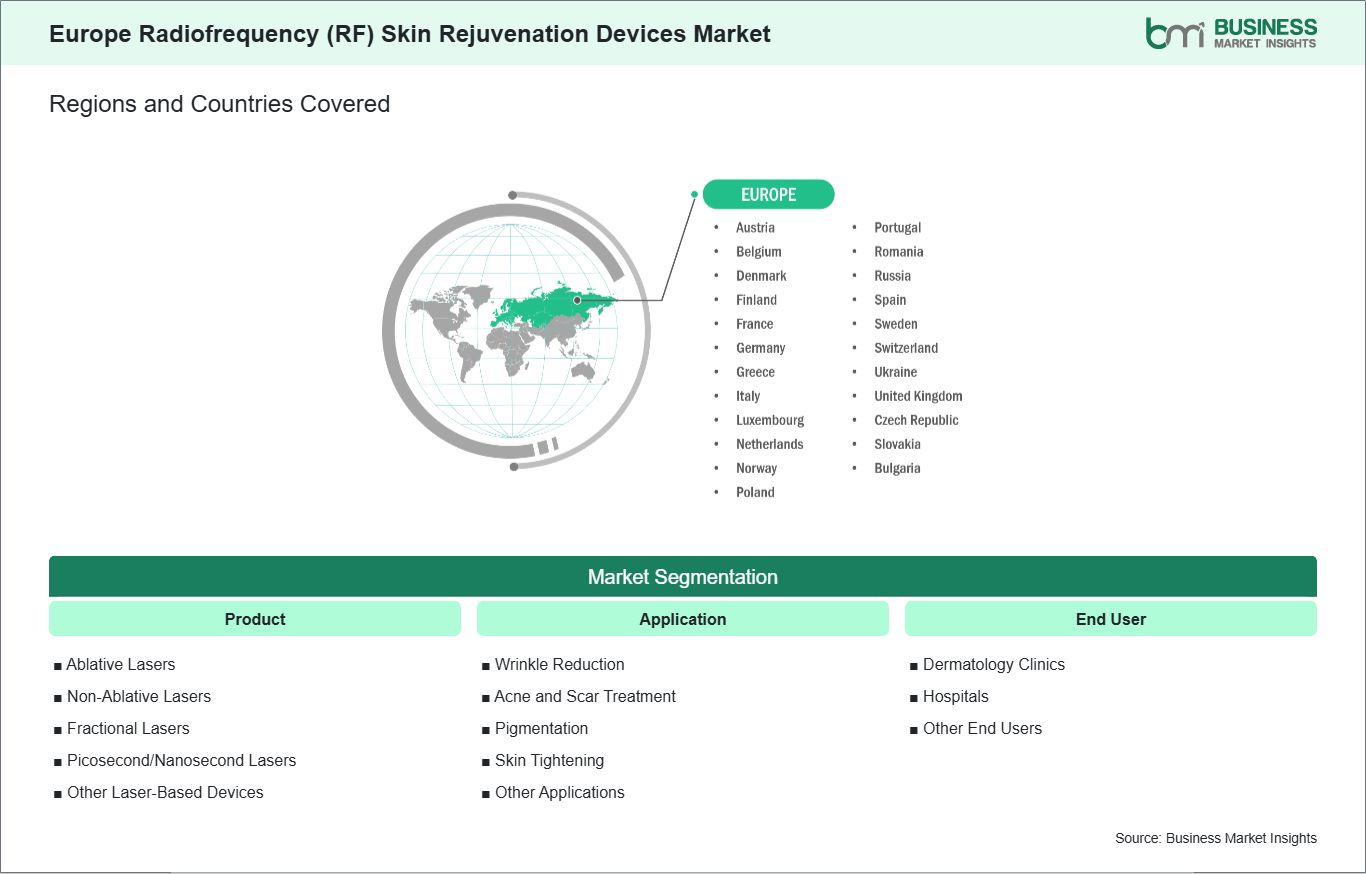
The geographical scope of the Europe Radiofrequency (RF) Skin Rejuvenation Devices Market report is divided into Germany, Italy, France, U.K., Spain, Belgium, Netherlands, Luxembourg, Norway, Finland, Denmark, Sweden, Switzerland, Austria, Greece, Portugal, Russia, Poland, Romania, Czech Republic, Ukraine, Slovakia, Bulgaria. Germany held the largest share in 2025.
Europe RF skin rejuvenation devices market trends are marked by the prevalence of non-surgical aesthetic treatments, influenced by increasing numbers of aging people, the popularity of collagen regeneration methods, and the growth in dermatology clinics and medical spas in the region. Germany is revealed as the top region, owing to advanced healthcare facilities for aesthetic treatments, the presence of key players in the medical devices industry, and high consumer spending on anti-aging treatments, thus becoming the pivotal center for the adoption of RF devices in Europe. Other important regions include France, Italy, and the U.K., propelled by higher consumer awareness of skin tightening techniques and accessibility of energy-based medical aesthetics devices in urban centers. In addition, Spain and Portugal have been exhibiting steady growth, attributed to increased consumer interest in beauty and wellness tourism. Moreover, Belgium, the Netherlands, and Luxembourg also contribute to the growth, based on high disposable incomes and early adoption of innovative dermatological devices. The countries of Switzerland and Austria represent the attributes of the premium market with a need for sophisticated clinical-grade devices. The Eastern European market, represented by countries such as Poland, the Czech Republic, Romania, Bulgaria, Slovakia, and Ukraine, represents an immature market that is growing steadily because of enhanced health care facilities and the penetration of aesthetic clinics. Russia exhibits diverse growth trends driven by economic ups and downs, but still holds its demands within the urban regions. In summary, Western Europe represents matured markets, whereas Eastern Europe represents emerging markets.