Analysis by Application (Optimal Route Mapping, Predictive and Prescriptive Analytics, Pricing Insights, Vessel Safety and Security, and Others) and End User (Commercial and Military)
No. of Pages:165
Report Code:
TIPRE00015406
Category:
Technology, Media and Telecommunications
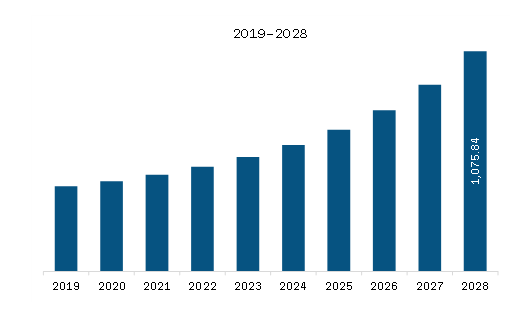
The Europe maritime analytics market was valued at US$ 558.58 million in 2023 and is projected to reach US$ 1,075.84 million by 2028; it is expected to grow at a CAGR of 14.0% from 2023 to 2028.
Increasing Demand for Enhanced Maritime Operations Through Data Analytics is Driving the Europe Maritime analytics Market
Maritime activities such as weather forecasting and route optimization depend on data received from satellites and IoT devices. With an increase in data generation from devices in harbors and vessels, the requirement of sophisticated technologies for processing generated data is also rising. Big data evaluates raw data from satellites and sensors to draw information, while advanced analytics uses the same raw data for drawing actionable insights. Applications of advanced analytics include weather condition monitoring, route management, operational analytics, and freight pattern analysis. Therefore, analytics and big data permit maritime companies to optimize different operations and recognize bottlenecks prior to their occurrence, lowering downtime and costs. The amount of data in maritime is huge, and ships regularly travel via areas with a limited high-speed network. Hence, new players are developing onboard data analytics systems to address the abovementioned concerns. For instance, OrbitMI (US) offers maritime intelligence and analytics to cater to the requirements of fleet operators. Similarly, Kaiko Systems (Germany) provides vessel health insights to address merchant ships' requirements. Thus, increasing demand for enhanced maritime operations through data analytics is fueling the maritime analytics market growth.
Europe Maritime Analytics Market Overview
Europe boasts of a prominent maritime industry owing to the strong presence of industrial manufacturing and robust international trade activities from many of its countries throughout the year. The region's strong economic status, combined with technologically well-equipped infrastructure to handle large cargo volumes, has significantly contributed to its dominance in the global maritime analytics market in recent years. Presently, the shipping industries in the UK, France, Russia, Germany, and Italy are characterized by a large number of commercial and defense vessels, which form a significant share of the marine traffic in the region.
Europe has emerged as one of the world's crucial international trade corridors through the sea. As per European Commission data sources, the maritime trade accounts for almost three-fourth of the total trade of the region. Since the shipping sector plays a crucial role in various European countries and contributes significantly to their respective GDPs, the modernization of various technological solutions becomes a crucial aspect of their operations for seamless management and maintenance. The strong penetration of marine transportation in the region has resulted in the early adoption of marine digital technology and data-driven analytics solutions for efficient management of maritime operational processes. Countries such as Italy and Russia are adopting advanced data analytics solutions in their maritime industries due to their strategically important location beside the Mediterranean Sea and robust capabilities of defense vessel manufacturing.
Europe Maritime Analytics Market Revenue and Forecast to 2028 (US$ Million)
Based on application, the maritime analytics market is divided into optimal route mapping, predictive & prescriptive analytics, pricing insights, vessel safety & security, and others. The predictive & prescriptive analytics segment held the largest market share in 2023.
Based on end user, the market is bifurcated into commercial and defense. The commercial segment held the largest market share in 2023.
Based on country, the Europe maritime analytics market is segmented into France, Germany, Italy, UK, Russia, and the Rest of Europe. Germany dominated the market in 2023.
Maritech Holdings Limited; RightShip Pty Limited; ShipNet; Windward Ltd; Kpler; Kayrros; OrbitMI, Inc.; Q88 LLC; Veson Nautical; Pole Star Space Applications; SEDNA Communications Ltd; Nordic IT; LgMAR; Signal Group; eeSea Aps; Shipfix Technologies S.A.S.; Shipamax Ltd.; Siglar Carbon; ZeroNorth A/S; Dataloy Systems AS; NINETY PERCENT OF EVERYTHING LIMITED; and Trigonal Ltd are the leading companies operating in the Europe maritime analytics market.
Europe Maritime Analytics Market Strategic Insights
Get more information on this report
Europe Maritime Analytics Market Segmentation Analysis
Europe Maritime Analytics Market Report Highlights
Europe Maritime Analytics Report Scope
Report Attribute
Details
Market size in 2023
US$ 558.58 Million
Market Size by 2028
US$ 1,075.84 Million
CAGR (2023 - 2028)
14.0%
Historical Data
2021-2022
Forecast period
2024-2028
Segments Covered
By Application
Optimal Route Mapping
Predictive and Prescriptive Analytics
Pricing Insights
Vessel Safety and Security
By End User
Commercial and Military
Regions and Countries Covered
Europe
UK, Germany, France, Russia, Italy, Rest of Europe
Market leaders and key company profiles
Maritech Holdings Limited
RightShip Pty Limited
ShipNet
Windward Ltd
Kpler
Kayrros
OrbitMI, Inc.
Q88 LLC
Veson Nautical
Pole Star Space Applications
SEDNA Communications Ltd
Nordic IT
LgMAR
Signal Group
eeSea Aps
Get more information on this report
Europe Maritime Analytics Market Country and Regional Insights
Get more information on this report
Identical Market Reports with other Region/Countries
The List of Companies - Europe Maritime Analytics Market
Maritech Holdings LimitedRightShip Pty LimitedShipNetWindward LtdKplerKayrros OrbitMI, Inc.Q88 LLCVeson NauticalPole Star Space ApplicationsSEDNA Communications LtdNordic ITLgMARSignal GroupeeSea ApsShipfix Technologies S.A.S.Shipamax Ltd.Siglar CarbonZeroNorth A/SDataloy Systems ASNINETY PERCENT OF EVERYTHING LIMITEDTrigonal Ltd.
Frequently Asked Questions
How big is the Europe Maritime Analytics Market?
The Europe Maritime Analytics Market is valued at US$ 558.58 Million in 2023, it is projected to reach US$ 1,075.84 Million by 2028.
What is the CAGR for Europe Maritime Analytics Market by (2023 - 2028)?
As per our report Europe Maritime Analytics Market, the market size is valued at US$ 558.58 Million in 2023, projecting it to reach US$ 1,075.84 Million by 2028. This translates to a CAGR of approximately 14.0% during the forecast period.
What segments are covered in this report?
The Europe Maritime Analytics Market report typically cover these key segments-
Application (Optimal Route Mapping, Predictive and Prescriptive Analytics, Pricing Insights, Vessel Safety and Security)
End User (Commercial and Military)
What is the historic period, base year, and forecast period taken for Europe Maritime Analytics Market?
The historic period, base year, and forecast period can vary slightly depending on the specific market research report. However, for the Europe Maritime Analytics Market report:
Historic Period : 2021-2022
Base Year : 2023
Forecast Period : 2024-2028
Who are the major players in Europe Maritime Analytics Market?
The Europe Maritime Analytics Market is populated by several key players, each contributing to its growth and innovation. Some of the major players include:
Maritech Holdings Limited
RightShip Pty Limited
ShipNet
Windward Ltd
Kpler
Kayrros
OrbitMI, Inc.
Q88 LLC
Veson Nautical
Pole Star Space Applications
SEDNA Communications Ltd
Nordic IT
LgMAR
Signal Group
eeSea Aps
Shipfix Technologies S.A.S.
Shipamax Ltd.
Siglar Carbon
ZeroNorth A/S
Dataloy Systems AS
NINETY PERCENT OF EVERYTHING LIMITED
Trigonal Ltd.
Who should buy this report?
The Europe Maritime Analytics Market report is valuable for diverse stakeholders, including:
Investors: Provides insights for investment decisions pertaining to market growth, companies, or industry insights. Helps assess market attractiveness and potential returns.
Industry Players: Offers competitive intelligence, market sizing, and trend analysis to inform strategic planning, product development, and sales strategies.
Suppliers and Manufacturers: Helps understand market demand for components, materials, and services related to concerned industry.
Researchers and Consultants: Provides data and analysis for academic research, consulting projects, and market studies.
Financial Institutions: Helps assess risks and opportunities associated with financing or investing in the concerned market.
Essentially, anyone involved in or considering involvement in the Europe Maritime Analytics Market value chain can benefit from the information contained in a comprehensive market report.





 Get Free Sample For Europe Maritime Analytics Market