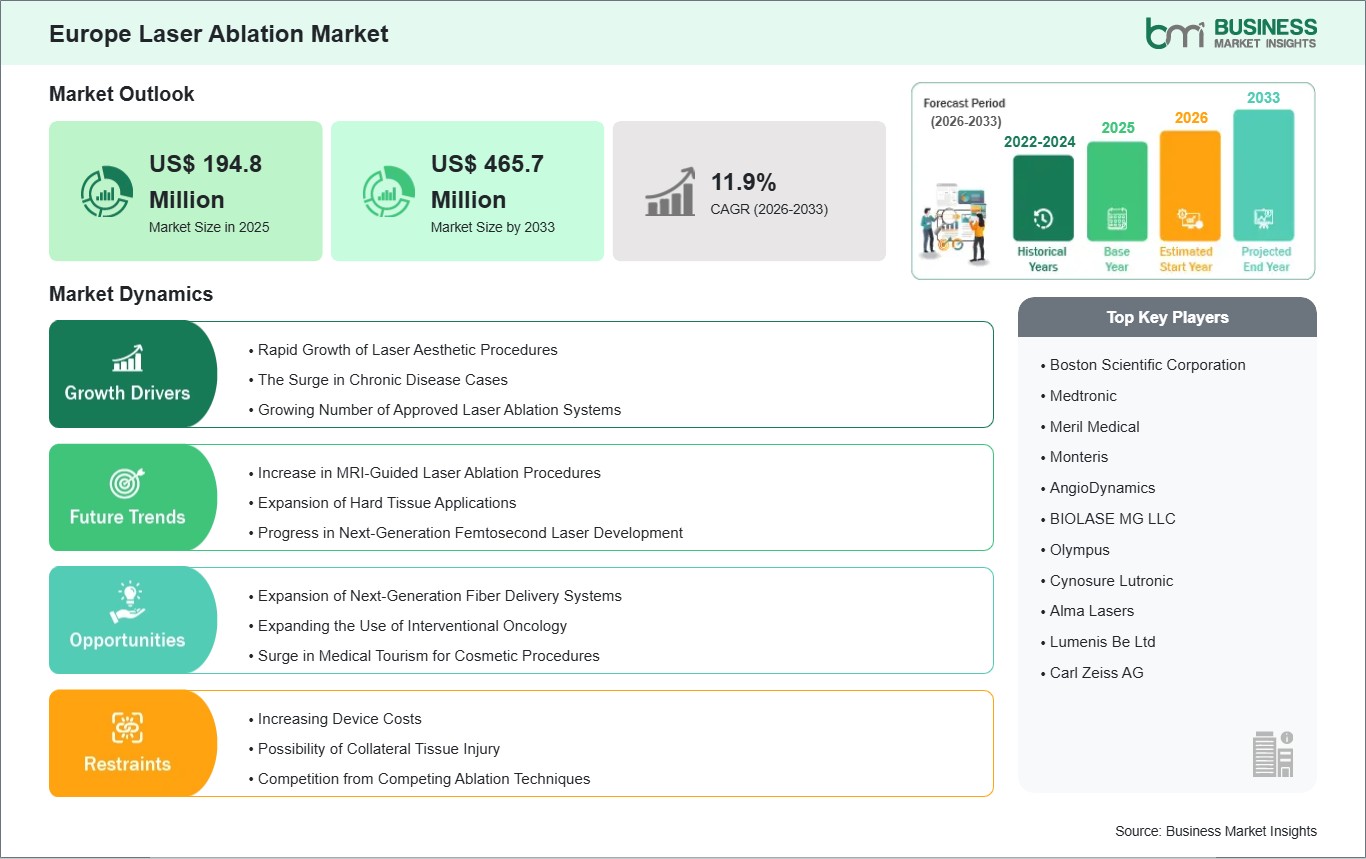
Rapid Growth of Laser Aesthetic Procedures
The European laser ablation market is driven by increasing demand for minimally invasive cosmetic procedures. Germany, France, the United Kingdom, Italy, and Spain have witnessed a rise in private dermatology clinics and medical spas offering treatments including laser hair removal, fractional skin resurfacing, pigmentation correction, and scar revision. Patients are increasingly attracted to laser procedures because they provide predictable outcomes, minimal downtime, and lower risk compared to surgical interventions. Rising disposable incomes, urbanization, and greater awareness of aesthetic technologies have further accelerated adoption.
Cultural beauty preferences across Europe emphasize natural, subtle enhancements rather than dramatic changes. Consumers focus on correcting early signs of aging, minor skin imperfections, and uneven tone. Clinics have responded by integrating advanced laser systems that enable precise energy delivery, ensuring consistent results tailored to individual skin types. Marketing campaigns emphasize treatment safety, efficiency, and long-term skin health, appealing to well-informed, quality-conscious patients across Western and Central Europe.
Metropolitan areas such as Paris, Berlin, London, Milan, and Madrid now have a dense network of specialized aesthetic clinics, making advanced laser treatments widely available. Skilled professionals, coupled with strict regulatory standards, foster patient confidence and trust. These factors collectively contribute to the sustained growth of laser aesthetic procedures in Europe, positioning them as a mainstream solution for personal care, cosmetic enhancement, and dermatological wellness.
Expansion of Next-Generation Fiber Delivery Systems
Next-generation fiber-optic delivery systems are increasingly driving the European laser ablation market by enhancing precision, control, and clinical versatility. These systems allow clinicians to deliver laser energy accurately to targeted tissue layers while minimizing damage to surrounding skin. Cosmetic applications, including fractional resurfacing, pigmentation correction, and scar treatment, benefit from precise energy control and consistent outcomes. Clinics in Paris, Berlin, London, Milan, and Madrid are adopting these advanced systems to meet rising patient expectations for safe, minimally invasive, and reliable treatments.
Beyond aesthetic uses, fiber-optic delivery technology is expanding into dermatologic, ophthalmologic, and endoscopic procedures. Real-time monitoring and controlled energy output enhance safety, reduce procedural risks, and improve treatment outcomes. Multifunctional devices allow clinics to offer both cosmetic and medical applications with a single system, improving operational efficiency and providing a broader range of treatments to patients.
Innovations in portability, modularity, and user-friendly design further increase accessibility for smaller clinics and multi-specialty practices. Compact, flexible systems allow advanced laser procedures to be performed without large infrastructure investments, while energy calibration and customizable settings enable treatments to be tailored to individual skin types and conditions. These developments establish next-generation fiber-optic delivery systems as a central driver of the European laser ablation market, supporting both growth and diversification in aesthetic and therapeutic applications.