Market Summary
Executive Summary and Market Analysis
The market in Eastern Europe for VNS devices is characterized by selective clinical application restricted to neurosurgical centers of excellence in which clinical decision-making occurs via the deliberations of eligibility boards, rather than an open referral process in the specialty itself. The indication for VNS treatment is confined almost exclusively to patients who suffer from complicated epilepsy after undergoing thorough diagnostics that involve EEG long-term recording and pre-operative evaluations. Therefore, the market dynamics for VNS devices are intermittent and highly dependent on the capabilities of a limited number of advanced neurological facilities.
The area is experiencing increased conformity on the part of leading neurological institutes in adhering to Western protocols on the treatment of epilepsy, and this has fostered the gradual adoption of neuromodulation techniques within multimodal treatment programs. The existence of established clinical schools of neurology also facilitates continuity in the process of surgical innovation, ensuring that VNS can be positioned as a natural progression from epilepsy surgery programs already in place. A significant hurdle faced by the market is the limited scope of diagnostics at the levels of primary and secondary health care facilities, which leads to long-term management of patients suffering from refractory epilepsy before undergoing surgery. In addition, procurement of implantable device cycles is highly regulated in hospitals, causing inconsistencies in adoption processes.
Segment Analysis
Eastern Europe Vagus Nerve Stimulation Devices Market Segmentation
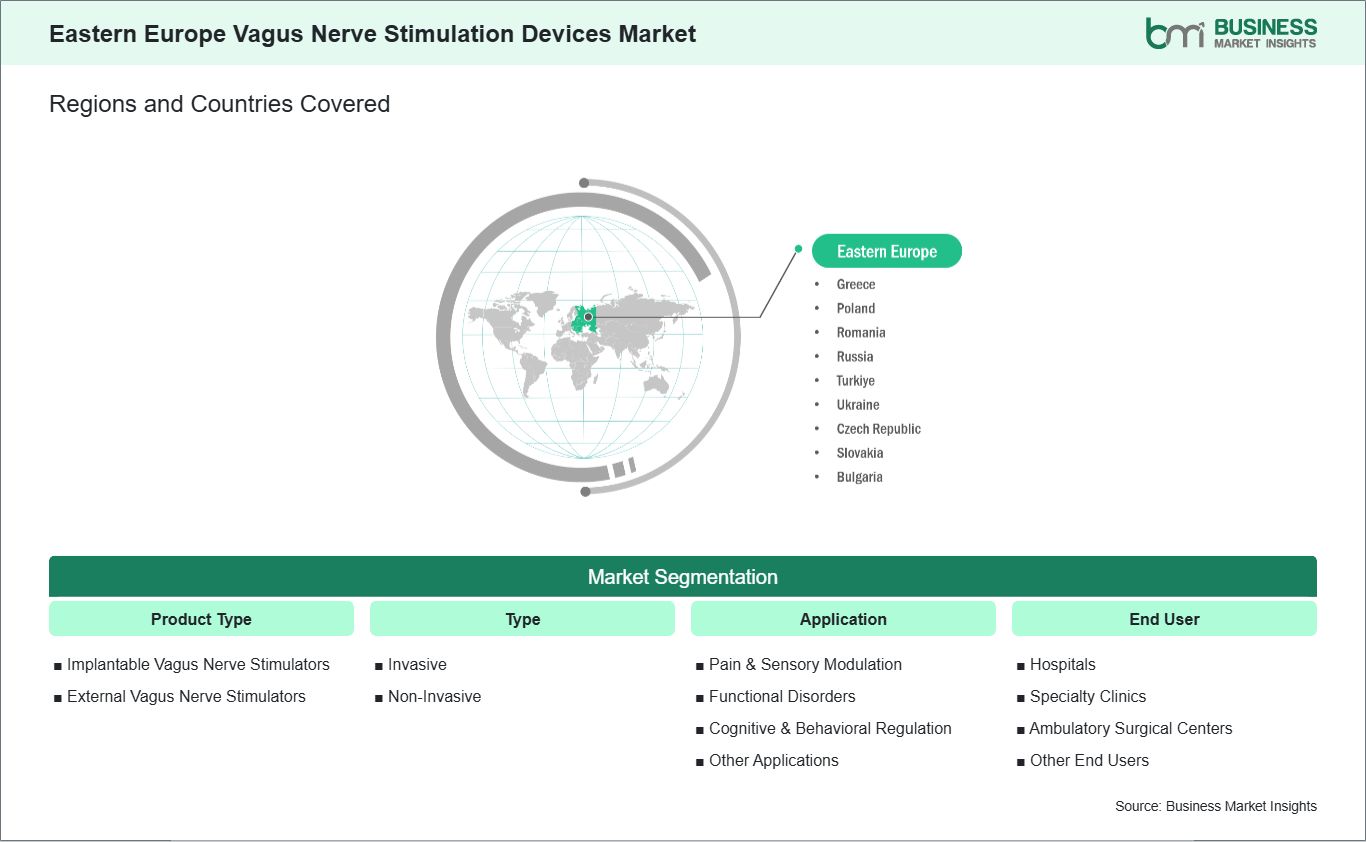
Key segments that contributed to the derivation of the Eastern Europe vagus nerve stimulation devices market analysis are product type, type, application, and end user.
- By product type, the vagus nerve stimulation devices market is segmented into implantable vagus nerve stimulators and external vagus nerve stimulators. The implantable vagus nerve stimulators segment dominated the market in 2025.
- Based on type, the vagus nerve stimulation devices market is classified into invasive and non-invasive devices. The invasive segment dominated the market in 2025.
- In terms of application, the vagus nerve stimulation devices market is categorized into pain & sensory modulation, functional disorders, cognitive & behavioral regulation, and other applications. The functional disorders segment dominated the market in 2025.
- On the basis of end user, the vagus nerve stimulation devices market is segmented into hospitals, specialty clinics, ambulatory surgical centers, and other end users. The hospitals segment dominated the market in 2025.
Market Forces
Eastern Europe Vagus Nerve Stimulation Devices Market Drivers and Opportunities
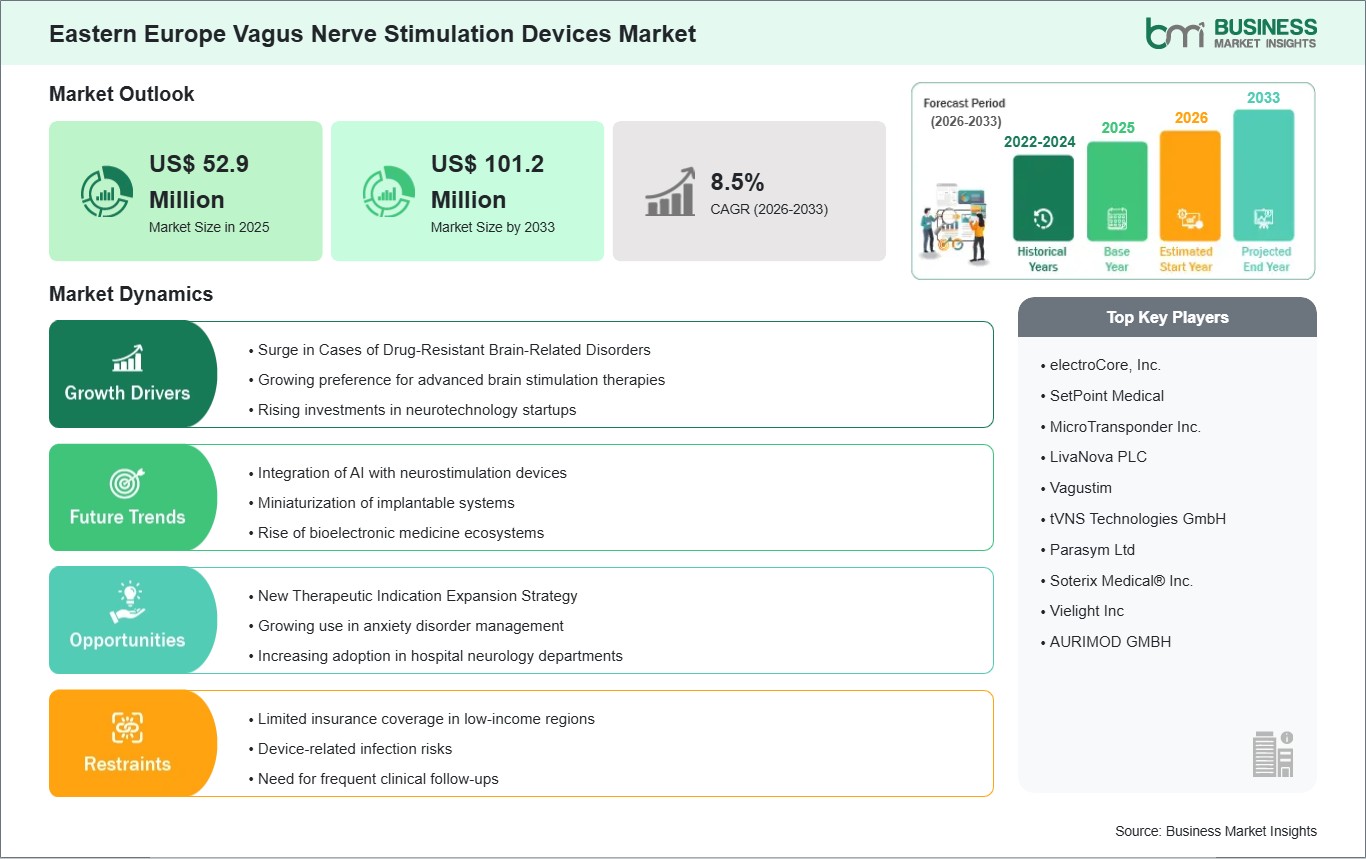
Surge in Cases of Drug-Resistant Brain-Related Disorders
The vagus nerve stimulator market in Eastern Europe is driven by the increasing disease burden in the form of drug-resistant neurological disorders, including epilepsy and serious mood disorders, specifically in Poland, Hungary, Ukraine, and the Czech Republic. Even though there have been developments in infrastructure related to neurological healthcare, there remains a significant number of epilepsy patients who suffer from ineffectiveness of multiple drugs, generating a continuous requirement for neuromodulation therapy solutions.
In Poland and the Czech Republic, expanding university hospital networks and epilepsy referral centers are increasingly managing complex refractory cases that require advanced intervention pathways. Hungary and Romania are witnessing similar trends, where delayed diagnosis in rural regions often leads to progression into chronic, treatment-resistant neurological states. This has strengthened the role of tertiary neurocare facilities in adopting advanced therapeutic technologies, including VNS, for patients with limited pharmacological response.
In Ukraine and parts of the Western Balkans, ongoing healthcare system constraints and uneven access to consistent long-term neurological treatment contribute to higher rates of poorly controlled epilepsy and post-traumatic neurological complications. Head injuries related to occupational hazards and traffic incidents further add to the population of patients with secondary seizure disorders. These factors collectively reinforce the need for adjunct therapies like VNS in select high-capacity neurology centers.
New Therapeutic Indication Expansion Strategy
In Eastern Europe, the application of vagus nerve stimulation is gradually expanding beyond epilepsy into psychiatric and neurorehabilitation domains, supported by growing clinical research activity in academic medical institutions. Countries such as Poland and the Czech Republic are actively exploring VNS as a potential adjunct therapy for treatment-resistant depression, particularly in patients who do not respond adequately to pharmacological and psychotherapeutic interventions.
The rehabilitation of stroke patients is another developing area of interest for the region, especially within aging patients from Hungary and Romania, where cerebrovascular diseases are one of the main reasons for permanent disabilities. The neurology departments are now beginning to explore whether VNS may aid neuroplasticity and recovery in combination with rehabilitation through physiotherapy programs.
Growing recognition of chronic pain syndromes as well as post-traumatic neurologic conditions in Ukraine and nearby countries is another factor that motivates scientists to explore the potential of neuromodulation technologies in their application within specialized clinics. Despite the fact that its introduction faces numerous infrastructure and financial obstacles, cooperation between universities and laboratories in Western Europe makes it possible to conduct preliminary clinical trials concerning other uses of VNS technology.
Size and Share Analysis
Eastern Europe Vagus Nerve Stimulation Devices Market Size and Share Analysis
The Eastern Europe vagus nerve stimulation devices market demonstrates steady growth, with size and share analysis highlighting evolving trends and competitive dynamics among key players. The report evaluates important subsegments categorized within product type, type, application, and end user, highlighting their respective contributions to overall market performance.
By product type, the implantable vagus nerve stimulators subsegment dominated the market in 2025, driven by their established clinical efficacy and widespread adoption in the treatment of neurological and psychiatric disorders such as epilepsy and treatment-resistant depression. These devices provide continuous and targeted nerve stimulation, making them a preferred long-term therapeutic option for chronic conditions.
Based on type, the invasive subsegment dominated the market in 2025, owing to its higher clinical effectiveness and stronger therapeutic outcomes in managing severe and refractory conditions. Invasive vagus nerve stimulation systems are widely preferred in hospital-based settings due to their proven long-term benefits and consistent symptom control.
In terms of application, the functional disorders subsegment dominated the market in 2025, propelled by the increasing prevalence of conditions such as epilepsy and depression, along with growing clinical adoption of vagus nerve stimulation as an adjunct therapy for patients who are unresponsive to conventional treatments.
On the basis of end user, the hospitals subsegment dominated the market in 2025 due to the availability of advanced neurology infrastructure, specialized neurosurgical expertise, and comprehensive postoperative care required for implantation and management of vagus nerve stimulation devices.
Report Coverage
Eastern Europe Vagus Nerve Stimulation Devices Market Report Coverage and Deliverables
The "Eastern Europe Vagus Nerve Stimulation Devices Market Size and Forecast (2022-2033)" report provides a detailed analysis of the market covering below areas:
- Market size and forecast at regional and country levels for all market segments covered under the scope
- Market trends, as well as drivers, restraints, and opportunities
- Market analysis covering key trends, regional framework, major players, regulations, and recent developments
- Market concentration, heat map analysis, prominent players, and recent developments for the Market
- Detailed company profiles, including SWOT analysis
Geographic Insights
Eastern Europe Vagus Nerve Stimulation Devices Market Geographic Insights
The geographical scope of the Eastern Europe Vagus Nerve Stimulation Devices market report is divided into: Russia, Poland, Romania, the Czech Republic, Ukraine, Romania, Greece, Slovakia, and Bulgaria. Russia held the largest share in 2025.
Russia dominates the Eastern Europe VNS device market because of the well-developed institutionalized structure of the referral system for neurosurgery, in which epileptological treatments are referred to specific federal neurology institutions and not local hospitals. Therefore, there exists a well-established scenario whereby the implementation of VNS treatment is part of established epileptic surgery programs conducted by major hospitals at a national level. An interesting feature of the Russian VNS device market is the strong involvement of epilepsy councils in the decision-making process of the suitability of patients for such procedures in their respective tertiary hospitals. Neurologists, neurosurgeons, and neurophysiologists make collective decisions on who qualifies for such treatment, thus limiting the application of VNS to only specialized patients.
The long history of functional brain disorder neurosurgery experience in Russia, which provides Russian facilities with the ability to keep up-to-date knowledge on implantable neurostimulation techniques, despite the lower penetration of the market overall. However, the adoption of devices depends on the regional development of diagnostics capabilities, especially considering the limited availability of EEG and image analysis devices beyond major cities in Russia. Adoption of such medical devices depends on the centralized purchase process in hospitals, aimed at rationalization of costs and resource allocation, which leads to different adoption schedules among authorized facilities as well. It should be noted that Russia still remains the major clinical center for VNS therapy in Eastern Europe.
Industry Activity
Recent Developments
The Eastern Europe Vagus Nerve Stimulation Devices market is evaluated by gathering qualitative and quantitative data post primary and secondary research, which includes important corporate publications, association data, and databases. A few of the key developments in the Eastern Europe Vagus Nerve Stimulation Devices market are:
- In October 2024, Motorika Nemo LLC announced that it had obtained registration approval in Russia for the VNS201B vagus nerve stimulation system developed by China‘s Rishena Medical, enabling commercialization of implantable VNS devices for drug-resistant epilepsy in the Russian market.
- In February 2023, LivaNova announced updates to its SenTiva DUO VNS Therapy system, highlighting continued commercialization and deployment of upgraded implantable vagus nerve stimulation devices used globally, including established clinical markets such as Eastern Europe, where VNS therapy is already integrated into epilepsy treatment pathways.
Trust & Transparency
Research Methodology
The market analysis combines proprietary research with secondary data from government agencies, company disclosures, regulatory filings, industry databases and expert interviews. Market estimates are validated through data triangulation, cross-market benchmarking and analyst
review.
View Full Research Methodology
Key Sources Referred:
The World BankWorld Health Organization (WHO)Center for Disease Control and Prevention (CDC)Food and Drug Administration (FDA)European Database on Medical Devices (EUDAMED)American Association of Neurological Surgeons (AANS)American Academy of Neurology (AAN)Company WebsitesCompany Annual ReportsCompany Investor Presentations