Market Summary
Executive Summary and Market Analysis
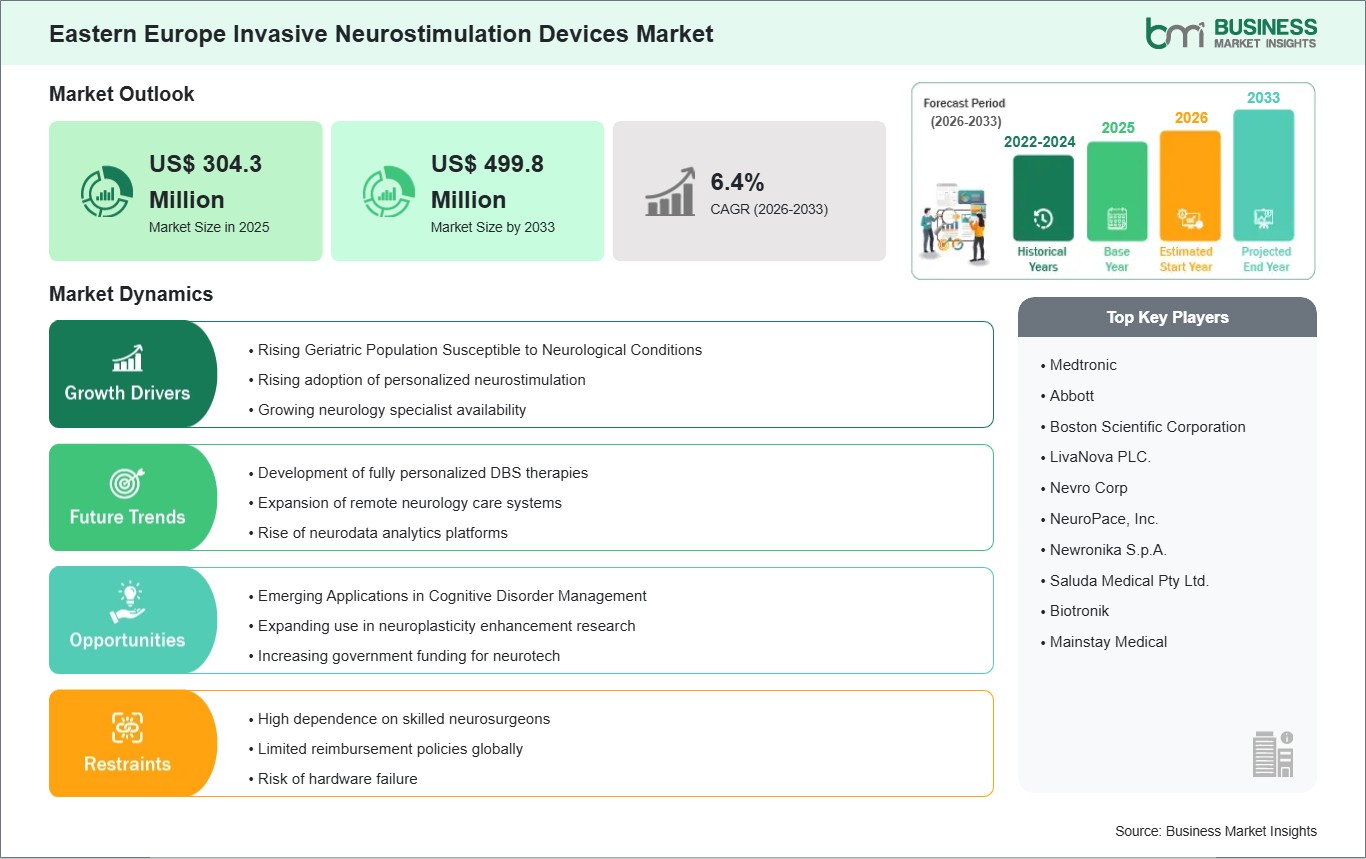
In the Eastern European invasive neurostimulation devices market, there is currently an increasing trend towards the incorporation of highly sophisticated neuromodulation therapy techniques to address the treatment of neurological disorders that cannot be effectively treated using traditional pharmacological treatment techniques. Factors driving demand within the market can be linked to an increase in the occurrence of movement disorders, chronic pain conditions, and neurological disorders that do not respond well to treatment. This has led to an increased demand for advanced implantable neurostimulation devices in the specialized facilities used to address such conditions. One factor driving demand is the development of increasingly advanced neurostimulation devices characterized by high programmability, precision, and the ability to deliver long-term treatment. Another key factor driving demand can be attributed to the modernization of neurosurgical facilities within certain Eastern European countries, coupled with increasing physician awareness about the effectiveness of treatments like deep brain stimulation. Another factor driving demand is the partnerships that firms are developing with research and educational facilities dedicated to neurological treatment and research. On the other hand, the competitive situation is affected by product differentiation, post-implantation support services, and country-specific procurement processes. While all this may seem promising, one thing that continues to hold back progress is the cost of neurostimulation devices in general, which includes both acquisition and installation as well as follow-up services. In addition, regulatory compliance standards, physicians' need for training, and criteria for patient selection play an important role in purchases as well. Overall, it becomes clear that the current Eastern European market environment is characterized by technological complexity and changes in clinical practice.
Segment Analysis
Eastern Europe Invasive Neurostimulation Devices Market Segmentation
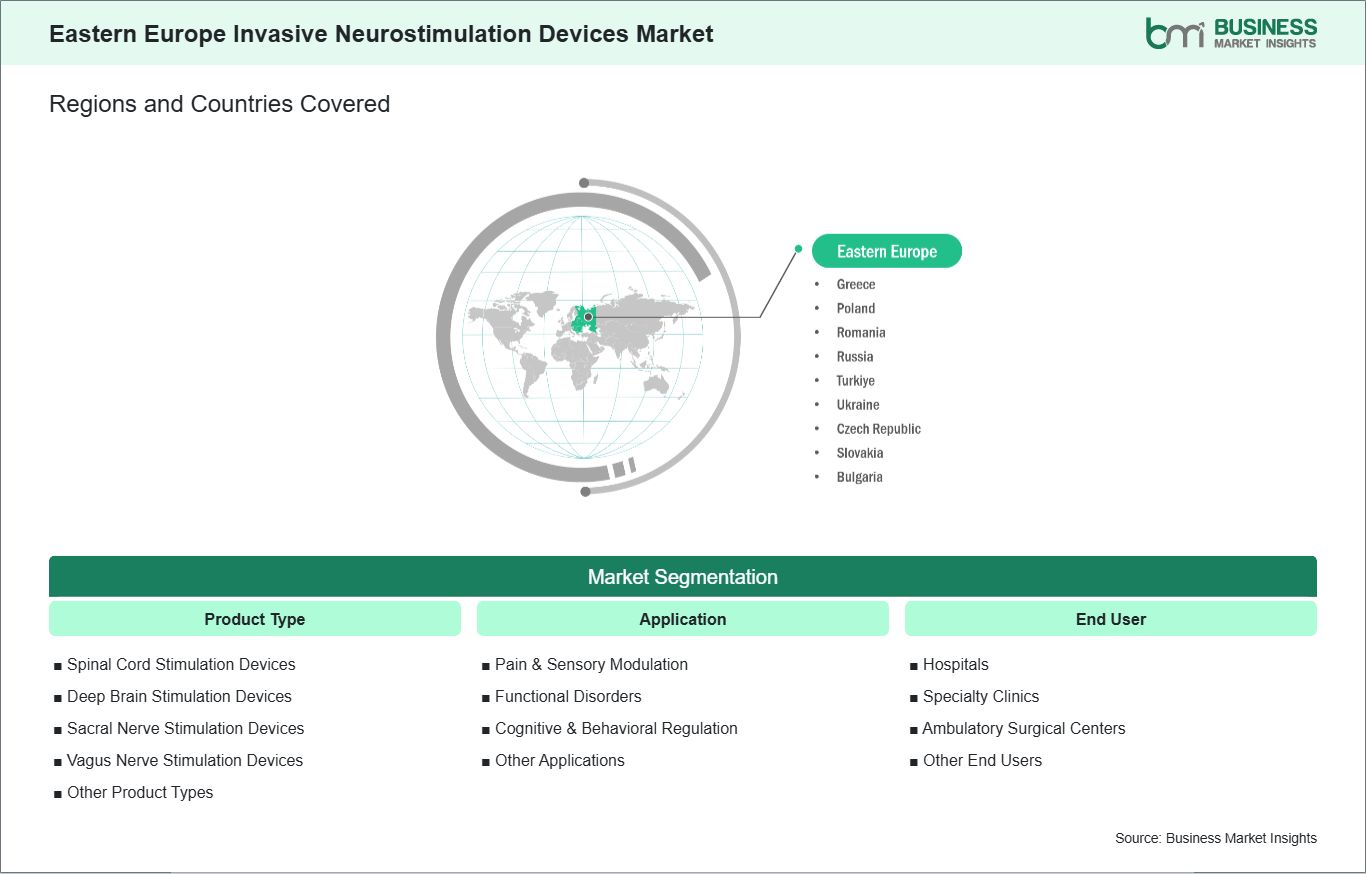
Key segments that contributed to the derivation of the Eastern Europe invasive neurostimulation devices market analysis are product type, application and end user.
- By product type, the invasive neurostimulation devices market is segmented into spinal cord stimulation devices, deep brain stimulation devices, sacral nerve stimulation devices, vagus nerve stimulation devices, and other product types. The spinal cord stimulation devices segment dominated the market in 2025.
- Based on application, the invasive neurostimulation devices market is categorized into pain & sensory modulation, functional disorders, cognitive & behavioral regulation, and other applications. The pain & sensory modulation segment dominated the market in 2025.
- In terms of end user, the invasive neurostimulation devices market is categorized into hospitals, specialty clinics, ambulatory surgical centers, and other end users. The hospitals segment dominated the market in 2025.
Market Forces
Eastern Europe Invasive Neurostimulation Devices Market Drivers and Opportunities
Rising Geriatric Population Susceptible to Neurological Conditions
Invasive neurostimulation market dynamics are largely driven by changes in demographics, resulting in a higher prevalence of age-related neurology issues in the region of Eastern Europe. With the increasing number of older patients developing movement disorders, chronic neuropathic pain, and other types of neurodegenerative conditions, the healthcare sector faces an increased demand for neurostimulation treatments.
Independence of older adults is another factor worth noting when analyzing the invasive neurostimulation devices market in Eastern Europe. Specialists specializing in neurology and neurosurgery have begun to take into account cases in which patients suffer from certain conditions that impede their ability to move independently, engage in routine activities, or take medications. This has led to a preference for invasive neurostimulation treatment in some cases and stimulated further development of multidisciplinary approaches to the issue.
Increased focus on geriatric care and related procedures leads to different needs in terms of technology and medical devices. For example, with the aging of the population, hospitals have become more interested in acquiring equipment that will allow them to manage complex cases involving chronic diseases. To adapt to changing requirements, manufacturers producing neurostimulation devices in Eastern Europe must continue to improve the durability of implants, programming features, etc.
Emerging Applications in Cognitive Disorder Management
The scope of invasive neurostimulation in Eastern Europe is gradually extending beyond traditional movement disorder applications toward the management of cognitive conditions. Research-focused hospitals and academic neuroscience centers are exploring how targeted neural modulation may influence brain circuits associated with memory, attention, and executive function. This evolving clinical interest is encouraging broader discussions regarding the role of implantable technologies in addressing cognitive decline that remains insufficiently controlled through conventional therapeutic approaches.
Healthcare institutions are also demonstrating increased interest in personalized neuromodulation strategies for complex neurological presentations involving both cognitive and behavioral symptoms. Rather than relying solely on standardized treatment pathways, specialists are investigating approaches that adapt stimulation parameters according to individual neurological profiles.
Commercial activity within the market is increasingly influenced by collaborations between device developers, neurological research institutes, and university hospitals. These partnerships are helping generate clinical insights that may expand the therapeutic boundaries of invasive neurostimulation. As evidence accumulates regarding neural network modulation and cognitive function, manufacturers are positioning their portfolios to address future indications.
Size and Share Analysis
Eastern Europe Invasive Neurostimulation Devices Market Size and Share Analysis
The Eastern Europe invasive neurostimulation devices market is experiencing steady growth, with market size and share analysis reflecting evolving treatment preferences and competitive dynamics among key players. The report evaluates important subsegments categorized within product type, application and end user, highlighting their respective contributions to market performance.
By product type, the spinal cord stimulation devices subsegment dominated the market in 2025, driven by its widespread adoption for chronic pain management, particularly for failed back surgery syndrome and neuropathic pain conditions.
Based on application, the pain & sensory modulation subsegment dominated the market in 2025, driven by the rising global prevalence of chronic pain disorders and the growing preference for neuromodulation as an alternative to long-term drug therapy.
In terms of end user, the hospitals subsegment dominated the market in 2025, driven by their advanced neurosurgical infrastructure, availability of specialized healthcare professionals, and high volume of neurostimulation implantation procedures.
Report Coverage
Eastern Europe Invasive Neurostimulation Devices Market Report Coverage and Deliverables
The "Eastern Europe Invasive Neurostimulation Devices Market Size and Forecast (2022-2033)" report provides a detailed analysis of the market covering below areas:
- Market size and forecast at regional and country levels for all market segments covered under the scope
- Market trends, as well as drivers, restraints, and opportunities
- Market analysis covering key trends, regional framework, major players, regulations, and recent developments
- Market concentration, heat map analysis, prominent players, and recent developments for the Market
- Detailed company profiles, including SWOT analysis
Geographic Insights
Eastern Europe Invasive Neurostimulation Devices Market Geographic Insights
The geographical scope of the Eastern Europe Invasive Neurostimulation Devices Market report is divided into Russia, Poland, Romania, Czech Republic, Greece, Ukraine, Slovakia, Bulgaria. Russia held the largest share in 2025.
In regards to the Eastern Europe invasive neurostimulation devices market, there is evidence that there are different dynamics associated with the development of the sector in various countries; however, it is noteworthy that Russia still represents a dominating player due to the country‘s highly developed healthcare system, presence of specialized clinics providing treatments for neurological diseases, and high involvement of neurosurgery operations at leading hospitals of urban areas. Poland is characterized by significant growth opportunities, as the market in the country experiences positive dynamics associated with increased investments in clinical research and the use of new therapy solutions for chronic neurological conditions. As for Romania, it is noteworthy that healthcare innovations contribute to positive growth dynamics in the market in the country, while physicians‘ growing awareness concerning minimally invasive therapy of neurological problems also promotes further development of the segment. The market development in the Czech Republic is facilitated by an advanced medical device environment in the country, as well as increased use of advanced treatment tools in hospitals of the third level. The Ukrainian market has been growing due to its attempts to improve its specialized health care services, thereby providing conditions for applying new neurostimulation systems in treating neurological diseases. In Slovakia, the market has been gaining traction owing to increased collaboration between healthcare facilities and manufacturers of medical devices, which have contributed to increased accessibility of modern neuromodulation technologies. At the same time, the Bulgarian market has demonstrated good development potential thanks to improved patient access to specialized neurological services and an increased interest of healthcare professionals in advanced medical technologies.
Industry Activity
Recent Developments
The Eastern Europe Invasive Neurostimulation Devices Market is evaluated by gathering qualitative and quantitative data post primary and secondary research, which includes important corporate publications, association data, and databases. A few of the key developments in the Eastern Europe invasive neurostimulation devices market are:
- In December 2023, Medtronic announced that it had received CE Mark approval for its Percept RC rechargeable deep brain stimulation (DBS) neurostimulator with BrainSense technology, enabling commercialization across the European Union. The launch expanded access to next-generation sensing-enabled DBS therapy for patients with Parkinson‘s disease, essential tremor, dystonia, and epilepsy, supporting adoption across Eastern European neurology centers that utilize CE-marked neurostimulation devices.
- In January 2024, AbbVie announced the European Union launch of PRODUODOPA (foslevodopa/foscarbidopa) for advanced Parkinson‘s disease. While a drug-device combination therapy rather than a traditional implant, the launch broadened advanced neurological treatment options in Europe and complements the ecosystem of invasive neurostimulation therapies used for patients with advanced movement disorders across Eastern European healthcare systems.
Trust & Transparency
Research Methodology
The market analysis combines proprietary research with secondary data from government agencies, company disclosures, regulatory filings, industry databases and expert interviews. Market estimates are validated through data triangulation, cross-market benchmarking and analyst
review.
View Full Research Methodology
Key Sources Referred:
U.S. Food and Drug Administration (FDA)National Institutes of Health (NIH)National Institute of Neurological Disorders and Stroke (NINDS)Centers for Medicare & Medicaid Services (CMS)Medical Device Innovation Consortium (MDIC)World Health Organization (WHO)International Organization for Standardization (ISO)International Neuromodulation Society (INS)North American Neuromodulation Society (NANS)Company WebsitesCompany Annual ReportsCompany Investor Presentations