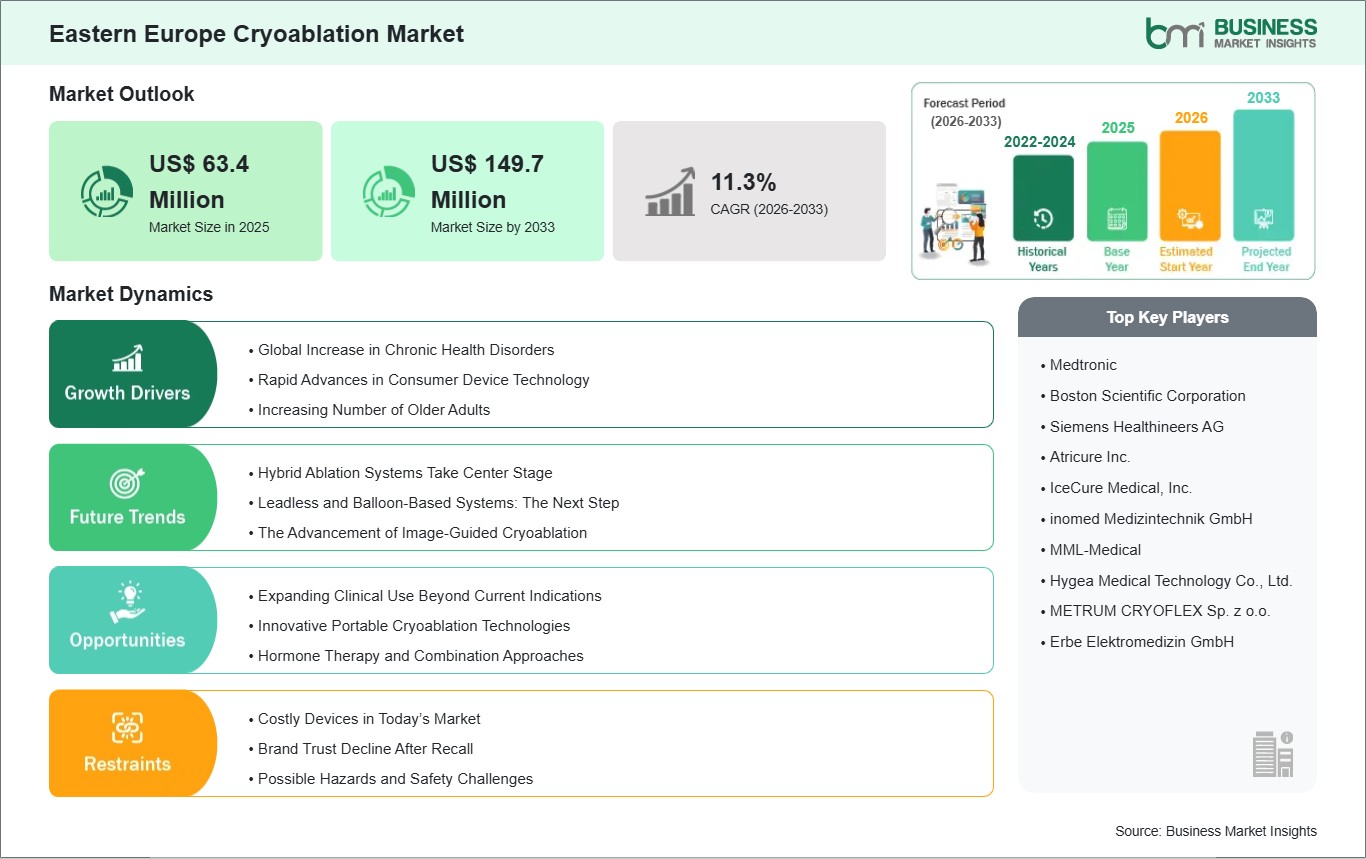
The Eastern Europe cryoablation market size is expected to reach US$ 149.7 million by 2033 from US$ 63.4 million in 2025. The market is estimated to record a CAGR of 11.3% from 2026 to 2033.
The Eastern Europe cryoablation market is evolving steadily as healthcare systems across the region continue modernizing their interventional capabilities and expanding access to minimally invasive treatment modalities. Cryoablation is gaining clinical traction in both cardiology and oncology applications, particularly in tertiary hospitals and university-affiliated institutions where advanced imaging and catheter-based infrastructure are available. Increasing physician familiarity with tissue-preserving technologies, combined with a broader shift toward reducing surgical trauma and hospital stay duration, is supporting adoption across specialized care centers.
The market is encouraged by the gradual upgrading of catheterization laboratories, growing interdisciplinary collaboration between electrophysiologists and oncologic surgeons, and rising patient awareness of minimally invasive alternatives. However, adoption remains uneven due to differences in healthcare funding structures and procurement processes across public hospital networks. Budgetary pressures and reliance on imported medical technologies can slow purchasing decisions and delay equipment standardization. Additionally, limited access to highly trained operators in non-metropolitan facilities presents an operational constraint. Despite these challenges, strengthening clinical education programs and ongoing infrastructure improvements continue to create favorable conditions for deeper integration of cryoablation into established therapeutic pathways throughout the region.

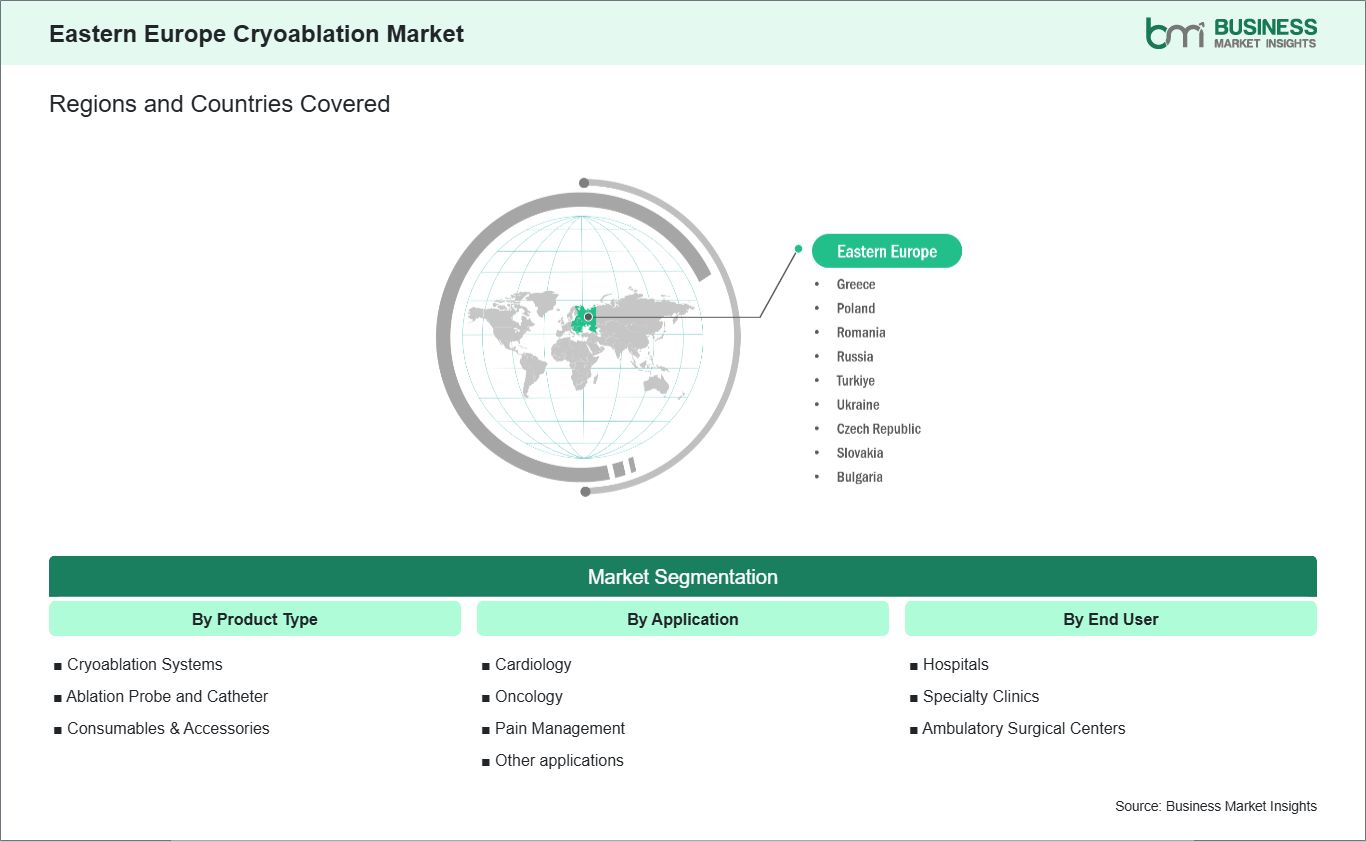
Key segments that contributed to the derivation of the Eastern Europe cryoablation market analysis are product type, application, and end user.
Eastern Europe has seen healthcare challenges shift as chronic health disorders become more prominent in clinical practice across the region. Conditions such as cardiac arrhythmias, coronary disease, and various solid tumors are more frequently encountered by specialists in major referral centers. This evolving disease landscape is prompting hospitals and cardiology clinics to evaluate advanced procedural options. Cryoablation, with its minimally invasive advantages, is increasingly on the radar of clinicians looking to treat complex chronic conditions with reduced procedural burden for patients.
Cardiology departments in cities like Warsaw, Prague, Kyiv, and Bucharest are augmenting their procedural offerings to include a broader range of ablation techniques. Electrophysiologists are now considering cryoablation as part of their toolkit for managing difficult rhythm disorders that do not respond optimally to medication alone. As cardiology practices modernize and adopt state-of-the-art interventional suites, interest in cryoablation continues to grow, particularly where specialists are trained and equipment is available.
Beyond cardiac care, oncologists in Eastern European cancer centers are also exploring minimally invasive ablation technologies to complement surgical and radiation therapies. Cryoablation fits well in treatment pathways for select patients with localized lesions, allowing clinicians to pursue targeted interventions with a focus on improving recovery experiences. As chronic health disorders remain a priority for health systems in the region, demand for procedures that address these conditions effectively and efficiently is shaping market interest in cryoablation solutions.
While cardiac applications have traditionally formed the core of cryoablation use in Eastern Europe, clinicians are increasingly looking to extend its role into additional clinical areas. Interventional radiologists and oncology specialists in regional health systems are beginning to assess cryoablation for soft-tissue ablation and organ-specific indications. These efforts signal a growing confidence in the technology’s versatility, particularly where multidisciplinary teams aim to offer alternatives to open surgery.
In national cancer institutes and academic hospitals across the region, physicians are discussing cryoablation in tumor boards as a possible option for patients who may not be ideal candidates for traditional surgical resection. By integrating image-guided ablation into treatment plans for liver or kidney lesions, for example, Eastern European clinicians are leveraging cryoablation’s ability to deliver focused therapy with precision. This trend reflects a broader shift toward embracing minimally invasive procedures that align with patient-centered care priorities.
Emerging interest is also visible in pain management and palliative intervention settings, where specialists are evaluating how cryoablation can be used to treat nerve-related pain syndromes or provide symptom relief in complex cases. Although these indications are still developing compared with more established cardiac and oncology uses, they illustrate how healthcare providers in Eastern Europe are exploring cryoablation’s full clinical potential. As procedural expertise and technical support increase across hospitals and specialty clinics, the market for diverse cryoablation indications is expected to become more dynamic and responsive to regional clinical needs.

The Eastern Europe cryoablation market demonstrates steady growth, with size and share analysis highlighting evolving trends and competitive dynamics among key players. The report evaluates important subsegments categorized within product type, application, and end user, highlighting their respective contributions to overall market performance.
By product type, the ablation probe and catheter subsegment dominated the market in 2025. This is driven by the recurring need for precise and reliable probes and catheters during cryoablation procedures, essential for effective freezing and destruction of targeted tissues, making them a key revenue driver for manufacturers and ensuring consistent demand in clinical settings.
In terms of application, the oncology subsegment dominated the market in 2025. The leadership of oncology applications is attributed to the rising incidence of cancer cases, growing preference for minimally invasive tumor ablation techniques, and increasing awareness among healthcare providers about the effectiveness of cryoablation in treating liver, kidney, prostate, and other solid tumors.
Based on end user, the hospitals subsegment dominated the market in 2025. Hospitals maintain a stronghold due to their well-established oncology and surgical departments, access to advanced cryoablation equipment, trained interventional radiologists and staff, and the capability to perform complex procedures with comprehensive patient care.
| Report Attribute | Details |
|---|---|
| Market size in 2025 | US$ 63.4 Million |
| Market Size by 2033 | US$ 149.7 Million |
| CAGR (2026 - 2033) | 11.3% |
| Historical Data | 2022-2024 |
| Forecast period | 2026-2033 |
| Segments Covered | By Product Type
|
|
Regions and Countries Covered
| |
| Eastern Europe | Russia, Poland, Romania, Czech Republic, Greece, Ukraine, Slovakia, Bulgaria |
| Market leaders and key company profiles |
|
The "Eastern Europe Cryoablation Market Size and Forecast (2022–2033)" report provides a detailed analysis of the market covering below areas:
The geographical scope of the Eastern Europe cryoablation market report is divided into: Russia, Poland, Romania, the Czech Republic, Ukraine, Romania, Greece, Slovakia, and Bulgaria. Russia held the largest share in 2025.
Russia dominates the Eastern Europe cryoablation market due to its extensive healthcare infrastructure and concentration of specialized medical institutions in major cities such as Moscow and Saint Petersburg. Large cardiovascular and oncology centers in these urban hubs have integrated cryoablation into advanced treatment protocols, particularly for atrial fibrillation management and selected solid tumor applications. The presence of government-backed medical research institutes has supported procedural refinement, clinician education, and the expansion of minimally invasive techniques, strengthening national expertise in cryogenic therapies. The country’s structured referral system directs complex cardiac and oncologic cases toward high-capacity hospitals, enabling consistent utilization of advanced interventional procedures. Domestic initiatives aimed at strengthening medical technology capabilities have also encouraged collaboration between healthcare institutions and device suppliers to enhance availability and technical support. Although disparities remain between metropolitan and rural healthcare facilities, continued investment in specialized care centers and professional training programs reinforces Russia’s leadership position within the regional cryoablation landscape.

The Eastern Europe cryoablation market is evaluated by gathering qualitative and quantitative data post primary and secondary research, which includes important corporate publications, association data, and databases. A few of the key developments in the Eastern Europe cryoablation market are:
The Eastern Europe Cryoablation Market is valued at US$ 63.4 Million in 2025, it is projected to reach US$ 149.7 Million by 2033.
As per our report Eastern Europe Cryoablation Market, the market size is valued at US$ 63.4 Million in 2025, projecting it to reach US$ 149.7 Million by 2033. This translates to a CAGR of approximately 11.3% during the forecast period.
The Eastern Europe Cryoablation Market report typically cover these key segments-
The historic period, base year, and forecast period can vary slightly depending on the specific market research report. However, for the Eastern Europe Cryoablation Market report:
The Eastern Europe Cryoablation Market is populated by several key players, each contributing to its growth and innovation. Some of the major players include:
The Eastern Europe Cryoablation Market report is valuable for diverse stakeholders, including:
Essentially, anyone involved in or considering involvement in the Eastern Europe Cryoablation Market value chain can benefit from the information contained in a comprehensive market report.
Please tell us your area of interest
(Market Segments/ Regions and Countries/ Companies)