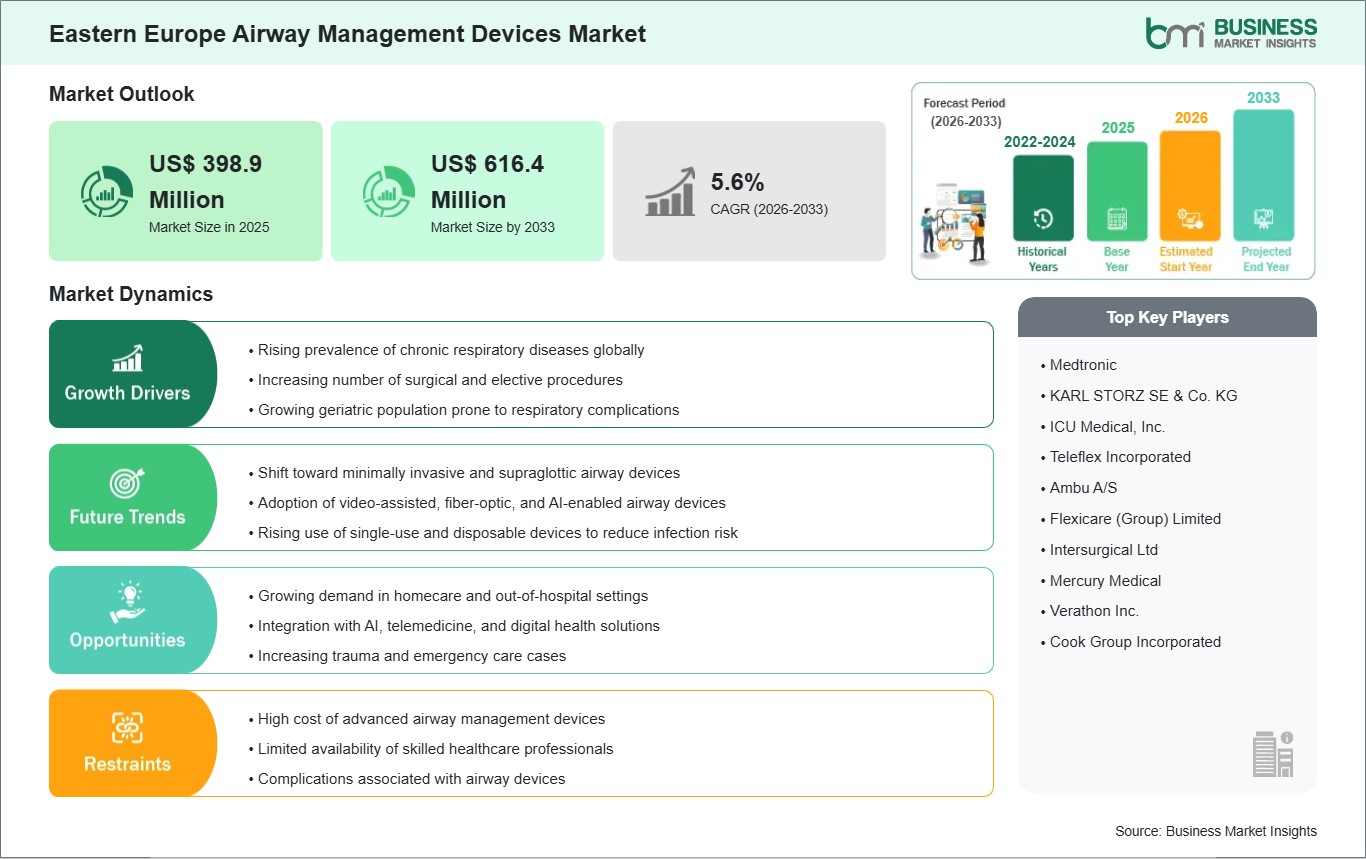
Rising Prevalence Of Chronic Respiratory Diseases
The Eastern Europe airway management devices market is being shaped significantly by the increasing burden of chronic respiratory diseases across the region. Countries such as Poland, Romania, and Ukraine are seeing higher incidence of chronic obstructive pulmonary disease (COPD) and asthma, driven by historical smoking patterns, urban air pollution, and occupational exposures. In industrial cities across Poland and the Czech Republic, decades of factory emissions and vehicular pollution have left a legacy of compromised respiratory health, increasing annual hospital admissions for exacerbations and respiratory distress.
In Russia and the Baltics, a growing number of older people adds to the problem due to their vulnerability to chronic respiratory disorders. Higher concentrations of elderly people in these countries than Western Europe imply the necessity for constant surveillance and treatment of airways. Hospitals in these countries observe increasing cases of serious diseases from one year to another that result in an enhanced need for the use of oxygen supplies, non-invasive ventilators, and airway clearing equipment.
Besides, seasonal changes affect patient symptoms in other ways. Harsh winters in Ukraine and Belarus, as well as dependence on coal as a heating fuel, cause patients to suffer from respiratory problems and, consequently, require more devices that help manage airways. Lack of adequate prevention measures for rural communities in this area contribute to the ongoing growth of airway management technology need.
Growing Demand in Homecare and Out‑Of‑Hospital Settings
There is a trend among eastern European countries to move away from the conventional hospital setting when dealing with chronic respiratory diseases, hence the need for airway management tools outside the hospital setup. The healthcare system in Hungary and other countries such as Bulgaria has been working hard to reduce the load at hospitals by giving their patients portability airway management gadgets. GPs have been prescribing portable oxygen treatment kits for COPD patients, enabling them to remain mobile and avoid frequent visits to hospitals.
In Poland and Slovakia, emergency medical services (EMS) are also modernizing, carrying advanced supraglottic devices and portable ventilators as standard equipment in ambulances. This enables first responders to secure airways effectively at the scene of accidents or acute respiratory failures, improving patient survival rates during transport to hospitals. The broadening role of EMS in acute airway management is a testament to the demand for reliable, transport‑ready devices across Eastern Europe.
Furthermore, telemedicine projects are also gaining popularity in regions such as Romania and Lithuania, where the remote monitoring of breathing patterns helps make personal modifications to airway support. Those patients who are equipped with at-home airway management devices are capable of relaying information to their physicians, which will allow the doctors to take quick action if there is a need for it. The combination of technology along with the delivery of health care outside of the hospital highlights another emerging regional trend.