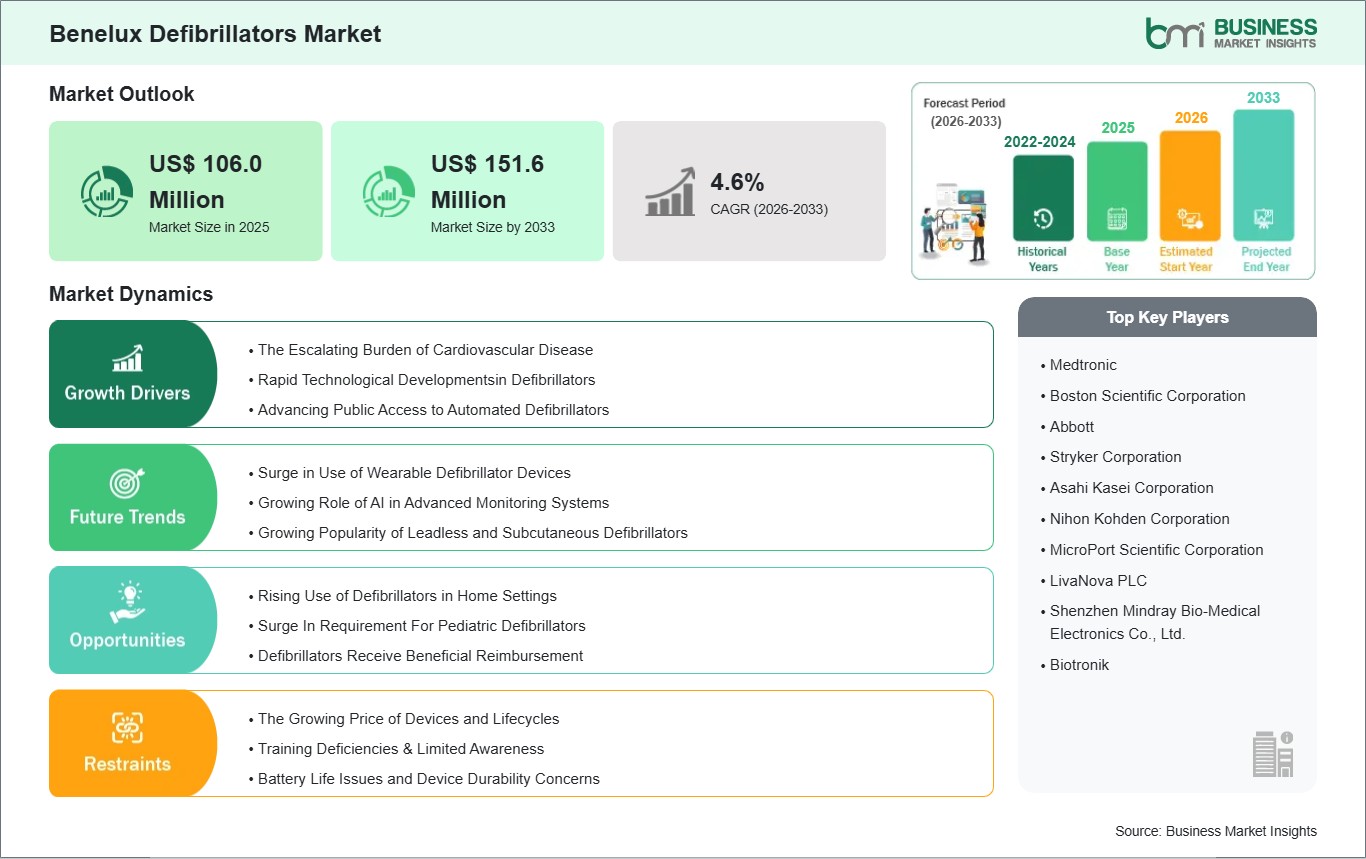
The Benelux Defibrillators market size is expected to reach US$ 151.6 million by 2033 from US$ 106.0 million in 2025. The market is estimated to record a CAGR of 4.6% from 2026 to 2033.
Belgium, the Netherlands, and Luxembourg have embraced automated external defibrillators (AEDs) and clinical-grade defibrillators across hospitals, ambulances, and public access points. Defibrillators are viewed as essential life-saving devices, and there is a strong focus on improving out-of-hospital cardiac arrest outcomes through wider device availability and training of lay responders.
Key drivers include robust public access defibrillation programs, high health literacy, and an emphasis on emergency preparedness. Public deployment of AEDs in transportation hubs, sports facilities, and workplaces, combined with widespread CPR training programs, strengthens bystander readiness and confidence. Additionally, the presence of advanced medical technology suppliers supports innovation in device functionality, portability, and ease of use.
Challenges include regulatory differences across the three countries, which can complicate the uniform deployment of defibrillators, and logistical issues in maintaining devices and ensuring accessibility outside urban centers. Despite these hurdles, strong government initiatives and public awareness support the adoption of defibrillation solutions across the region.

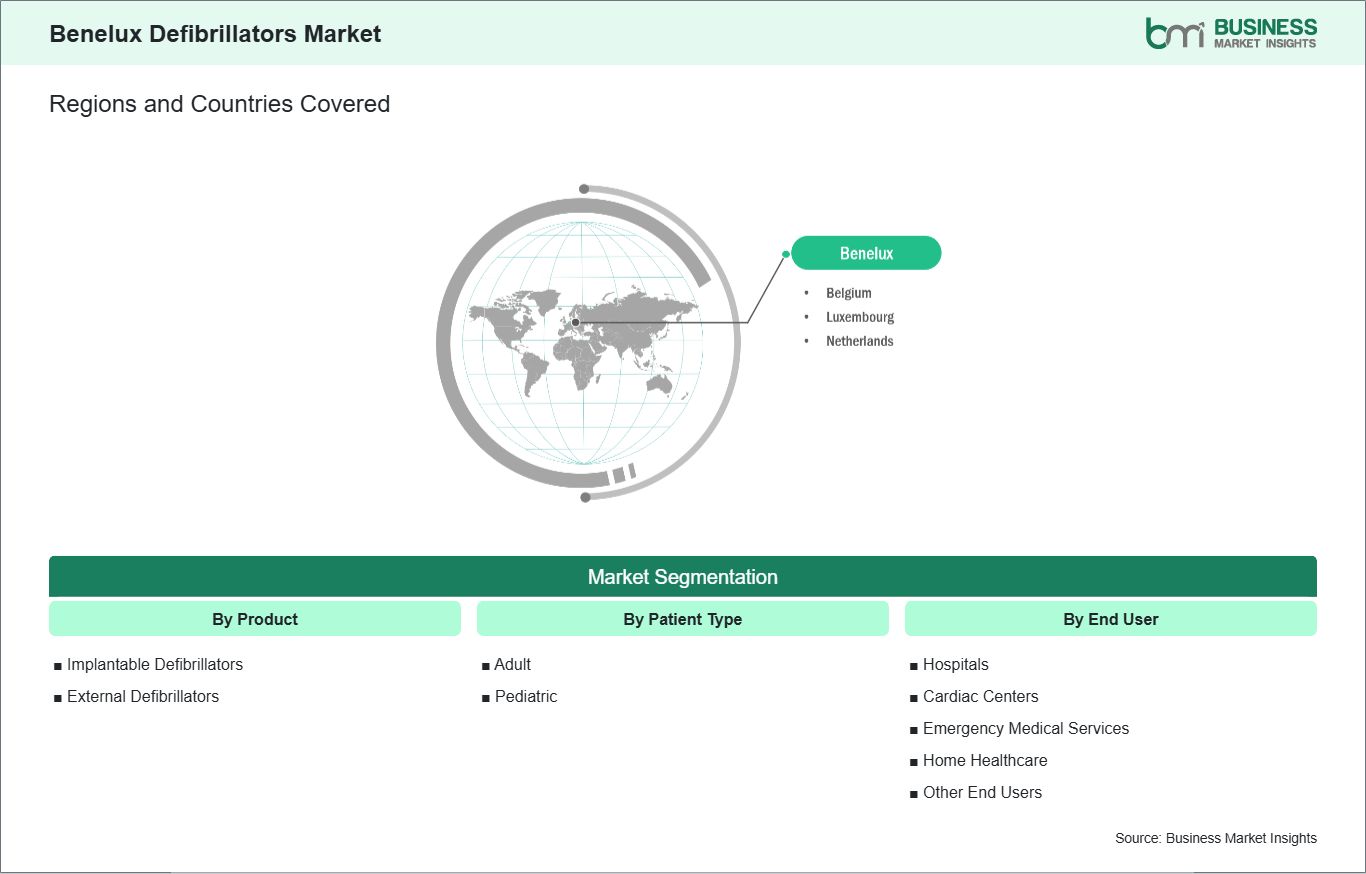
Key segments that contributed to the derivation of the Benelux Defibrillators market analysis are product type, patient type, and end user.
The region is experiencing a gradual but significant increase in cardiovascular diseases (CVDs), driven by aging populations, sedentary lifestyles, and lifestyle-related risk factors such as obesity, high cholesterol, and diabetes. Coronary artery disease, arrhythmias, and sudden cardiac arrest are increasingly reported, particularly in urban centers such as Brussels, Amsterdam, and Luxembourg City. The prevalence of CVD in adults over 50 is rising, prompting increased focus on preventive and acute cardiac care.
Healthcare systems in the Benelux countries are well-developed and are integrating defibrillators into hospital and emergency care protocols. Hospitals are equipping intensive care units with AEDs and implantable cardioverter defibrillators (ICDs), and medical staff undergo rigorous training in advanced life support. National initiatives, such as the Dutch “HartslagNu” program and Belgium’s AED registration systems, emphasize rapid defibrillation as a critical component in reducing mortality from sudden cardiac events.
Despite a strong healthcare infrastructure, regional disparities in emergency access remain, particularly in more rural areas or smaller towns. Ambulance response times and AED availability vary, which can impact survival in cases of out-of-hospital cardiac arrest. Public awareness campaigns, community training programs, and municipal AED deployment projects ensure broader access, reflecting the region’s commitment to bridging gaps in lifesaving cardiac interventions.
The market is seeing growing interest in home-based defibrillators, especially among patients with a history of cardiac events or high-risk profiles. Households in Belgium and the Netherlands are investing in portable AEDs, driven by increased awareness of sudden cardiac arrest risks and the convenience of immediate intervention at home. Healthcare providers are recommending these devices for preventive care in high-risk patients.
The rise of telemedicine and home healthcare services is supporting adoption, with professionals providing guidance on device use and combining it with CPR training for family members. In urban centers such as Amsterdam and Brussels, where out-of-hospital cardiac response times can be delayed, having a home defibrillator is seen as a practical way to enhance patient safety and improve outcomes. Programs integrating digital monitoring and emergency alert systems enhance the effectiveness of home-based devices.
Affordability and maintenance are considerations, though less so than in developing regions. Government subsidies, insurance coverage, and support from medical device distributors are making home defibrillators more accessible. Continued emphasis on public education, device registration, and healthcare provider recommendations suggests that home-based defibrillators will become an important part of cardiac care strategies in the coming years.

The Benelux Defibrillators market demonstrates steady growth, with size and share analysis highlighting evolving trends and competitive dynamics among key players. The report evaluates important subsegments categorized within product type, patient type, and end user, highlighting their respective contributions to overall market performance.
By product type, the implantable defibrillators subsegment dominated the market in 2025. Their adoption is driven by their proven efficacy in preventing sudden cardiac arrest, long-term reliability, and ability to continuously monitor and correct life-threatening arrhythmias, making them a cornerstone in cardiac care.
In terms of patient type, the adults subsegment dominated the market in 2025 due to the higher prevalence of cardiac disorders in the adult population, increased awareness of sudden cardiac death prevention, and greater accessibility of advanced defibrillator therapies for adult patients.
Based on end user, the hospitals subsegment dominated the market in 2025. Hospitals remain the primary distribution channel due to their comprehensive cardiac care facilities, access to trained cardiologists and specialized technicians, advanced monitoring infrastructure, and ability to provide immediate, life-saving interventions.
| Report Attribute | Details |
|---|---|
| Market size in 2025 | US$ 106.0 Million |
| Market Size by 2033 | US$ 151.6 Million |
| CAGR (2026 - 2033) | 4.6% |
| Historical Data | 2022-2024 |
| Forecast period | 2026-2033 |
| Segments Covered | By By Product
|
|
Regions and Countries Covered
| |
| Benelux | Belgium, Netherlands, Luxembourg |
| Market leaders and key company profiles |
|
The "Benelux Defibrillators Market Size and Forecast (2022–2033)" report provides a detailed analysis of the market covering below areas:
The geographical scope of the Benelux Defibrillators market report is divided into: Belgium, the Netherlands, and Luxembourg. The Netherlands held the largest share in 2025.
The Netherlands leads the market due to its developed emergency response infrastructure and strong government focus on rapid intervention for sudden cardiac arrest. AEDs are installed in public spaces, transport hubs, schools, sports complexes, and corporate offices, ensuring rapid access in emergencies. Extensive training programs for medical professionals as well as community members empower citizens to act confidently when cardiac events occur.
Collaboration between municipalities, healthcare institutions, and volunteer networks strengthens AED coverage and public engagement. Dutch manufacturers and international suppliers maintain a strong market presence, offering devices with advanced features and reliable support services.
However, challenges remain in ensuring consistent device coverage in rural areas and integrating AED location data to improve emergency response coordination. Despite these considerations, the Netherlands’ focus on life-saving infrastructure, proactive training programs, and public engagement firmly establishes it as the dominant market within the region.

The Benelux Defibrillators market is evaluated by gathering qualitative and quantitative data post primary and secondary research, which includes important corporate publications, association data, and databases. A few of the key developments in the Benelux defibrillators market are:
The Benelux Defibrillators Market is valued at US$ 106.0 Million in 2025, it is projected to reach US$ 151.6 Million by 2033.
As per our report Benelux Defibrillators Market, the market size is valued at US$ 106.0 Million in 2025, projecting it to reach US$ 151.6 Million by 2033. This translates to a CAGR of approximately 4.6% during the forecast period.
The Benelux Defibrillators Market report typically cover these key segments-
The historic period, base year, and forecast period can vary slightly depending on the specific market research report. However, for the Benelux Defibrillators Market report:
The Benelux Defibrillators Market is populated by several key players, each contributing to its growth and innovation. Some of the major players include:
The Benelux Defibrillators Market report is valuable for diverse stakeholders, including:
Essentially, anyone involved in or considering involvement in the Benelux Defibrillators Market value chain can benefit from the information contained in a comprehensive market report.
Please tell us your area of interest
(Market Segments/ Regions and Countries/ Companies)