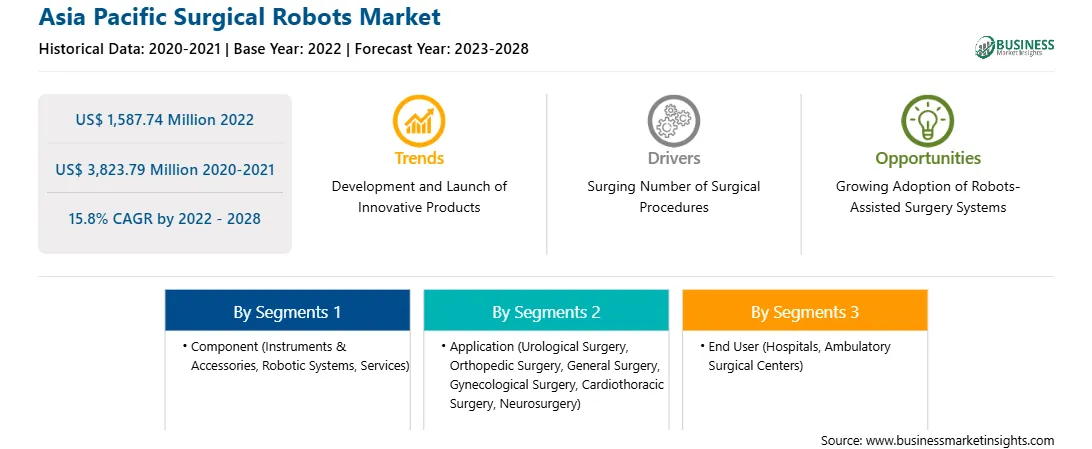
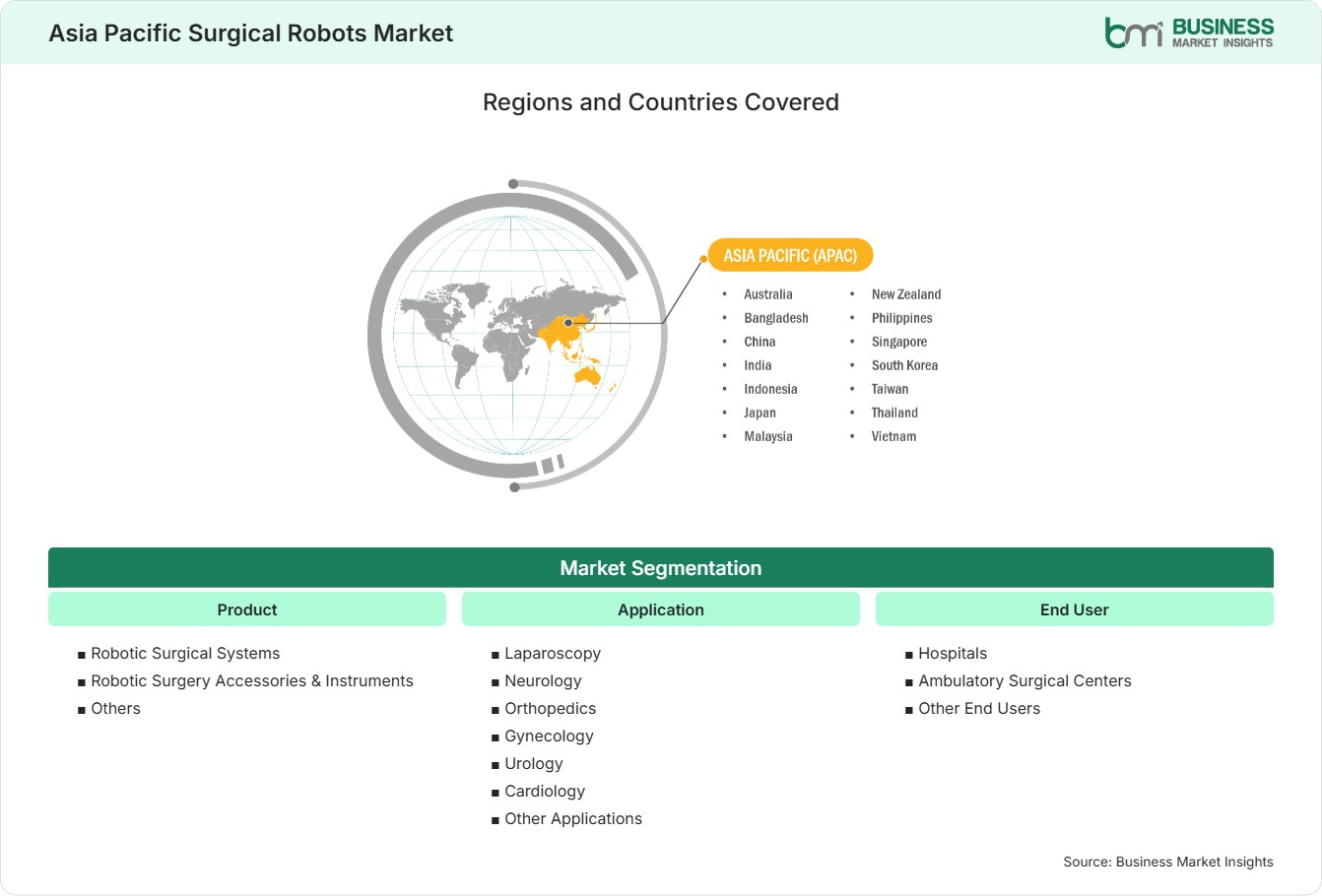
The geographical scope of the Asia Pacific Surgical Robots Market report is divided into China, India, Japan, Australia, Bangladesh, Indonesia, Malaysia, New Zealand, Philippines, Singapore, South Korea, Taiwan, Thailand, and Vietnam. China held the largest share in 2025.
Country-specific dynamics in the Asia Pacific surgical robots market reveal highly differentiated adoption patterns shaped by healthcare infrastructure maturity, regulatory frameworks, and capital investment capacity. China has emerged as a leading adopter, driven by large-scale hospital modernization initiatives, rapid urban population growth, and increasing government incentives aimed at promoting minimally invasive and precision surgery programs. Robotic-assisted surgery adoption is expanding across urology, gastrointestinal, and cardiothoracic specialties, with metropolitan hospitals prioritizing systems that enhance surgical precision, reduce complications, and shorten patient recovery times. In India, adoption remains selective but concentrated in metropolitan private hospitals where demand for oncology, cardiac, and orthopedic robotic procedures is rising. These hospitals often leverage robotic systems to attract high-income patients and international medical tourists, while bridging gaps in surgical precision and efficiency. Australia represents a mature market, characterized by strong integration of robotic-assisted platforms within tertiary and teaching hospitals. High per capita healthcare expenditure, structured surgeon training programs, and regulatory support for advanced medical technologies drive steady adoption across multiple specialties, including urology, gynecology, and colorectal surgery. Meanwhile, South Korea is advancing through government-backed initiatives and private hospital investments focused on upgrading surgical care quality. Training programs, public-private partnerships, and technology-driven surgical centers are supporting broader integration, particularly in high-complexity procedures. Across these key Asia Pacific markets, adoption is influenced by factors such as capital availability, surgeon expertise, reimbursement frameworks, and institutional prioritization of patient outcomes. While mature markets emphasize technological sophistication and workflow integration, emerging markets focus on selective deployment and operational efficiency. These country-level trends underscore the strategic expansion of robotic-assisted surgery across Asia Pacific, highlighting a region-wide alignment toward improving surgical precision, patient safety, and healthcare competitiveness through advanced robotic solutions.