Analysis - by Source (Bio-Based and Synthetic), Form (Dry and Liquid), and Crop Type (Fruits and Vegetables, Cereals and Grains, Oilseeds and Pulses, and Others)
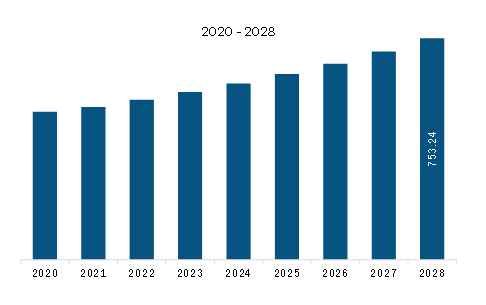
The Asia Pacific miticides market is expected to grow from US$ 543.10 million in 2022 to US$ 753.24 million by 2028. It is estimated to grow at a CAGR of 5.6% from 2022 to 2028.
Bio-Based Miticides Drive Asia Pacific Miticides Market
For years, pesticides have been in use in an indiscriminate manner, destroying many of the natural adversaries of formerly innocuous species, along with swiftly inducing resistance in many parasites. Over the years, the green revolution has succeeded in part through the heavy use of chemical fertilizers and pesticides subsidized by governments. Many countries launched production support programs to stimulate agricultural production and achieve food self-sufficiency. Government subsidies resulted in the lower prices of fertilizers, resulting in their overuse, which not only burdened national fiscal positions but also caused environmental degradation. Thus, various countries began adopting bio-based alternatives to synthetic miticides to control environmental degradation. Malaysia reported the use of 101 metric tons of botanical and biological insecticides in agricultural practices in 2019. Plant-derived or botanical pesticides, including miticides, are typically more easily degradable and may have a lower environmental impact than chemically manufactured medications. The growing demand for such natural products to treat crops has led companies in the Asia Pacific miticides market to introduce bio-based products. Thus, the increasing popularity of organic agricultural produce and growing government efforts to develop bio-based farming practices are triggering the demand for bio-based miticides, which is likely to emerge as a significant trend in the Asia Pacific miticides market in the coming years.
Asia Pacific Miticides Market Overview
The Asia Pacific miticides market is prominent due to growing awareness about crop protection chemicals among farmers, government subsidies, and rising food demand due to the increasing population. During the forecast period, surging demand for excellent agricultural products and organic produce's increasing need for high productivity and yield are expected to boost the use of miticides in Asia Pacific countries, especially China, Japan, and India. Increasing agriculture sector, these Asian countries determine a high product consumption rate. According to the Asian Development Bank, rising incomes and urbanization are transforming food consumption. Policies introduced by many international, multilateral, and bilateral organizations on regulating pesticide distribution and promoting integrated pest management (IPM) have supported the efforts of governments in the region. The development of the Food and Agriculture Organization's (FAO's) International Code of Conduct on the Distribution and Use of Pesticides has greatly helped with the process. Further, the growing fruits & vegetable industry has propelled the demand for miticides in Asia Pacific. Asia Pacific countries such as India, China, and Japan are among the top fruit and vegetable-producing countries. According to the Ministry of Agriculture & Farmers Welfare, in 2021, India was the second-largest horticulture producer behind China, producing about 12% of the global fruit and vegetable production. This increased production of fruits and vegetables in Asia Pacific is expected to boost the demand for miticides in the region in the coming years.
Asia Pacific Miticides Market Revenue and Forecast to 2028 (US$ Million)
Asia Pacific Miticides Market Segmentation
The Asia Pacific Miticides market is segmented into source, form, crop type, and country.
Based on source, the Asia Pacific miticides market is bifurcated into bio-based and synthetic. In 2022, the synthetic segment registered a larger share in the Asia Pacific miticides market.
Based on form, the Asia Pacific miticides market is segmented into dry and liquid. In 2022, the liquid segment registered a larger share in the Asia Pacific miticides market.
Based on crop type, the Asia Pacific miticides market is segmented into fruits and vegetables, cereals and grains, oilseeds and pulses, and others. In 2022, the fruits and vegetables segment registered a largest share in the Asia Pacific miticides market.
Based on country, the Asia Pacific miticides market is segmented into Australia, China, India, Japan, South Korea, and the Rest of Asia Pacific. In 2022, China segment registered a largest share in the Asia Pacific miticides market.
BASF SE; Bayer AG; Certis USA LLC; FMC Corp; Gowan Co; Kemin Industries Inc.; Nihon Nohyaku Co. Ltd.; Oro Agri International BV; Syngenta AG; and UPL Ltd are the leading companies operating in the Asia Pacific miticides market.
Asia Pacific Miticides Market Strategic Insights
Get more information on this report
Asia Pacific Miticides Market Segmentation Analysis
Asia Pacific Miticides Market Report Highlights
Asia Pacific Miticides Report Scope
Report Attribute
Details
Market size in 2022
US$ 543.10 Million
Market Size by 2028
US$ 753.24 Million
CAGR (2022 - 2028)
5.6%
Historical Data
2020-2021
Forecast period
2023-2028
Segments Covered
By Source
Bio-Based
Synthetic
By Form
Dry
Liquid
By Crop Type
Fruits and Vegetables
Cereals and Grains
Oilseeds and Pulses
Regions and Countries Covered
Asia-Pacific
China, India, Japan, Australia, Rest of Asia-Pacific
Market leaders and key company profiles
BASF SE
Bayer AG
Certis USA LLC
FMC Corp
Gowan Co
Kemin Industries Inc.
Nihon Nohyaku Co. Ltd.
Oro Agri International BV
Syngenta AG
UPL Ltd
Get more information on this report
Asia Pacific Miticides Market Country and Regional Insights
Get more information on this report
Identical Market Reports with other Region/Countries
The List of Companies - Asia Pacific Miticides Market
BASF SE Bayer AG Certis USA LLC FMC Corp Gowan Co Kemin Industries Inc. Nihon Nohyaku Co. Ltd. Oro Agri International BV Syngenta AG UPL Ltd
Frequently Asked Questions
How big is the Asia Pacific Miticides Market?
The Asia Pacific Miticides Market is valued at US$ 543.10 Million in 2022, it is projected to reach US$ 753.24 Million by 2028.
What is the CAGR for Asia Pacific Miticides Market by (2022 - 2028)?
As per our report Asia Pacific Miticides Market, the market size is valued at US$ 543.10 Million in 2022, projecting it to reach US$ 753.24 Million by 2028. This translates to a CAGR of approximately 5.6% during the forecast period.
What segments are covered in this report?
The Asia Pacific Miticides Market report typically cover these key segments-
Source (Bio-Based, Synthetic)
Form (Dry, Liquid)
Crop Type (Fruits and Vegetables, Cereals and Grains, Oilseeds and Pulses)
What is the historic period, base year, and forecast period taken for Asia Pacific Miticides Market?
The historic period, base year, and forecast period can vary slightly depending on the specific market research report. However, for the Asia Pacific Miticides Market report:
Historic Period : 2020-2021
Base Year : 2022
Forecast Period : 2023-2028
Who are the major players in Asia Pacific Miticides Market?
The Asia Pacific Miticides Market is populated by several key players, each contributing to its growth and innovation. Some of the major players include:
BASF SE
Bayer AG
Certis USA LLC
FMC Corp
Gowan Co
Kemin Industries Inc.
Nihon Nohyaku Co. Ltd.
Oro Agri International BV
Syngenta AG
UPL Ltd
Who should buy this report?
The Asia Pacific Miticides Market report is valuable for diverse stakeholders, including:
Investors: Provides insights for investment decisions pertaining to market growth, companies, or industry insights. Helps assess market attractiveness and potential returns.
Industry Players: Offers competitive intelligence, market sizing, and trend analysis to inform strategic planning, product development, and sales strategies.
Suppliers and Manufacturers: Helps understand market demand for components, materials, and services related to concerned industry.
Researchers and Consultants: Provides data and analysis for academic research, consulting projects, and market studies.
Financial Institutions: Helps assess risks and opportunities associated with financing or investing in the concerned market.
Essentially, anyone involved in or considering involvement in the Asia Pacific Miticides Market value chain can benefit from the information contained in a comprehensive market report.





 Get Free Sample For Asia Pacific Miticides Market