Analysis By Product Type (Enoxaparin, Dalteparin, Tinzaparin, Fraxiparine, Nadroparin, and Others), Packaging (Multi-Vials and Prefilled Syringes), Application [Deep Vein Thrombosis, Acute Coronary Syndrome (ACS), Pulmonary Embolism, and Others], and End User (Hospitals, Clinics, Ambulatory Surgical Centers, and Others)
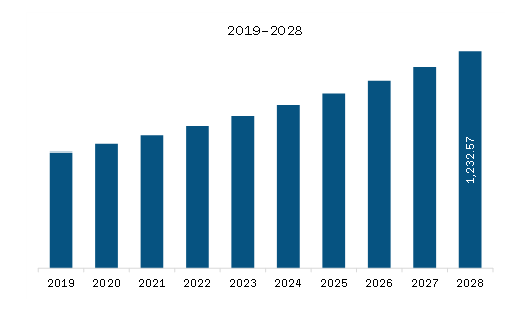
The low molecular weight heparin market in Asia Pacific is expected to grow from US$ 756.47 million in 2021 to US$ 1,232.57 million by 2028; it is estimated to grow at a CAGR of 7.2% from 2021 to 2028.
The Shenzhen Panorama Network has increased the production of new LMWH products to expand its presence in the market. In May 2020, Meitheal Pharmaceuticals Inc. received an FDA approval for Enoxaparin Sodium Injection (USP), a generic equivalent of Lovenox. The increasing propensity of research institutes to encourage the use of LMWH in new treatments will boost its demand in the near future. The LMWH helps improve coagulation disorder occurring in COVID-19 patients; it exerts anti-inflammatory effects by reducing IL-6 and stimulating lymphocyte percentage. This application of LMWH is paving the way for well-controlled clinical trials in the field of COVID-19. In addition, important players in the market are working with hospitals to strengthen their product portfolio. Further, the increasing implementation of other organic and inorganic growth strategies of key players in the low molecular weight heparin market is expected to drive its adoption in the near future.
Japan, China, South Korea, India, and Australia are the worst-hit countries due to the rising number of COVID-19 cases and related deaths. The economies of India, China, Japan, and South Korea, among others, were hit badly with negative inflation, GDPs, and rising unemployment rates due to the COVID-19 pandemic. The effects of the COVID-19 pandemic have put health data sharing and interoperability under the microscope. The interruptions in supply chains and the massive demand for the efficient treatment of COVID-19 patients have raised critical challenges in the health research industry in Asia Pacific. It has also affected manufacturing, supply chain, and business and financial markets. Medical device manufacturers and suppliers are shifting their focus to developing and supplying COVID-19 essentials and medical devices for respiratory diseases, which affect the operations of the various key players operating in this region. The prevalence of thromboembolism differs significantly between different ethnic and population groups. In Japan, the incidence of VTE is reportedly about one-eighth of North Americans. Hyperhomocysteinemia and elevated levels of Factors I, VIII, and XI are the other possible hereditary risk factors. However, the differences are due to the lack of well-designed studies and non-standardized survey designs. The incidence of VTE in Asian countries has doubled in the past decade. This could be attributed to lifestyle changes, the aging population, and increasing awareness of VTE. Thromboembolism in COVID-19 patients are a major concern for clinicians. A Chinese study conducted on COVID-19 ICU patients reported 46–85.4% DVT incidence. China is expecting a remarkable recovery for NMH, with the resumption of trade operations after the relaxation of lockdown. A review of this list by regulator in China was expected in 2020 but has been practically delayed due to the COVID-19 pandemic.
Asia Pacific Low Molecular Weight Heparin Market Revenue and Forecast to 2028 (US$ Million)
Asia Pacific Low Molecular Weight Heparin Market Segmentation
Asia Pacific Low Molecular Weight Heparin Market – By Product Type
Enoxaparin
Dalteparin
Tinzaparin
Fraxiparine
Nadroparin
Others
Asia Pacific Low Molecular Weight Heparin Market – ByPackaging
Multi-Vials
Prefilled Syringes
Asia Pacific Low Molecular Weight Heparin Market – ByApplication
Deep Vein Thrombosis
Acute Coronary Syndrome (ACS)
Pulmonary Embolism
Others
Asia Pacific Low Molecular Weight Heparin Market – ByEnd User
Hospitals
Clinics
Ambulatory Surgical Centers
Others
Asia Pacific Low Molecular Weight Heparin Market– By Country
China
Japan
India
Australia
South Korea
Rest of Asia Pacific
Asia Pacific Low Molecular Weight Heparin Market-Companies Mentioned
Abbott
Aspen Holdings
B. Braun Medical Inc.
Changzhou Qianhong Biopharma Co Ltd
Dr. Reddy's Laboratories
LEO Pharma A/S
Novartis
Pfizer Inc.
Sanofi
TEVA PHARMACEUTICAL INDUSTRIES LTD
Asia Pacific Low Molecular Weight Heparin Market Strategic Insights
Get more information on this report
Asia Pacific Low Molecular Weight Heparin Market Segmentation Analysis
Asia Pacific Low Molecular Weight Heparin Market Report Highlights
Asia Pacific Low Molecular Weight Heparin Report Scope
Report Attribute
Details
Market size in 2021
US$ 756.47 Million
Market Size by 2028
US$ 1,232.57 Million
CAGR (2021 - 2028)
7.2%
Historical Data
2019-2020
Forecast period
2022-2028
Segments Covered
By Product Type
Enoxaparin
Dalteparin
Tinzaparin
Fraxiparine
Nadroparin
By Packaging
Multi-Vials and Prefilled Syringes
By Application
Deep Vein Thrombosis
Acute Coronary Syndrome
Pulmonary Embolism
By End User
Hospitals
Clinics
Ambulatory Surgical Centers
Regions and Countries Covered
Asia-Pacific
China, India, Japan, Australia, Rest of Asia-Pacific
Market leaders and key company profiles
Abbott
Aspen Holdings
B. Braun Medical Inc.
Changzhou Qianhong Biopharma Co Ltd
Dr. Reddy's Laboratories
LEO Pharma A/S
Novartis
Pfizer Inc.
Sanofi
TEVA PHARMACEUTICAL INDUSTRIES LTD
Get more information on this report
Asia Pacific Low Molecular Weight Heparin Market Country and Regional Insights
Get more information on this report
Identical Market Reports with other Region/Countries
The List of Companies - Asia Pacific Low Molecular Weight Heparin Market
AbbottAspen HoldingsB. Braun Medical Inc.Changzhou Qianhong Biopharma Co LtdDr. Reddy's LaboratoriesLEO Pharma A/SNovartisPfizer Inc.SanofiTEVA PHARMACEUTICAL INDUSTRIES LTD
Frequently Asked Questions
How big is the Asia Pacific Low Molecular Weight Heparin Market?
The Asia Pacific Low Molecular Weight Heparin Market is valued at US$ 756.47 Million in 2021, it is projected to reach US$ 1,232.57 Million by 2028.
What is the CAGR for Asia Pacific Low Molecular Weight Heparin Market by (2021 - 2028)?
As per our report Asia Pacific Low Molecular Weight Heparin Market, the market size is valued at US$ 756.47 Million in 2021, projecting it to reach US$ 1,232.57 Million by 2028. This translates to a CAGR of approximately 7.2% during the forecast period.
What segments are covered in this report?
The Asia Pacific Low Molecular Weight Heparin Market report typically cover these key segments-
Product Type (Enoxaparin, Dalteparin, Tinzaparin, Fraxiparine, Nadroparin)
End User (Hospitals, Clinics, Ambulatory Surgical Centers)
What is the historic period, base year, and forecast period taken for Asia Pacific Low Molecular Weight Heparin Market?
The historic period, base year, and forecast period can vary slightly depending on the specific market research report. However, for the Asia Pacific Low Molecular Weight Heparin Market report:
Historic Period : 2019-2020
Base Year : 2021
Forecast Period : 2022-2028
Who are the major players in Asia Pacific Low Molecular Weight Heparin Market?
The Asia Pacific Low Molecular Weight Heparin Market is populated by several key players, each contributing to its growth and innovation. Some of the major players include:
Abbott
Aspen Holdings
B. Braun Medical Inc.
Changzhou Qianhong Biopharma Co Ltd
Dr. Reddy's Laboratories
LEO Pharma A/S
Novartis
Pfizer Inc.
Sanofi
TEVA PHARMACEUTICAL INDUSTRIES LTD
Who should buy this report?
The Asia Pacific Low Molecular Weight Heparin Market report is valuable for diverse stakeholders, including:
Investors: Provides insights for investment decisions pertaining to market growth, companies, or industry insights. Helps assess market attractiveness and potential returns.
Industry Players: Offers competitive intelligence, market sizing, and trend analysis to inform strategic planning, product development, and sales strategies.
Suppliers and Manufacturers: Helps understand market demand for components, materials, and services related to concerned industry.
Researchers and Consultants: Provides data and analysis for academic research, consulting projects, and market studies.
Financial Institutions: Helps assess risks and opportunities associated with financing or investing in the concerned market.
Essentially, anyone involved in or considering involvement in the Asia Pacific Low Molecular Weight Heparin Market value chain can benefit from the information contained in a comprehensive market report.




 Get Free Sample For Asia Pacific Low Molecular Weight Heparin Market