
The low molecular weight heparin market in South and Central America is expected to grow from US$ 202.69 million in 2021 to US$ 303.39 million by 2028; it is estimated to grow at a CAGR of 5.9% from 2021 to 2028.
Low molecular weight heparins (LMWH) can be subcutaneously administered once a day without the need for any supervision. However, the effects of unfractionated heparin (UFH) or standard heparin vary from patient to patient. Therefore, it can only be administered to hospitalized patients under supervision. In addition, the LMWH has more predictable pharmacokinetic properties compared to unfractionated heparin, which allows its administration in fixed doses based on laboratory monitoring, without the need for dose adjustments. The low molecular weight fractions of heparin have the molecular weight of ~3,500–8,000 Daltons, while unfractionated heparin has a molecular weight of 15,000 Daltons; thus, the former react less with platelets than the latter. Moreover, the LMWH is less likely to induce immune allergic thrombocytopenia, which is a severe side effect of unfractionated heparin (UFH). This condition is often complicated by arterial thrombosis. In addition, properties such as better bioavailability, predictable dose-response, and longer plasma half-life than unfractionated heparin make low molecular weight heparin a preferred choice for anticoagulation therapy. Such advantages of the LMWH over unfractionated heparin are boosting its demand, thereby spurring market growth, which is further anticipated to drive the market in South and Central America.
Countries in South and Central America are famous for medical tourism, but they have seen adverse effects of the COVID-19 pandemic in the past two years. After the onset of the second wave of the COVID-19 outbreak, there were 5,395,044 new cases in Argentina. Thus, the region was on the verge of imposing the second lockdown in 2021. In 2020, the market stakeholders lost their businesses due to the shutdown of their businesses for indefinite periods. SARS-2-CoV can contribute to VTE or arterial disease due to increased inflammatory response, hypoxia, immobilization, and DIC. The risk of developing VTE is higher in critically ill COVID-19 patients. In addition to hemostatic changes, immobility, systemic inflammatory status, mechanical ventilation, and central catheters increase the risk of thromboembolism, while diet-related and hepatic changes alter the production of coagulation factors. Identified risk factors for VTE include hospitalization in the intensive care unit, and higher white blood cell count, neutrophil/lymphocyte ratio, and D-dimer value. The COVID-19 pandemic can affect the prevention and treatment of thrombotic or thromboembolic diseases in different ways. The protocols for thromboprophylaxis, anticoagulation, and additional considerations for the management of coagulation disorders and the bleeding should be implemented in each facility by the most current recommendations in the region.
South and Central America Low Molecular Weight Heparin Market Revenue and Forecast to 2028 (US$ Million)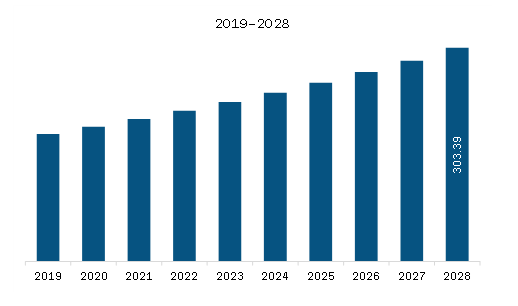
South and Central America Low Molecular Weight Heparin Market Segmentation
South and Central America Low Molecular Weight Heparin Market – By Product Type
- Enoxaparin
- Dalteparin
- Tinzaparin
- Fraxiparine
- Nadroparin
- Others
South and Central America Low Molecular Weight Heparin Market – By Packaging
- Multi-Vials
- Prefilled Syringes
South and Central America Low Molecular Weight Heparin Market – By Application
- Deep Vein Thrombosis
- Acute Coronary Syndrome (ACS)
- Pulmonary Embolism
- Others
South and Central America Low Molecular Weight Heparin Market – By End User
- Hospitals
- Clinics
- Ambulatory Surgical Centers
- Others
South and Central America Low Molecular Weight Heparin Market– By Country
- Brazil
- Argentina
- Rest of South and Central America
South and Central America Low Molecular Weight Heparin Market-Companies Mentioned
- Abbott
- Aspen Holdings
- B. Braun Medical Inc.
- Dr. Reddy's Laboratories
- LEO Pharma A/S
- Novartis
- Pfizer Inc.
- Sanofi
- TEVA PHARMACEUTICAL INDUSTRIES LTD
South and Central America Low Molecular Weight Heparin Market Strategic Insights

South and Central America Low Molecular Weight Heparin Market Report Highlights
| Report Attribute | Details |
| Market size in 2021 | US$ 202.69 Million |
| Market Size by 2028 | US$ 303.39 Million |
| CAGR (2021 - 2028) | 5.9% |
| Historical Data | 2019-2020 |
| Forecast period | 2022-2028 |
| Segments Covered |
By Product Type
|
|
Regions and Countries Covered
|
|
| South and Central America | Brazil, Argentina, Rest of South and Central America |
| Market leaders and key company profiles |
|
South and Central America Low Molecular Weight Heparin Market Country and Regional Insights



