Analysis By Type (Clear Glass, Tinted Glass, Textured Glass, and Others) and Application (Automotive and Transportation, Building and Construction, Electronics, and Others)
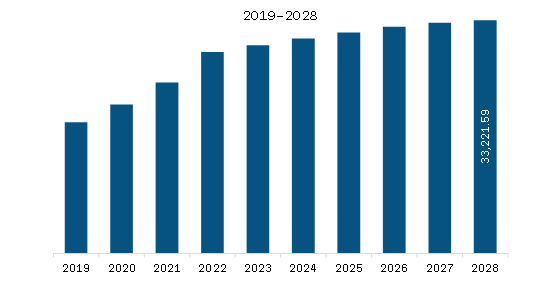
The APAC float glass market is expected to grow from US$ 24,363.07 million in 2021 to US$ 33,221.59 million by 2028; it is estimated to grow at a CAGR of 4.5% from 2021 to 2028.
There has been a rise in energy-efficient and sustainable float glass for various end-use industries such as building & construction, automobile, and electronics in recent years. Energy efficiency refers to the ability of the glass to regulate indoor temperature, which will help keep the interiors relatively cool during summers and warm during winters. Some manufacturers are producing energy-efficient float glass for the consumers to reduce the energy bills of residential houses and offices and conserve the environment. For instance, Asahi India Glass Limited provides energy-efficient float glass and is 100% recyclable and non-toxic, which minimizes the carbon footprint. The glass supplied by the company is also designed to be copper and lead-free for environmental preservation. Along with this, Pilkington provides Optifloat, a recyclable clear float glass, and the manufacturing plants meet the stringent demands of international standard ISO 14001. Thus, increasing demand for energy-efficient and sustainable float glass and rising focus of the manufacturing companies on providing such float glass are providing growth opportunities for the APAC float glass market.
In case of COVID-19, APAC is highly affected specially India. The governments of APAC countries are taking possible steps to reduce its effects by announcing lockdown, and thus, impact the revenue generated by the market. The emergence of new COVID-19 waves in India, Thailand, and other Asian economies has prolonged the effect upon GDP. The ongoing COVID-19 pandemic is anticipated to cause huge disruptions in the growth of various industries of APAC. However, the uncertainty regarding the future outbreak, especially in countries such as India and a few other Asian countries, has altered the status of several industrial sectors. The governments of various APAC economies are taking possible steps to restrict the spread of the virus by announcing country-wide lockdown, which have a direct impact upon the growth of industrial sectors. This may impact the demand for float glass. The fast recovery and re-start of construction projects in China along with the recovery of oversea projects has increased the float glass requirement, which reached a peak in January 2021.
With the new features and technologies, vendors can attract new customers and expand their footprints in emerging markets. This factor is likely to drive the APAC float glass market. The APAC float glass market is expected to grow at a good CAGR during the forecast period.
APAC Float Glass Market Revenue and Forecast to 2028 (US$ Million)
APAC Float Glass Market Segmentation
APAC Float Glass Market –By Type
Clear Glass
Tinted Glass
Textured Glass
Others
APAC Float Glass Market –ByApplication
Automotive and Transportation
Building and Construction
Residential
Commercial
Industrial
Electronics
Others
APAC Float Glass Market, by Country
Australia
China
India
Japan
South Korea
Rest of APAC
APAC Float Glass Market - Companies Mentioned
AGC Inc.
China Glass Holdings Limited
Guardian Industries Holdings
Nippon Sheet Glass Co., Ltd
Qingdao Migo Glass Co.,Ltd.
Saint-Gobain Glass India
SCHOTT AG
Shenzhen Sun Global Glass Co., Ltd
Xinyi Glass Holdings Limited
Asia Pacific Float Glass Market Strategic Insights
Get more information on this report
Asia Pacific Float Glass Market Segmentation Analysis
Asia Pacific Float Glass Market Report Highlights
Asia Pacific Float Glass Report Scope
Report Attribute
Details
Market size in 2021
US$ 24,363.07 Million
Market Size by 2028
US$ 33,221.59 Million
CAGR (2021 - 2028)
4.5%
Historical Data
2019-2020
Forecast period
2022-2028
Segments Covered
By Type
Clear Glass
Tinted Glass
Textured Glass
By Application
Automotive and Transportation
Building and Construction
Electronics
Regions and Countries Covered
Asia-Pacific
China, India, Japan, Australia, Rest of Asia-Pacific
Market leaders and key company profiles
AGC Inc.
China Glass Holdings Limited
Guardian Industries Holdings
Nippon Sheet Glass Co., Ltd
Qingdao Migo Glass Co.,Ltd.
Saint-Gobain Glass India
SCHOTT AG
Shenzhen Sun Global Glass Co., Ltd
Xinyi Glass Holdings Limited
Get more information on this report
Asia Pacific Float Glass Market Country and Regional Insights
Get more information on this report
Identical Market Reports with other Region/Countries
The List of Companies - Asia Pacific Float Glass Market
AGC Inc.China Glass Holdings LimitedGuardian Industries HoldingsNippon Sheet Glass Co., LtdQingdao Migo Glass Co.,Ltd.Saint-Gobain Glass IndiaSCHOTT AGShenzhen Sun Global Glass Co., LtdXinyi Glass Holdings Limited
Frequently Asked Questions
How big is the Asia Pacific Float Glass Market?
The Asia Pacific Float Glass Market is valued at US$ 24,363.07 Million in 2021, it is projected to reach US$ 33,221.59 Million by 2028.
What is the CAGR for Asia Pacific Float Glass Market by (2021 - 2028)?
As per our report Asia Pacific Float Glass Market, the market size is valued at US$ 24,363.07 Million in 2021, projecting it to reach US$ 33,221.59 Million by 2028. This translates to a CAGR of approximately 4.5% during the forecast period.
What segments are covered in this report?
The Asia Pacific Float Glass Market report typically cover these key segments-
Type (Clear Glass, Tinted Glass, Textured Glass)
Application (Automotive and Transportation, Building and Construction, Electronics)
What is the historic period, base year, and forecast period taken for Asia Pacific Float Glass Market?
The historic period, base year, and forecast period can vary slightly depending on the specific market research report. However, for the Asia Pacific Float Glass Market report:
Historic Period : 2019-2020
Base Year : 2021
Forecast Period : 2022-2028
Who are the major players in Asia Pacific Float Glass Market?
The Asia Pacific Float Glass Market is populated by several key players, each contributing to its growth and innovation. Some of the major players include:
AGC Inc.
China Glass Holdings Limited
Guardian Industries Holdings
Nippon Sheet Glass Co., Ltd
Qingdao Migo Glass Co.,Ltd.
Saint-Gobain Glass India
SCHOTT AG
Shenzhen Sun Global Glass Co., Ltd
Xinyi Glass Holdings Limited
Who should buy this report?
The Asia Pacific Float Glass Market report is valuable for diverse stakeholders, including:
Investors: Provides insights for investment decisions pertaining to market growth, companies, or industry insights. Helps assess market attractiveness and potential returns.
Industry Players: Offers competitive intelligence, market sizing, and trend analysis to inform strategic planning, product development, and sales strategies.
Suppliers and Manufacturers: Helps understand market demand for components, materials, and services related to concerned industry.
Researchers and Consultants: Provides data and analysis for academic research, consulting projects, and market studies.
Financial Institutions: Helps assess risks and opportunities associated with financing or investing in the concerned market.
Essentially, anyone involved in or considering involvement in the Asia Pacific Float Glass Market value chain can benefit from the information contained in a comprehensive market report.




 Get Free Sample For Asia Pacific Float Glass Market