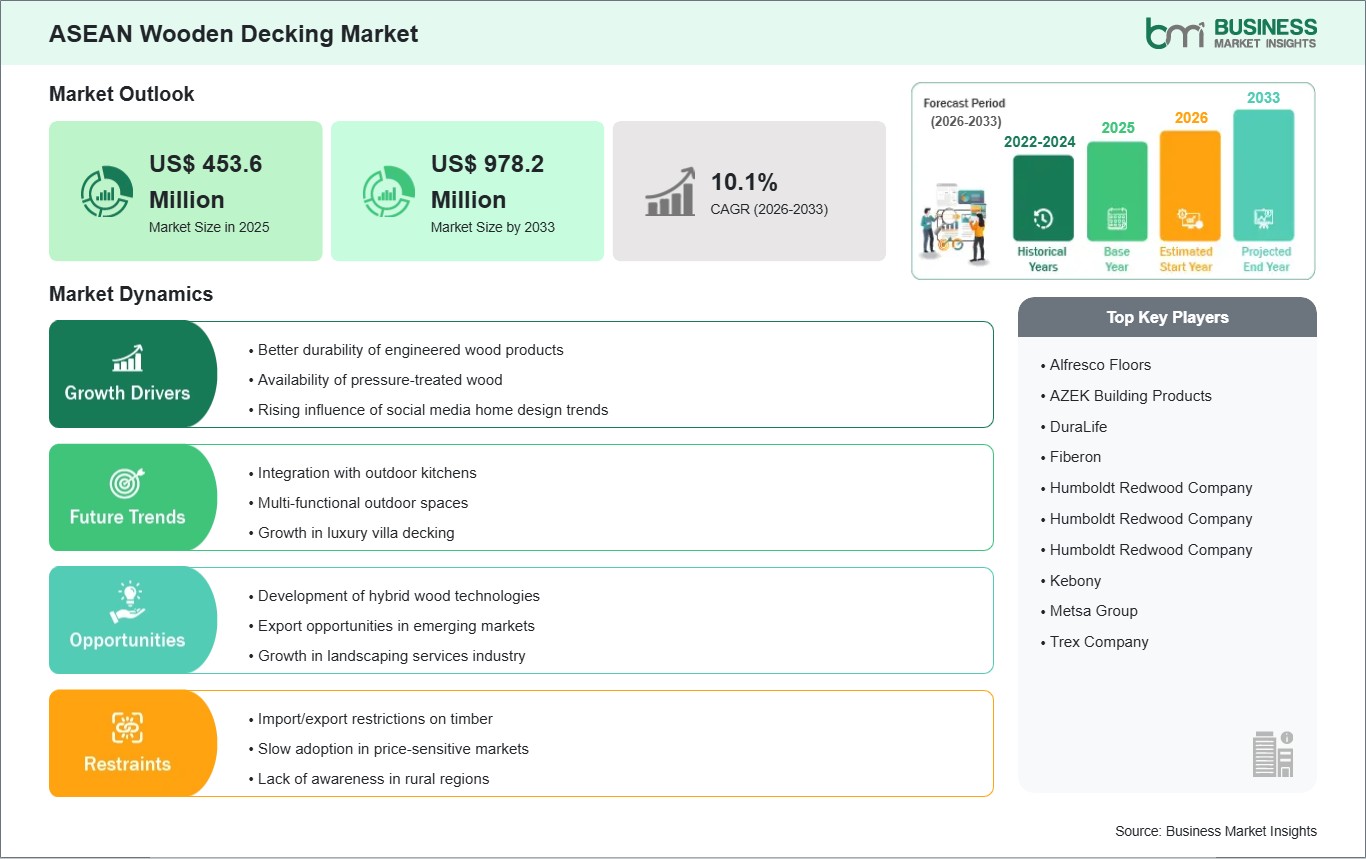
The ASEAN wooden decking market size is expected to reach US$ 978.2 million by 2033 from US$ 453.6 million in 2025. The market is estimated to record a CAGR of 10.1% from 2026 to 2033.
The ASEAN wooden decking market is witnessing slow but steady growth because of fast urbanization, investment in tourism-related constructions, and growing preference among consumers for having recreation spaces outdoors in Southeast Asia. Growth in demand for wooden decking can be seen mostly in the development of hospitality infrastructure, high-end residential construction, commercial buildings at waterfronts, and eco-tourism resorts. Some of the countries that have been seen making use of decking materials for their hotels include Thailand, Vietnam, Indonesia, and Malaysia. One critical factor contributing to market expansion includes the presence of a robust regional tourism sector. There continues to be a great deal of investment by ASEAN countries into developing resorts, islands, and luxury hospitality developments focusing on green architecture. wooden decking materials have become popular among developers of such constructions because of their ability to fit into the surrounding landscape. Another important trend includes rising consumption and popularity of lifestyle-oriented housing designs by the burgeoning middle class, which will boost usage of wooden decking materials for residential purposes. Furthermore, the availability of local timber sources and manufacturing facilities in ASEAN countries is another positive factor affecting the region's deck boards market. Local varieties of wood, which demonstrate better resistance to tropical climates, are frequently used in deck flooring. Nevertheless, environmental issues and regulations in regard to forest harvesting may lead to greater demand for certified wood materials.

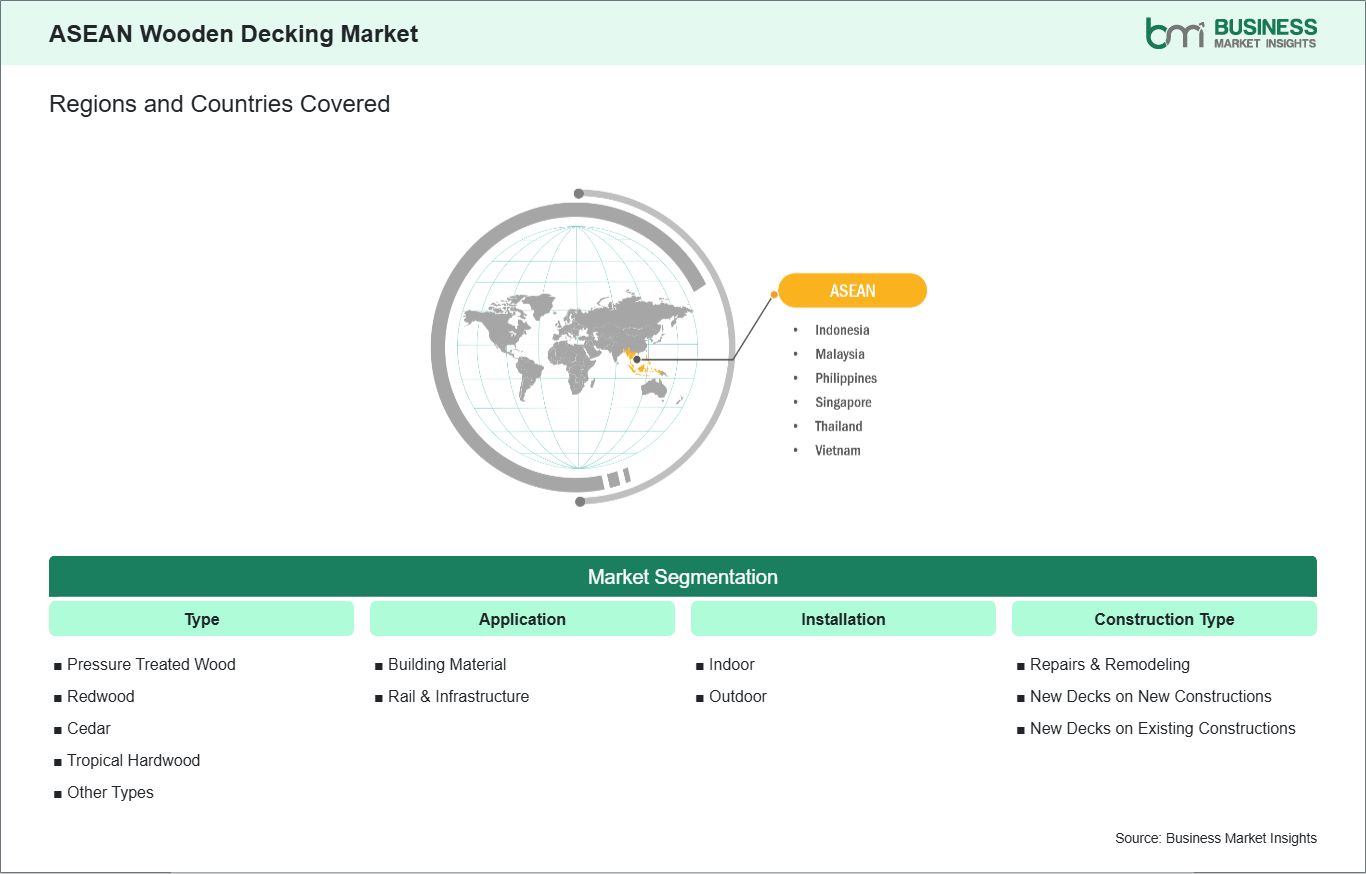
Key segments that contributed to the derivation of the ASEAN wooden decking market analysis are types, application, installation, construction type, and distribution channel.
The market for wooden decking in ASEAN is witnessing significant growth owing to increased durability and performance from engineered wood. Weather conditions such as high humidity, rainfall, and sun exposure in tropical environments in Southeast Asia have made it difficult for normal wood to last long as building material for decking purposes. To solve this problem, there is a move to use engineered wood in place of normal wood that lacks durability. Countries like Singapore, Malaysia, and Thailand are currently using more engineered wooden decking in their condominiums, hotels, and outdoor commercial spaces.
The expansion of cities and infrastructure development for tourist attractions is also among the factors fueling demand for quality decking materials. Resort developments, water-fronts, and mixed-use urban centers have been built extensively in countries such as Indonesia, Vietnam, and the Philippines where appearances are crucial. Wood-engineered products are favored by hotels and commercial developers due to their ability to withstand environmental challenges better than natural wood without treatments against warping, insect attacks, and excessive moisture absorption. Composite and modified wooden decking materials are gaining popularity especially in tourism-oriented destinations like Bali, Phuket, and Cebu.
The sustainability drives are enhancing market acceptance of engineered wood products in ASEAN markets. The government and other development bodies have been encouraging builders to opt for sustainable construction materials in order to reduce burden on natural forest ecosystems. Engineered wood is usually manufactured from recycled fibers, plantation trees, and composite materials. The companies operating in Malaysia and Vietnam have been improving manufacturing capacities within the region, leading to availability of durable engineered decking at affordable costs.
Hybrid technology of woods is offering great growth prospects for the ASEAN wooden deckings industry since manufacturers are trying to blend the natural appearance of woods with the sturdiness of synthetic substances. Hybrid wood products, which contain natural woods combined with plastic, resin, and minerals, have been welcomed by countries in Southeast Asia since they resist climatic stress and still manage to look good. Singapore and Thailand, among other ASEAN countries, have embraced hybrid woods in urban landscaping and high-end housing developments due to their cost-effective nature.
Moreover, innovations in hybrid decking materials are gaining momentum as tourism and commercial infrastructure development continue to flourish. The hospitality industry in ASEAN continues to experience rapid growth with major investments by countries like Indonesia, Vietnam, and the Philippines into eco-resort establishments and beachfront hotels. There is demand for decking materials resistant to moisture, salt water, insects, and maintaining their aesthetically pleasing form. The advancement of hybrid wood technologies is catering to this requirement via surface modifications and reinforced structures. Additionally, heat and slip-resistant composite decking materials are also being introduced into the market targeting the tropical conditions prevailing in the region.
Increased investments into research and manufacturing processes in ASEAN could bolster the prospects of hybrid wood technologies. The countries of Malaysia and Vietnam have been identified as potential production centers for composite decking products due to low manufacturing costs and availability of wood processing industries in the area. A number of businesses in the region are joining hands with material science companies worldwide to come up with recycling systems for hybrid decking materials. Increased compliance with sustainable regulations coupled with the preference of maintenance-free building materials will boost the acceptance of hybrid decking in the coming years.
The ASEAN wooden decking market is experiencing steady growth, with market size and share analysis reflecting evolving treatment preferences and competitive dynamics among key players. The report evaluates important subsegments categorized within types, application, installation, construction type, and distribution channel, highlighting their respective contributions to overall market performance.
By types, the pressure treated wood subsegment dominated the market in 2025, because it is highly affordable, durable, and resistant to moisture, termites, and decay, making it suitable for long-term outdoor use. Due to its low maintenance requirements and wide availability, homeowners and contractors prefer pressure-treated wood over other decking materials.
Based on application, the building material subsegment dominated the market in 2025 because wooden decking is extensively used in residential and commercial construction projects such as patios, balconies, gardens, and outdoor flooring. Due to increasing urbanization and rising investments in housing and infrastructure development, the demand for wooden decking as a building material continues to grow.
On the basis of installation, the outdoor subsegment dominated the market in 2025, because wooden decking is mainly designed for outdoor recreational and landscaping purposes. The consumers are increasingly focusing on outdoor living spaces, gardens, rooftop seating areas, and poolside decks, outdoor installation has witnessed significant demand globally.
In terms of construction type, the repairs and remodeling subsegment dominated the market in 2025, because many old decks require renovation, replacement, and maintenance over time. Due to the growing trend of home improvement and remodeling activities, especially in developed countries, consumers are investing more in upgrading existing outdoor structures instead of undertaking new construction projects.
By distribution channel, the indirect sales subsegment dominated the market in 2025, because manufacturers mainly distribute wooden decking products through wholesalers, dealers, and retail home improvement stores. Due to the wider market reach, better product accessibility, and convenience offered by indirect sales channels, contractors and customers prefer purchasing decking materials through established distributors.

| Report Attribute | Details |
|---|---|
| Market size in 2025 | US$ 453.6 Million |
| Market Size by 2033 | US$ 978.2 Million |
| CAGR (2026 - 2033) | 10.1% |
| Historical Data | 2022-2024 |
| Forecast period | 2026-2033 |
| Segments Covered | By Type
|
|
Regions and Countries Covered
| |
| ASEAN | Indonesia, Malaysia, Philippines, Singapore, Thailand, Vietnam |
| Market leaders and key company profiles |
|
The "ASEAN Wooden Decking Market Size and Forecast (2022-2033)" report provides a detailed analysis of the market covering below areas:
The geographical scope of the ASEAN wooden decking market report is divided into: Indonesia, Malaysia, the Philippines, Singapore, Thailand, and Vietnam. Indonesia held the largest share in 2025.
Indonesia holds dominance over the ASEAN market for wood decks because of its abundance in wood and processing power, as well as its growing construction industry driven by tourism. The country has established itself as one of the biggest suppliers and consumers of wood decks in the market, which is due to a combination of domestic and export demands for wood deck products. Demand for wood decks in Indonesia has been focused mainly on projects and constructions related to hospitality, resorts, and high-end residential areas. The dominant presence of Indonesia in the market can be attributed to the abundance of tropical hardwood species known for their strength, durability, and beauty in use as outdoor materials. Tropical hardwooden decking products that have been locally manufactured are commonly used in hotels, spas, marinas, outdoor eating establishments, and even leisure areas. The country's reputation as a leading tourist destination has led to the development of high-quality outdoor structures with nature-based architectural designs. Indonesia has is an advanced woodworking and furniture manufacturing base. The local manufactures have developed the capacity for treating wood, finishing it, and manufacturing products in line with export standards. As such, the country can efficiently cater to both domestic and foreign markets. Furthermore, government policies promoting the growth of tourism and modernizing the infrastructure in Indonesia have contributed to increased demand for outdoor construction products. Environmental pressures resulting from concerns about logging and deforestation are one notable disadvantage that Indonesian wood deck exporters face. With increased awareness among foreign purchasers regarding the source of their products, they demand certified wood. Also, the tropical climate presents another problem since it makes the maintenance of the wood product more challenging. Nevertheless, Indonesia continues to dominate the ASEAN market owing to its resource availability and manufacturing capacity.

The ASEAN wooden decking market is evaluated by gathering qualitative and quantitative data post primary and secondary research, which includes important corporate publications, association data, and databases. A few of the key developments in the ASEAN wooden decking market are:
The ASEAN Wooden Decking Market is valued at US$ 453.6 Million in 2025, it is projected to reach US$ 978.2 Million by 2033.
As per our report ASEAN Wooden Decking Market, the market size is valued at US$ 453.6 Million in 2025, projecting it to reach US$ 978.2 Million by 2033. This translates to a CAGR of approximately 10.1% during the forecast period.
The ASEAN Wooden Decking Market report typically cover these key segments-
The historic period, base year, and forecast period can vary slightly depending on the specific market research report. However, for the ASEAN Wooden Decking Market report:
The ASEAN Wooden Decking Market is populated by several key players, each contributing to its growth and innovation. Some of the major players include:
The ASEAN Wooden Decking Market report is valuable for diverse stakeholders, including:
Essentially, anyone involved in or considering involvement in the ASEAN Wooden Decking Market value chain can benefit from the information contained in a comprehensive market report.
Please tell us your area of interest
(Market Segments/ Regions and Countries/ Companies)