Market Summary
Executive Summary and Market Analysis
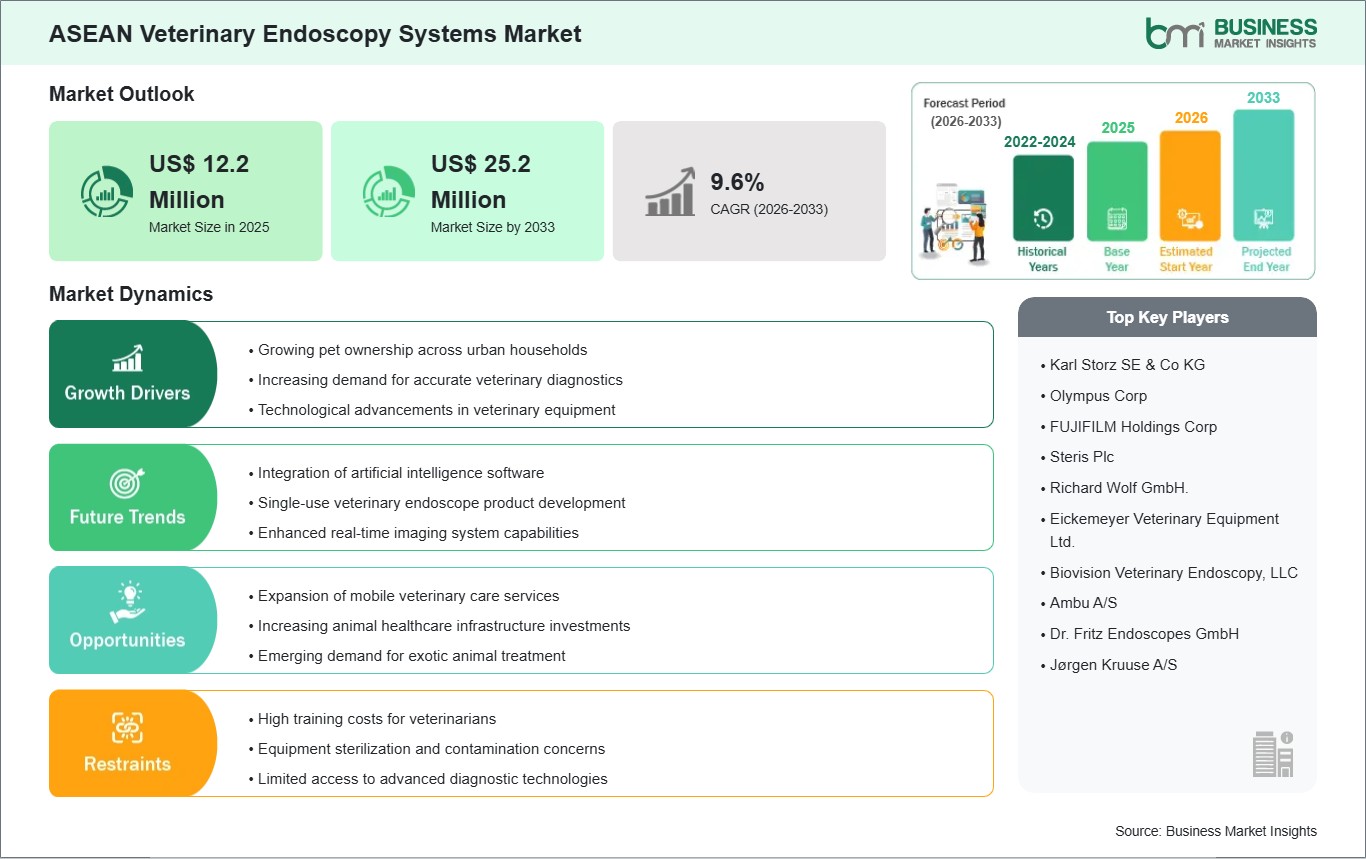
The ASEAN veterinary endoscopy systems market is evolving as a strategically important segment within the broader animal healthcare technology landscape, driven by rising demand for advanced diagnostic precision, improved livestock productivity, and the rapid expansion of companion animal care services. There has been a slow but steady evolution in the market, moving from traditional veterinary diagnosis methods to less invasive techniques that improve clinical effectiveness and reduce complications during the procedure. This trend will be strengthened by the growing understanding of veterinarians about the importance of endoscopy in diagnosing ailments at an early stage and performing surgeries. Growth within the market is driven by changes in the structure of the region’s animal husbandry and pet care sectors. With the adoption of intensive farming practices in some ASEAN countries, there has been a strong emphasis on having modern diagnostic technologies that can help in managing the health of the herd and maintaining biosecurity. At the same time, the process of urbanization and lifestyle changes are resulting in the rising number of pets within cities, thereby generating a need for specialized veterinary care. In terms of competition, the market has global players in the veterinary equipment segment, along with local distributors. Product innovations are moving more towards the direction of smaller size, improved imaging resolutions, and versatility that will help in accommodating different clinical setups, varying from advanced veterinary facilities to rural ones with inadequate resources. Nonetheless, growth within the market is limited by certain factors, including underdeveloped infrastructure, lack of compensation packages for animal treatments, and insufficient number of qualified endoscopists. In regard to marketing efforts, increased attention has been dedicated to organizing training sessions, developing procedures, and partnering with veterinary institutions in order to promote the usage of endoscopic technology. In addition, vendors have been developing modular products and more flexible financing plans in order to make products affordable. Thus, the market for endoscopy equipment in ASEAN veterinary clinics is projected to witness stable progress, facilitated by the modernization of veterinary facilities.
Segment Analysis
ASEAN Veterinary Endoscopy Systems Market Segmentation
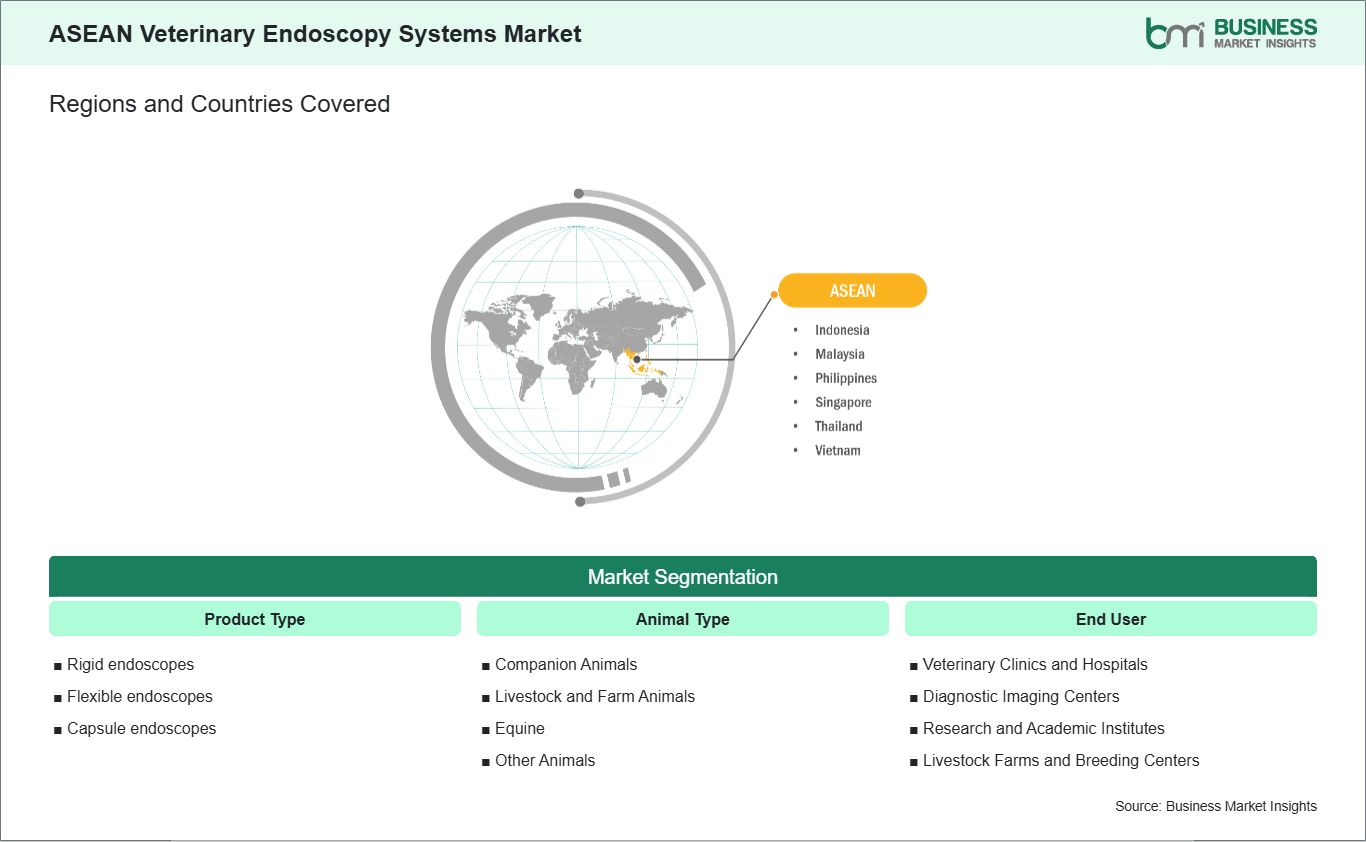
Key segments that contributed to the derivation of the ASEAN veterinary endoscopy systems market analysis are product type, animal type, and end user.
- By product type, the veterinary endoscopy systems market is segmented into rigid endoscopes, flexible endoscopes, capsule endoscopes. The rigid endoscopes segment dominated the market in 2025.
- Based on animal type, the veterinary endoscopy systems market is categorized into companion animals, livestock & farm animals, equine, others. The companion animals segment dominated the market in 2025.
- In terms of end user, the veterinary endoscopy systems market is categorized veterinary clinics & hospitals, diagnostic imaging centers, research & academic institutes, livestock farms & breeding centers. The veterinary clinics and hospitals segment dominated the market in 2025.
Market Forces
ASEAN Veterinary Endoscopy Systems Market Drivers and Opportunities
Increasing spending on pet healthcare
The ASEAN veterinary endoscopy systems market is being supported by a steady rise in consumer spending on pet healthcare across both developed and emerging economies in the region. Pet care has become an integral component of the current lifestyle in cities, especially in large cities where disposable incomes are on the rise. This is driving pet owners to emphasize preventative care and diagnostic techniques over basic medical services. The veterinary endoscopy market has emerged as a key player in this context due to the increasing range of services offered by clinics.
As the veterinary industry develops in countries with developed veterinary ecologies, there is an increasing trend of organized expenditure on the health care of pets. The veterinary centers have upgraded their testing facilities to accommodate the demands of informed and quality-oriented pet owners. This has led to the creation of conditions favorable for adopting sophisticated imaging equipment and endoscopy technology. Likewise, in developing ASEAN nations, there is a gradual shift towards more holistic care in veterinary practice, leading to a broader customer base for endoscopy devices.
It is evident that the area is undergoing a significant change toward more expensive veterinary services, based on changes in attitudes concerning the welfare of animals as well as the readiness to engage in expensive medical interventions. It is expected that this will be the case as more pets are owned in cities, and veterinary service suppliers become more technologically oriented.
Integration of artificial intelligence diagnostics tools
The ASEAN veterinary endoscopy systems market is witnessing gradual integration of artificial intelligence-based diagnostic tools aimed at improving clinical accuracy and operational efficiency. Such technological developments have been incorporated into imaging systems for the purposes of aiding veterinarians to detect any abnormality that is present in the patients. AI systems aid image analysis, pattern recognition, and decision-making activities within the processes of diagnosis.
In more developed markets in this region for veterinary medicine, the implementation of AI technology is in line with the overall digital transformation of the health care industry. Software-based diagnostic tools are being implemented by veterinarians, which help with diagnosing patients alongside other techniques such as endoscopy, and decrease the need for human interpretation. This becomes especially valuable in areas where specialized knowledge may not be available, since AI helps ensure the consistency of diagnoses made.
In developing veterinary markets across ASEAN, AI integration is still in early stages but is expected to expand as digital infrastructure improves. The utilization of cloud-based diagnostic technologies and the adoption of remote consultation services has made it possible to provide specialists’ assistance and thus more effective use of sophisticated endoscopy equipment even in suburban areas. Eventually, it seems that the collaboration between AI technologies and endoscopy systems will help to enhance diagnostics, make it more accessible, and upgrade veterinary medicine systems.
Size and Share Analysis
ASEAN Veterinary Endoscopy Systems Market Size and Share Analysis
The ASEAN veterinary endoscopy systems market demonstrates steady growth, with size and share analysis highlighting evolving trends and competitive dynamics among key players. The report examines subsegments categorized within product type, animal type, and end user, offering insights into their contribution to overall market performance.
By product type, the rigid endoscopes segment dominated the market in 2025, driven by expanding use in minimally invasive surgeries such as laparoscopy, arthroscopy, and cystoscopy in veterinary clinics and hospitals.
Based on animal type, the companion animals subsegment dominated the market in 2025, driven by rising pet ownership, increasing expenditure on animal healthcare, and growing adoption of minimally invasive diagnostic and surgical procedures across ASEAN countries.
In terms of end user, the veterinary clinics and hospitals subsegment dominated the market in 2025, driven by higher procedural volumes, improving veterinary infrastructure, and increasing availability of advanced endoscopic equipment for routine and specialty care across the region.
Report Coverage
ASEAN Veterinary Endoscopy Systems Market Report Coverage and Deliverables
The "ASEAN Veterinary Endoscopy Systems Market Size and Forecast (2022-2033)" report provides a detailed analysis of the market covering below areas:
- Market size and forecast at global, regional, and country levels for all the key market segments covered under the scope
- Market trends, as well as drivers, restraints, and opportunities
- Market analysis covering key trends, global and regional framework, major players, regulations, and recent developments
- Market concentration, heat map analysis, prominent players, and recent developments for the Market
- Detailed company profiles, including SWOT analysis
Geographic Insights
ASEAN Veterinary Endoscopy Systems Market Geographic Insights
The geographical scope of the ASEAN veterinary endoscopy systems market report is divided into Indonesia, Malaysia, the Philippines, Singapore, Thailand, Vietnam. Indonesia held the largest share in 2025.
Country-level dynamics in the ASEAN veterinary endoscopy systems market reveal a diverse and multi-speed adoption environment shaped by varying economic structures, veterinary infrastructure maturity, and animal health priorities. In Indonesia, market activity is primarily driven by its large-scale livestock industry, where veterinary diagnostics play a crucial role in managing productivity and disease prevention. The country is witnessing increasing institutional efforts to modernize veterinary services, particularly in poultry and cattle sectors, although access to advanced equipment remains uneven outside major agricultural hubs. Thailand demonstrates a comparatively advanced veterinary ecosystem, supported by strong government involvement in animal health regulation and a well-developed private veterinary sector. The country has a growing base of specialty veterinary clinics that are increasingly integrating endoscopic procedures into routine diagnostics and surgical applications, particularly in companion animal care and equine medicine. In Malaysia, veterinary endoscopy adoption is supported by structured healthcare systems and higher levels of professional training. The presence of modern veterinary hospitals in urban centers facilitates early adoption of advanced diagnostic technologies, with increasing emphasis on precision-based veterinary care and animal welfare standards. Vietnam is emerging as a rapidly evolving market, largely propelled by the expansion of commercial livestock farming and export-oriented agriculture. Veterinary modernization initiatives are encouraging the use of advanced diagnostic tools, particularly in swine and poultry sectors, where disease control and efficiency are critical priorities. Meanwhile, the Philippines is experiencing gradual growth in adoption, primarily driven by increasing urban pet ownership and expanding private veterinary practice networks. Although infrastructure limitations persist, rising awareness of advanced veterinary procedures and growing investment in veterinary education are expected to support incremental market development. Collectively, ASEAN countries reflect a tiered adoption structure, where advanced economies lead in clinical integration while emerging markets present long-term opportunities tied to agricultural modernization and expanding veterinary healthcare access.
Industry Activity
Recent Developments
The ASEAN veterinary endoscopy systems market is evaluated by gathering qualitative and quantitative data post primary and secondary research, which includes important corporate publications, association data, and databases. A few of the key developments in the ASEAN veterinary endoscopy systems market are:
- In December 2022, SonoScape Medical Corp, announced that it was strengthening its Animal Health solutions portfolio by expanding its veterinary endoscopy systems globally, including flexible and rigid endoscopes integrated with HD imaging systems, targeting veterinary hospitals across emerging Asia-Pacific markets, which include ASEAN countries with growing demand for minimally invasive animal diagnostics.
- In July 2024, SK Telecom, announced that it had expanded its AI-based veterinary diagnostic assistant “X Caliber” into Malaysia, Thailand, and Vietnam through strategic agreements signed at the FASAVA Congress in Kuala Lumpur, supporting veterinary diagnostic workflows that complement imaging and endoscopy-based clinical decision-making in the ASEAN region.
Trust & Transparency
Research Methodology
The market analysis combines proprietary research with secondary data from government agencies, company disclosures, regulatory filings, industry databases and expert interviews. Market estimates are validated through data triangulation, cross-market benchmarking and analyst
review.
View Full Research Methodology
Key Sources Referred:
American College of Veterinary Radiology (ACVR)World Small Animal Veterinary Association (WSAVA)British Veterinary Association (BVA)International Veterinary Radiology Association (IVRA)American Veterinary Medical Association (AVMA)ASEANan College of Veterinary Diagnostic Imaging (ECVDI)World Organisation for Animal Health (WOAH / OIE)Veterinary Imaging & Radiation Oncology Society (VIROS)