Market Summary
Executive Summary and Market Analysis
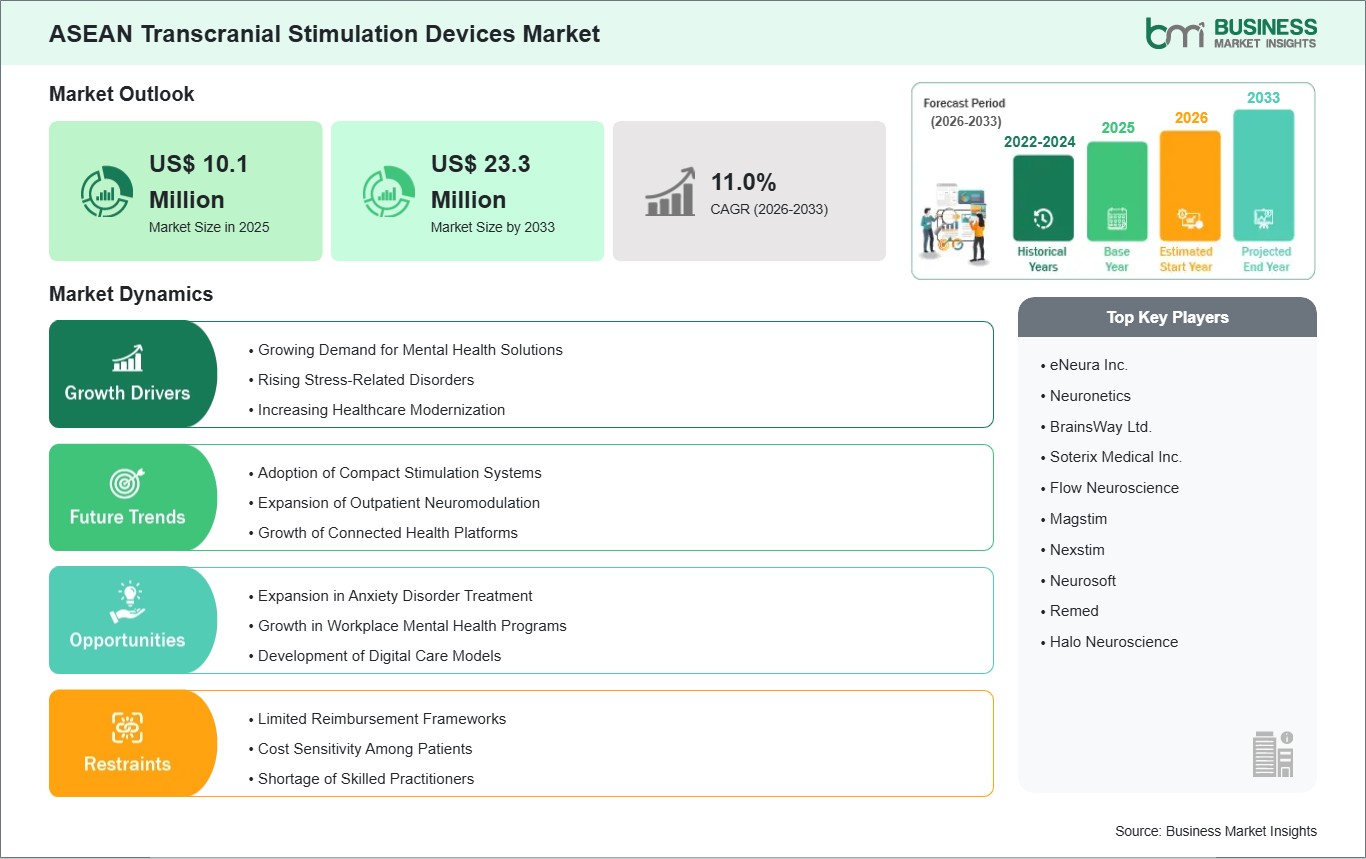
Transcranial stimulation devices in the ASEAN market are seeing steady development as healthcare organizations within Southeast Asia place an increased emphasis on the treatment of neurological and psychological disorders. Depression, anxiety disorders, chronic pain syndromes, and neurodegenerative illnesses are becoming more prevalent, which has led to the emergence of new technological approaches to noninvasive therapy, such as transcranial magnetic stimulation devices and transcranial electrical stimulation devices. Increased awareness among patients about brain health issues and growing recognition of the benefits of brain stimulation methods are propelling market growth in both advanced and developing ASEAN countries. Malaysia is experiencing growth in terms of adopting transcranial stimulation devices within private hospitals and psychiatric clinics due to improved awareness and accessibility of specialized services. Thailand is continuing to develop through advanced rehabilitation centers and medical tourism services incorporating brain stimulation techniques. Countries such as Indonesia, Vietnam, and the Philippines have started to experience slow growth through adoption in urban centers and educational medical institutions. Market growth is mainly fueled by the trend towards non-medical treatment methods, increased funding in mental health care, and growing attention to non-invasive neuromodulation therapies among clinicians. The strengthening cooperation between local healthcare establishments and overseas medical device producers also leads to improved technology transfer and physicians' education. Moreover, the demographic problem of an aging population is another factor that drives the demand for neurological recovery and cognitive disorders treatment in several ASEAN nations. In spite of the positive market environment, several obstacles still prevent the widespread use of the products in question. Expensive equipment, low reimbursement rates, and a lack of properly educated personnel still remain serious issues in numerous ASEAN states. The difference in healthcare system regulations and reliance on foreign technologies are other factors that complicate the activity of producers and suppliers. However, healthcare reform and increased attention to advanced neurological treatment should contribute to the long-term development of the market in question.
Segment Analysis
ASEAN Transcranial Stimulation Devices Market Segmentation
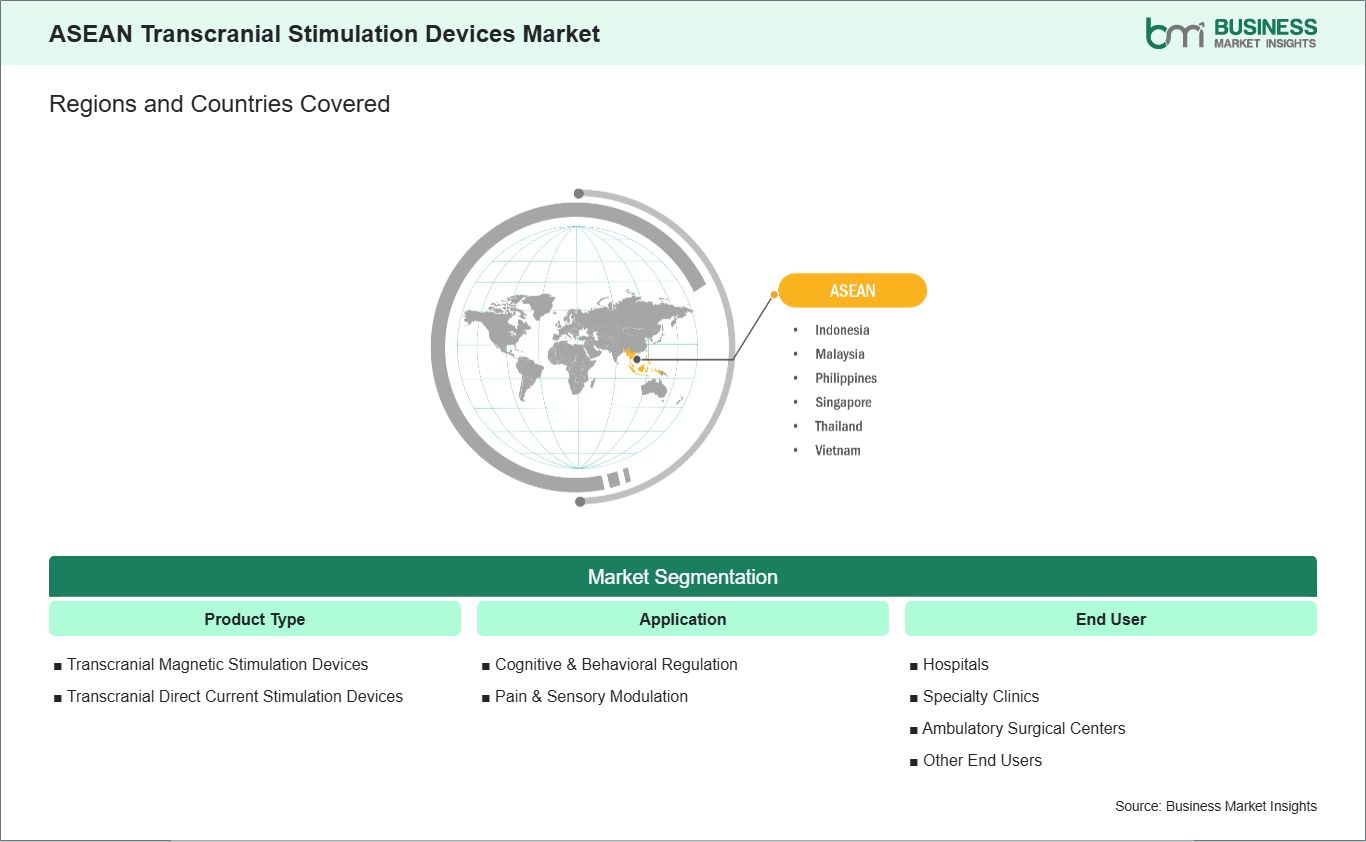
Key segments that contributed to the derivation of the ASEAN transcranial stimulation devices market analysis are product type, application, and end user.
- By product type, the transcranial stimulation devices market is segmented into transcranial magnetic stimulation devices and transcranial direct current stimulation devices. The transcranial magnetic stimulation devices segment dominated the market in 2025.
- Based on application, the transcranial stimulation devices market is categorized into cognitive & behavioral regulation and pain & sensory modulation. The cognitive & behavioral regulation segment dominated the market in 2025.
- In terms of end user, the transcranial stimulation devices market is categorized into hospitals, specialty clinics, ambulatory surgical centers, and other end users. The hospitals segment dominated the market in 2025.
Market Forces
ASEAN Transcranial Stimulation Devices Market Drivers and Opportunities
Growing Demand for Mental Health Solutions
Awareness concerning depression and stress-related disorders, along with cognitive wellness in ASEAN economies, is promoting the acceptance of transcranial stimulation technology among clinicians. Healthcare professionals in urban centers located in Singapore, Malaysia, and Thailand are incorporating neurological techniques in their psychiatric therapy strategies, as patients prefer non-medicating methods of treatment that are associated with shorter recovery periods.
Health initiatives in Indonesia and the Philippines are raising awareness regarding behavioral health services as well, which promotes demand for innovative brain-stimulating technology among hospital centers and clinics. Growing networks of telemedicine consultations will facilitate the recommendation of personalized therapy options by clinicians, especially for patients who are dealing with fatigue, burnout, and unstable moods at work due to increased pressure in metropolitan cities.
Medical travel destinations such as Thailand and Singapore are contributing to the adoption rate through investment in neuroscience research and premium services of behavioral health. Collaboration between healthcare organizations and academia is fostering the development of new approaches, while increased attention from companies towards employees' mental well-being is creating a conducive environment.
Expansion in Anxiety Disorder Treatment
The increasing number of anxiety disorder cases in ASEAN is driving up the need for transcranial stimulation devices in mental health and neurological care settings. There is an increase in the provision of non-invasive treatment methods by healthcare institutions in countries like Vietnam, Indonesia, and Malaysia to provide patients with alternatives that do not involve the use of medication for dealing with their symptoms, especially those from the urban areas dealing with work and social pressure.
There are efforts through mental health advocacy campaigns by regional healthcare organizations that have seen earlier treatment of general anxiety disorders being done within communities and in private hospitals. There is an increase in collaborations between psychologists, neurologists, and rehabilitation experts in Singapore and the Philippines in providing awareness about the benefits of brain stimulation techniques for treating anxiety disorders.
Investments made in mental health technology are also making it easier for more ASEAN healthcare providers to adopt transcranial stimulation therapy. Hospitals in Thailand and new medical facilities in Cambodia have started incorporating neurotechnology into their behavior modification programs.
Size and Share Analysis
ASEAN Transcranial Stimulation Devices Market Size and Share Analysis
The ASEAN transcranial stimulation devices market demonstrates steady growth, with size and share analysis highlighting evolving trends and competitive dynamics among key players. The report examines subsegments categorized within product type, application, and end user, offering insights into their contribution to overall market performance.
By product type, the transcranial magnetic stimulation devices subsegment dominated the market in 2025, driven by its strong clinical efficacy in treating major depression and other neurological disorders, along with increasing regulatory approvals and growing adoption in hospital-based neuropsychiatric care.
Based on application, the cognitive & behavioral regulation subsegment dominated the market in 2025, driven by the rising prevalence of mental health disorders and increasing demand for non-invasive therapies that improve cognition, mood, and behavioral outcomes without pharmacological side effects.
In terms of end user, the hospitals subsegment dominated the market in 2025, driven by higher availability of advanced neurostimulation infrastructure, presence of trained specialists, and preference for supervised clinical environments for safe and effective patient treatment.
Report Coverage
ASEAN Transcranial Stimulation Devices Market Report Coverage and Deliverables
The "ASEAN Transcranial Stimulation Devices Market Size and Forecast (2022-2033)" report provides a detailed analysis of the market covering below areas:
- Market size and forecast at global, regional, and country levels for all the key market segments covered under the scope
- Market trends, as well as drivers, restraints, and opportunities
- Market analysis covering key trends, global and regional framework, major players, regulations, and recent developments
- Market concentration, heat map analysis, prominent players, and recent developments for the Market
- Detailed company profiles, including SWOT analysis
Geographic Insights
ASEAN Transcranial Stimulation Devices Market Geographic Insights
The geographical scope of the ASEAN Transcranial Stimulation Devices Market report is divided into Indonesia, Malaysia, Philippines, Singapore, Thailand, Vietnam. Indonesia held the largest share in 2025.
The market of Transcranial Stimulation Devices in ASEAN is steadily developing owing to the increasing awareness of various neurological and psychiatric disorders and healthcare infrastructure in the region, along with the growing importance of non-invasive brain stimulator applications. Brain stimulation technologies are slowly becoming incorporated into the practice of healthcare facilities owing to the growing awareness regarding mental health and neurology in the region. The main driving force of growth in the market of transcranial stimulation devices in the ASEAN region is the country of Indonesia, which leads, due to a relatively larger patient base and healthcare infrastructure. Additionally, a growing number of tertiary hospitals, the availability of neurological specialists, and mental health services in urban regions positively affect the industry in Indonesia. Malaysia has been exhibiting stability in terms of growth as it has been fueled by healthcare development, increasing adoption of neurostimulation treatments, and greater cooperation between healthcare organizations and tech companies. The Philippines is increasingly becoming an attractive destination on account of better access to healthcare facilities, growing recognition of neurological disorders, and higher patient interest in advanced therapy methods. Singapore remains the innovation center of the region thanks to its highly developed research facilities, high standards in regulation, and timely adoption of cutting-edge neurological devices. Thailand is capitalizing on growing rehabilitation services, higher investment in the healthcare sector, and active medical tourism that allows for better application of advanced neurotherapy techniques. In turn, Vietnam shows significant market potential in view of growing healthcare infrastructure, greater clinical awareness, and higher healthcare providers' interest in advanced neurology technology.
Industry Activity
Recent Developments
The ASEAN Transcranial Stimulation Devices Market is evaluated by gathering qualitative and quantitative data post primary and secondary research, which includes important corporate publications, association data, and databases. A few of the key developments in the ASEAN transcranial stimulation devices market are:
- In June 2023, Nexalin Technology announced a joint venture with Wider Come Limited to advance the commercialization, marketing, and distribution of its transcranial alternating current stimulation (tACS) devices across the Asia-Pacific region, including ASEAN markets.
- In August 2023, BrainsWay announced the expansion of access to its Deep TMS systems in the Asia-Pacific region through multisystem purchases in Taiwan, strengthening its regional neurostimulation footprint relevant to ASEAN healthcare expansion activities.
Trust & Transparency
Research Methodology
The market analysis combines proprietary research with secondary data from government agencies, company disclosures, regulatory filings, industry databases and expert interviews. Market estimates are validated through data triangulation, cross-market benchmarking and analyst
review.
View Full Research Methodology
Key Sources Referred:
U.S. Food and Drug Administration (FDA)National Institute of Mental Health (NIMH)National Institute for Health and Care Excellence (NICE)European Medicines Agency (EMA)Medicines and Healthcare products Regulatory Agency (MHRA)American Psychiatric Association (APA)World Health Organization (WHO)International Neuromodulation Society (INS)International Society for Neuroregulation & Research (ISNR)European Society for Magnetic Resonance in Medicine and Biology (ESMRMB)Company WebsitesCompany Annual ReportsCompany Investor Presentations