Market Summary
Executive Summary and Global Market Analysis
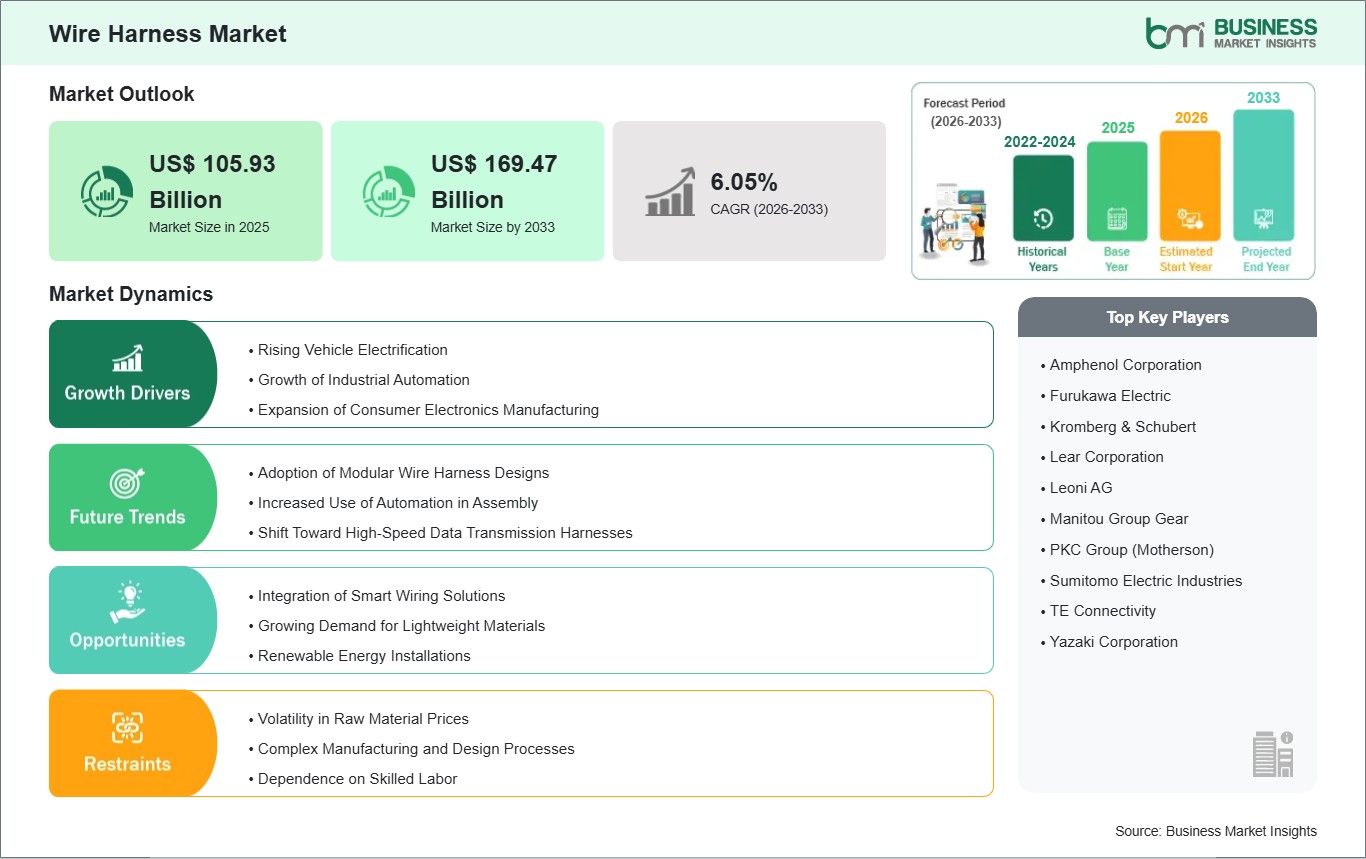
The global wire harness market is experiencing steady growth, driven by the increasing electrification of vehicles, expansion of electronic systems across industries, and rising demand for complex wiring solutions in advanced machinery and consumer electronics. Wire harnesses are essential for organizing, protecting, and routing wires and cables, ensuring reliable electrical connectivity and signal transmission in increasingly sophisticated applications.
Key drivers include the automotive industry's transition towards electric vehicles (EVs) and advanced driver-assistance systems (ADAS), which require more complex and high-voltage harnesses. Furthermore, the growth of industrial automation, renewable energy infrastructure, and telecommunications networks continues to fuel demand. The market faces challenges such as volatile raw material prices, the high complexity of custom harness designs, and intense global competition. However, opportunities are emerging from the development of lightweight and high-durability materials, the adoption of automated manufacturing processes, and the growing need for harnesses in electric aircraft, medical robotics, and smart infrastructure projects.
Segment Analysis
Wire Harness Market Segmentation
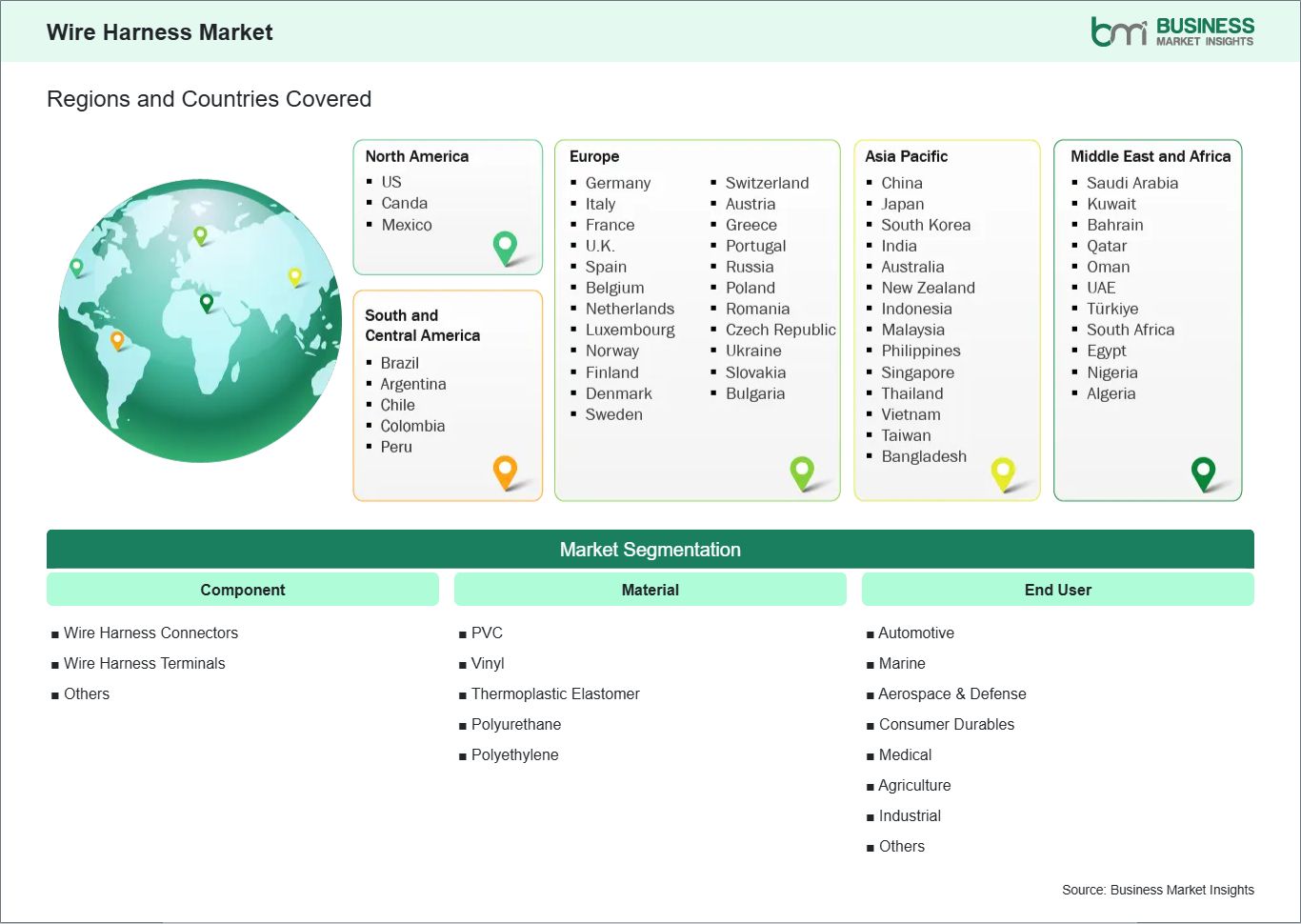
Key segments that contributed to the derivation of the wire harness market analysis are component, material, and end user.
- By component, the wire harness market is segmented into wire harness connectors, wire harness terminals, and others. The connectors segment dominated the market in 2024.
- By material, the market is classified into PVC, vinyl, thermoplastic elastomer, polyurethane, and polyethylene. The PVC segment held the largest share in the wire harness market in 2024.
- By end user, the market includes automotive, marine, aerospace & defense, consumer durables, medical, agriculture, industrial, and others. The automotive segment held the largest share in the wire harness market in 2024.
Market Forces
Wire Harness Market Drivers and Opportunities
Automotive Electrification and Electronic Content
The rapid shift towards vehicle electrification and the proliferation of in-cabin electronics represent a primary growth driver for the wire harness market. Modern vehicles, especially Electric Vehicles (EVs) and Hybrid Electric Vehicles (HEVs), require extensive, high-voltage wiring systems to power batteries, electric motors, and charging systems. Simultaneously, the increasing integration of Advanced Driver-Assistance Systems (ADAS), infotainment units, and connected car features demands more sophisticated data transmission harnesses. This dual trend of powertrain electrification and rising electronic content per vehicle is significantly increasing the complexity, value, and volume of wire harnesses used, solidifying the automotive industry as the dominant end-user sector and a key driver of technological innovation in harness design and materials.
Adoption of Lightweight and High-Performance Materials
The push for greater efficiency, particularly in automotive and aerospace applications, is creating a substantial opportunity for advanced materials in wire harness construction. There is growing demand to replace traditional materials like standard PVC with lighter, more durable, and higher-performance alternatives such as Thermoplastic Elastomers (TPE) and Polyurethane. These materials offer superior resistance to extreme temperatures, chemicals, and abrasion while reducing overall weight—a critical factor for improving vehicle fuel efficiency and aircraft performance. Furthermore, the development of halogen-free and flame-retardant materials is becoming increasingly important for safety regulations in various industries. This shift towards specialized, high-value materials allows manufacturers to offer premium solutions, improve product longevity, and meet stringent industry standards, opening new revenue streams and fostering innovation in the wire harness supply chain.
Size and Share Analysis
Wire Harness Market Size and Share Analysis
Based on component, the wire harness market is segmented into wire harness connectors, wire harness terminals, and others. Connectors lead the segment due to their critical role in establishing secure and reliable electrical junctions, with demand driven by the miniaturization and increasing density of electronic systems across all end-user industries.
Based on material, the market is classified into PVC, vinyl, thermoplastic elastomer, polyurethane, and polyethylene. PVC remains the dominant material owing to its cost-effectiveness, flexibility, and good insulating properties, though thermoplastic elastomers are experiencing faster growth due to demand for lightweight and high-durability solutions in automotive and aerospace.
By end user, the market includes automotive, marine, aerospace & defense, consumer durables, medical, agriculture, industrial, and others. The automotive sector continues to be the largest segment, driven by rising vehicle production and electrification. The aerospace & defense and industrial segments are also significant, with steady demand for robust and reliable wiring solutions in critical applications.
Report Coverage
Wire Harness Market Report Coverage and Deliverables
The Wire Harness Market Size and Forecast (2022–2033) report provides a detailed analysis of the market covering below areas:
- Wire Harness Market size and forecast at global, regional, and country levels for all the key market segments covered under the scope
- Wire Harness Market trends, as well as market dynamics such as drivers, restraints, and key opportunities
- Wire Harness Market analysis covering key market trends, global and regional framework, major players, regulations, and recent market developments
- Industry landscape and competition analysis covering market concentration, heat map analysis, prominent players, and recent developments for the wire harness market
- Detailed company profiles, including SWOT analysis
Geographic Insights
Wire Harness Market Geographic Insights
The Asia-Pacific region is the largest and fastest-growing market for wire harnesses, underpinned by its position as the global hub for automotive manufacturing and electronics production. Countries such as China, Japan, South Korea, and India host major automotive OEMs and a dense network of tier-1 and tier-2 suppliers, creating immense demand for both standard and high-voltage harnesses. The region's cost-competitive manufacturing ecosystem and strong government support for EV adoption further accelerate market growth.
North America remains a technologically advanced and high-value market, characterized by significant demand from its automotive and aerospace & defense sectors. The United States, with its strong presence of automotive manufacturers, aircraft producers, and industrial automation companies, drives demand for sophisticated and reliable wire harness solutions. The region's focus on electric vehicles, military modernization, and telecommunications infrastructure sustains a steady market for advanced wiring systems.
Europe represents a mature yet innovation-driven market, with its strength anchored in premium automotive manufacturing, aerospace, and industrial machinery. Germany, as the regional leader, along with France, Italy, and the United Kingdom, has a robust automotive sector that is rapidly transitioning to electric mobility, demanding complex and high-quality wire harnesses. Strict EU regulations on vehicle safety and emissions further propel the adoption of advanced electrical architectures.
Industry Activity
Recent Developments
The Wire Harness Market is evaluated by gathering qualitative and quantitative data post primary and secondary research, which includes important corporate publications, association data, and databases. A few of the key developments in the wire harness market are:
- In December 2025, Molex, a global electronics leader and connectivity innovator, introduces MX-DaSH Modular Wire-to-Wire Connectors, the newest additions to its award-winning MX-DaSH family of data-signal hybrid connectors that unify power, signal and high-speed data connectivity in a single connector system. MX-DaSH Modular connectors utilize multiple, versatile cartridges incorporated into a single housing system to simplify wiring and harness architecture while improving automotive design flexibility, adaptability and scalability across multiple vehicle models and applications.
- In December 2025, Samvardhana Motherson International Limited (SAMIL) announced that it had entered into exclusive negotiations through its material subsidiary Motherson Global Investments B.V. (MGI B.V.) to potentially acquire 100% of the global wiring harness business of Nexans autoelectric GmbH (“AutoElectric”), subject to employee consultation and necessary regulatory approvals. The enterprise value of the transaction is €207 million on a cash and debt-free basis, with the actual payout to be determined based on closing adjustments.
Trust & Transparency
Research Methodology
The market analysis combines proprietary research with secondary data from government agencies, company disclosures, regulatory filings, industry databases and expert interviews. Market estimates are validated through data triangulation, cross-market benchmarking and analyst
review.
View Full Research Methodology
Key Sources Referred:
World Bank – Global Trade Indicators
World Trade Organization (WTO)
(International Monetary Fund )IMF
International Trade Administration (ITA)
Company website
Company annual reports
Company investor presentations