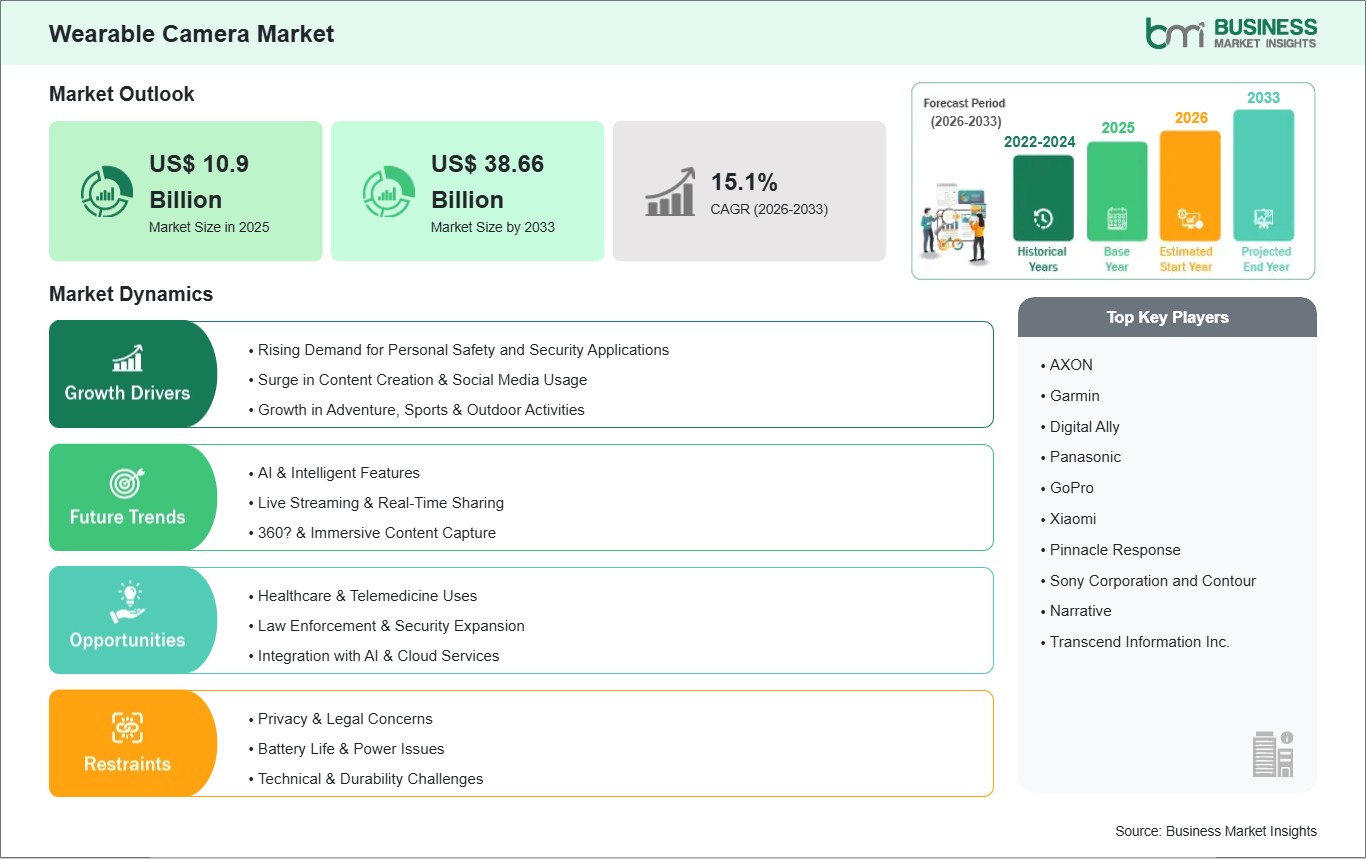
The wearable camera market size is expected to reach US$ 38.66 billion by 2033 from US$ 10.9 billion in 2025. The market is estimated to record a CAGR of 15.1% from 2026 to 2033.
A wearable camera is a compact, portable device designed to be worn on the body, such as on clothing, glasses, or helmets, to capture hands-free photos and videos from the user’s perspective. Its primary usage spans diverse sectors, including law enforcement, sports, healthcare, and personal security, allowing users to document real-time experiences, monitor activities, or ensure safety. The benefits of wearable cameras are significant: they provide objective evidence, enhance accountability, support training and performance analysis, and improve situational awareness.
Several factors drive the growth of the wearable camera market, including the rising demand for personal security devices, increasing adoption in professional sectors, technological advancements like AI and cloud integration, and the growing popularity of adventure sports and vlogging. However, the market also faces restraints such as privacy concerns, high costs, data storage challenges, and regulatory limitations in certain regions. Opportunities in the market include integration with IoT devices, expansion in healthcare and industrial monitoring, and innovation in lightweight, high-resolution, and longer battery-life devices. Current trends indicate a shift toward smart wearable cameras with AI-powered features, live streaming capabilities, and enhanced connectivity, reflecting the growing consumer preference for convenience, real-time sharing, and advanced analytical functionalities.

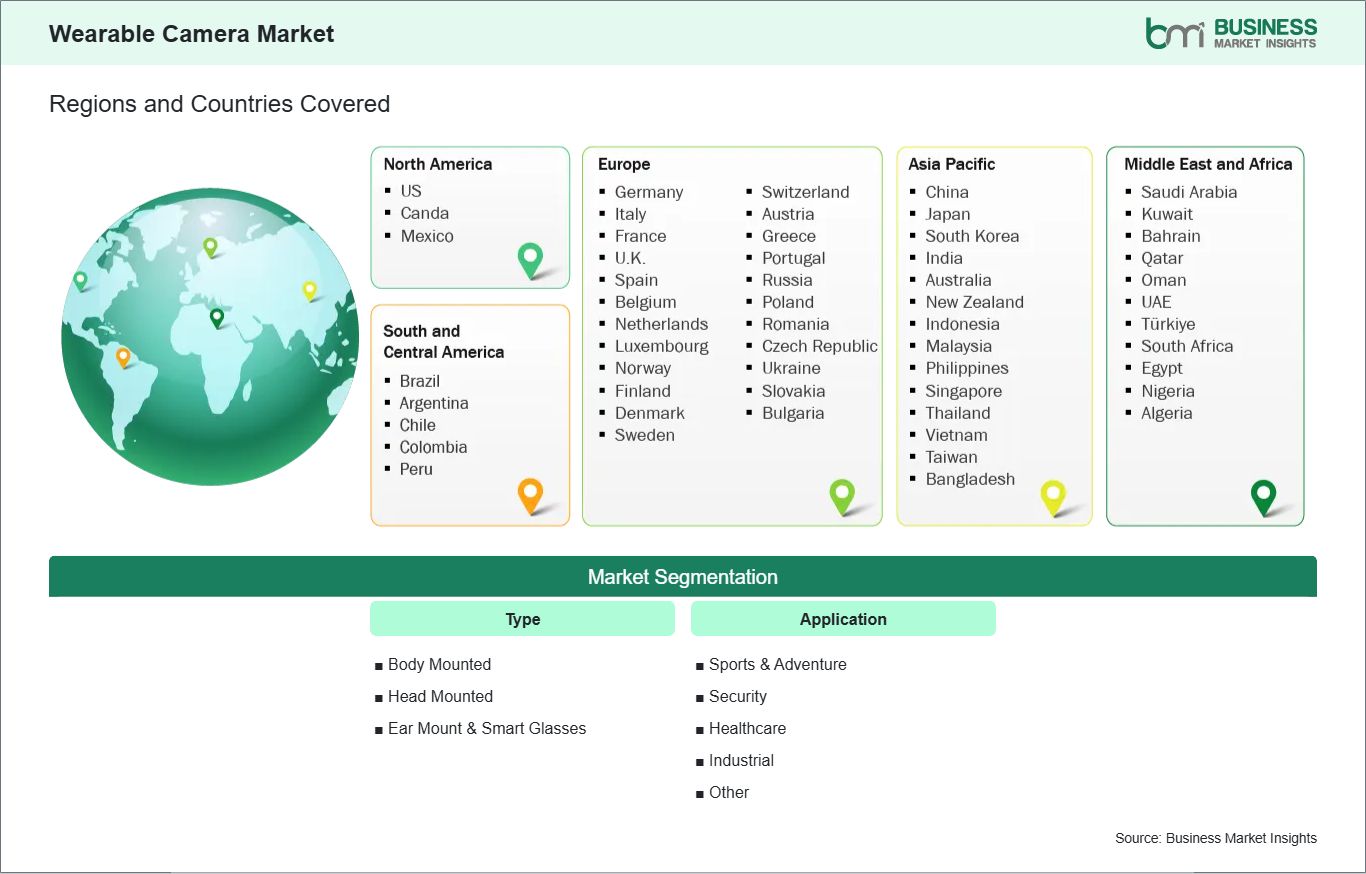
Key segments that contributed to the derivation of the wearable camera market analysis are type, motion, and industry vertical.
One of the most compelling drivers of the wearable camera market is the increasing global emphasis on personal safety and security. With rising urbanization, growth in solo travel, and heightened awareness around personal protection, consumers and professionals alike are turning to wearable cameras as reliable tools for real‑time documentation and evidence capture. Unlike stationary CCTV systems, wearable cameras provide mobility and first‑hand perspectives—whether worn as body cams by law enforcement, attached to helmets by cyclists, or clipped to clothing by everyday users. In law enforcement and security sectors, wearable cameras improve transparency and accountability, helping to resolve disputes and reduce incidents of misconduct. Many police departments and security agencies globally have adopted body‑worn cameras as part of broader reforms, driven by public demand for greater police transparency. This in turn is creating institutional procurement and long‑term contracts that significantly boost market revenue. On the consumer side, the rise of solo adventure and extreme sports has amplified demand for wrist, chest, and head‑mounted cameras that can withstand harsh environments while delivering high‑quality footage. Furthermore, the proliferation of social media platforms and user‑generated content has motivated lifestyle and travel vloggers to integrate wearable cameras into their kits, reinforcing their popularity. Beyond recreational use, wearable cameras are increasingly seen as essential safety devices for vulnerable groups such as children, elderly individuals, and night‑shift workers. Parents, caregivers, and employers are leveraging these devices to monitor well‑being and quickly respond to emergencies. Smartphone connectivity and cloud services have further enhanced functionality, enabling instant alerts and location tracking. This multi‑dimension demand—from security agencies, sports enthusiasts, content creators, and safety‑centric consumers—is driving widespread adoption of wearable cameras, making personal safety and security one of the most pivotal forces shaping market growth.
A significant and rapidly evolving opportunity in the wearable camera market lies in the integration of Artificial Intelligence (AI) and Internet of Things (IoT) technologies, transforming simple recording devices into intelligent, context‑aware systems. This technological convergence presents a new frontier for product innovation, differentiation, and value creation, expanding market potential beyond traditional uses. AI‑enabled wearable cameras can perform real‑time analytics, such as facial recognition, object detection, behavior prediction, and anomaly alerts. For example, in enterprise settings, intelligent wearables can automatically recognize safety violations on construction sites, top hazards in real time, and send alerts to supervisors. This moves wearable cameras from passive recording devices to proactive risk‑mitigation tools, unlocking substantial opportunities in industrial safety, healthcare monitoring, and smart city initiatives. The embedding of IoT connectivity enables seamless interaction with other devices and cloud ecosystems. Wearable cameras can now transmit data continuously to centralized platforms for longitudinal analytics, remote viewing, or integration with broader surveillance and asset‑tracking systems. For instance, in logistics and delivery services, such devices could offer real‑time visibility into driver behavior, route hazards, and incident logging—enhancing operational efficiency and safety compliance.
Furthermore, AI and IoT capabilities enhance user experience through features like automatic event tagging, voice commands, low‑power mode triggers, and context‑based recording. These innovations reduce user burden, extend battery life, and improve the relevance of captured footage. Cloud‑based machine learning also enables continuous improvement of device intelligence through over‑the‑air updates, creating recurring value streams and fostering recurring revenue models for manufacturers. As consumer expectations evolve toward smarter, connected devices, the integration of AI and IoT in wearable cameras presents a major opportunity—expanding applications, increasing device relevance, and enabling higher‑margin products that address both consumer lifestyles and enterprise needs.

By type, the market is segmented into body mounted, head mounted, and ear mount & smart glasses. The head mounted segment held the largest share of the market in 2025. Head-mounted wearable cameras are devices worn on the head to capture hands-free videos and images from the user’s perspective. Their increasing global demand is driven by applications in sports, healthcare, law enforcement, and remote work, offering real-time documentation, enhanced training, and immersive experiences for both personal and professional use.
By application, the market is segmented into sports & adventure, security, healthcare, industrial, and other. The sports & adventure segment held the largest share of the market in 2025. The demand for wearable cameras in the sports and adventure industry is rising due to their ability to capture immersive, first-person perspectives during extreme activities. Athletes and adventurers seek high-quality footage for social media, training analysis, and personal memories. Durability, lightweight design, and advanced features like stabilization and waterproofing also drive popularity.
| Report Attribute | Details |
|---|---|
| Market size in 2025 | US$ 10.9 Billion |
| Market Size by 2033 | US$ 38.66 Billion |
| Global CAGR (2026 - 2033) | 15.1% |
| Historical Data | 2022-2024 |
| Forecast period | 2026-2033 |
| Segments Covered | By Type
|
| Regions and Countries Covered | North America
|
| Market leaders and key company profiles |
|
The Wearable Camera Market Size and Forecast (2022–2033) report provides a detailed analysis of the market covering below areas:
The geographical scope of the wearable camera market report is divided into five regions: North America, Asia Pacific, Europe, Middle East & Africa, and South & Central America. The wearable camera market in Asia Pacific is expected to grow significantly during the forecast period.
The North America wearable camera market is segmented into United State, Canada, and Mexico. The demand and adoption of wearable cameras in North America have been steadily increasing due to a combination of technological, social, and economic factors. One significant driver is the rapid advancement in camera technology, including higher resolution, improved battery life, compact designs, and enhanced connectivity features. These innovations have made wearable cameras more appealing to consumers, providing convenience and high-quality recording capabilities that were previously unattainable. Another crucial factor is the growing popularity of outdoor and adventure activities, such as hiking, biking, and extreme sports, where users seek to document their experiences hands-free. Social media also plays a pivotal role, as platforms like Instagram, TikTok, and YouTube encourage content sharing, motivating users to invest in wearable cameras to capture unique perspectives and create engaging content. Moreover, wearable cameras are increasingly being adopted in professional settings, including law enforcement, security, journalism, and healthcare, where they provide practical benefits such as evidence collection, safety monitoring, and workflow documentation. Rising consumer awareness regarding personal safety and security further fuels adoption, as wearable cameras offer an added layer of protection during daily activities.
Additionally, the increasing affordability of wearable cameras has broadened their market, making them accessible to a wider demographic beyond early adopters and tech enthusiasts. The integration of advanced features, such as live streaming, AI-driven analytics, and cloud storage, enhances their utility and appeal, reinforcing consumer interest. Finally, the influence of lifestyle trends emphasizing technology-driven convenience, fitness tracking, and immersive experiences continues to push demand. Together, these factors—technological advancement, social influence, professional utility, safety concerns, affordability, and lifestyle trends—create a favorable environment for the growing adoption of wearable cameras across North America, reflecting both personal and professional demand.

The wearable camera market is evaluated by gathering qualitative and quantitative data post primary and secondary research, which includes important corporate publications, association data, and databases. A few of the key developments in the wearable camera market are:
The Wearable Camera Market is valued at US$ 10.9 Billion in 2025, it is projected to reach US$ 38.66 Billion by 2033.
As per our report Wearable Camera Market, the market size is valued at US$ 10.9 Billion in 2025, projecting it to reach US$ 38.66 Billion by 2033. This translates to a CAGR of approximately 15.1% during the forecast period.
The Wearable Camera Market report typically cover these key segments-
The historic period, base year, and forecast period can vary slightly depending on the specific market research report. However, for the Wearable Camera Market report:
The Wearable Camera Market is populated by several key players, each contributing to its growth and innovation. Some of the major players include:
The Wearable Camera Market report is valuable for diverse stakeholders, including:
Essentially, anyone involved in or considering involvement in the Wearable Camera Market value chain can benefit from the information contained in a comprehensive market report.
Please tell us your area of interest
(Market Segments/ Regions and Countries/ Companies)