Market Summary
Executive Summary and Global Market Analysis
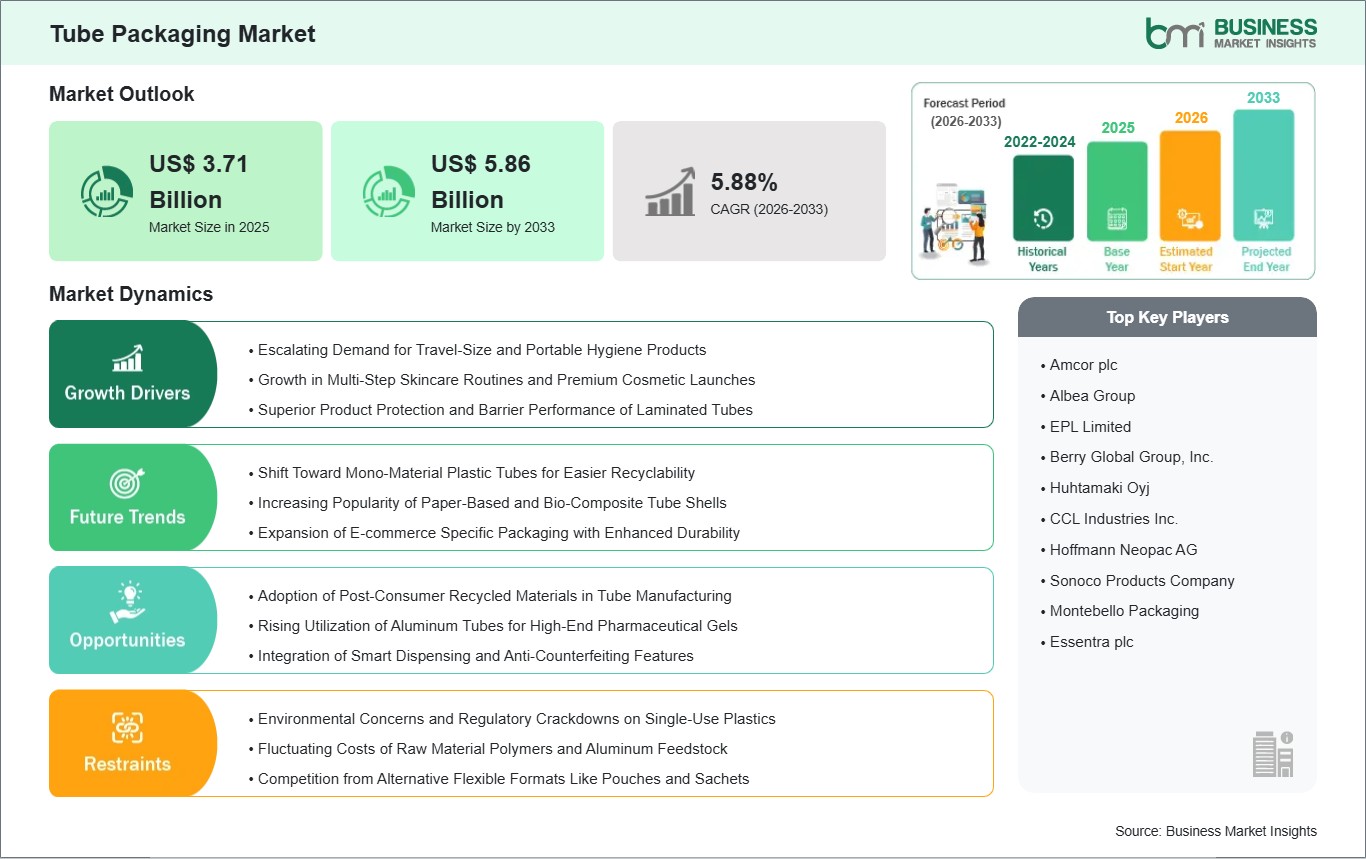
The tube packaging market is in the process of undergoing a revolutionary phase with the shift towards high-performance materials and sustainable manufacturing processes. As the primary packaging solution for the personal care, oral care, and pharmaceutical sectors, tube packaging is recognized for offering the ideal solution in terms of precision dispensing, airtight protection, and portable convenience. At present, the market is being driven by the laminated and plastic tube structures that offer the necessary protection for the complex chemical formulations involved in the products of the above-mentioned sectors. This technical reliability is further complemented by the aesthetic flexibility of modern printing technologies.
The market is primarily driven by the expansion of the middle class in emerging economies and the overall rise in healthcare spend globally. In terms of end consumers, they are demanding more niche products such as anti-aging creams and medicated topical products. These products can only be delivered in squeezable tubes. While the market is facing issues in terms of waste and the fluctuating price of raw materials, there is a drive towards more sustainable materials such as bioplastics and mono-materials. Overall, the market is in a position to continue growing as manufacturers continue to innovate with the help of automation and advancements in materials science.
Segment Analysis
Tube Packaging Market Segmentation
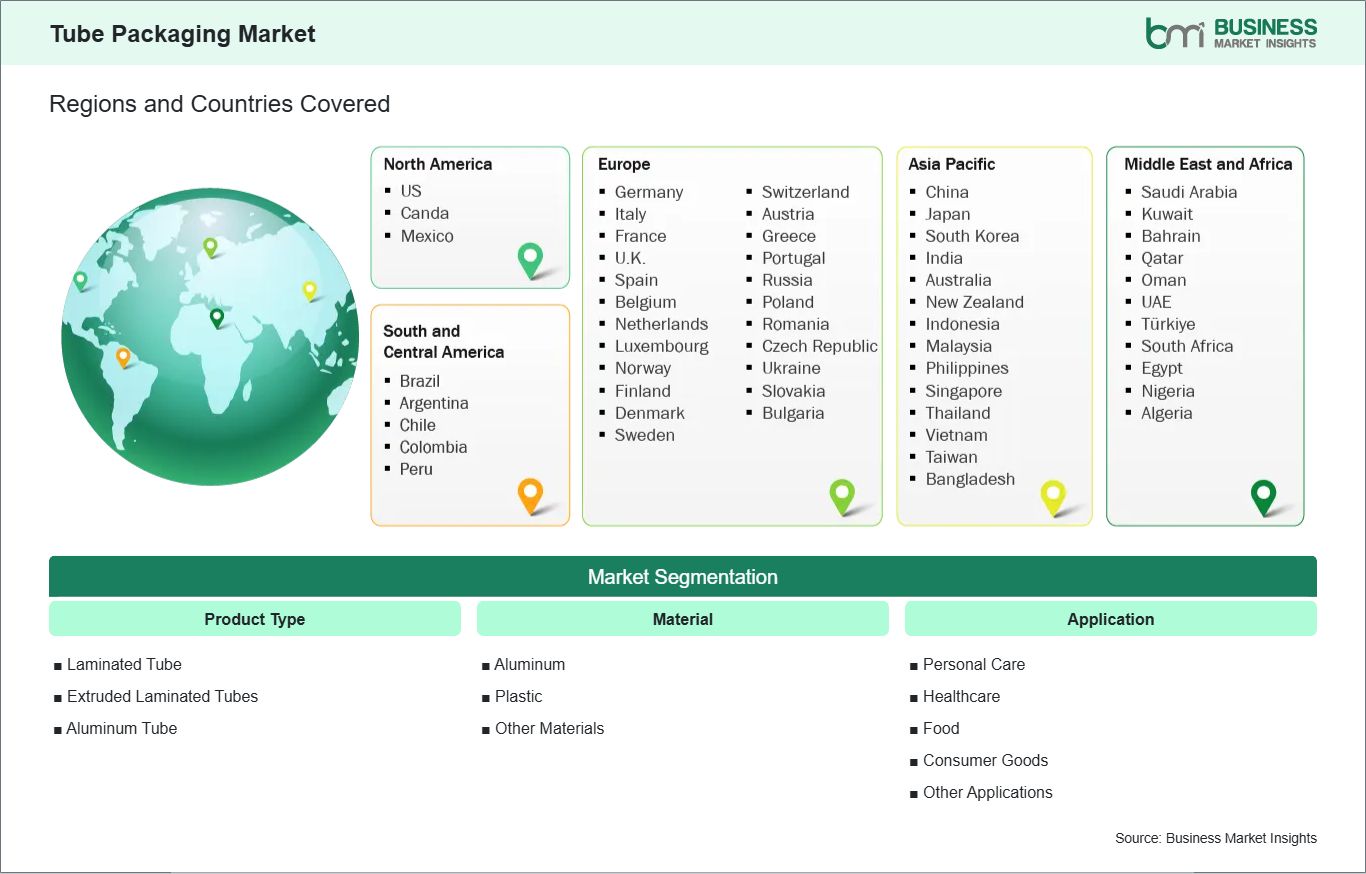
Key segments that contributed to the derivation of the Tube Packaging market analysis are product type, material, and application.
- By product type, the tube packaging market is segmented into Laminated Tube, Extruded Laminated Tubes, and Aluminum Tube. The Laminated Tube segment dominated the market in 2025.
- By material, the tube packaging market is segmented into Aluminum, Plastic, and Other materials. The Plastic segment dominated the market in 2025.
- By application, the tube packaging market is segmented into Personal Care, Healthcare, Food, Consumer Goods, and Other applications. The Personal Care segment dominated the market in 2025.
Market Forces
Tube Packaging Market Drivers and Opportunities
Escalating Demand for Travel-Size and Portable Hygiene Products
The contemporary consumer experience has increasingly become characterized by mobility and the need for convenience, and it is in response to this that the need for compact tube packaging has been catalyzed. Small format tubes, especially those with a capacity of less than 100ml, have become indispensable for the traveling consumer, the fitness enthusiast, and the busy working professional, owing to the need for on-the-go access to their personal hygiene products. This experience has not only become characterized by size but also by the reliability of the product, as the tube ensures a leak-free product that can be taken on the go without taking up too much space.
Furthermore, the rise of sampling and trial-size marketing strategies within the beauty and pharmaceutical industries has further solidified the role of the tube. Brands utilize small-capacity tubes to introduce consumers to high-value serums and medicated ointments, allowing for a low-risk entry point into a product line. As global tourism and business travel continue to expand, the requirement for airline-compliant, squeezable packaging remains a fundamental pillar of market growth. This trend forces manufacturers to innovate in nozzle design and cap security to ensure that portability does not come at the expense of product integrity.
Adoption of Post-Consumer Recycled Materials in Tube Manufacturing
Sustainability has transitioned from a niche marketing claim to a core operational requirement, opening significant opportunities for the integration of post-consumer recycled resins into the tube production value chain. Manufacturers are increasingly replacing virgin plastics with recycled polyethylene and polypropylene to meet both internal corporate responsibility goals and external legislative mandates. This transition is technically demanding, as the recycled material must maintain the same flexibility, clarity, and barrier integrity as traditional plastics to ensure that the user experience remains uncompromised.
The opportunity lies in the ability to market "circular" packaging to an environmentally conscious demographic that prioritizes eco-friendly brands. By developing tubes that incorporate high percentages of recycled content without losing the soft-touch feel or aesthetic brilliance of the packaging, companies can capture a premium market share. Additionally, the development of mono-material tubes, which simplify the recycling process at the end of the product life, represents a high-growth area. As waste management infrastructure improves globally, the demand for tubes that can be seamlessly reintroduced into the manufacturing loop will likely outpace traditional, non-recyclable multi-material alternatives.
Size and Share Analysis
Tube Packaging Market Size and Share Analysis
The global Tube Packaging market is experiencing steady growth, with market size and share analysis reflecting evolving treatment preferences and competitive dynamics among key players. The report evaluates important subsegments categorized within product type, material, and application, highlighting their respective contributions to overall market performance.
By product type, the Laminated Tube subsegment dominated the market in 2025 due to its superior barrier properties that combine the benefits of plastic and aluminum. This hybrid structure effectively prevents oxygen and moisture ingress, significantly extending the shelf life of sensitive cosmetic and pharmaceutical formulations.
By material, the Plastic subsegment dominated the market in 2025 because of its high versatility, impact resistance, and cost-effectiveness for mass production. Its lightweight nature reduces transportation costs, while its compatibility with various printing techniques allows brands to achieve premium aesthetic appeal at lower price points.
By application, the Personal Care subsegment dominated the market in 2025 owing to the massive global volume of skincare, haircare, and oral care products requiring hygienic dispensing. The rise in beauty consciousness and premium grooming trends has necessitated portable and user-friendly formats, positioning tubes as the primary choice.
Report Coverage
Tube Packaging Market Report Coverage and Deliverables
The "Tube Packaging Market Size and Forecast (2022 - 2033)" report provides a detailed analysis of the market covering below areas:
- Tube Packaging market size and forecast at the regional and country levels for segments covered under the scope
- Tube Packaging market trends, as well as drivers, restraints, and opportunities
- Tube Packaging market analysis covering key trends, regional framework, major players, regulations, and recent developments
- Industry landscape and competition analysis covering market concentration, heat map analysis, prominent players, and recent developments for the Tube Packaging market
- Detailed company profiles, including SWOT analysis
Geographic Insights
Tube Packaging Market Geographic Insights
The geographical scope of the Tube Packaging market report is divided into: North America, Asia Pacific, Europe, Middle East & Africa, and South & Central America. North America held the largest share in 2025.
North America maintains a commanding position in the tube packaging market, a dominance rooted in its highly advanced pharmaceutical and cosmetic sectors. The United States serves as a primary hub for packaging innovation, where major industry players are heavily investing in research and development to create high-barrier, child-resistant, and sustainable tube formats. This leadership is supported by a sophisticated supply chain and a high concentration of premium skincare and dermatological brands that prioritize the functional advantages of tubes for active ingredient stability. The regional market is also characterized by a high per-capita consumption of oral care and personal grooming products, ensuring a consistent and high-volume demand.
The dominance is further reinforced by stringent quality standards and regulatory frameworks that favor the protective qualities of laminated and aluminum tubes in the healthcare sector. North American consumers exhibit a strong preference for "on-the-go" lifestyles, which sustains the demand for travel-sized and convenience-oriented packaging. Additionally, the region is at the forefront of the green packaging movement, with local manufacturers leading the way in integrating recycled content and reducing the carbon footprint of production lines. As the market moves toward more digitalized and automated manufacturing processes, North America's established infrastructure and technological maturity ensure it remains the global benchmark for tube packaging excellence.
Industry Activity
Recent Developments
The Tube Packaging market is evaluated by gathering qualitative and quantitative data post primary and secondary research, which includes important corporate publications, association data, and databases. A few of the key developments in the Tube Packaging market are:
- In October 2023, Amcor plc announced the launch of a more sustainable tube packaging range, including recyclable laminate tubes designed for the personal care and beauty sectors.
- In March 2023, Albéa Group introduced its EcoFusion Top, a lightweight and recyclable tube closure solution aimed at reducing plastic usage in cosmetic packaging.
- In February 2022, EPL Limited announced the development of Platina tubes, a fully recyclable laminated tube solution targeting oral care and beauty brands.
Trust & Transparency
Research Methodology
The market analysis combines proprietary research with secondary data from government agencies, company disclosures, regulatory filings, industry databases and expert interviews. Market estimates are validated through data triangulation, cross-market benchmarking and analyst
review.
View Full Research Methodology
Key Sources Referred:
American Chemistry Council (ACC)International Council of Chemical Associations (ICCA)European Chemical Industry Council (Cefic)China National Packaging Industry Association (CNPIA)Indian Institute of Packaging (IIP)Japan Packaging Institute (JPI)Company WebsitesCompany Annual ReportsCompany Investor Presentations