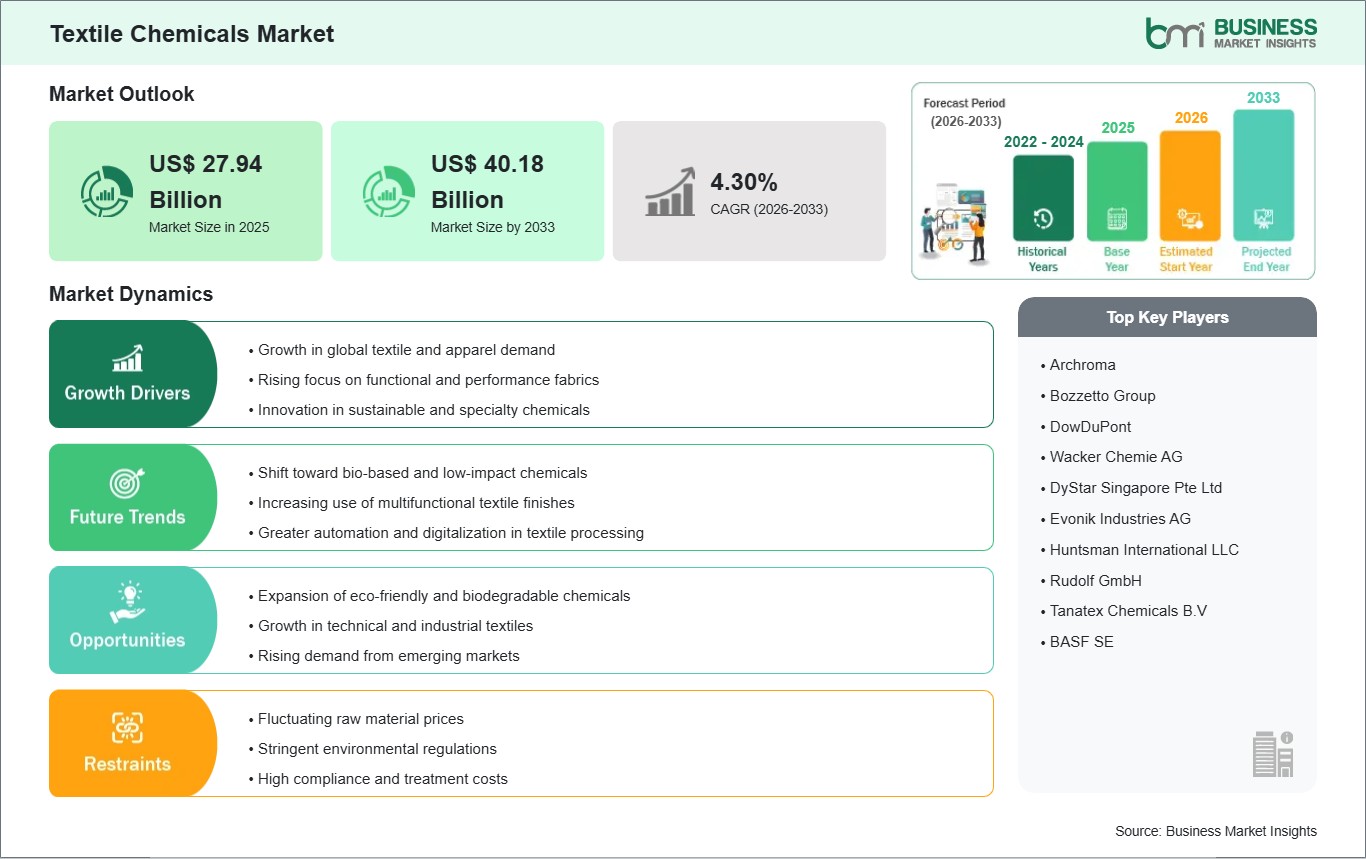
The textile chemicals market size is expected to reach US$ 40.18 billion by 2033 from US$ 27.94 billion in 2025. The market is estimated to record a CAGR of 4.3% from 2026 to 2033.
Textile chemicals are specialized substances used in processing, finishing, and treating fibers, yarns, and fabrics to improve their performance, appearance, and durability. They include categories like dyes, pigments, bleaching agents, softeners, sizing agents, flame retardants, water repellents, and anti-microbial finishes. These chemicals are essential for enhancing color fastness, texture, elasticity, and resistance to stains, wrinkles, and microbial growth. This enables manufacturers to create high-quality textiles that meet consumer and industrial standards.
The textile chemicals market is driven by rising fashion trends, increasing disposable incomes, and greater demand for home textiles, technical textiles, and performance fabrics. Rapid urbanization and industrialization, especially in emerging economies like China, India, and Southeast Asia, have increased the demand for processed fabrics in sectors such as apparel, automotive, and construction. Additionally, sustainability and environmental rules are encouraging manufacturers to adopt eco-friendly and bio-based textile chemicals, creating new opportunities for innovation and growth. Improvements in chemical formulations, digital textile printing, and functional finishes also help expand the market by meeting changing consumer and industrial needs.

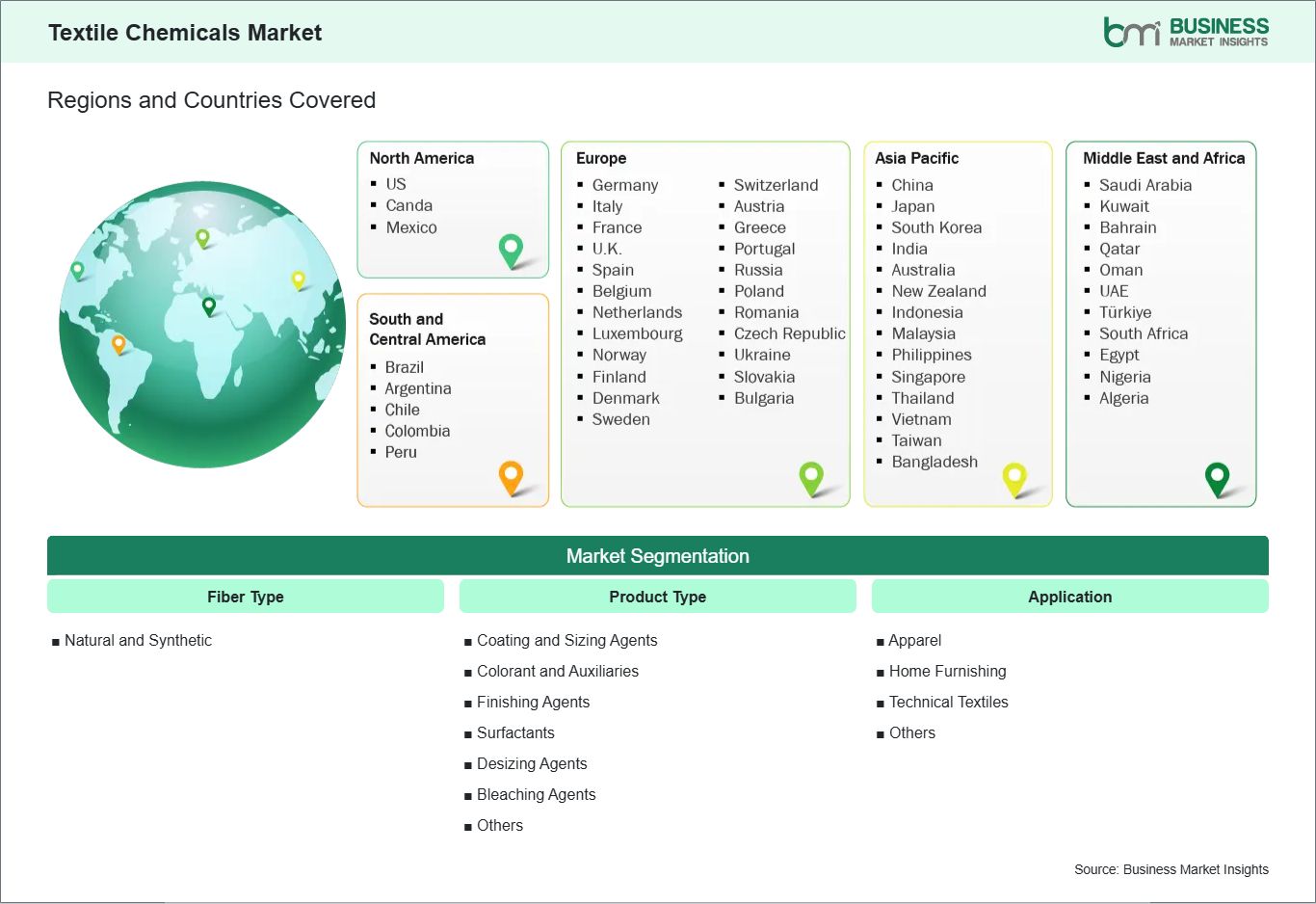
Key segments that contributed to the derivation of the textile chemicals market analysis are fiber type, product type, and application.
A significant factor driving the textile chemicals market is the growing demand for functional and performance textiles in various sectors. Consumers and industries are looking for fabrics that provide benefits beyond looks, such as moisture management, stain resistance, UV protection, wrinkle resistance, anti-microbial properties, and flame retardancy. This trend is rapidly emerging in activewear, sportswear, technical textiles, and protective clothing, where improved fabric functionality is essential. The rise of e-commerce and fast fashion has also increased the need for high-quality, durable, and visually appealing garments, which depend heavily on chemical treatments in production.
Moreover, emerging markets in Asia Pacific and South and Central America are experiencing rapid urbanization, higher disposable incomes, and changing lifestyles, which boost the consumption of processed fabrics. As manufacturers work to meet these changing consumer demands, the need for advanced textile chemicals such as finishing agents, coatings, and specialty additives keeps growing. Overall, the demand for innovative, functional textiles is driving strong growth in the textile chemicals market and supporting investment in research and development for new chemical formulations.
A significant opportunity for growth in the textile chemicals market is the rising use of eco-friendly and sustainable chemical solutions. As awareness of environmental issues grows and government regulations on wastewater management, emissions, and chemical safety become stricter, textile manufacturers are moving towards biodegradable, low-impact, and non-toxic chemicals. These include bio-based dyes, water-saving finishing agents, and solvent-free auxiliaries, which help reduce environmental pollution while keeping fabric quality.
Consumer preferences are also pushing this trend, with more buyers looking for apparel and home textiles made using sustainable methods. Brands are using green textile chemicals to boost their corporate responsibility profiles and meet certifications like OEKO-TEX and GOTS, which further encourages adoption. Additionally, sustainability trends are opening doors for innovation, such as enzymes for bleaching, natural-based softeners, and recycled chemical inputs that help cut down on water and energy use. As environmental concerns and regulatory pressures grow, eco-friendly textile chemicals are likely to gain a larger share of the market, presenting a long-term growth opportunity for manufacturers and suppliers worldwide.

| Report Attribute | Details |
|---|---|
| Market size in 2025 | US$ 27.94 Billion |
| Market Size by 2033 | US$ 40.18 Billion |
| Global CAGR (2026 - 2033) | 4.30% |
| Historical Data | 2022 - 2024 |
| Forecast period | 2026-2033 |
| Segments Covered | By Fiber Type
|
|
Regions and Countries Covered
| |
| North America | US, Canada, Mexico |
| Europe | Belgium, Austria, Finland, Denmark, Greece, Poland, Romania, Russia, Ukraine, Czech Republic, Slovakia, Bulgaria, Italy, Luxembourg, Germany, Switzerland, France, Netherlands, Norway, Portugal, Spain, Sweden, United Kingdom |
| Asia-Pacific | Australia, China, India, Japan, South Korea, Indonesia, Malaysia, Philippines, Singapore, Thailand, Vietnam, Bangladesh, New Zealand, Taiwan |
| South and Central America | Brazil, Argentina, Peru, Chile, Colombia |
| Middle East and Africa | Bahrain, Kuwait, Oman, Qatar, Saudi Arabia, United Arab Emirates, Turkiye, South Africa, Egypt, Algeria, Nigeria |
| Market leaders and key company profiles |
|
The Textile Chemicals Market Size and Forecast (2022-2033) report provides a detailed analysis of the market covering below areas:
The geographical scope of the textile chemicals market report is divided into five regions: North America, Asia Pacific, Europe, the Middle East & Africa, and South & Central America. The textile chemicals market in the Asia Pacific is expected to grow significantly during the forecast period.
This is due to strong manufacturing capabilities, abundant raw materials, and fast-growing end-use industries across the region. Countries like China, India, Bangladesh, and Vietnam dominate the region. They have a large textile and apparel manufacturing base that supplies both local and international markets. Well-established textile clusters, competitive labor costs, and government incentives have turned the region into a global hub for textile production. This drives high consumption of textile chemicals used for dyeing, finishing, and coating.
Rapid urbanization, rising disposable incomes, and changing fashion trends have further increased demand for functional, high-quality fabrics. This has boosted the use of specialty chemicals. Additionally, rising exports of garments, technical textiles, and home furnishings from Asia Pacific to North America, Europe, and other regions support ongoing market growth. Investment in modern manufacturing technologies, the adoption of eco-friendly chemicals, and growing awareness about product quality and fabric performance have strengthened the region's market share. These factors make Asia Pacific the most significant market in the global textile chemicals industry.

The textile chemicals market is evaluated by gathering qualitative and quantitative data post-primary and secondary research, which includes important corporate publications, association data, and databases. A few of the key developments in the textile chemicals market are:
The Textile Chemicals Market is valued at US$ 27.94 Billion in 2025, it is projected to reach US$ 40.18 Billion by 2033.
As per our report Textile Chemicals Market, the market size is valued at US$ 27.94 Billion in 2025, projecting it to reach US$ 40.18 Billion by 2033. This translates to a CAGR of approximately 4.30% during the forecast period.
The Textile Chemicals Market report typically cover these key segments-
The historic period, base year, and forecast period can vary slightly depending on the specific market research report. However, for the Textile Chemicals Market report:
The Textile Chemicals Market is populated by several key players, each contributing to its growth and innovation. Some of the major players include:
The Textile Chemicals Market report is valuable for diverse stakeholders, including:
Essentially, anyone involved in or considering involvement in the Textile Chemicals Market value chain can benefit from the information contained in a comprehensive market report.
Please tell us your area of interest
(Market Segments/ Regions and Countries/ Companies)