Market Summary
Executive Summary and Global Market Analysis
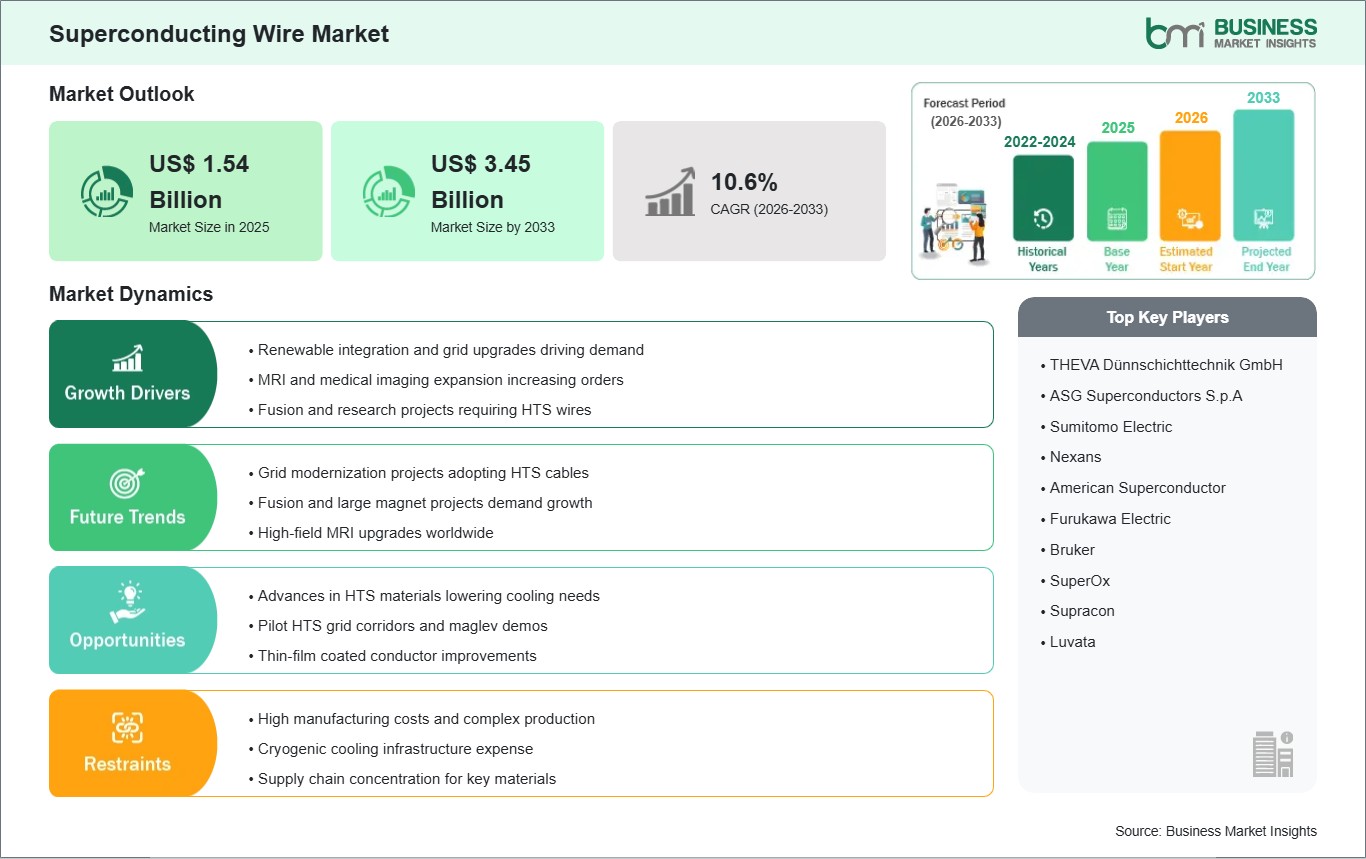
Superconducting wires are special conductive materials that show nearly zero electrical resistance at very low temperatures. These wires allow highly efficient current transmission in high-field situations where regular conductors lose a lot of energy. They are used in medical imaging, energy systems, and high-speed transportation that need stable magnetic performance. The growing focus on energy efficiency in systems that use a lot of power is leading to increased use in utility and industrial applications. The demand for medical imaging, especially in high-resolution diagnostic tools, is driving their integration into hospital upgrades.
Additionally, ongoing research in quantum systems and fusion energy is boosting their long-term potential in advanced scientific fields. Segmentation patterns reveal different material and operational needs in various applications. Low-temperature versions are widely used in established systems like MRI machines. High-temperature superconductors are becoming more popular because they are easier to cool and offer more flexibility in power and transportation systems. Technological advancements are focused on making wires more stable, increasing current density, and achieving cost-effective cryogenic integration. Progress in material engineering is leading to longer lifespans and better strength under magnetic stress. Improvements in manufacturing are also helping to make complex wire designs easier to produce for industrial use.
Competition in this field involves specialized material developers and research-focused manufacturers who aim to improve performance. Partnerships between energy companies and material science organizations are speeding up the move to commercial use. The industry is gradually evolving toward greater integration across energy transmission and advanced transportation applications.
Segment Analysis
Superconducting Wire Market Segmentation
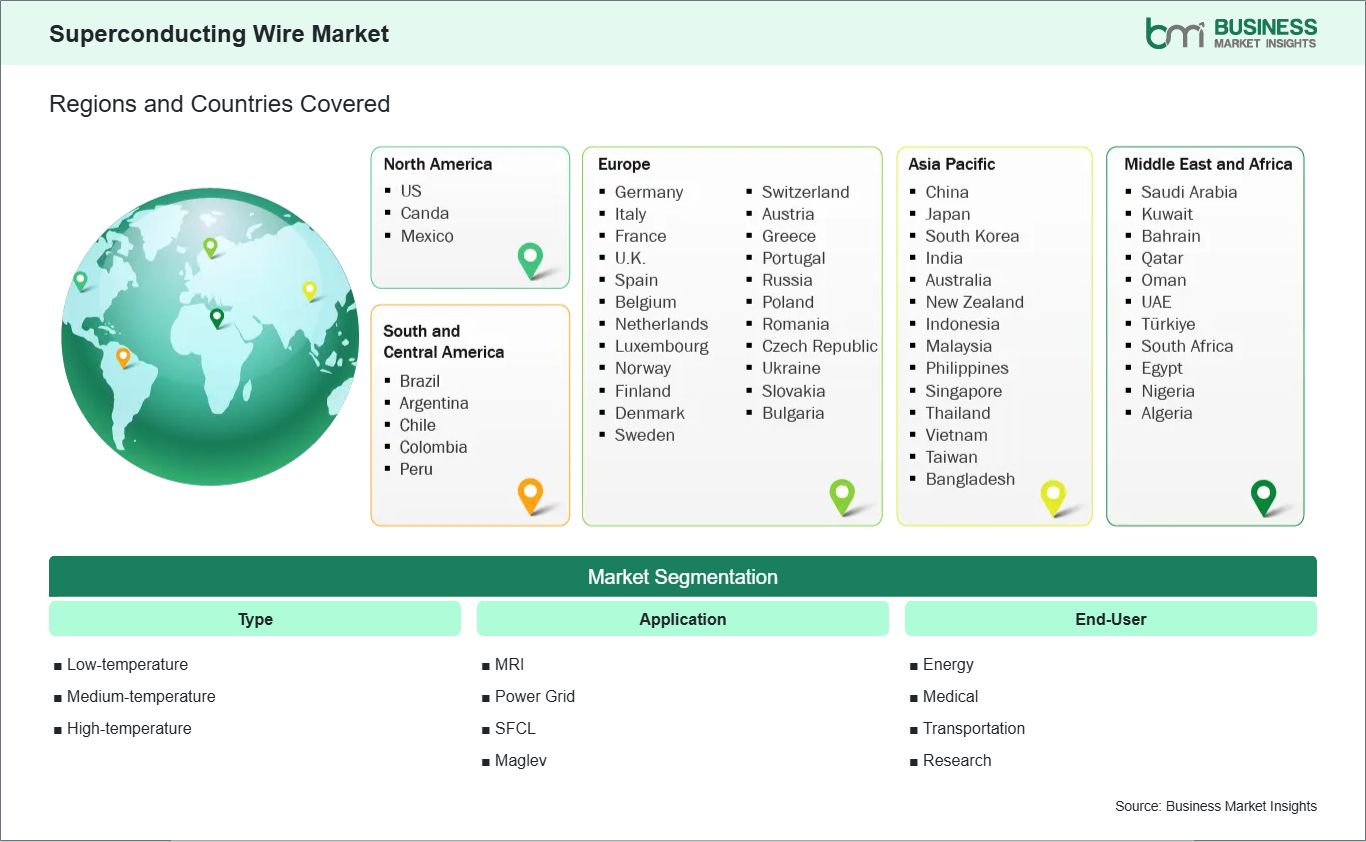
The market is divided into categories based on type, application, and end user.
By Type
- Low-temperature - widely used in established cryogenic magnetic systems
- Medium-temperature - balances operational efficiency and cooling needs
- High-temperature - allows for broader use with less cryogenic dependency
By Application
- MRI - supports high-resolution medical imaging systems.
- Power Grid - improves efficient long-distance electricity transmission
- SFCL - provides fault current limiting in modern grids
- Maglev - enables magnetic levitation for high-speed transport systems
By End User
- Energy - focused on transmission efficiency and grid improvement
- Medical - driven by the demand for diagnostic imaging infrastructure
- Transportation - supports advanced magnetic propulsion systems
- Research - used in experimental physics and quantum systems
Market Forces
Superconducting Wire Market Drivers and Opportunities
Expansion of High-Efficiency Energy Infrastructure
The growing focus on reducing transmission losses in power systems is speeding up the use of superconducting wire solutions. Utilities are looking into new conductors that can handle high current densities without resistive losses. This need is especially important in crowded urban areas where space limits traditional expansion methods. This shift is encouraging the integration of cryogenic conductor systems in pilot grid projects. Improved efficiency in electricity transfer helps maintain stable energy distribution as demand rises. This transition boosts system reliability and supports modernization efforts in national energy frameworks.
Advancements in Medical and Scientific Applications
The need for high-precision imaging and research tools is increasing the use of superconducting wires. MRI systems need stable magnetic fields, which low-resistance conductors provide when operating under controlled cryogenic conditions. Research labs also rely on superconducting materials for high-field experimental setups.
Ongoing improvements in materials are enhancing wire performance under changing thermal and electromagnetic stress. Better durability and field stability are expanding the use of these wires in next-generation medical devices and experimental physics platforms. This progress promotes greater integration in healthcare and advanced research areas.
Size and Share Analysis
Superconducting Wire Market Size and Share Analysis
The superconducting wire market is expected to reach US$ 3.45 billion by 2033, up from US$ 1.54 billion in 2025. The market is projected to grow at a rate of 10.6% from 2026 to 2033.
This growth shows a greater need for high-efficiency electrical systems in the energy, medical, and transportation sectors. Low-temperature superconducting wires continue to hold a strong position due to their established use in MRI systems and older infrastructure.
At the same time, high-temperature variants are becoming more popular as operational flexibility increases and cooling needs become simpler. Medical imaging is a key application area, driven by steady demand for better diagnostic accuracy. Energy transmission and specialized transport systems also play an important role in market growth through widespread adoption.
Report Coverage
Superconducting Wire Market Report Coverage and Deliverables
The "Superconducting Wire Market Size and Forecast (2022-2033)" report provides a detailed analysis of the market covering below areas:
- The market size and forecast at global, regional, and country levels for all market segments covered under the scope
- The market trends, as well as drivers, restraints, and opportunities
- The market analysis covering key trends, global and regional framework, major players, regulations, and recent developments
- Industry landscape and competition analysis covering market concentration, heat map analysis, prominent players, and recent developments for the market
- Detailed company profiles, including SWOT analysis
Geographic Insights
Superconducting Wire Market Geographic Insights
The superconducting wire market shows various patterns of regional adoption influenced by needs in industrial electrification, healthcare infrastructure growth, and progress in cryogenic engineering. Regional priorities vary widely depending on energy efficiency goals and the level of research activity in scientific institutions and infrastructure systems.
North America is highly engaged, supported by strong healthcare systems and research-focused institutions. Investment in modernizing the grid and in high-performance medical imaging equipment aids the steady use of superconducting wire technologies in specialized applications.
Asia Pacific is seeing an increase in deployment due to industrial modernization and transportation innovation programs. Strong manufacturing bases and rising energy demand promote the use of superconducting wire in power transmission and magnetic levitation projects.
Europe and emerging markets display organized interest driven by sustainability goals and funding for scientific research. European regions focus on energy efficiency, while emerging economies slowly adopt superconducting solutions in research, healthcare, and infrastructure development.
Industry Activity
Recent Developments
The superconducting wire market is evaluated by gathering qualitative and quantitative data post primary and secondary research, which includes important corporate publications, association data, and databases. Recent developments and news in the market include:
- In February 2026, Microsoft Corporation broadened testing of high-temperature superconducting (HTS) power cables with VEIR. The goal was to improve power delivery in ultra-high-density data centers and cut transmission losses in AI infrastructure.
- In January 2026, Bruker Corporation boosted its capacity for integrating superconducting magnets and wires. This move was in response to the rising demand for MRI and high-field scientific instruments, reinforcing its supply chain in the medical and research sectors.
Trust & Transparency
Research Methodology
The market analysis combines proprietary research with secondary data from government agencies, company disclosures, regulatory filings, industry databases and expert interviews. Market estimates are validated through data triangulation, cross-market benchmarking and analyst
review.
View Full Research Methodology
Key Sources Referred:
International Energy Agency (IEA)National Renewable Energy Laboratory (NREL)International Electrotechnical Commission (IEC)S. Department of EnergyCompany WebsitesCompany Annual ReportsCompany Investor Presentations