Market Summary
Executive Summary and Global Market Analysis
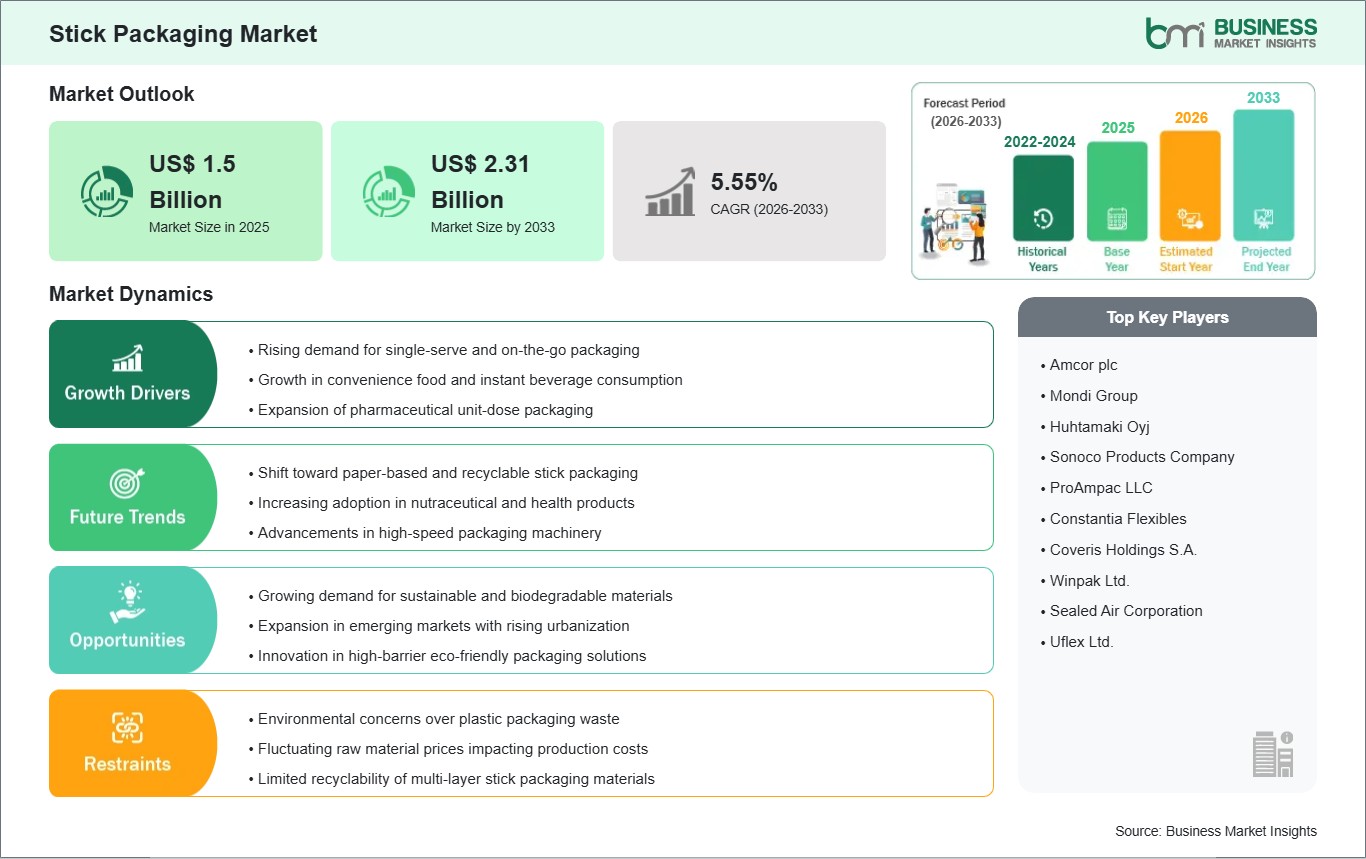
The market for stick packaging is growing steadily with increasing demand for single-serve packaging formats in the food, pharmaceutical, and cosmetic sectors. The benefits associated with stick packaging include its portability, portion control, material saving, and high-speed packaging capability. These benefits make stick packaging more suitable for contemporary consumer lifestyles, especially in urban cities where convenience is a necessity. At the same time, the market is witnessing a trend towards sustainable packaging formats with manufacturers adopting recyclable and biodegradable packaging materials to meet environmental concerns. Though plastic-based packaging materials like BOPP are dominating the market due to their properties and cost advantages, innovation in sustainable packaging formats is moving forward. In addition, increasing demand in nutraceutical and personal care product segments is also driving the growth of the stick packaging market. Overall, the stick packaging market is expected to grow continuously with increasing demand and changing consumer lifestyles.
Segment Analysis
Stick Packaging Market Segmentation
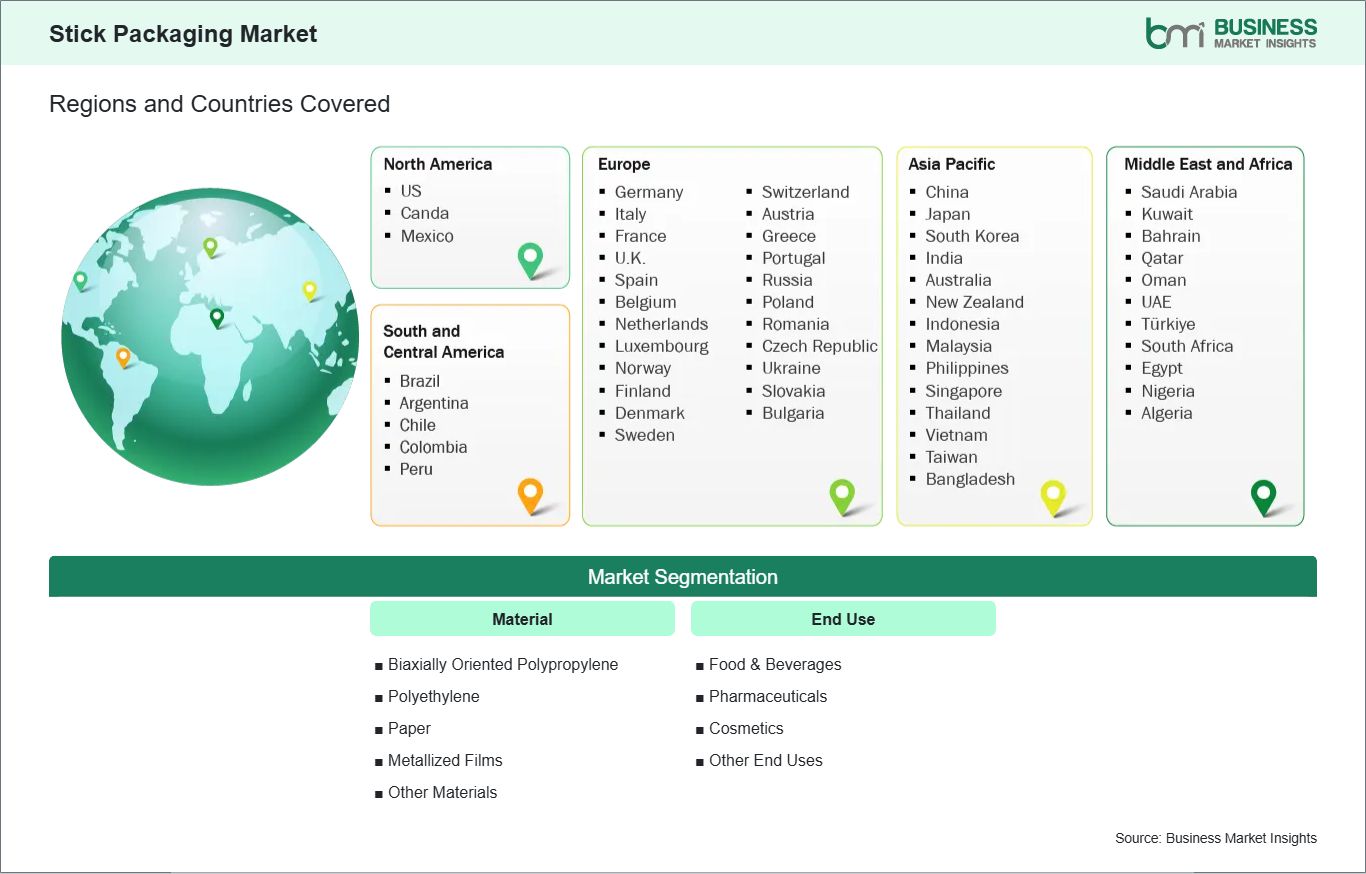
Key segments that contributed to the derivation of the Stick Packaging market analysis are material and end use.
- By material, the market is segmented into Biaxially Oriented Polypropylene, Polyethylene, Paper, Metallized Films, and Others. The Biaxially Oriented Polypropylene segment dominated the market in 2025.
- By end use, the market is segmented into Food & Beverages, Pharmaceuticals, Cosmetics, and Others. The Food & Beverages segment dominated the market in 2025.
Market Forces
Stick Packaging Market Drivers and Opportunities
Rising demand for single-serve and on-the-go packaging
Due to a greater demand for on-the-go and individually sized products, stick packaging has become an increasingly popular method of packaging. Consumers are gravitating toward convenience and portability when it comes to their fast-paced lifestyles. This is particularly true in urban areas where ease of use and portion control are important. As stick packaging allows for precise amounts to be dosed, it is lightweight and takes up little storage space, making it suitable for use with instant coffee, sugar, energy drinks, dietary supplements, etc.; also, the way that stick packaging reduces product wastage and makes using a product more convenient leads to its growth across industries. Moreover, the continued trend towards on-the-go / hygienic packaging is further increasing the need for stick packs. Manufacturers are focusing on developing compact packaging formats that align with consumer desires for convenience, portability and efficiency, which has been a significant contributor to growth within this market.
Growing demand for sustainable and biodegradable materials
The rising demand for sustainable and biodegradable materials presents a significant opportunity in the stick packaging market. Increasing environmental awareness among consumers and regulatory pressure on reducing plastic waste are encouraging manufacturers to explore eco-friendly alternatives. Companies are investing in the development of recyclable, compostable, and paper-based stick packaging solutions that maintain barrier performance while minimizing environmental impact. These innovations are gaining traction, especially in regions with strict sustainability regulations and environmentally conscious consumers. Furthermore, brands adopting sustainable packaging solutions can enhance their market positioning and meet corporate sustainability goals. This shift is expected to open new growth avenues, drive innovation, and create competitive differentiation, ultimately supporting long-term expansion in the stick packaging market.
Size and Share Analysis
Stick Packaging Market Size and Share Analysis
The global Stick Packaging market is experiencing steady growth, with market size and share analysis reflecting evolving treatment preferences and competitive dynamics among key players. The report evaluates important subsegments categorized within material and end use highlighting their respective contributions to overall market performance.
By material, the Biaxially Oriented Polypropylene subsegment dominated the market in 2025 due to its excellent barrier properties, mechanical strength, and cost efficiency, making it ideal for large-scale stick packaging applications across food and pharmaceutical industries.
By end use, the Food & Beverages subsegment dominated the market in 2025 due to increasing consumer preference for portable, single-use packaging formats and the widespread use of stick packs for instant beverages, sweeteners, and condiments.
Report Coverage
Stick Packaging Market Report Coverage and Deliverables
The "Stick Packaging Market Size and Forecast (2022 - 2033)" report provides a detailed analysis of the market covering below areas:
- Stick Packaging market size and forecast at the regional and country levels for segments covered under the scope
- Stick Packaging market trends, as well as drivers, restraints, and opportunities
- Stick Packaging market analysis covering key trends, regional framework, major players, regulations, and recent developments
- Industry landscape and competition analysis covering market concentration, heat map analysis, prominent players, and recent developments for the Stick Packaging market
- Detailed company profiles, including SWOT analysis
Geographic Insights
Stick Packaging Market Geographic Insights
The geographical scope of the Stick Packaging market report is divided into: North America, Asia Pacific, Europe, Middle East & Africa, and South & Central America. North America held the largest share in 2025.
North America dominates the stick packaging market due to strong demand for convenience-oriented packaging and high consumption of packaged food and beverages. The region benefits from advanced packaging infrastructure, widespread adoption of single-serve formats, and the presence of leading food and pharmaceutical manufacturers that extensively utilize stick packs. Consumers in North America increasingly prefer portable and hygienic packaging solutions, particularly for products such as instant beverages, dietary supplements, and sweeteners. This trend is supported by busy lifestyles and a growing focus on portion control and health-conscious consumption patterns.
Additionally, regulatory emphasis on sustainable packaging is driving innovation in eco-friendly materials across the region. Companies are actively investing in recyclable and biodegradable stick packaging solutions to meet environmental standards and consumer expectations. The presence of key market players and continuous technological advancements further strengthen North America's leading position. Meanwhile, Asia-Pacific is emerging as a high-growth region due to rapid urbanization, expanding middle-class population, and increasing demand for affordable and convenient packaging formats.
Industry Activity
Recent Developments
The Stick Packaging market is evaluated by gathering qualitative and quantitative data post primary and secondary research, which includes important corporate publications, association data, and databases. A few of the key developments in the Stick Packaging market are:
- In March 2023, Huhtamaki announced that it had launched sustainable stick packaging solutions made from paper-based laminates, targeting food and beverage brands seeking eco-friendly alternatives to plastic.
- In October 2023, Constantia Flexibles announced that it had expanded its stick-pack production capabilities in Europe, adding new lines to meet rising demand in single-serve coffee, beverage powders, and healthcare products.
- In June 2024, Sonoco announced that it had introduced recyclable stick packaging formats for personal care and food applications, aligning with global sustainability goals and regulatory requirements.
Trust & Transparency
Research Methodology
The market analysis combines proprietary research with secondary data from government agencies, company disclosures, regulatory filings, industry databases and expert interviews. Market estimates are validated through data triangulation, cross-market benchmarking and analyst
review.
View Full Research Methodology
Key Sources Referred:
Institute of Packaging Professionals (IoPP) World Packaging Organization (WPO) Flexible Packaging Association (FPA) Sustainable Packaging Coalition (SPC) European Stick Pack Association (ESPA) Association for Packaging and Processing Technologies (PMMI) Japan Packaging Institute (JPI) Indian Institute of Packaging (IIP) China Packaging Federation (CPF) Company Websites Company Annual Reports Company Investor Presentations