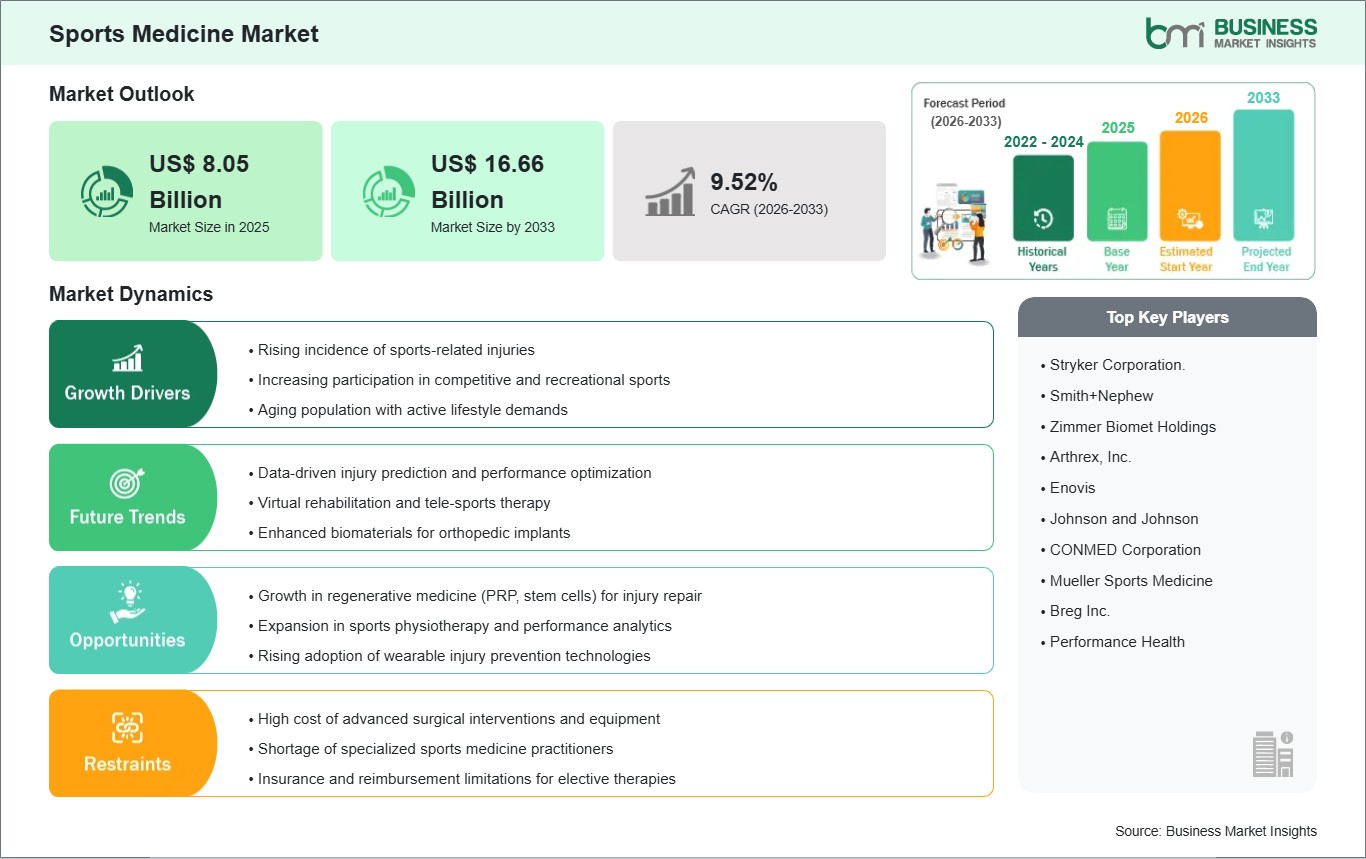
The Sports Medicine Market size is expected to reach US$ 16.66 billion by 2033 from US$ 8.05 billion in 2025. The market is estimated to record a CAGR of 9.52% from 2026 to 2033.
Sports Medicine is a branch of healthcare that specializes in the prevention, diagnosis, treatment, and rehabilitation of injuries and medical conditions that are sports-related, exercise-related, and active lifestyle-related. It integrates clinical medical care with performance enhancement and injury prevention techniques for athletes and physically active individuals of all kinds. The sports medicine team aims to help people with disabilities by improving their capabilities, reducing their suffering, and returning them to the safest and most effective activities.
The sports medicine market is growing steadily, which is supported by the ongoing participation in sports and fitness, the increasing number of sports injuries, and the increasing awareness about preventive care. Different technologies like less invasive operations, gadgets that monitor and wear, artificial intelligence in diagnosing, telemedicine, and regenerative therapies such as PRP and stem cells are changing the delivery of care, improving recovery results, and customizing treatment. North America captures a considerable share due to its well-developed healthcare facilities and a robust sports culture, while the Asia-Pacific region is fast breaking through with governments giving assurance in terms of healthcare infrastructure and sports health facilities. The markets are witnessing a significant trend towards prevention through active participation, as well as digital health integration and an overall improvement in athletes' performance; these developments indicate that the demand is not only for professional athletes but also for fitness lovers and the aged active population.

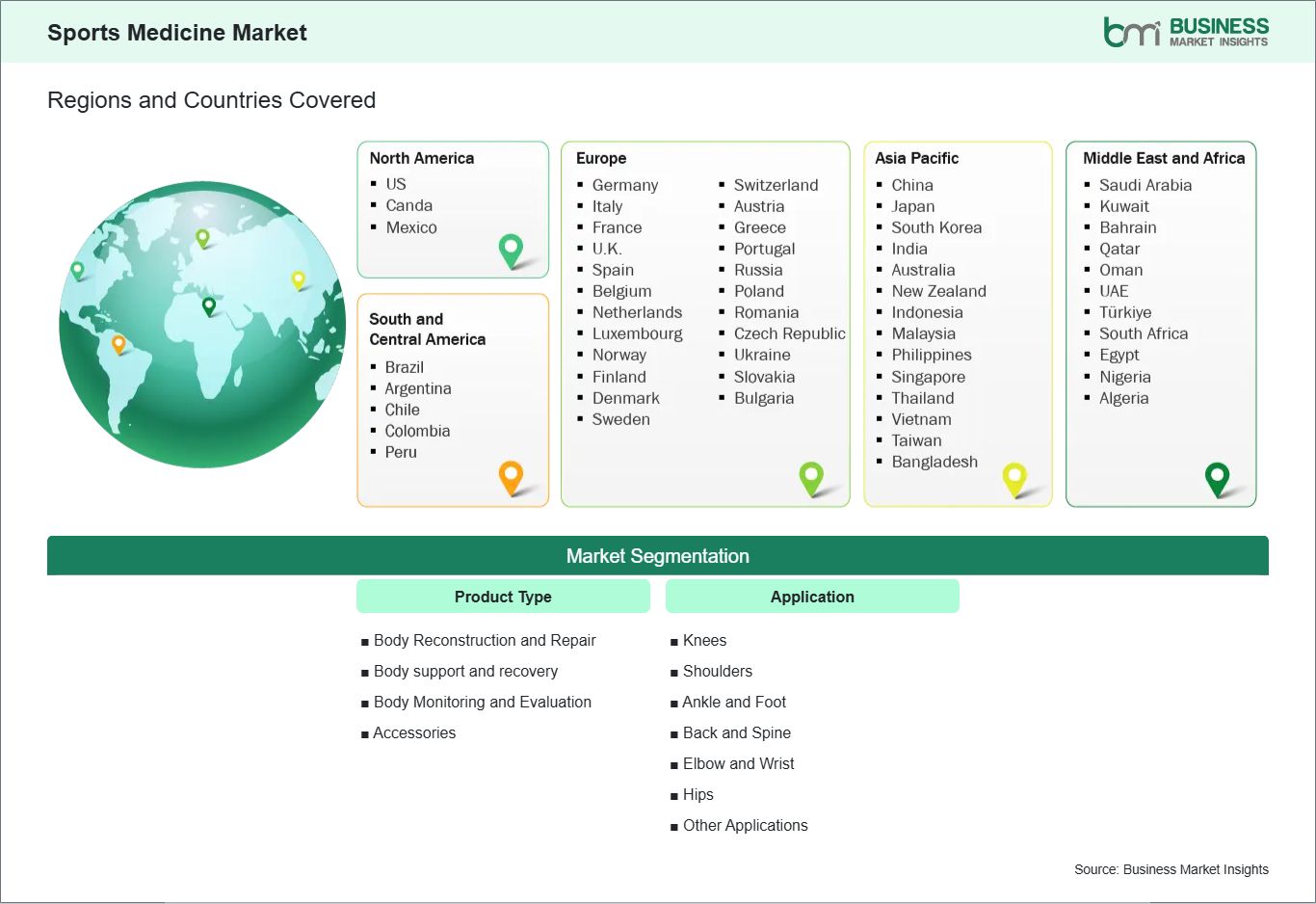
Key segments that contributed to the derivation of the sports medicine market analysis are product type and application.
The primary factor responsible for the growth of the sports medicine market is the substantial global rise in sports-related injuries, a situation that is mainly caused by larger numbers of people engaging in competitive and recreational physical activities. The number of people participating in sports, for instance, from children's leagues through to adult fitness, has increased so much that the occurrence of ligament tears, fractures, sprains, and tendon damage has multiplied, creating a constant need for preventive care, diagnostics, and cutting-edge treatment solutions. For instance, in the US alone, around 3.5 million people are reported to suffer from sports-related injuries every year, thus reinforcing the demand for prompt medical treatment and rehabilitation that never ceases.
At the same time, there is a major cultural transformation towards active lifestyles and fitness consciousness that includes all age groups, with aging populations still being physically active. This very trend is the one that drives the demand for not only surgical procedures like arthroscopy and regenerative therapies such as platelet-rich plasma and stem cell treatments, but also for the availability of technologies that support the whole process, like wearable monitoring devices and AI-assisted rehabilitation tools that speed up recovery and reduce the chances of recurrence.
The sports medicine market has one of its most attractive prospects in the new technology and digital transformation of care delivery. Hospital innovations like wearable monitoring systems, AI-assisted diagnostic devices, and remote rehabilitation platforms are changing the methods of identifying, treating, and preventing injuries. Wearable gadgets are currently giving medical professionals and athletes real-time physical and chemical feedback, which they can use to adjust their training and reduce the chances of getting injured.
Moreover, the industry leaders and researchers are constantly increasing their respective solution sets with ultra-modern innovations, for instance, advanced biomaterials like Temple OrthoBiologics’ TX-33 to be introduced in 2024, which is specifically made for muscle recovery and repair and is a step towards the development of more powerful regenerative therapies.
Telemedicine and virtual rehabilitation programs, which are part of the digital health technologies, are also making it possible for sports medicine clinics to reach out to people living in remote or underdeveloped areas. The combination is of great support to customized treatment, ongoing care, and active patient involvement—revolutionizing the sports medicine field and opening wide fields for innovations and growth.

By product type, the sports medicine market is categorized into body reconstruction and repair, body support and recovery, body monitoring and evaluation, accessories. The body reconstruction and repair segment held the largest share of the market in 2025. The body reconstruction and repair segment leads the sports medicine market because it encompasses critical surgical solutions—such as implants, arthroscopy tools, fracture and ligament repair devices—needed to address complex musculoskeletal injuries common in athletes and active populations. This segment consistently commands the highest market share due to increasing sports-related injuries requiring surgical intervention and growing adoption of advanced, minimally invasive procedures that improve recovery outcomes and long-term functionality.
By application, the sports medicine market is segmented into knees, shoulders, ankle and foot, back and spine, elbow and wrist, hips, other applications. The knees segment dominated the market in 2025. The knee application segment dominates globally because knee injuries—like ACL and meniscus tears and cartilage damage—are among the most frequent in sports and high-impact physical activities. These conditions drive significant demand for both surgical and non-surgical treatments, including arthroscopy, braces, biologics, and rehabilitation solutions. The high incidence of knee injuries and extensive treatment options make this application the largest share contributor in the sports medicine market.
| Report Attribute | Details |
|---|---|
| Market size in 2025 | US$ 8.05 Billion |
| Market Size by 2033 | US$ 16.66 Billion |
| Global CAGR (2026 - 2033) | 9.52% |
| Historical Data | 2022 - 2024 |
| Forecast period | 2026-2033 |
| Segments Covered | By Product Type
|
|
Regions and Countries Covered
| |
| North America | US, Canada, Mexico |
| Europe | Belgium, Austria, Finland, Denmark, Greece, Poland, Romania, Russia, Ukraine, Czech Republic, Slovakia, Bulgaria, Italy, Luxembourg, Germany, Switzerland, France, Netherlands, Norway, Portugal, Spain, Sweden, United Kingdom |
| Asia-Pacific | Australia, China, India, Japan, South Korea, Indonesia, Malaysia, Philippines, Singapore, Thailand, Vietnam, Bangladesh, New Zealand, Taiwan |
| South and Central America | Brazil, Argentina, Peru, Chile, Colombia |
| Middle East and Africa | Bahrain, Kuwait, Oman, Qatar, Saudi Arabia, United Arab Emirates, Turkiye, South Africa, Egypt, Algeria, Nigeria |
| Market leaders and key company profiles |
|
The " Sports Medicine Market Size and Forecast (2022–2033)" report provides a detailed analysis of the market covering below areas:
The geographical scope of the sports medicine market report is divided into five regions: North America, Asia Pacific, Europe, Middle East & Africa, and South & Central America. The sports medicine market in Asia Pacific is expected to grow significantly during the forecast period.
The Asia-Pacific sports medicine market is segmented into China, Japan, South Korea, India, Australia, New Zealand, Indonesia, Malaysia, the Philippines, Singapore, Thailand, Vietnam, Taiwan, Bangladesh, and the Rest of Asia. The Asia-Pacific sports medicine market is experiencing robust growth, due to the increasing engagement in sports and physical activities in large countries like China, India, Japan, and Australia, which has resulted in a substantial rise in the occurrence of sports-related injuries from ligament tears to fractures, thus increasing the demand for preventive as well as therapeutic sports medicine solutions. These changes and development are being driven by the awareness of fitness and the active lifestyles of the young and the middle-aged. Besides, the government policies and public funding through the development of sports and healthcare sectors are removing the barriers to physical activity and access to sports medicine services. National campaigns on exercise and injury prevention, accompanied by grants for sports facilities and rehab centers, are bringing orthopedic, diagnostic, and rehabilitative care ever closer to the people.
Medical technology advancements—like less invasive surgical instruments, tissue regeneration therapies, and online learning rehabilitation devices—are increasing the effectiveness of the treatment and the satisfaction of the patients, thus making the sports medicine services more attractive and accessible. Also, the continued rise of the middle class and the increase in disposable incomes in the region are creating conditions under which more individuals are able to afford the specialized dedication to sports injury treatment, thus further fueling the market growth across the Asia-Pacific region.

The sports medicine market is evaluated by gathering qualitative and quantitative data post primary and secondary research, which includes important corporate publications, association data, and databases. A few of the key developments in the sports medicine market are:
The Sports Medicine Market is valued at US$ 8.05 Billion in 2025, it is projected to reach US$ 16.66 Billion by 2033.
As per our report Sports Medicine Market, the market size is valued at US$ 8.05 Billion in 2025, projecting it to reach US$ 16.66 Billion by 2033. This translates to a CAGR of approximately 9.52% during the forecast period.
The Sports Medicine Market report typically cover these key segments-
The historic period, base year, and forecast period can vary slightly depending on the specific market research report. However, for the Sports Medicine Market report:
The Sports Medicine Market is populated by several key players, each contributing to its growth and innovation. Some of the major players include:
The Sports Medicine Market report is valuable for diverse stakeholders, including:
Essentially, anyone involved in or considering involvement in the Sports Medicine Market value chain can benefit from the information contained in a comprehensive market report.
Please tell us your area of interest
(Market Segments/ Regions and Countries/ Companies)