Analysis - Application (Ethylene Dichloride/Polyvinylchloride Production, Chloromethanes, Isocyanates and Oxygenates, Solvents, and Others) and End-Use Industry (Water Treatment, Chemicals, Pulp and Paper, Plastics, Pharmaceuticals, and Others)
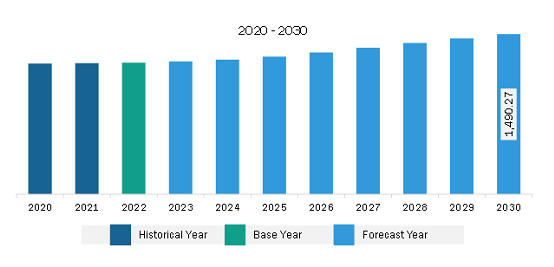
The South & Central America chlorine market is expected to grow from US$ 1,235.60 million in 2023 to US$ 1,490.27 million by 2030. It is estimated to grow at a CAGR of 2.7% from 2023 to 2030.
Flourishment of PVC Manufacturing Industry Fuel South & Central America Chlorine Market
Polyvinyl chloride (PVC) is one of the most widely used synthetic polymers globally and finds applications in various sectors, including construction, automotive, electrical, packaging, and healthcare. The production of PVC involves the polymerization of vinyl chloride monomers, and chlorine is a key raw material in this chemical process. The construction and infrastructure development activities are increasing substantially. PVC pipes, fittings, and profiles are extensively used in construction due to their durability, cost-effectiveness, and versatility. As urbanization continues to accelerate in many parts of the world, the demand for PVC-based construction materials rises in tandem, leading to a higher need for chlorine to meet the polymerization requirements. According to the European Council of Vinyl Manufacturers, PVC is the third-most-produced plastic in the world, after polyethylene and polypropylene. Approximately 70% of all PVC produced in Europe is used for flooring, windows, pipes, roofing membranes, and other building products. PVC's lightweight nature, ease of processing, and cost-efficiency have made it a preferred choice for manufacturing automotive parts such as dashboards, door panels, and wiring covers. Therefore, the growth of the automotive sector propels the demand for PVC, which bolsters the requirement for chlorine as a raw material in PVC production.
PVC films and sheets are widely used in packaging applications, particularly for food and pharmaceutical products. With the increasing demand for packaging goods and the growing focus on hygiene and product safety, the demand for PVC-based packaging materials has soared, further contributing to the chlorine demand from the PVC industry. In the electrical sector, PVC cables and wires are extensively used for electrical insulation due to their excellent electrical properties and fire-retardant characteristics. As the demand for electricity and electrical infrastructure continues to rise, the need for PVC-based electrical materials propels, consequently bolstering the chlorine demand. Thus, since PVC remains a preferred material in construction, automotive, packaging, and electrical applications, the need for chlorine in the polymerization process remains strong.
South & Central America Chlorine Market Overview
The South & Central America chlorine market is segmented into Brazil, Argentina, and the Rest of South & Central America. South & Central America is one of the largest pulps and paper producers due to the availability of raw materials. Chlorine is used in the pulp & paper industry for bleaching processes to improve paper quality. According to the Indústria Brasileira de Árvores (Ibá) and Food and Agriculture Organization (FAO), Brazil accounted for 11.3%, and Chile held 2.8% of global pulp production in 2020. Thus, the large quantity of pulp and paper production in the region is anticipated to drive the chlorine demand.
South & Central America Chlorine Market Revenue and Forecast to 2030 (US$ Million)
South & Central America Chlorine Market Segmentation
The South & Central America chlorine market is segmented into application, end-use industry, and country.
Based on application, the South & Central America chlorine market is segmented into ethylene dichloride/polyvinylchloride production, chloromethanes, isocyanates and oxygenates, solvents, and others. The ethylene dichloride/polyvinylchloride production segment held the largest share of the South & Central America chlorine market in 2023.
Based on end-use industry, the South & Central America chlorine market is segmented into water treatment, chemicals, pulp and paper, plastics, pharmaceuticals, and others. The plastics segment held the largest share of the South & Central America chlorine market in 2023.
Based on country, the South & Central America chlorine market has been categorized into the Brazil, Argentina, and the Rest of South & Central America. The Rest of South & Central America dominated the share of the South & Central America chlorine market in 2023.
Aditya Birla Chemicals India Ltd; BASF SE; Ercros SA; Hanwha Solutions Corp; INEOS Group Holdings SA; Occidental Petroleum Corp; Olin Corp; Tata Chemicals Ltd; and Sumitomo Chemical Co Ltd are some of the leading companies operating in the South America chlorine market.
South & Central America Chlorine Market Strategic Insights
Get more information on this report
South & Central America Chlorine Market Segmentation Analysis
South & Central America Chlorine Market Report Highlights
South & Central America Chlorine Report Scope
Report Attribute
Details
Market size in 2023
US$ 1,235.60 Million
Market Size by 2030
US$ 1,490.27 Million
CAGR (2023 - 2030)
2.7%
Historical Data
2021-2022
Forecast period
2024-2030
Segments Covered
By Application
Ethylene Dichloride/Polyvinylchloride Production
Chloromethanes
Isocyanates and Oxygenates
Solvents
By End-Use Industry
Water Treatment
Chemicals
Pulp and Paper
Plastics
Pharmaceuticals
Regions and Countries Covered
South and Central America
Brazil, Argentina, Rest of South and Central America
Market leaders and key company profiles
Aditya Birla Chemicals India Ltd
BASF SE
Ercros SA
Hanwha Solutions Corp
INEOS Group Holdings SA
Occidental Petroleum Corp
Olin Corp
Tata Chemicals Ltd
Sumitomo Chemical Co Ltd
Get more information on this report
South & Central America Chlorine Market Country and Regional Insights
Get more information on this report
Identical Market Reports with other Region/Countries
The List of Companies - South & Central America Chlorine Market
Aditya Birla Chemicals India LtdBASF SEErcros SAHanwha Solutions CorpINEOS Group Holdings SAOccidental Petroleum CorpOlin CorpTata Chemicals LtdSumitomo Chemical Co Ltd
Frequently Asked Questions
How big is the South & Central America Chlorine Market?
The South & Central America Chlorine Market is valued at US$ 1,235.60 Million in 2023, it is projected to reach US$ 1,490.27 Million by 2030.
What is the CAGR for South & Central America Chlorine Market by (2023 - 2030)?
As per our report South & Central America Chlorine Market, the market size is valued at US$ 1,235.60 Million in 2023, projecting it to reach US$ 1,490.27 Million by 2030. This translates to a CAGR of approximately 2.7% during the forecast period.
What segments are covered in this report?
The South & Central America Chlorine Market report typically cover these key segments-
Application (Ethylene Dichloride/Polyvinylchloride Production, Chloromethanes, Isocyanates and Oxygenates, Solvents)
End-Use Industry (Water Treatment, Chemicals, Pulp and Paper, Plastics, Pharmaceuticals)
What is the historic period, base year, and forecast period taken for South & Central America Chlorine Market?
The historic period, base year, and forecast period can vary slightly depending on the specific market research report. However, for the South & Central America Chlorine Market report:
Historic Period : 2021-2022
Base Year : 2023
Forecast Period : 2024-2030
Who are the major players in South & Central America Chlorine Market?
The South & Central America Chlorine Market is populated by several key players, each contributing to its growth and innovation. Some of the major players include:
Aditya Birla Chemicals India Ltd
BASF SE
Ercros SA
Hanwha Solutions Corp
INEOS Group Holdings SA
Occidental Petroleum Corp
Olin Corp
Tata Chemicals Ltd
Sumitomo Chemical Co Ltd
Who should buy this report?
The South & Central America Chlorine Market report is valuable for diverse stakeholders, including:
Investors: Provides insights for investment decisions pertaining to market growth, companies, or industry insights. Helps assess market attractiveness and potential returns.
Industry Players: Offers competitive intelligence, market sizing, and trend analysis to inform strategic planning, product development, and sales strategies.
Suppliers and Manufacturers: Helps understand market demand for components, materials, and services related to concerned industry.
Researchers and Consultants: Provides data and analysis for academic research, consulting projects, and market studies.
Financial Institutions: Helps assess risks and opportunities associated with financing or investing in the concerned market.
Essentially, anyone involved in or considering involvement in the South & Central America Chlorine Market value chain can benefit from the information contained in a comprehensive market report.





 Get Free Sample For South & Central America Chlorine Market