Analysis By Type (On-Board Headsets, and Ground Support Headsets); Noise Cancellation Type (Active, and Passive), End Use (Commercial Aircraft, Military Aircraft, and General Aviation).
No. of Pages:96
Report Code:
TIPRE00027844
Category:
Aerospace and Defense
South and Central America Aviation Headsets Market
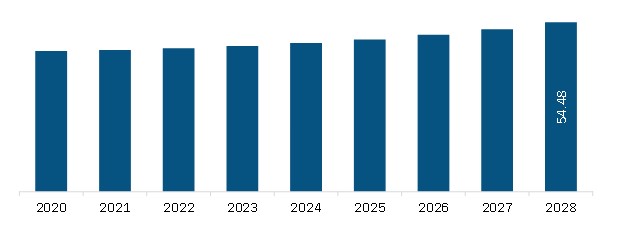
South and Central America aviation headsets in South and Central America is expected to grow from US$ 45.63 million in 2021 to US$ 54.48 million by 2028; it is estimated to grow at a CAGR of 2.6% from 2021 to 2028.
Technological advancements such as the implementation of different types of noise cancellation technology such as active noise cancellations that allow the user to block all the other external noises. Also, passive noise cancellation technology allows the user to access clear voice through the headsets while blocking the external voice through countered sound frequencies. To combat the harmful high-frequency noise that cannot be controlled by other means, ear protection must be used. Plus, without ear protection, excessive airport noise can also reduce productivity and interfere with communication. The aviation industry has made many advancements in headset technology to ensure the safety and wellbeing of ground crew by creating wireless Bluetooth headsets that not only protect the workers’ ears from loud noises but allow workers to effectively communicate with each other on the ramp. Moreover, the adoption of new technologies such as HMDs with helmets for military applications have also witnessed technological advancements such as inclusion of headsets in the helmets for easy military operations.
Brazil has the highest number of COVID-19 cases, followed by Peru, Chile, Colombia, and Ecuador, among others. South America's government has taken an array of actions to protect their citizens and contain COVID-19's spread. Brazil is the largest spender in the aerospace industry and is the only modern aircraft manufacturing country in the region. Owing to this, the demand for components and aircraft related systems and technologies is at an all-time high in the country. In addition, the majority of the components are imported from the US, China, and South and Central America an countries. The slowdown in aviation headset production in the country has impaired the supply chain in Brazil. This has weakened the demand for aircraft components, such as engines, airframe, avionics, and other components. Thus, the outbreak of COVID-19 has had a harsh impact on the South American aviation headsets market, especially in Brazil.
With the new features and technologies, vendors can attract new customers and expand their footprints in emerging markets. This factor is likely to drive the South and Central America aviation headsets. The South and Central America aviation headsets is expected to grow at a good CAGR during the forecast period.
South and Central America Aviation Headsets Market Revenue and Forecast to 2028(US$ Million)
South and Central America Aviation Headsets Market Segmentation
By Type
On-Board Headsets
Ground Support Headsets
By Noise Cancellation Type
Active
Passive
By End User
Commercial Aircraft
Military Aircraft
General Aviation
By Country
South and Central America
Brazil
Argentina
Rest of South and Central America
Companies Mentioned -
Lightspeed Aviation, Inc.
Sennheiser electronic GmbH & Co. KG
Faro Aviation
David Clark Company
Bose Corporation
Plantronics, Inc.
Robert Bosch GmbH
GBHHeadsets
South and Central America Aviation Headsets Market Strategic Insights
Get more information on this report
South and Central America Aviation Headsets Market Segmentation Analysis
South and Central America Aviation Headsets Market Report Highlights
South and Central America Aviation Headsets Report Scope
Report Attribute
Details
Market size in 2021
US$ 45.63 Million
Market Size by 2028
US$ 54.48 Million
CAGR (2021 - 2028)
2.6%
Historical Data
2019-2020
Forecast period
2022-2028
Segments Covered
By Type
On-Board Headsets
Ground Support Headsets
By Noise Cancellation Type
Active
Passive
By End Use
Commercial Aircraft
Military Aircraft
General Aviation
Regions and Countries Covered
South and Central America
Brazil, Argentina, Rest of South and Central America
Market leaders and key company profiles
Lightspeed Aviation, Inc.
Sennheiser electronic GmbH & Co. KG
Faro Aviation
David Clark Company
Bose Corporation
Plantronics, Inc.
Robert Bosch GmbH
GBH Headsets
Get more information on this report
South and Central America Aviation Headsets Market Country and Regional Insights
Get more information on this report
Identical Market Reports with other Region/Countries
The List of Companies - South and Central America Aviation Headsets Market
Lightspeed Aviation, Inc.Sennheiser electronic GmbH & Co. KGFaro AviationDavid Clark CompanyBose Corporation Plantronics, Inc.Robert Bosch GmbHGBH Headsets
Frequently Asked Questions
How big is the South and Central America Aviation Headsets Market?
The South and Central America Aviation Headsets Market is valued at US$ 45.63 Million in 2021, it is projected to reach US$ 54.48 Million by 2028.
What is the CAGR for South and Central America Aviation Headsets Market by (2021 - 2028)?
As per our report South and Central America Aviation Headsets Market, the market size is valued at US$ 45.63 Million in 2021, projecting it to reach US$ 54.48 Million by 2028. This translates to a CAGR of approximately 2.6% during the forecast period.
What segments are covered in this report?
The South and Central America Aviation Headsets Market report typically cover these key segments-
Type (On-Board Headsets, Ground Support Headsets)
Noise Cancellation Type (Active, Passive)
End Use (Commercial Aircraft, Military Aircraft, General Aviation)
What is the historic period, base year, and forecast period taken for South and Central America Aviation Headsets Market?
The historic period, base year, and forecast period can vary slightly depending on the specific market research report. However, for the South and Central America Aviation Headsets Market report:
Historic Period : 2019-2020
Base Year : 2021
Forecast Period : 2022-2028
Who are the major players in South and Central America Aviation Headsets Market?
The South and Central America Aviation Headsets Market is populated by several key players, each contributing to its growth and innovation. Some of the major players include:
Lightspeed Aviation, Inc.
Sennheiser electronic GmbH & Co. KG
Faro Aviation
David Clark Company
Bose Corporation
Plantronics, Inc.
Robert Bosch GmbH
GBH Headsets
Who should buy this report?
The South and Central America Aviation Headsets Market report is valuable for diverse stakeholders, including:
Investors: Provides insights for investment decisions pertaining to market growth, companies, or industry insights. Helps assess market attractiveness and potential returns.
Industry Players: Offers competitive intelligence, market sizing, and trend analysis to inform strategic planning, product development, and sales strategies.
Suppliers and Manufacturers: Helps understand market demand for components, materials, and services related to concerned industry.
Researchers and Consultants: Provides data and analysis for academic research, consulting projects, and market studies.
Financial Institutions: Helps assess risks and opportunities associated with financing or investing in the concerned market.
Essentially, anyone involved in or considering involvement in the South and Central America Aviation Headsets Market value chain can benefit from the information contained in a comprehensive market report.




 Get Free Sample For South and Central America Aviation Headsets Market