Market Summary
Executive Summary and Global Market Analysis
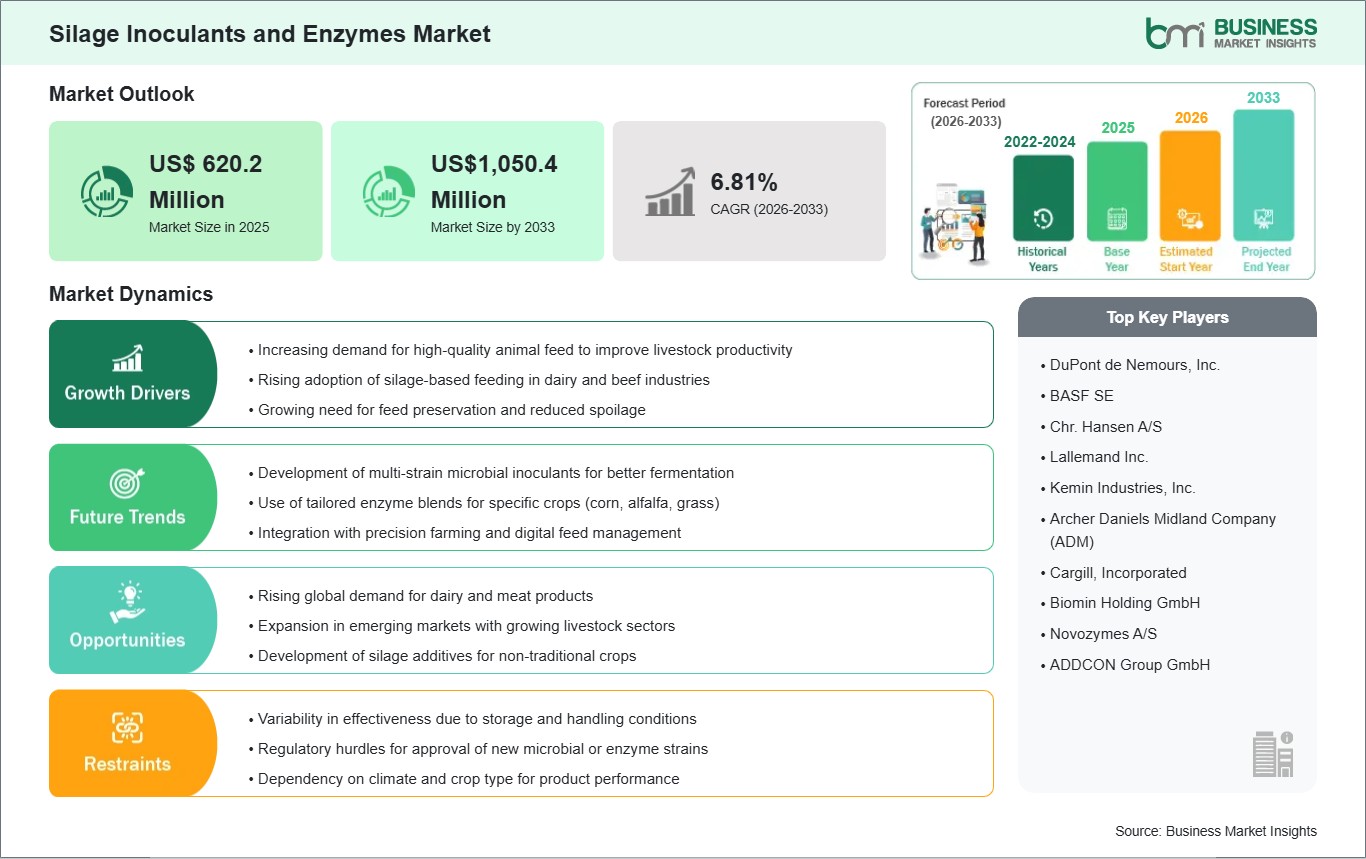
The global silage inoculants and enzymes market is a vital component of modern livestock and forage management, focusing on enhancing the nutritional quality, preservation, and digestibility of silage used in cattle, dairy, and other ruminant farming. Silage inoculants, which include beneficial bacteria such as lactic acid bacteria, help in efficient fermentation, reduce spoilage, and improve overall feed stability, while enzymes support the breakdown of complex plant fibers to increase nutrient availability. The market is primarily driven by the growing demand for high-quality animal feed to support rising global meat and dairy consumption, as well as the increasing adoption of sustainable and precision farming practices.
Advanced farming techniques, coupled with a push for better animal productivity and reduced environmental waste, have further amplified the need for innovative inoculants and enzyme solutions. However, market growth faces challenges such as sensitivity of microbial formulations to storage and application conditions, which can affect performance. Additionally, the cost associated with premium inoculant and enzyme products may limit adoption among small-scale or cost-conscious farmers, particularly in developing regions, where traditional silage preparation methods are still prevalent.
Segment Analysis
Silage Inoculants and Enzymes Market Segmentation
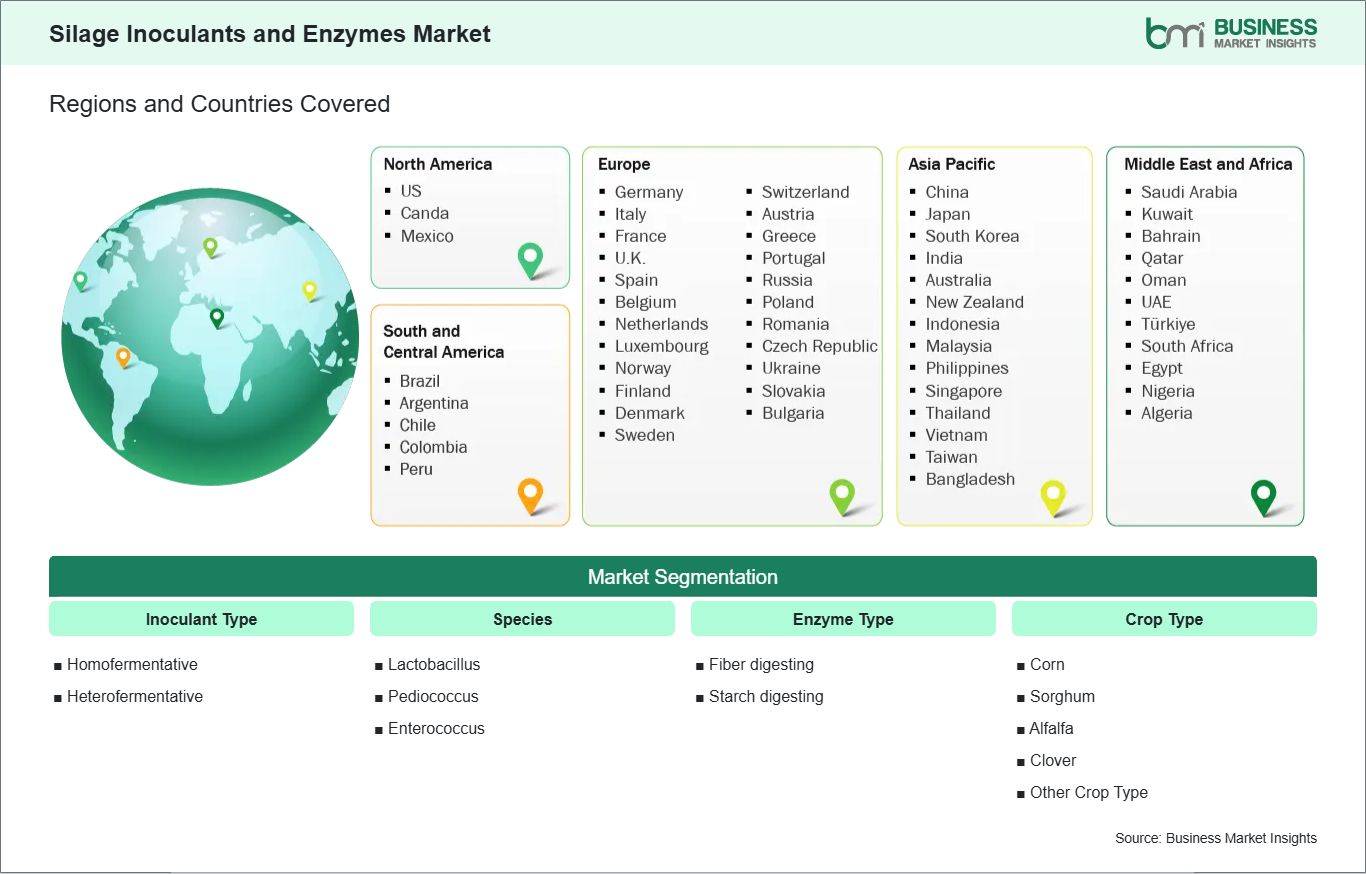
Key segments that contributed to the derivation of the silage inoculants and enzymes market analysis are inoculant type, species, enzyme, and crop type.
- By inoculant type, the silage inoculants and enzymes market is segmented into homofermentative and heterofermentative. The homofermentative polyurethane segment dominated the market in 2025.
- By species, the silage inoculants and enzymes market is segmented into lactobacillus, pediococcus, and enterococcus. The lactobacillus segment dominated the market in 2025.
- By enzyme type, the silage inoculants and enzymes market is segmented into fiber digesting and starch digesting. The fiber digesting segment dominated the market in 2025.
- In terms of crop type, the silage inoculants and enzymes market is segmented into corn, sorghum, alfalfa, clover, and other crop type. The corn segment dominated the market in 2025.
Market Forces
Silage Inoculants and Enzymes Market Drivers and Opportunities
Growing Need for Feed Preservation and Reduced Spoilage
The Western Europe silage inoculants and enzymes market is being driven by the increased emphasis on preserving animal feed and reducing loss due to spoilage. Germany, France, and the Netherlands have a highly developed dairy and animal husbandry industry, where maintaining the quality of silage is of prime importance to ensure productivity. Silage inoculants with lactic acid bacteria and enzymes help to speed up the fermentation process, maintain a consistent pH level, and prevent the growth of unwanted microorganisms, thus ensuring that the quality of animal feed is not compromised.
Farmers and agribusinesses are also responding to increasing operational costs and regulatory requirements around feed safety. Silage preservation is a key factor in reducing waste and increasing overall farm productivity, especially in areas where land and feed are scarce. The use of enzyme-based products is also increasing as a supplementary method to inoculants for increasing the digestibility of silage and overall animal feed conversion. Therefore, these methods are becoming an essential part of modern Western European livestock production.
Moreover, developments in product formulations and application methods are also driving the inoculants and enzyme market. Custom formulations of inoculants and enzyme-based products are being developed to meet the requirements of different crops and conditions. The application of these products in combination with automatic silage application systems in Europe is also increasing overall productivity and ensuring the application of these products in an even and consistent manner.
Rising Global Demand for Dairy and Meat Products
The increased demand for dairy and meat products across the globe is another key driver for the Western Europe silage inoculants and enzymes market. Europe is a leading manufacturer of dairy and beef products, and to meet the set production targets, it is imperative to maintain quality feed for cattle. Silage inoculants form a critical part of ensuring that cattle are fed quality feed, thus impacting dairy and meat quality.
Farmers in Western Europe are increasingly turning to inoculants and enzyme application for better feed efficiency and productivity. In countries such as the Netherlands and Germany, which have high dairy farming intensity, silage quality is a major factor in lactation performance and the prevention of gastrointestinal problems in dairy cattle. Cattle and pig producers also rely on high-quality silages for animal performance, growth rate, and feed conversion efficiency. Therefore, silage inoculants are a key factor in modern animal agriculture.
The increasing focus on sustainability and environmental protection is also a major driver for the silage inoculants and enzyme market in Western Europe. The EU is committed to sustainable agriculture and reducing greenhouse gas emissions from animal agriculture. The focus on research and innovation is also a key factor for the silage inoculants and enzyme market in Western Europe. Farmers are investing in research and development of better inoculant and enzyme products for European crops and farming systems. Therefore, the silage inoculants and enzyme market is a key factor in Western Europe’s animal agriculture and dairy production systems.
Size and Share Analysis
Silage Inoculants and Enzymes Market Size and Share Analysis
The global Silage inoculants and enzymes market is experiencing steady growth, with market size and share analysis reflecting evolving treatment preferences and competitive dynamics among key players. The report evaluates important subsegments categorized within inoculant type, species, enzyme, and crop type highlighting their respective contributions to overall market performance.
By inoculant type, the homofermentative subsegment dominated the market in 2025 because they primarily produce lactic acid, which rapidly lowers silage pH, improving preservation and reducing spoilage. This makes them particularly effective for high‑moisture forages like corn and sorghum, meeting the key priority of many livestock producers — consistent fermentation quality and feed stability.
By species, the lactobacillus segment subsegment dominated the market in 2025 due to their robust acid production, adaptability across crops, and proven reliability in enhancing silage fermentation. They efficiently outcompete undesirable microbes, improving nutrient retention and feed digestibility, which keeps them preferred over other LAB genera for the majority of silage programs.
By enzyme type, the fiber digesting subsegment dominated the market in 2025 because improving cell wall breakdown directly enhances silage digestibility and animal performance, especially in ruminants. As producers seek higher feed efficiency and greater energy extraction from forages like corn stover, alfalfa, and clover, fiber‑digesting enzymes generate the greatest incremental value compared with starch‑only enzyme blends.
By crop type, the furniture subsegment dominated the market in 2025 due to its high yield, energy density, and broad adoption in dairy and beef rations. As a result, corn receives the largest application of both inoculants and enzymes, driving the greatest overall volume in this market segment.
Report Coverage
Silage Inoculants and Enzymes Market Report Coverage and Deliverables
The "Silage Inoculants and Enzymes Market Size and Forecast (2022 - 2033)" report provides a detailed analysis of the market covering below areas:
- Silage inoculants and enzymes market size and forecast at the regional and country levels for segments covered under the scope
- Silage inoculants and enzymes market trends, as well as drivers, restraints, and opportunities
- Silage inoculants and enzymes market analysis covering key trends, regional framework, major players, regulations, and recent developments
- Industry landscape and competition analysis covering market concentration, heat map analysis, prominent players, and recent developments for the silage inoculants and enzymes market.
- Detailed company profiles, including SWOT analysis
Geographic Insights
Silage Inoculants and Enzymes Market Geographic Insights
The geographical scope of the silage inoculants and enzymes market report is divided into: North America, Asia Pacific, Europe, Middle East & Africa, and South & Central America. North America held the largest share in 2025.
North America dominates the silage inoculants and enzymes market, owing to its well-established livestock and dairy industries and widespread adoption of advanced feed management technologies. The region’s livestock farmers increasingly rely on inoculants and enzyme solutions to optimize feed efficiency, enhance milk and meat production, and ensure consistent silage quality throughout the year. North American markets are characterized by high awareness of precision farming techniques, including silage moisture management, bacterial inoculant optimization, and fiber-degrading enzyme applications, which collectively improve nutritional yield.
Additionally, the presence of leading global feed additive companies and research institutions fosters continuous innovation in strain development, enzyme blends, and multi-functional inoculant products tailored for specific forage types. Regulatory frameworks in the region also encourage safe and effective use of microbial and enzymatic products, promoting quality assurance and adoption of technologically advanced solutions.
Despite its strong position, North America faces challenges related to the high cost of advanced inoculants and enzymes, as well as the need for specialized knowledge to ensure optimal application. These factors push manufacturers and farmers to focus on training, product customization, and research-driven innovations to maintain market leadership and maximize feed efficiency.
Industry Activity
Recent Developments
The silage inoculants and enzymes market is evaluated by gathering qualitative and quantitative data post primary and secondary research, which includes important corporate publications, association data, and databases. A few of the key developments in the Silage inoculants and enzymes market are:
- In March 2025, Lallemand Animal Nutrition reported ground‑breaking trial results for its Magniva Platinum grass silage inoculant, demonstrating improved fibre digestibility and enhanced milk yields, underscoring product innovation within the European silage inoculants space.
- In March 2024, EW Nutrition announced that it had acquired the BIOMIN BIOSTABIL silage inoculant product line from dsm‑firmenich, giving the company ownership of an established line of silage inoculants and expanding its product offerings in Europe and other global markets.
- In January 2024, Kemin Industries announced the launch of “SIL‑ALL 4 × 4,” a new multi‑strain bacterial silage inoculant product featuring combined homo‑ and hetero‑fermentative bacteria strains for broader silage applications, with availability planned across European distributor networks serving Central and Eastern Europe.
Trust & Transparency
Research Methodology
The market analysis combines proprietary research with secondary data from government agencies, company disclosures, regulatory filings, industry databases and expert interviews. Market estimates are validated through data triangulation, cross-market benchmarking and analyst
review.
View Full Research Methodology
Key Sources Referred:
EU REACH Regulation European Chemicals Agency (ECHA) European Food Safety Authority (EFSA) Food and Drug Administration (FDA) Company Websites Company Annual Reports Company Investor Presentations