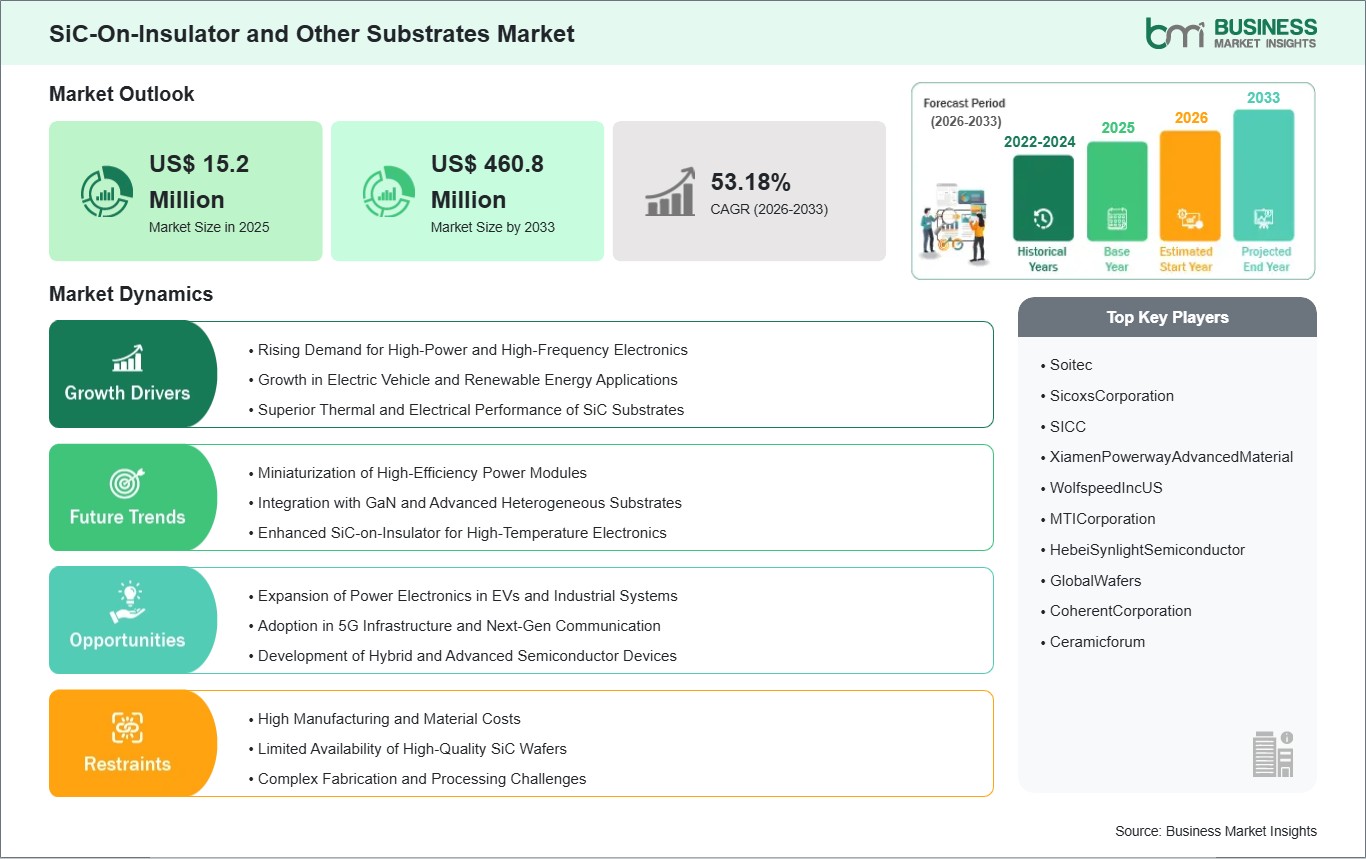
Rising Demand for High-Power and High-Frequency Electronics
As electronics continue to advance, there is growing interest in new substrate technologies like silicon carbide-on-insulator (SiC-OI) and other specialized materials. Today’s devices run at higher power and switch faster, which puts more pressure on thermal management and electrical efficiency. Standard silicon substrates have some limitations, but SiC-OI provides higher breakdown voltage, faster switching, and better heat management. Because of these benefits, SiC-OI works well in high-frequency uses such as RF amplifiers, telecom systems, and new power conversion equipment.
As telecommunications networks are upgraded around the world, there is a growing need for substrates that can support high frequencies. In places like North America and East Asia, new mobile networks and early 6G projects need components that can manage more data and lower delays. SiC‑OI and similar substrates offer the stability and thermal performance needed to keep signals clear, even when conditions are tough. This makes advanced substrates essential for today’s communication technologies.
Outside of telecom, industries like aerospace and defense are also driving growth in the market for high-power, high-frequency substrates. These materials are used in radar, electronic warfare systems, and high-speed signal processors, all of which need to perform reliably in challenging environments. In the United States and European Union, ongoing investment in defense technology is leading manufacturers to choose SiC-based substrates to meet high standards for reliability and efficiency.
Expansion of Power Electronics in EVs and Industrial Systems
The growth of electric vehicles (EVs) is intensifying the need for efficient, durable power electronics, creating new opportunities for advanced substrates. Inverters, onboard chargers, and power conversion modules all require materials capable of managing high voltages and temperatures while ensuring efficient switching. SiC‑OI and other high-performance substrates are increasingly being used to improve energy efficiency, reduce component size and weight, and extend battery life. In rapidly growing EV markets such as China and the European Union, automakers are prioritizing these materials to enhance vehicle performance and reliability.
Industrial power applications are also fueling substrate demand. Renewable energy inverters, industrial motor drives, and smart grid components all operate under high-power conditions, where energy losses must be minimized and thermal management is critical. Regions investing heavily in renewable infrastructure, including Scandinavia and Australia, are seeing wider adoption of SiC‑based and other advanced substrates in these applications. This trend reflects a broader global shift toward electrification and energy-efficient industrial systems, extending substrate demand beyond consumer electronics.
Collaboration between substrate manufacturers and system developers is helping tailor solutions for regional needs. For example, in India, modernizing industrial facilities with energy-efficient motor drives has highlighted the value of advanced substrates in lowering operational costs and improving equipment lifespan. Globally, such partnerships are enabling optimized production and region-specific solutions that meet local performance and regulatory requirements. As the electrification of transportation and industrial systems continues, SiC‑OI and other high-performance substrates are expected to remain a key component in efficient, reliable power electronics.