Market Summary
Executive Summary and Global Market Analysis
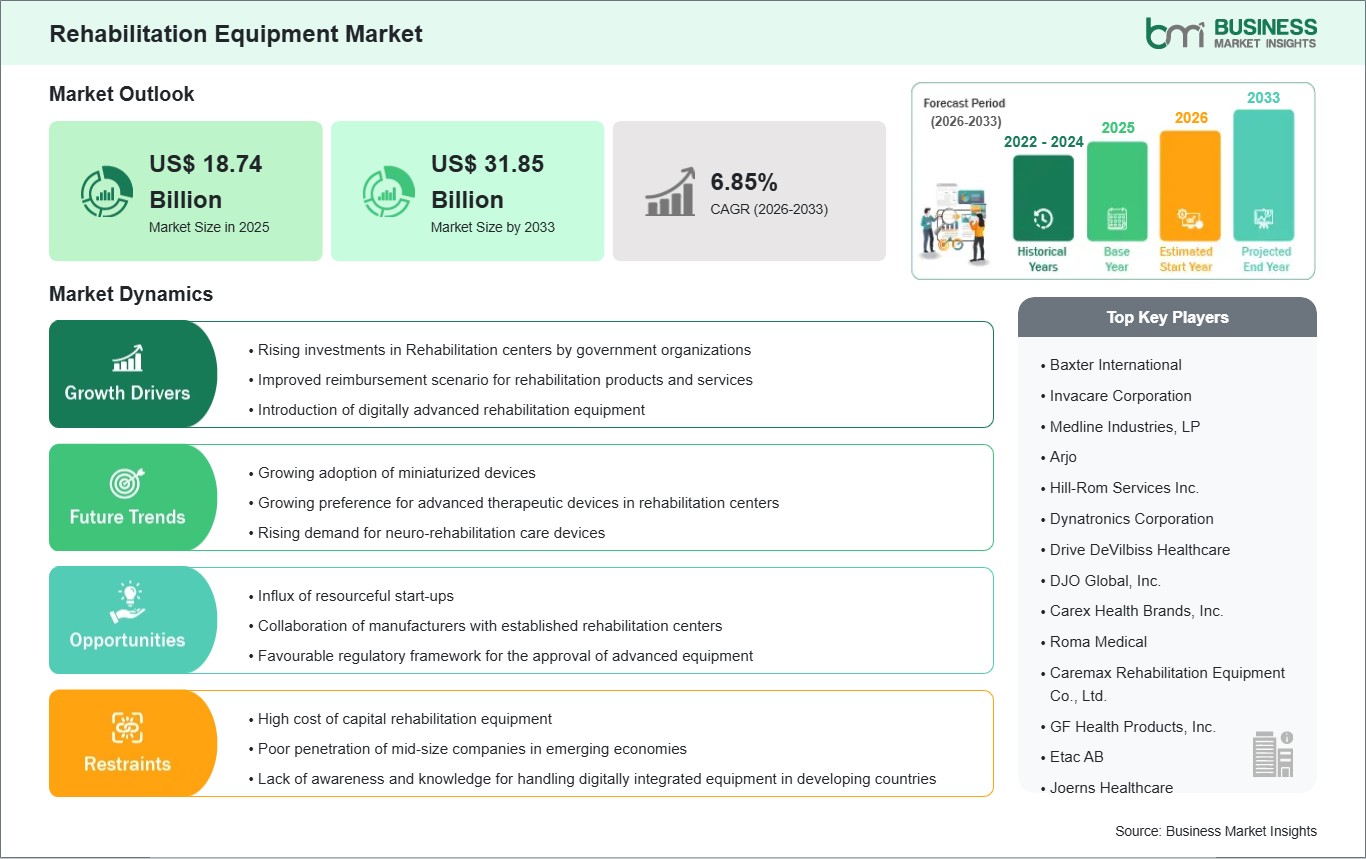
The rehabilitation equipment market across the globe keeps growing steadily, and this growth is backed by the higher occurrence of chronic diseases, the increase in the number of disabled people, and also the fast-growing elderly population all over the world. Rehabilitation equipment consisting of mobility aids, exercise therapy devices, body support systems, and daily living assistance tools, is necessary in restoring functional ability, improving independence, and increasing the quality of life of patients in hospitals, rehabilitation centers, and homecare settings. The market is also supported by the use of technology in the form of robotic-assisted therapy, sensor-based monitoring systems, and digitally integrated rehabilitation solutions, which besides improving treatment accuracy, also increase the involvement of the patients.
The North American region leads the world market as a result of its well-established healthcare system, strong reimbursement conditions, and early adoption of novel technologies, while Europe comes next with stable demand that is maintained by good healthcare policies and an aging population. The Asia-Pacific region is likely to grow the most in the near future due to the improvement of healthcare facilities, the increasing acceptance of rehabilitation therapies, and the rising occurrence of stroke and orthopedic disorders. Although the high price of equipment and low reimbursement in underdeveloped areas are some of the obstacles, the demand for portable, home-based, and inexpensive rehabilitation solutions is generating a lot of market opportunities.
Segment Analysis
Rehabilitation Equipment Market Segmentation
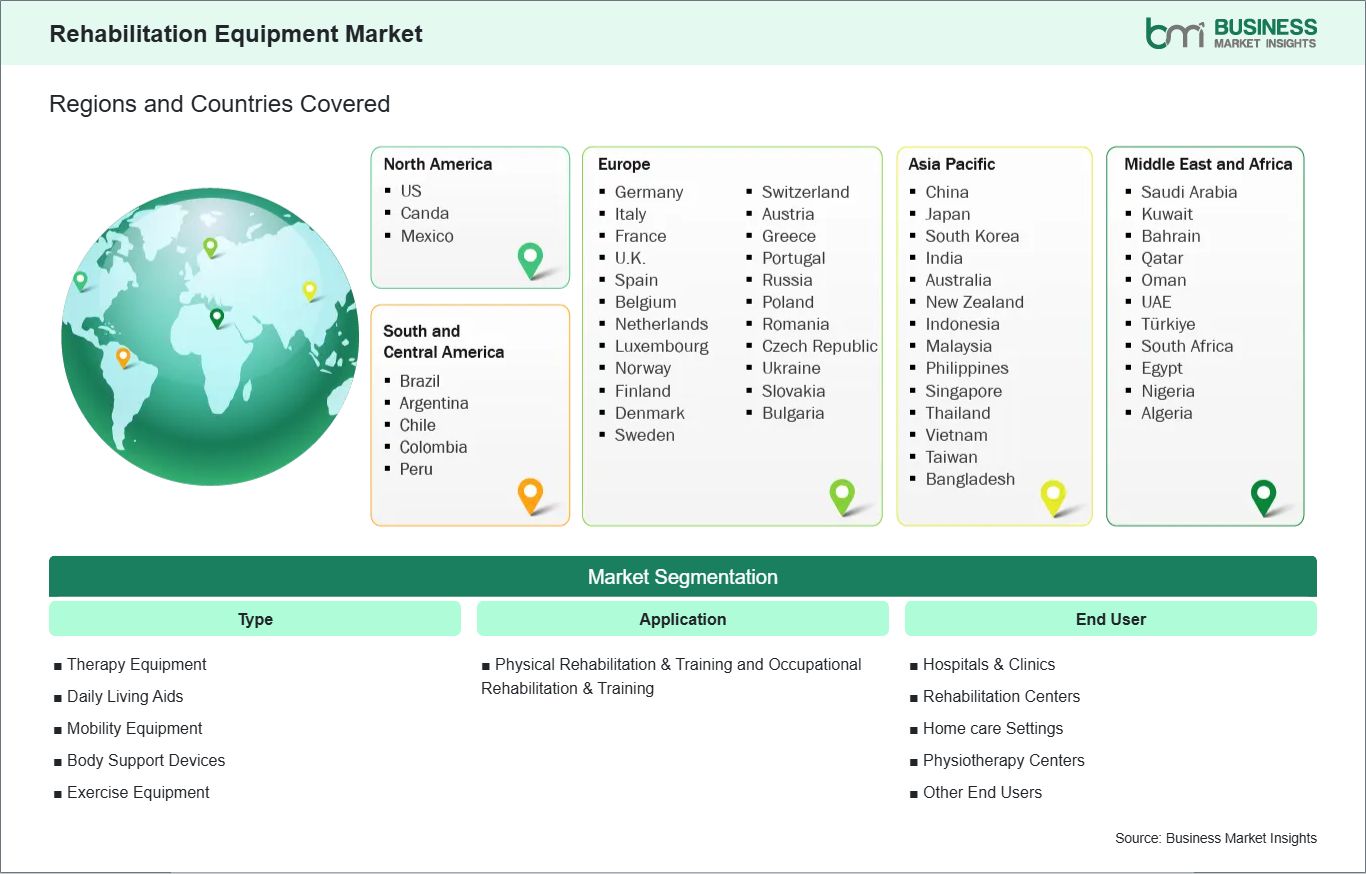
Key segments that contributed to the derivation of the Rehabilitation Equipment market analysis are type, application, and end user.
- By type, the rehabilitation equipment market is segmented into therapy equipment, daily living aids, mobility equipment, body support devices, and exercise equipment. The rehabilitation equipment segment dominated the market in 2025.
- By application, the market is bifurcated into physical rehabilitation & training and occupational rehabilitation & training. The occupational rehabilitation & training segment held the largest share of the market in 2025.
- By end user, the market is segmented into hospitals & clinics, rehabilitation centers, home care settings, physiotherapy centers, and other end users. The hospitals & clinics segment held the largest share of the market in 2025.
Market Forces
Rehabilitation Equipment Market Drivers and Opportunities
Rising Prevalence of Disabilities and Chronic Conditions
The rehabilitation equipment market is expanding due to the rapidly increasing growing prevalence of disability and related chronic health conditions globally, which increases demand for mobility aids and therapeutic devices. According to the World Health Organization, an estimated 1.3 billion people (16% of the global population) experience significant disability, a figure that reflects trends through forecast period as ageing and noncommunicable diseases rise worldwide. In the United States, Centers for Disease Control and Prevention data indicate that over 61 million adults (about 1 in 4) reported a disability in 2025, with prevalence particularly high among adults 65 and older showcasing a sustained need for equipment like wheelchairs and therapy devices across years. In the European Union in 2025, approximately 24% of adults over age 16 had some form of disability according to Eurostat, equating to 107 million people requiring varying levels of assistive technologies and rehabilitation support. These prevalence statistics underscore persistent rehabilitation needs across major regions, driving increased adoption of physiotherapy equipment, daily living aids, and mobility products. Moreover, chronic conditions such as cardiovascular, neurological, and musculoskeletal disorders which often lead to functional impairments healthcare systems must manage rising caseloads year over year, thus expanding reliance on rehabilitation technologies. This demographic and health trend directly fuels market demand as governments and healthcare providers seek to improve patient outcomes and quality of life through supportive devices and clinical equipment.
Expansion of Assistive Technology Access Driven by Unmet Needs and Inclusive Innovation
The rehabilitation equipment market stems from the massive unmet global need for assistive and rehabilitation technologies combined with a rising prevalence of disability and chronic conditions that require ongoing support and rehabilitation. According to the World Health Organization, an estimated 1.3 billion people about 16 % of the global population experience significant disability, a figure that remains valid through 2025, 2023, and into 2025 as demographic ageing and noncommunicable diseases increase worldwide. This broad base of potential users spans multiple regions and underscores a persistent and growing demand for rehabilitation devices and assistive products. According to WHO’s 2025 Assistive Technology fact sheet, more than 2.5 billion people globally need at least one assistive product, and this is projected to grow to 3.5 billion by 2050 due to ageing and disease burdens, making expanded access to rehabilitation equipment a pressing public health priority.
However, access remains low in many countries, presenting an opportunity for industry and health systems to bridge gaps through innovation and distribution efforts. For example, cutting-edge technologies such as robotic exoskeletons like Ekso Bionics’ EksoNR with new GaitCoach software launched in 2025, which enhances gait therapy and usability in clinical settings, illustrate how product advancements can meet this unmet demand while improving functional outcomes for neurological and mobility-impaired patients. By aligning product development with national and international initiatives to improve assistive technology access especially in regions with low service coverage manufacturers and healthcare stakeholders can unlock significant opportunities to enhance rehabilitation outcomes and quality of life for millions of individuals with disabilities.
Size and Share Analysis
Rehabilitation Equipment Market Size and Share Analysis
By type, the rehabilitation equipment market is segmented into therapy equipment, daily living aids, mobility equipment, body support devices, and exercise equipment. The rehabilitation equipment segment dominated the market in 2025. The rehabilitation equipment segment dominates due to the rising prevalence of disabilities, aging populations, increased demand for post-acute and long-term care, wider adoption of advanced therapy technologies, and growing government support for rehabilitation services across hospitals, clinics, and home-care settings.
By application, the market is bifurcated into physical rehabilitation & training and occupational rehabilitation & training. The occupational rehabilitation & training segment held the largest share of the market in 2025. The occupational rehabilitation & training segment leads due to increasing workplace injuries, higher prevalence of functional and cognitive impairments, growing return-to-work programs, employer and insurer support, and rising demand for therapies that restore daily living and job-related skills.
By end user, the market is segmented into hospitals & clinics, rehabilitation centers, home care settings, physiotherapy centers, other end users. The hospitals & clinics segment held the largest share of the market in 2025. Hospitals & clinics dominate due to high patient inflow, availability of advanced rehabilitation infrastructure, skilled healthcare professionals, integrated post-acute care services, higher reimbursement coverage, and their central role in managing acute injuries, surgeries, and chronic condition rehabilitation.
Report Coverage
Rehabilitation Equipment Market Report Coverage and Deliverables
The Rehabilitation Equipment Market Size and Forecast (2025-2033) report provides a detailed analysis of the market covering below areas:
- Rehabilitation Equipment market size and forecast at global, regional, and country levels for all the key market segments covered under the scope
- Rehabilitation Equipment market trends, as well as market dynamics such as drivers, restraints, and key opportunities
- Rehabilitation Equipment market analysis covering key market trends, global and regional framework, major players, regulations, and recent market developments
- Industry landscape and competition analysis covering market concentration, heat map analysis, prominent players, and recent developments for the Rehabilitation Equipment market
Detailed company profiles, including SWOT analysis
Geographic Insights
Rehabilitation Equipment Market Geographic Insights
The geographical scope of the rehabilitation equipment market report is divided into five regions: North America, Asia Pacific, Europe, Middle East & Africa, and South & Central America. The rehabilitation equipment market in Asia Pacific is expected to grow significantly during the forecast period.
The Asia-Pacific rehabilitation equipment market is segmented into China, Japan, South Korea, India, Australia, New Zealand, Indonesia, Malaysia, the Philippines, Singapore, Thailand, Vietnam, Taiwan, Bangladesh, and the Rest of Asia. The Asia-Pacific rehabilitation equipment market is experiencing robust growth, driven by the rapidly aging population, rising prevalence of chronic diseases and disabilities, and increasing awareness of rehabilitation and assistive care. Major economies like China and India are leading the way, fueled by expanding healthcare infrastructure, increasing healthcare expenditure, and government initiatives focused on disability inclusion and elderly care.
The region is also experiencing rising adoption of advanced rehabilitation technologies, including robotic-assisted therapy devices, smart mobility aids, and digitally enabled physiotherapy solutions, particularly in hospitals and specialized rehabilitation centers. Growth in home healthcare services and increased access to rehabilitation through tele-rehabilitation platforms are further accelerating demand. Additionally, improving insurance coverage, investments in medical device manufacturing, and expansion of physiotherapy and rehabilitation centers are strengthening market penetration. The combination of demographic shifts, healthcare reforms, and technological advancement is positioning Asia Pacific as a key growth hub in the global rehabilitation equipment market
Industry Activity
Recent Developments
The Rehabilitation Equipment market is evaluated by gathering qualitative and quantitative data post primary and secondary research, which includes important corporate publications, association data, and databases. A few of the key developments in the Rehabilitation Equipment market are:
- In October 2025, Bioness Medical, Inc., a leading neuro-rehabilitation Company that is innovating to improve and restore function for those living with neurological deficits, is pleased to announce the launch of Bioness Integrated Therapy System (BITS) Functional Reality (FR), an immersive virtual reality platform. This novel, patent-pending technology is designed to integrate with Bioness Medical's Vector dynamic bodyweight support system and the Bioness Integrated Therapy System (BITS) to provide an immersive, 360-degree enhanced patient experience.
- In July 2025, Zimmer Biomet Holdings, Inc., a global medical technology leader, and Monogram Technologies Inc., an orthopedic robotics company, today announced they have entered into a definitive agreement for Zimmer Biomet to acquire all outstanding shares of stock of Monogram for an upfront payment of $4.04 per share in cash, corresponding to an equity value of approximately $177 million and an enterprise value of approximately $168 million. Monogram common stockholders will also receive a non-tradeable contingent value right (CVR) entitling the holder to receive up to $12.37 per share of common stock in cash if certain product development, regulatory and revenue milestones are achieved through 2030. The respective boards of directors of Zimmer Biomet and Monogram have unanimously approved the proposed transaction.
In June 2025, Bioness Medical, Inc., a leading neuro-rehabilitation Company aiming to improve and restore function for those living with neurological and orthopedic deficits, is pleased to announce it has acquired the assets and business of Austin, Texas based Harmonic Bionics, Inc, a robotics company focused on improving neuro rehabilitation patient upper extremity mobility and function deficits following brain insults like stroke and traumatic brain injury.
Trust & Transparency
Research Methodology
The market analysis combines proprietary research with secondary data from government agencies, company disclosures, regulatory filings, industry databases and expert interviews. Market estimates are validated through data triangulation, cross-market benchmarking and analyst
review.
View Full Research Methodology
Key Sources Referred:
World Bank – Global Trade Indicators
European Chemicals Agency
International Council of Chemical Associations
(International Monetary Fund )IMF
World Trade Organization (WTO)
International Trade Administration (ITA)
Company website
Company annual reports
Company investor presentations