
Radiofrequency Ablation Market Outlook: Size, Share, Trends, Growth Analysis, Competitive Landscape & Forecast, 2026-2033

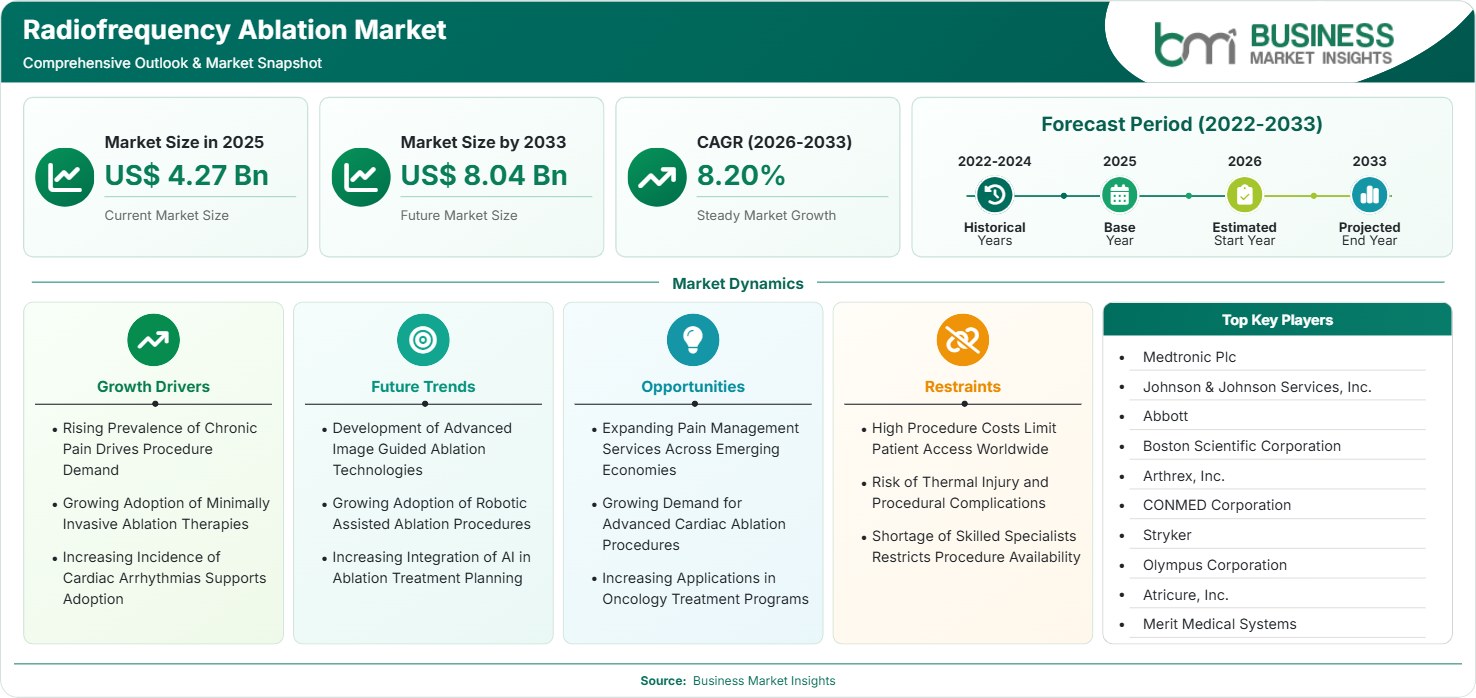
The Radiofrequency Ablation Market size was valued at US$ 4.27 Billion in 2025 and is projected to reach US$ 8.04 Billion by 2033, growing at a CAGR of 8.20% during 2026–2033, driven by chronic pain, cardiac arrhythmias, minimally invasive procedures, and opportunities in emerging healthcare infrastructure and oncology applications.

Report Coverage
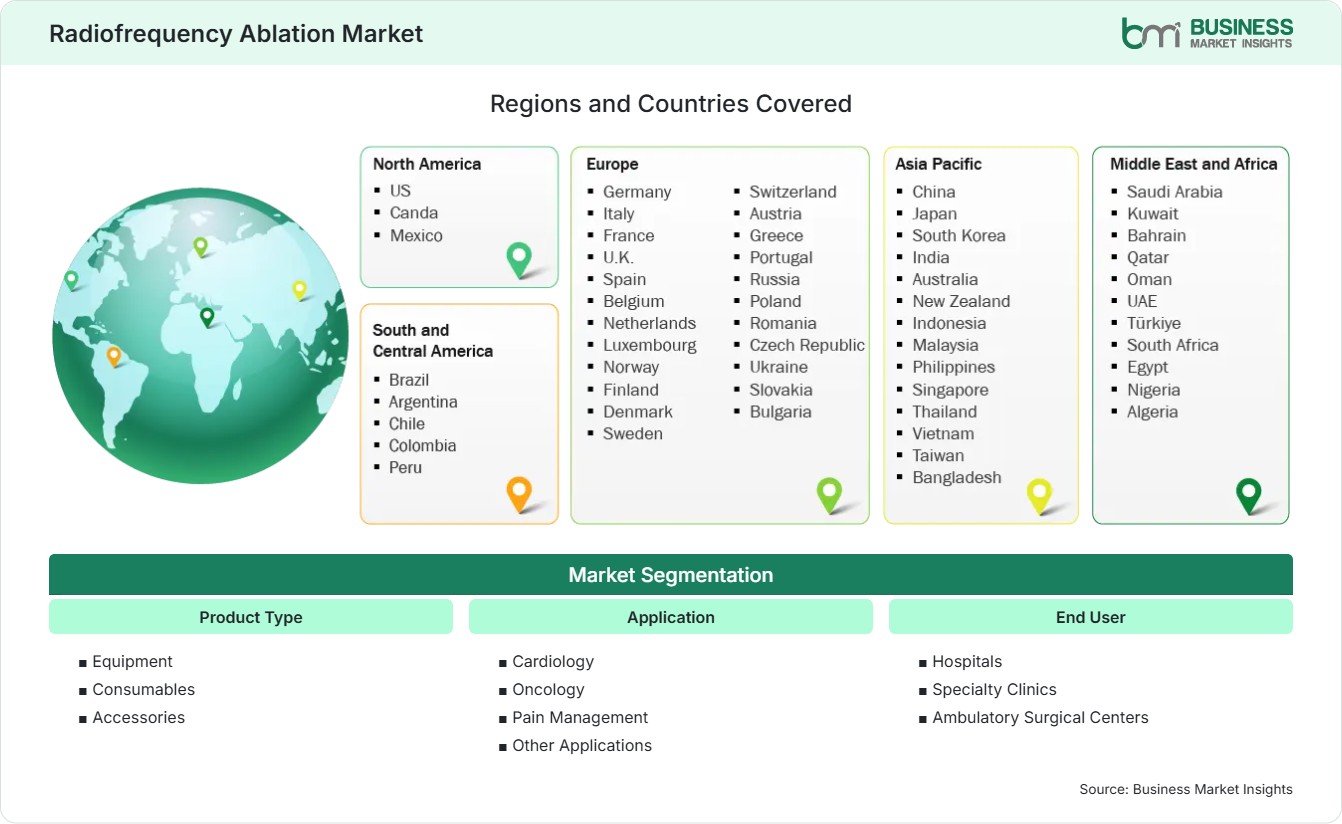
  • Product Type: Equipment, Consumables, Accessories
  • Application: Cardiology, Oncology, Pain Management, Other Applications
  • End User: Hospitals, Specialty Clinics, Ambulatory Surgical Centers
US$ 4.27 Bn Market size in 2025
US$ 8.04 Bn Market Size by 2033
8.20% CAGR, 2026 - 2033
2026-2033 Forecast Period

AI Overview

Radiofrequency Ablation Market Summary

  • North America Region: North America holds an estimated 47.5% Radiofrequency Ablation Market share in 2025 and is projected to grow at a 7.9% CAGR during 2026–2033, supported by advanced electrophysiology infrastructure, chronic pain treatment, favorable procedure adoption, and opportunities in outpatient care, advanced cardiac ablation, and image-guided intervention.
  • Fastest Growing Region: Asia Pacific holds an estimated 24.0% share in 2025 and is projected to grow at a 10.2% CAGR during 2026–2033, driven by healthcare investment, expanding specialist capacity, cardiovascular disease management, and opportunities in affordable minimally invasive procedures, oncology treatment, and pain management.
  • Leading Segment: Consumables holds an estimated 58.2% share in 2025 and is projected to grow at a 8.8% CAGR, supported by demand for generators, integrated procedural platforms, technological upgrades, and continued installation across hospitals, specialty centers, and advanced interventional facilities.
  • High Growth Segment: Cardiology holds an estimated 56.6% share in 2025 and is projected to grow at a 7.5% CAGR, driven by arrhythmia management, expanding electrophysiology capacity, catheter-based procedures, and demand for precise, minimally invasive treatment alternatives.
  • Key Market Opportunity: Expanding cardiac, oncology, and pain-management capabilities in emerging healthcare systems creates opportunities for scalable ablation platforms, physician training, specialized treatment centers, and technologies supporting precise therapeutic interventions.
  • Major Market Players: Medtronic Plc, Johnson & Johnson Services, Inc., Abbott, Boston Scientific Corporation, Arthrex, Inc., CONMED Corporation, Stryker, Olympus Corporation, Atricure, Inc., and Merit Medical Systems.
Strategic Insights

Radiofrequency Ablation Market: Strategic Insights

Radiofrequency Ablation Market Strategic Framework
FREE PDF
Request your free sample
Request free sample
Stakeholder View

Key Takeaways

  • The Radiofrequency Ablation Market value chain increasingly depends on coordination between device developers, energy-platform suppliers, imaging and navigation specialists, hospitals, physicians, and distributors, making clinical training and post-installation support important competitive capabilities.
  • Cardiology and chronic pain applications provide strong expansion potential because procedural demand can increase as healthcare systems build specialist capacity and shift appropriate interventions toward minimally invasive treatment pathways.
  • Innovation is moving toward improved energy control, enhanced catheter performance, navigation support, and procedural integration, with manufacturers focusing on precision, workflow efficiency, and more predictable treatment delivery.
  • Asia Pacific offers a compelling investment case because healthcare infrastructure, specialist availability, and demand for minimally invasive treatment are expanding across major population centers and emerging medical hubs.
  • Strategic activity is likely to emphasize technology partnerships, specialized device portfolios, electrophysiology capabilities, and acquisitions that strengthen access to high-growth therapeutic applications and established clinical networks.
  • Physician training remains strategically important because technology adoption depends not only on equipment availability but also on procedural expertise, workflow integration, patient selection, and confidence in managing potential complications.
Geographic Outlook

Radiofrequency Ablation Market Regional Highlights

North America Radiofrequency Ablation Market

North America holds an estimated 47.5% share in 2025 and is projected to grow at a 7.9% CAGR during 2026–2033. Advanced hospitals, established electrophysiology programs, and broad adoption of minimally invasive interventions support regional demand. The Radiofrequency Ablation Market share benefits from specialized clinical infrastructure and strong technology adoption.

  • Advanced electrophysiology laboratories continue to support demand for sophisticated energy-delivery platforms, mapping technologies, and specialized catheters designed to improve procedural control and workflow efficiency.
  • The expansion of outpatient treatment models has increased the involvement of ambulatory facilities, especially with respect to the management of certain kinds of pain.
  • Regulatory requirements encourage manufacturers to prioritize device testing, procedural safety, usability, and physician training, supporting demand for comprehensive technology and service capabilities.
  • Cardiac applications remain strategically important because established specialist networks can adopt new technologies and procedural approaches as clinical evidence and regulatory pathways develop.

US Radiofrequency Ablation Market

The US represents approximately 93.9% of regional share in 2025 and is projected to grow at a 8.1% CAGR through 2033. Demand is supported by extensive hospital infrastructure and strong adoption of catheter-based interventions. The Radiofrequency Ablation Market growth outlook benefits from specialized cardiovascular care, chronic pain treatment, and ongoing technology replacement as providers seek improved precision, efficiency, and integration across complex interventional procedures.

  • Established electrophysiology programs create demand for advanced ablation technologies capable of supporting increasingly complex arrhythmia treatment and integrated procedural workflows.
  • Ambulatory and specialty settings support selected pain-management procedures, encouraging demand for efficient systems suited to high-throughput clinical environments.
  • Continued technology development creates replacement opportunities as providers evaluate improved catheter designs, energy platforms, procedural integration, and enhanced treatment capabilities.

Europe Radiofrequency Ablation Market

Europe accounts for an estimated 22.2% share in 2025 and is projected to expand at a 7.9% CAGR through 2033. Germany remains a leading market and is projected to grow at a 7.7% CAGR. Established cardiology infrastructure and specialized interventional care support adoption. The region benefits from strong clinical expertise, increasing demand for minimally invasive therapies, and continued investment in procedural modernization.

  • Germany supports broad adoption through established cardiovascular and interventional treatment infrastructure, creating opportunities for advanced equipment and specialized procedural technologies.
  • The UK presents growth opportunities through healthcare modernization and increasing interest in interventions that can improve treatment efficiency and patient recovery.
  • European providers have begun to concentrate more on the technologies that enhance procedural accuracy and resource use efficiency in specialist clinical settings.
  • Oncology and pain-management applications offer additional expansion opportunities as hospitals seek targeted interventions that complement broader treatment pathways.

Asia Pacific Radiofrequency Ablation Market

Asia Pacific holds an estimated 24.0% share in 2025 and is projected to grow at a 10.2% CAGR through 2033. China is a major regional market, while India offers higher expansion potential. China is projected to grow at a 10.6% CAGR, while India could expand at 11.9% CAGR. The region benefits from hospital investment, growing specialist capacity, and increasing demand for advanced minimally invasive treatment options.

  • China is strengthening advanced cardiovascular and oncology capabilities, supporting demand for specialized technologies across large hospital networks and expanding urban treatment centers.
  • India offers substantial potential as private hospitals, medical tourism, and specialist care capacity increase access to advanced minimally invasive procedures.
  • Japan and South Korea encourage the use of technology through their advanced medical facilities, medical expertise, and need for precision in cardiovascular and pain management procedures.
  • Growing specialist training programs can improve procedural capacity and support wider adoption across markets where advanced ablation services remain concentrated in major cities.

Rest of World Radiofrequency Ablation Market

Rest of World accounts for an estimated 6.2% share in 2025 and is projected to grow at a 3.3% CAGR through 2033. South America recorded 4.0% global share in 2025 and is forecast at 4.3% CAGR through 2033, while Middle East and Africa recorded 2.2% share and 2.4% CAGR, respectively. Brazil is projected to grow at a 5.3% CAGR, while Saudi Arabia could expand at 2.9% CAGR. Radiofrequency Ablation Market share is supported by rising specialist capacity.

South and Central America offers opportunities through private healthcare investment and broader access to cardiovascular and pain-management services. Middle Eastern markets continue developing specialist hospitals and technology-intensive treatment programs.

  • Brazil represents a major regional opportunity as advanced cardiovascular care and specialist hospital infrastructure expand across metropolitan healthcare networks.
  • Gulf countries are investing in specialized hospitals and high-acuity care, creating demand for advanced interventional technologies and physician training programs.
  • Private healthcare providers can accelerate technology adoption by investing in specialized centers capable of attracting patients seeking minimally invasive treatment options.
  • Wider training and service support remain essential for sustained expansion because advanced procedures require experienced physicians, appropriate facilities, and reliable technical infrastructure.
Global Market Geography
FREE PDF
Request your free sample
Request free sample
Segment Analysis

Radiofrequency Ablation Market Segmentation

Product Type

Consumables accounts for an estimated 58.2% share in 2025 and is projected to grow at a 8.8% CAGR during 2026–2033. Generators and integrated platforms remain essential to procedural delivery, while consumables support recurring utilization. The Radiofrequency Ablation Market scope is increasingly shaped by technology upgrades, precision requirements, workflow integration, and the need for specialized components across expanding clinical applications.

  • Equipment: Equipment demand is supported by generator replacement, procedural capacity expansion, technology upgrades, and hospital investment in specialized interventional treatment infrastructure.
  • Consumables: Consumables generate recurring demand through single-use and procedure-specific requirements, supporting continued utilization across cardiac, oncology, and pain-management applications.
  • Accessories: Accessories support system integration, connectivity, procedural setup, and device functionality, creating supplementary demand as treatment platforms expand across specialized facilities.

Application

Cardiology accounts for an estimated 56.6% share in 2025 and is projected to grow at a 7.5% CAGR during 2026–2033. Arrhythmia treatment supports demand for precise catheter-based interventions, while pain management and oncology broaden the clinical base. The Radiofrequency Ablation Market trends reflect growing interest in targeted procedures that can reduce surgical requirements and improve treatment efficiency.

  • Cardiology: Cardiac procedures rely on precise energy delivery to treat abnormal electrical pathways, supporting demand for advanced catheters and integrated electrophysiology systems.
  • Oncology: Oncology applications support targeted destruction of selected tumors, creating opportunities where minimally invasive intervention can complement surgery, radiation, or systemic therapies.
  • Pain Management: Pain management procedures address selected chronic conditions by targeting nerves or tissues, supporting outpatient treatment and specialized interventional care models.
  • Other Applications: Additional applications broaden technology utilization across specialized interventions where controlled thermal energy can support targeted tissue treatment and procedural alternatives.

End User

Hospitals account for an estimated 72.7% share in 2025 and are projected to grow at a 7.5% CAGR during 2026–2033. Complex procedures and multidisciplinary treatment needs sustain their leading position. Specialty clinics and ambulatory surgical centers expand access to selected interventions. The Radiofrequency Ablation Market increasingly benefits from treatment decentralization where clinical complexity and patient safety requirements permit.

  • Hospitals: Hospitals remain essential for complex cardiac, oncology, and interventional procedures requiring advanced imaging, specialist teams, emergency support, and multidisciplinary patient management.
  • Specialty Clinics: Specialty clinics support focused treatment delivery through dedicated physician expertise, streamlined workflows, and specialized care pathways for selected therapeutic applications.
  • Ambulatory Surgical Centers: Ambulatory facilities provide opportunities for appropriate minimally invasive procedures where efficient scheduling, shorter recovery, and lower facility intensity are feasible.
Market Forces

Radiofrequency Ablation Market Dynamics

Key Market Drivers

Rising Prevalence of Chronic Pain Drives Procedure Demand

The increasing cases of chronic pain lead to the growing requirement for treatment methods that may be able to intervene on specific pain pathways if conventional means cannot provide enough pain relief. The radiofrequency technology provides doctors with a minimally invasive procedure for appropriately chosen patients, which can be combined with special pain pathways. Market growth will be driven by the development of interventional pain procedures and the focus on targeted treatment methods. There is also a growing need for efficient procedures that do not limit patient mobility. As chronic diseases need more long-term management, the need for technology that can be used alongside other forms of treatment will continue to play a significant role.

Growing Adoption of Minimally Invasive Ablation Therapies

A modern health system prefers treatment modalities that can help reduce tissue trauma and promote rapid healing processes instead of choosing invasive methods. This leads to the use of catheters and imaging-based ablation technologies in many treatments. The dynamics of the market include innovations in device control, procedure planning, and therapy. It is required to develop devices that comply with new outpatient and specialty care procedures and provide reliable outcomes. Minimally invasive technologies also contribute to the development of targeted therapy pathways for eligible patients who do not meet surgical treatment criteria. These clinical preferences have continued to influence equipment purchases and procedures.

Increasing Incidence of Cardiac Arrhythmias Supports Adoption

The growing need for the management of cardiovascular conditions underscores the necessity of further developing advanced intervention techniques. Catheter ablation therapy has become an essential treatment for certain arrhythmias; there is an increasing need for energy delivery and procedural technologies. The market is growing due to rising demand for cardiovascular treatments, while technological advances create more opportunities for electrophysiologists. According to the World Health Organization, cardiovascular diseases are the number one cause of mortality worldwide.

Key Market Opportunities

Expanding Pain Management Services Across Emerging Economies

There is an increase in the provision of specialized health care services in developing nations. This trend presents manufacturers with an opportunity to develop technologies designed to aid intervention-based pain management services. Expansion of urban health care networks and growth in private hospitals' investments will increase the availability of procedures previously available only in large cities. Manufacturers should utilize this opportunity by providing physicians with education, technical support, and equipment configuration that meets local needs. Increased awareness of minimally invasive procedures will positively impact the Radiofrequency Ablation Market forecast.

Growing Demand for Advanced Cardiac Ablation Procedures

Cardiac treatments offer a large potential market for technology companies, as more electrophysiology centers are being built and better ways to perform procedures are needed. A need is emerging for platforms that improve catheter manipulation by incorporating mapping, energy delivery, and procedural efficiency. Another area of potential is the development of training and services for hospitals that are developing specialty programs. Technology vendors could distinguish themselves by offering platforms with workflow improvements, enhanced usability, and reliability. As healthcare systems invest in cardiac treatments, specialized services can be developed through more advanced procedures.

Increasing Applications in Oncology Treatment Programs

Oncological programs represent an emerging opportunity for ablation applications, in which local therapy can complement overall cancer care. Radiofrequency-based technologies can assist with treatment options for select cancers when surgery is not an option or where minimal invasiveness is the best course of action. The increased availability of imaging and interventional oncology can facilitate acceptance in hospitals and specialty centers. Probe development by manufacturers can be driven by use cases in healthcare facilities and by procedures specific to clinical needs. Opportunities exist, especially in healthcare systems seeking to expand their cancer treatment offerings.

Market Restraints and Challenges

High Procedure Costs Limit Patient Access Worldwide

Factors: High-tech devices, disposables, infrastructure, imaging, and physician skills can all contribute to an overall rise in the procedure's cost. Impact: High procedure costs will hinder implementation due to limited funding. Medical personnel will have to make decisions about investments that are volume- and resource-based. Price sensitivity is especially pronounced in developing countries, where interventional technologies tend to accumulate in large medical facilities. This is why the development of the Radiofrequency Ablation Market can become quite uneven across healthcare systems. Manufacturers should consider using flexible business models, effective service organizations, and technological solutions.

Risk of Thermal Injury and Procedural Complications

Factor: Radiofrequency procedures use thermal energy; therefore, accurate positioning and energy application are key to preventing tissue damage. Impact: Complications of procedures may affect clinical risk, necessitating more stringent training and reducing uptake where specialists lack experience with the procedure. Monitoring safety will remain vital, given that regulatory bodies are still reviewing complications arising from energy procedures. Serious complications associated with certain radiofrequency procedures have been identified by the FDA, underscoring the need for proper use and training.

Company Analysis

Competitive Landscape

The Radiofrequency Ablation Market analysis is characterized by competition among diversified medical technology companies and specialized interventional device developers. Companies compete through catheter technology, energy platforms, procedural integration, clinical application expertise, manufacturing capabilities, physician support, and global access to hospitals and specialized treatment centers.

Company Name

Overview

Products and Services relevant to this market

Medtronic Plc

Global medical technology company with broad capabilities in cardiac rhythm management, surgical technologies, pain therapies, and minimally invasive interventions.

Ablation catheters, energy platforms, cardiac rhythm technologies, navigation solutions, pain-management systems, and related clinical support services.

Johnson & Johnson Services, Inc.

Diversified healthcare organization with medical technology capabilities spanning electrophysiology and interventional treatment technologies.

Cardiac ablation systems, electrophysiology catheters, mapping technologies, energy-delivery platforms, and clinical solutions for arrhythmia treatment.

Abbott

Global healthcare company with established cardiovascular and electrophysiology technology capabilities supporting specialized cardiac procedures.

Electrophysiology systems, mapping technologies, ablation catheters, cardiovascular devices, and clinical solutions supporting arrhythmia management.

Boston Scientific Corporation

Medical technology company serving cardiovascular, endoscopy, oncology, urology, and other interventional specialties through diverse device portfolios.

Radiofrequency ablation catheters, electrophysiology systems, interventional oncology technologies, and specialized devices supporting minimally invasive treatment.

Arthrex, Inc.

Medical device company focused on minimally invasive surgical technologies and products for orthopedic and sports medicine applications.

Radiofrequency systems, surgical probes, arthroscopic technologies, and accessories supporting soft-tissue management and minimally invasive procedures.

CONMED Corporation

Medical technology company supplying surgical and orthopedics solutions for hospitals, ambulatory centers, and specialist healthcare facilities.

Radiofrequency generators, ablation probes, electrosurgical technologies, surgical instruments, and accessories supporting minimally invasive procedures.

Stryker

Global medical technology company operating across surgical, neurotechnology, orthopedics, and specialized intervention categories.

Radiofrequency ablation systems, surgical technologies, specialized probes, pain-management solutions, and equipment supporting interventional treatment.

Olympus Corporation

Medical technology company providing visualization, therapeutic, and interventional solutions across gastrointestinal and other clinical specialties.

Energy systems, endoscopic therapeutic technologies, surgical devices, visualization platforms, and accessories supporting targeted minimally invasive interventions.

Atricure, Inc.

Specialized medical device company focused on technologies for cardiac ablation and the treatment of selected heart rhythm conditions.

Cardiac ablation systems, surgical and catheter-based technologies, energy devices, mapping-related solutions, and rhythm-management treatment platforms.

Merit Medical Systems

Global manufacturer of medical devices used in interventional, oncology, and diagnostic procedures across hospitals and specialist facilities.

Radiofrequency ablation systems, lesion probes, interventional oncology technologies, catheters, and procedure-related devices supporting targeted treatment.

Trust & Transparency

Research Methodology

The market analysis combines proprietary research with secondary data from government agencies, company disclosures, regulatory filings, industry databases and expert interviews. Market estimates are validated through data triangulation, cross-market benchmarking and analyst review.

View Full Research Methodology

Questions Answered

Frequently Asked Questions

How can the Radiofrequency Ablation Market Report support strategic planning?

The report helps stakeholders evaluate product categories, therapeutic applications, end-user requirements, regional opportunities, technology priorities, competitive positioning, and barriers influencing long-term market development.

Why are emerging economies important for future expansion?

Expanding hospitals, specialist training, healthcare investment, and access to advanced treatments can create new demand as minimally invasive intervention capabilities become available beyond established medical centers.

What is the difference between equipment and consumables?

Equipment generally includes durable procedural platforms and generators, while consumables include procedure-specific components that are used or replaced regularly during clinical treatment.

Why are minimally invasive procedures supporting technology adoption?

They can provide targeted treatment through smaller access points and may support shorter recovery pathways for appropriately selected patients, encouraging investment in specialized interventional technologies.

What is radiofrequency ablation primarily used for?

It is used across several clinical applications to deliver controlled energy for targeted tissue treatment, including selected cardiac rhythm disorders, chronic pain conditions, oncology procedures, and other specialized interventions.

Access the Full Radiofrequency Ablation Market Report

Get segment-level forecasts, regional estimates, competitive benchmarking, company profiles and downloadable Excel datasets.

Access the full Radiofrequency Ablation Market Report
400 pages PDF & Excel | 2026-10-06
Similar Research

Related Market Reports